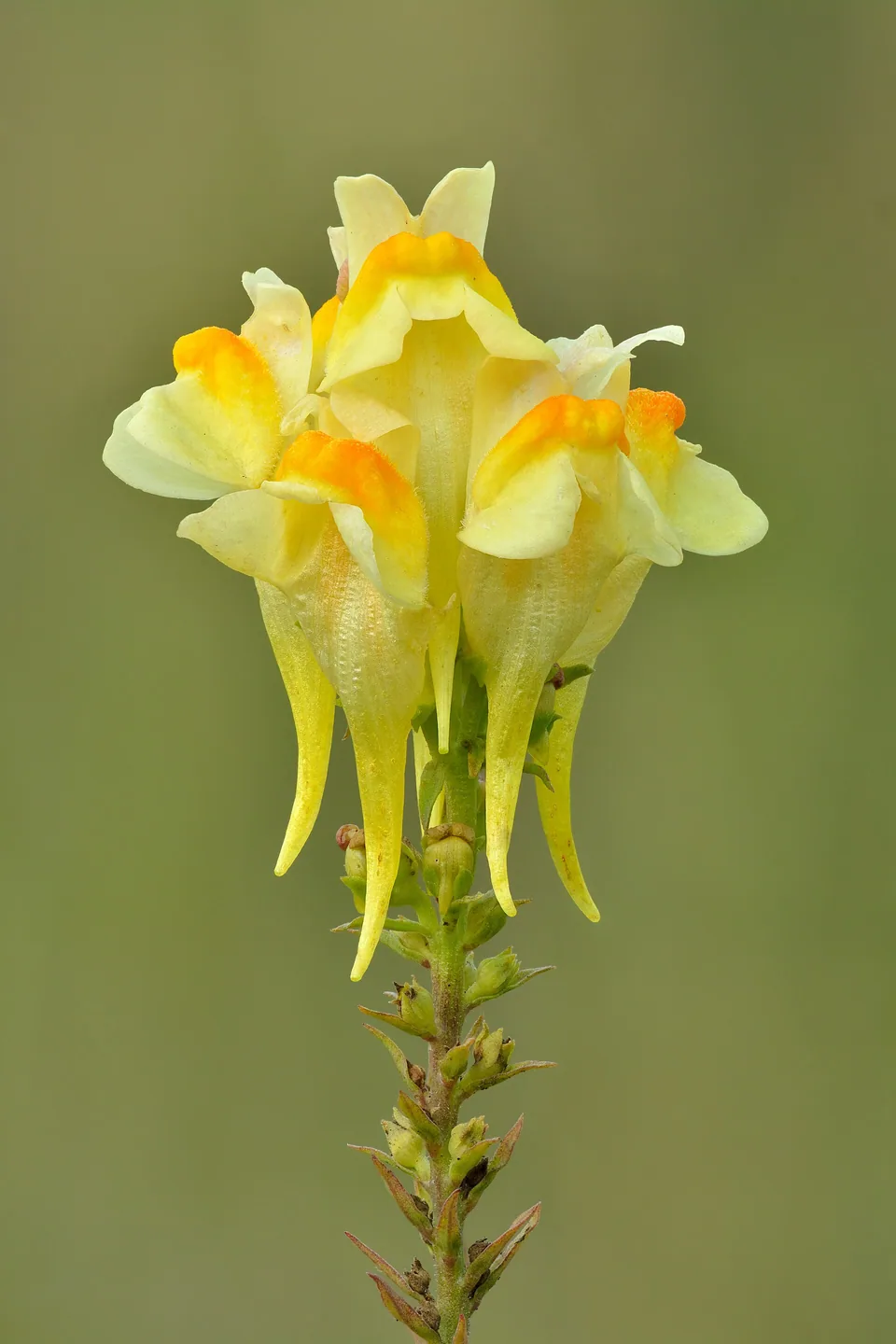


How to Grow and Care for Butter and Eggs
Linaria vulgaris
Written by Emilio Marruso · last checked
Toxic to: Livestock · Why
At a glance
This tough perennial asks for very little: full sun, dry conditions and soil with good drainage, even alkaline soil with a pH of 8.0. It grows happily in a container, which is also the easiest way to enjoy it, because in the ground its roots spread up to 10 feet and form patches. Start new plants from seed or root cuttings.
- Sun
Full sun
What the sources say (1)
Light: Full sun
Light: Full sun (6 or more hours of direct sunlight a day)
— Linaria vulgaris (Brideweed, Butter and Eggs, Common Toadflax, Jacob's Ladder, Wild Snapdragon, Yellow Toadflax) | North Carolina Extension Gardener Plant Toolbox [1] - Water
Likes it dry; the soil must drain well
What the sources say (1)
Watering: Prefers dry conditions with good drainage
Butter and Eggs prefers full sun, good drainage, dry conditions, and gravelly or sandy soil.
— Linaria vulgaris (Brideweed, Butter and Eggs, Common Toadflax, Jacob's Ladder, Wild Snapdragon, Yellow Toadflax) | North Carolina Extension Gardener Plant Toolbox [1] - Soil
Alkaline soil, pH 8.0 or higher
What the sources say (1)
Soil pH, minimum: 8.0
Soil pH: Alkaline (>8.0) Soil Drainage: Good Drainage Occasionally Dry
— Linaria vulgaris (Brideweed, Butter and Eggs, Common Toadflax, Jacob's Ladder, Wild Snapdragon, Yellow Toadflax) | North Carolina Extension Gardener Plant Toolbox [1] - Pests
Watch for aphids and powdery mildew
What the sources say (2)
Pests: aphids
Diseases, Insect Pests, and Other Plant Problems: Susceptible to aphids and powdery mildew.
— Linaria vulgaris (Brideweed, Butter and Eggs, Common Toadflax, Jacob's Ladder, Wild Snapdragon, Yellow Toadflax) | North Carolina Extension Gardener Plant Toolbox [1] Diseases: powdery mildew
Diseases, Insect Pests, and Other Plant Problems: Susceptible to aphids and powdery mildew.
— Linaria vulgaris (Brideweed, Butter and Eggs, Common Toadflax, Jacob's Ladder, Wild Snapdragon, Yellow Toadflax) | North Carolina Extension Gardener Plant Toolbox [1] - Watch out
Spreads hard: roots reach 10 ft; pull it up with all roots, as a ½-inch piece regrows
- Propagation
From seed or root cuttings
What the sources say (1)
Propagation: Root cutting; seed
Recommended Propagation Strategy: Root Cutting Seed Country Or Region
— Linaria vulgaris (Brideweed, Butter and Eggs, Common Toadflax, Jacob's Ladder, Wild Snapdragon, Yellow Toadflax) | North Carolina Extension Gardener Plant Toolbox [1] - Containers
Grows in containers too
What the sources say (1)
In containers: Yes
Landscape Location: Container Naturalized Area Landscape Theme: Children's Garden
— Linaria vulgaris (Brideweed, Butter and Eggs, Common Toadflax, Jacob's Ladder, Wild Snapdragon, Yellow Toadflax) | North Carolina Extension Gardener Plant Toolbox [1] - Safety
Mildly toxic to livestock if eaten in large amounts
Overview
Butter and eggs is a flowering perennial in the plantain family, native to Eurasia. [1] It spreads by seed and creeping rhizomes, forms patches and is not recommended for home landscapes. [2][1]
This record is incomplete: the sources we read do not cover every field yet.
Not yet covered by our sources: Hardiness, coldest zone, Hardiness, warmest zone
Butter and Eggs care
How to water Butter and Eggs
Prefers dry conditions with good drainage
What the sources say (1)
Butter and Eggs prefers full sun, good drainage, dry conditions, and gravelly or sandy soil.How much light Butter and Eggs needs
Full sun
What the sources say (1)
Light:
Full sun (6 or more hours of direct sunlight a day)How much cold Butter and Eggs can take
Hardiness, coldest zone
Not stated in the sources we read.
Hardiness, warmest zone
Not stated in the sources we read.
Best soil for Butter and Eggs
8.0
What the sources say (1)
Soil pH:
Alkaline (>8.0)
Soil Drainage:
Good Drainage
Occasionally DryWhere to grow Butter and Eggs
Yes
What the sources say (1)
Landscape Location:
Container
Naturalized Area
Landscape Theme:
Children's GardenHow to propagate Butter and Eggs
Root cutting; seed
What the sources say (1)
Recommended Propagation Strategy:
Root Cutting
Seed
Country Or RegionHow to grow Butter and Eggs
The plant
Life cycle
perennial
What the sources say (2)
Uses (Ethnobotany): Used as a yellow dye for centuries in Germany. Life Cycle: Perennial Recommended Propagation Strategy: Root Cutting SeedDescription: – perennial – considered invasive in some areas -leaves are alternately arrangedFamily
Plantaginaceae
What the sources say (2)
Genus: Linaria Species: vulgaris Family: Plantaginaceae Uses (Ethnobotany): Used as a yellow dye for centuries in Germany.they are now considered card carrying members of the plantain family along with snapdragons, foxgloves and penstemons.Pests and diseases
Pests
aphids
What the sources say (1)
Diseases, Insect Pests, and Other Plant Problems: Susceptible to aphids and powdery mildew.Diseases
powdery mildew
What the sources say (1)
Diseases, Insect Pests, and Other Plant Problems: Susceptible to aphids and powdery mildew.Butter and Eggs pests and problems
Aphids and powdery mildew
Symptom: Susceptible to aphids and powdery mildew.
What the sources say (1)
Diseases, Insect Pests, and Other Plant Problems: Susceptible to aphids and powdery mildew.
— Linaria vulgaris (Brideweed, Butter and Eggs, Common Toadflax, Jacob's Ladder, Wild Snapdragon, Yellow Toadflax) | North Carolina Extension Gardener Plant Toolbox [1] Aggressive spread
Symptom: Extensive root system spreads up to 10 feet, forms patches and outcompetes other plants.
What to do: Hand pulling can be effective as long as roots are removed; root fragments as small as 1/2 inch can produce new plants.
What the sources say (2)
Yellow toadflax can be difficult to eradicate due to its extensive root system, which can spread as much as 10 feet. Root fragments as small as ½ inch long can produce new plants.
— Yellow toadflax, Linaria vulgaris – Wisconsin Horticulture [2] Hand pulling can be effective, as long as roots are removed. Many populations
— Yellow toadflax, Linaria vulgaris – Wisconsin Horticulture [2]
Remedies
Each remedy shows what official sources say about it; traditional remedies without an official source are marked as such. Harmful ones are listed so you know to avoid them.
Treating the plant
aphids
insecticidal soap Works
How: Horticultural soaps or fungicides can manage infestations.
Horticultural soaps or fungicides can manage infestations.
— biologyinsights.com [5] What the evidence says For example, insecticidal soap is a safe, effective organic insecticide with minimal environmental impact.
— extension.psu.edu [6]
Getting rid of it
aggressive spread
hand pulling Partly works
Root fragments as small as ½ inch long can produce new plants.
— Yellow toadflax, Linaria vulgaris – Wisconsin Horticulture [2] How: Hand pulling can be effective, as long as roots are removed.
Hand pulling can be effective, as long as roots are removed.
— Yellow toadflax, Linaria vulgaris – Wisconsin Horticulture [2] What the evidence says Hand pulling can be effective, as long as roots are removed.
— Yellow toadflax, Linaria vulgaris – Wisconsin Horticulture [2] tillage Partly works
Root fragments as small as ½ inch long can produce new plants.
— Yellow toadflax, Linaria vulgaris – Wisconsin Horticulture [2] How: Tillage beginning in the early summer and continued at 3 to 4 week intervals has been somewhat successful in controlling this weed.
Tillage beginning in the early summer and continued at 3 to 4 week intervals has been somewhat successful in controlling this weed.
— Yellow toadflax, Linaria vulgaris – Wisconsin Horticulture [2] What the evidence says Tillage beginning in the early summer and continued at 3 to 4 week intervals has been somewhat successful in controlling this weed.
— Yellow toadflax, Linaria vulgaris – Wisconsin Horticulture [2] mowing Partly works
How: Mowing will help decrease seed production but will generally not eliminate established populations.
Mowing will help decrease seed production but will generally not eliminate established populations.
— Yellow toadflax, Linaria vulgaris – Wisconsin Horticulture [2] What the evidence says Mowing will help decrease seed production but will generally not eliminate established populations.
— Yellow toadflax, Linaria vulgaris – Wisconsin Horticulture [2] burning Not proven
How: Burning does not kill the roots and can promote resprouting.
Burning is not effective, as it does not kill the roots and can promote resprouting
— Yellow toadflax, Linaria vulgaris – Wisconsin Horticulture [2] What the evidence says Burning is not effective, as it does not kill the roots and can promote resprouting
— Yellow toadflax, Linaria vulgaris – Wisconsin Horticulture [2]
Is Butter and Eggs toxic to pets?
Reported by the source, quoted verbatim. This is not medical or veterinary advice: if a person or an animal may have eaten this plant, contact a poison control centre or a veterinarian.
Because it contains a poisonous glucoside that are mildly toxic to livestock when consumed in large quantities, it is a particular problem in rangeland (although it is also unpalatable, so reports of livestock poisoning are rare)
[2]
Similar plants
- Blue Toadflax Linaria canadensis
- Purple Toadflax Linaria purpurea
- Toadflax Linaria maroccana
- Angelonia Angelonia angustifolia
- Birdeye Speedwell Veronica persica
- Brazilian Snapdragon Achetaria azurea
- Buckhorn plantain Plantago coronopus
- Coral Plant Russelia equisetiformis
Sources
Every value above is quoted from these documents. Links lead to the original publisher.
- Linaria vulgaris (Brideweed, Butter and Eggs, Common Toadflax, Jacob's Ladder, Wild Snapdragon, Yellow Toadflax) | North Carolina Extension Gardener Plant Toolbox · plants.ces.ncsu.edu, consulted
- Yellow toadflax, Linaria vulgaris – Wisconsin Horticulture · hort.extension.wisc.edu, consulted
- Butter-and-eggs - Cooperative Extension: Maine Wild Blueberries - University of Maine Cooperative Extension · extension.umaine.edu, consulted
- Linaria vulgaris or Butter and Eggs, Toadflax · uaex.uada.edu, consulted
- biologyinsights.com · biologyinsights.com
- extension.psu.edu · extension.psu.edu
Written by Emilio Marruso · last checked