
How to Grow and Care for Toadflax
Linaria maroccana
Written by Emilio Marruso · last checked
At a glance
Moroccan toadflax is a cheerful annual that is easy to grow from seed. Give it full sun to partial shade and soil that stays moist but drains well. Trim it after the first flowers and it will bloom again; sow it in late summer and you can enjoy a fresh wave of flowers in fall, once the summer heat has passed.
- Sun
Full sun to partial shade
What the sources say (2)
Light: Full sun to partial shade
siting it in an area where it will get afternoon shade can encourage summer blossoms
— Linaria maroccana (Linaria, Toadflax) | North Carolina Extension Gardener Plant Toolbox [1] Light: Full sun (6 or more hours of direct sunlight a day) Partial Shade (Direct sunlight only part of the day, 2-6 hours)
— Linaria maroccana (Linaria, Toadflax) | North Carolina Extension Gardener Plant Toolbox [1] - Water
Keep the soil evenly moist, but make sure it drains well
What the sources say (1)
Watering: Consistently moist, well-drained soil
Toadflax does best in consistently moist, well-drained, humusy to sandy-loam soil in full sun.
— Linaria maroccana (Linaria, Toadflax) | North Carolina Extension Gardener Plant Toolbox [1] - Cold
Survives winters down to −50 °F (−45.6 °C)
Very hardy · USDA 2a · RHS H7 · Z2
What the sources say (2)
Hardiness, coldest zone: 2a [winter low −45.6 to −42.8 °C (−50 to −45 °F)]
USDA Plant Hardiness Zone: 2a, 2b, 3a, 3b, 4a, 4b, 5a, 5b, 6a, 6b, 7a, 7b, 8a, 8b, 9a, 9b, 10a, 10b, 11a, 11b
— Linaria maroccana (Linaria, Toadflax) | North Carolina Extension Gardener Plant Toolbox [1] Hardiness, warmest zone: 11b [winter low 7.2 to 10 °C (45 to 50 °F)]
USDA Plant Hardiness Zone: 2a, 2b, 3a, 3b, 4a, 4b, 5a, 5b, 6a, 6b, 7a, 7b, 8a, 8b, 9a, 9b, 10a, 10b, 11a, 11b
— Linaria maroccana (Linaria, Toadflax) | North Carolina Extension Gardener Plant Toolbox [1] - Pruning
Trim it after the first flowers to get more blooms
What the sources say (1)
Pruning: After initial flowering, to encourage additional blooms
You can cut the plant back after initial flowering to encourage additional blooms.
— Linaria maroccana (Linaria, Toadflax) | North Carolina Extension Gardener Plant Toolbox [1] - Pests
Watch for aphids; powdery mildew can be a problem
What the sources say (2)
Pests: aphids
Watch for aphids. Powdery mildew can also be a problem.
— Linaria maroccana (Linaria, Toadflax) | North Carolina Extension Gardener Plant Toolbox [1] Diseases: powdery mildew
Watch for aphids. Powdery mildew can also be a problem.
— Linaria maroccana (Linaria, Toadflax) | North Carolina Extension Gardener Plant Toolbox [1] - Watch out
It fades and stops blooming in summer heat: give it afternoon shade
- Size
9 in to 1.5 ft tall, 6 to 9 in wide
What the sources say (2)
Mature height: 22.86-45.72 cm (9 in - 1 ft 6 in)
Dimensions: Height: 0 ft. 9 in. - 1 ft. 6 in. Width: 0 ft. 6 in. - 0 ft. 9 in.
— Linaria maroccana (Linaria, Toadflax) | North Carolina Extension Gardener Plant Toolbox [1] Mature width: 15.24-22.86 cm (6 in - 9 in)
Dimensions: Height: 0 ft. 9 in. - 1 ft. 6 in. Width: 0 ft. 6 in. - 0 ft. 9 in.
— Linaria maroccana (Linaria, Toadflax) | North Carolina Extension Gardener Plant Toolbox [1] - Propagation
Grows from seed
What the sources say (1)
Propagation: Seed
Recommended Propagation Strategy: Seed Country Or Region Of Origin: Morocco Distribution: Introduced
— Linaria maroccana (Linaria, Toadflax) | North Carolina Extension Gardener Plant Toolbox [1] - Sowing
Sow in late summer for flowers in fall
What the sources say (1)
Sowing: Late summer, for a fall bloom
Alternatively, you can sow seeds in late summer for a fall bloom.
— Linaria maroccana (Linaria, Toadflax) | North Carolina Extension Gardener Plant Toolbox [1]
Overview
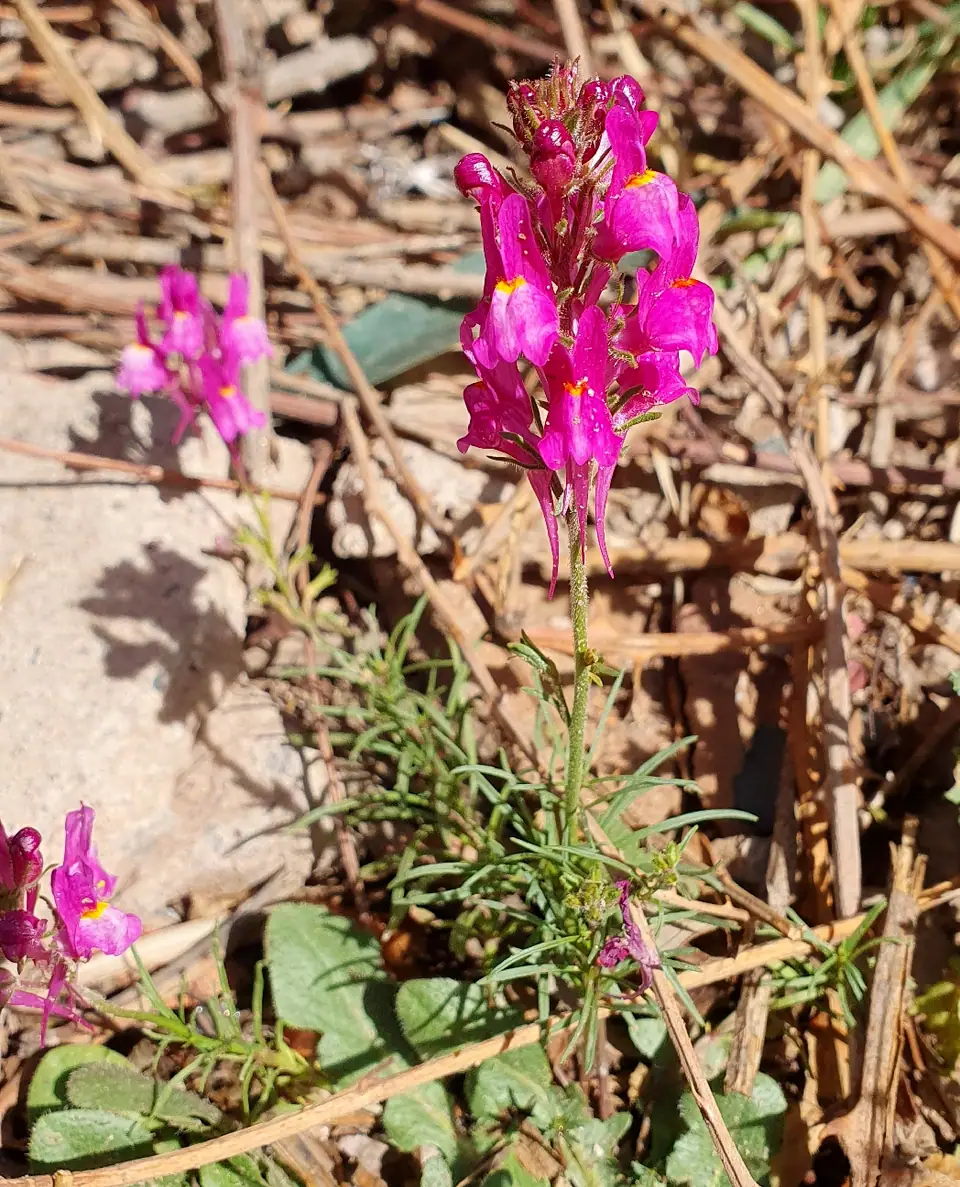
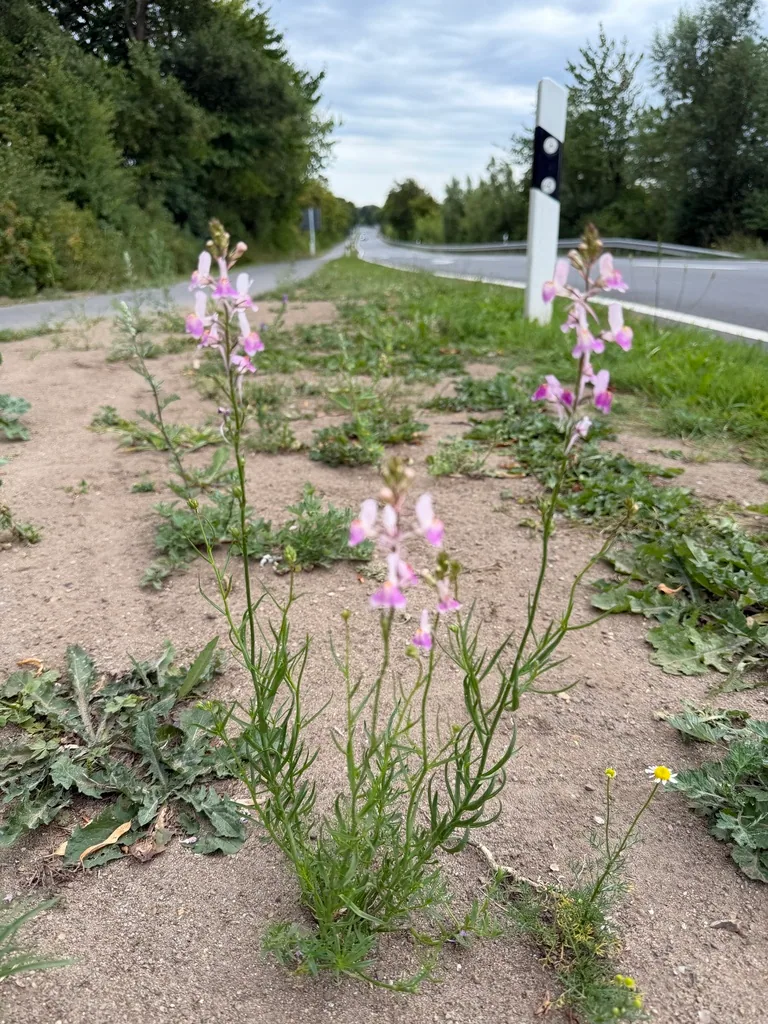
Toadflax is a cool-weather, branching annual with snapdragon-like flowers, native to Morocco. [1] It does best in consistently moist, well-drained soil in full sun, and tends to fade in hot summer weather. [1] It is propagated by seed and self-seeds in optimum growing conditions. [1]
Toadflax care
How to water Toadflax
Consistently moist, well-drained soil
What the sources say (1)
Toadflax does best in consistently moist, well-drained, humusy to sandy-loam soil in full sun.How much light Toadflax needs
Full sun to partial shade
What the sources say (2)
siting it in an area where it will get afternoon shade can encourage summer blossomsLight:
Full sun (6 or more hours of direct sunlight a day)
Partial Shade (Direct sunlight only part of the day, 2-6 hours)How much cold Toadflax can take
Hardiness, coldest zone
2a [winter low −45.6 to −42.8 °C (−50 to −45 °F)]
What the sources say (1)
USDA Plant Hardiness Zone:
2a, 2b, 3a, 3b, 4a, 4b, 5a, 5b, 6a, 6b, 7a, 7b, 8a, 8b, 9a, 9b, 10a, 10b, 11a, 11bHardiness, warmest zone
11b [winter low 7.2 to 10 °C (45 to 50 °F)]
What the sources say (1)
USDA Plant Hardiness Zone:
2a, 2b, 3a, 3b, 4a, 4b, 5a, 5b, 6a, 6b, 7a, 7b, 8a, 8b, 9a, 9b, 10a, 10b, 11a, 11bHow to propagate Toadflax
Seed
What the sources say (1)
Recommended Propagation Strategy:
Seed
Country Or Region Of Origin:
Morocco
Distribution:
IntroducedHow to grow Toadflax
The plant
Life cycle
annual
What the sources say (1)
Toadflax is a cool weather, branching annual in the fig wort family with snapdragon-like flowers.Family
Plantaginaceae
What the sources say (1)
Genus: Linaria Species: maroccana Family: Plantaginaceae Life Cycle: AnnualMature height
22.86-45.72 cm (9 in - 1 ft 6 in)
What the sources say (1)
Dimensions: Height: 0 ft. 9 in. - 1 ft. 6 in. Width: 0 ft. 6 in. - 0 ft. 9 in.Mature width
15.24-22.86 cm (6 in - 9 in)
What the sources say (1)
Dimensions: Height: 0 ft. 9 in. - 1 ft. 6 in. Width: 0 ft. 6 in. - 0 ft. 9 in.Pests and diseases
Pests
aphids
What the sources say (1)
Watch for aphids. Powdery mildew can also be a problem.Diseases
powdery mildew
What the sources say (1)
Watch for aphids. Powdery mildew can also be a problem.Toadflax pests and problems
Aphids
Symptom: Aphids affect the plant
What to do: Watch for aphids
What the sources say (1)
Watch for aphids. Powdery mildew can also be a problem.
— Linaria maroccana (Linaria, Toadflax) | North Carolina Extension Gardener Plant Toolbox [1] Powdery mildew
Symptom: Powdery mildew can be a problem
What to do: Not stated in the source
What the sources say (1)
Watch for aphids. Powdery mildew can also be a problem.
— Linaria maroccana (Linaria, Toadflax) | North Carolina Extension Gardener Plant Toolbox [1] Summer heat
Symptom: Plant fades and stops blooming in hot summer weather
What to do: Site in an area with afternoon shade, or sow seeds in late summer for a fall bloom
What the sources say (1)
The plant tends to fade in hot summer weather, but siting it in an area where it will get afternoon shade can encourage summer blossoms.
— Linaria maroccana (Linaria, Toadflax) | North Carolina Extension Gardener Plant Toolbox [1]
Remedies
Each remedy shows what official sources say about it; traditional remedies without an official source are marked as such. Harmful ones are listed so you know to avoid them.
Treating the plant
aphids
insecticidal soap spray Works
Some plants are sensitive to soap sprays and may be seriously injured by them. Read the label to make sure your plant is not one of them
— caswell.ces.ncsu.edu [2] To test for plant sensitivity, spray a small area and wait 24 hours to see if any damage occurs
— caswell.ces.ncsu.edu [2] Do not apply the soap in full sun or at temperatures above 90 ºF as this may damage the plants
— caswell.ces.ncsu.edu [2] How: Insecticidal soaps are usually used as a 1 to 2% solution (2½ to 5 tablespoons per gallon); follow the product label; do not apply in full sun or above 90 °F.
Insecticidal soaps are usually used as a 1 to 2% solution (2½ to 5 tablespoons per gallon). Always follow the label for the product you are using
— caswell.ces.ncsu.edu [2] What the evidence says Small, soft-bodied insects such as aphids, mealybugs, thrips, scale crawlers, and spider mites are most susceptible to the soaps
— caswell.ces.ncsu.edu [2]
powdery mildew
dilute hydrogen peroxide spray Not verified
Traditional remedy, not verified by an official source.
How: Dilute solution of hydrogen peroxide (9 parts water to 1 part hydrogen peroxide), sprayed on the plants thoroughly about once a week.
wider spacing for air circulation Not verified
Traditional remedy, not verified by an official source.
How: Do not plant things too close together, to allow ample air circulation around the plants; avoid damp, shady areas.
no evening sprinkler watering Not verified
Traditional remedy, not verified by an official source.
How: Avoid using the sprinklers in the evening, so the water does not stand on the leaves too long.
do not compost infected plant parts Not verified
Traditional remedy, not verified by an official source.
How: If you have a case of powdery mildew, do not compost the infected plant parts.
Calendar
Sowing
Late summer, for a fall bloom
What the sources say (1)
Alternatively, you can sow seeds in late summer for a fall bloom.Pruning
After initial flowering, to encourage additional blooms
What the sources say (1)
You can cut the plant back after initial flowering to encourage additional blooms.Months as given by the sources, which are mostly from the United States (northern hemisphere). In the southern hemisphere they shift by about six months.
Indicative values
Values from a secondary source, not checked word for word like the rest of this page. Use them as a starting point.
- Drought tolerant
- yesIndicative value, adapt it to your climate · Secondary source
- Soil pH
- 6-7.5Indicative value, adapt it to your climate · Secondary source
- Care level
- MediumIndicative value, adapt it to your climate · Secondary source
- Growth rate
- LowIndicative value, adapt it to your climate · Secondary source
Similar plants
- Blue Toadflax Linaria canadensis
- Butter and Eggs Linaria vulgaris
- Purple Toadflax Linaria purpurea
- Angelonia Angelonia angustifolia
- Birdeye Speedwell Veronica persica
- Brazilian Snapdragon Achetaria azurea
- Coral Plant Russelia equisetiformis
- Creeping Gloxinia Lophospermum erubescens
Sources
Every value above is quoted from these documents. Links lead to the original publisher.
- Linaria maroccana (Linaria, Toadflax) | North Carolina Extension Gardener Plant Toolbox · plants.ces.ncsu.edu, consulted
- caswell.ces.ncsu.edu · caswell.ces.ncsu.edu
Written by Emilio Marruso · last checked