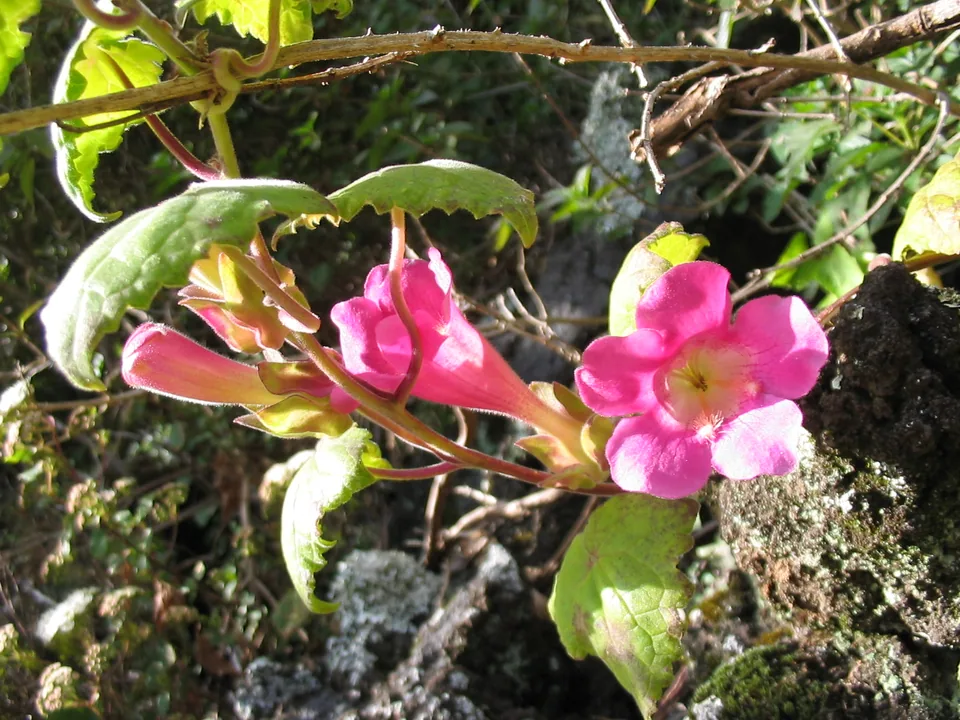


How to Grow and Care for Creeping Gloxinia
Lophospermum erubescens
Written by Emilio Marruso · last checked
Not toxic to cats and dogs, according to the sources · Sources
At a glance
This easygoing perennial is happy in full sun or partial shade, as long as its soil stays moist and drains well. It spreads to 3 ft wide, grows nicely in containers, and you can start new plants from seed or stem cuttings. Best of all, it is safe around cats, dogs and horses, so the whole family can enjoy it.
- Sun
Full sun to partial shade
What the sources say (1)
Light: Full sun to partial shade
Light: Full sun (6 or more hours of direct sunlight a day) Partial Shade (Direct sunlight only part of the day, 2-6 hours)
— Lophospermum erubescens (Creeping Gloxinia, Maurandya, Mexican Twist) | North Carolina Extension Gardener Plant Toolbox [1] - Water
Keep the soil moist, but make sure it drains well
What the sources say (1)
Watering notes: Does best with moist, well-drained loamy or sandy soil
Creeping Gloxina does best in full sun with moist and well-drained loamy or sandy soil. It has escaped from cultivation and become naturalized in tropical and subtropical areas of the world.
— Lophospermum erubescens (Creeping Gloxinia, Maurandya, Mexican Twist) | North Carolina Extension Gardener Plant Toolbox [1] - Cold
Survives winters down to 30 °F (−1.1 °C)
Half hardy: mild winters or an unheated greenhouse · USDA 10a · RHS H3 · Z10
What the sources say (2)
Hardiness, coldest zone: 10a [winter low −1.1 to 1.7 °C (30 to 35 °F)]
USDA Plant Hardiness Zone: 10a, 10b, 11a, 11b, 12a, 12b, 13a, 13b
— Lophospermum erubescens (Creeping Gloxinia, Maurandya, Mexican Twist) | North Carolina Extension Gardener Plant Toolbox [1] Hardiness, warmest zone: 13b [winter low 18.3 to 21.1 °C (65 to 70 °F)]
USDA Plant Hardiness Zone: 10a, 10b, 11a, 11b, 12a, 12b, 13a, 13b
— Lophospermum erubescens (Creeping Gloxinia, Maurandya, Mexican Twist) | North Carolina Extension Gardener Plant Toolbox [1] - Soil
Loamy or sandy soil that drains well
What the sources say (1)
Watering notes: Does best with moist, well-drained loamy or sandy soil
Creeping Gloxina does best in full sun with moist and well-drained loamy or sandy soil. It has escaped from cultivation and become naturalized in tropical and subtropical areas of the world.
— Lophospermum erubescens (Creeping Gloxinia, Maurandya, Mexican Twist) | North Carolina Extension Gardener Plant Toolbox [1] - Size
Grows 3 ft wide
What the sources say (1)
Mature width: 91.44 cm (3 ft)
It climbs by twining, can reach a length of 7 feet or more with a 3 foot spread, and plants in the wild tend to have showy pink flowers.
— Lophospermum erubescens (Creeping Gloxinia, Maurandya, Mexican Twist) | North Carolina Extension Gardener Plant Toolbox [1] - Propagation
Grow new plants from seed or stem cuttings
What the sources say (1)
Propagation: Seed, stem cutting
Recommended Propagation Strategy: Seed Stem Cutting Country Or
— Lophospermum erubescens (Creeping Gloxinia, Maurandya, Mexican Twist) | North Carolina Extension Gardener Plant Toolbox [1] - Containers
Grows in containers too
What the sources say (1)
In containers: Yes
It is not frost hardy and, in cooler zones, will need to be grown in a container that can be moved indoors over the winter.
— Lophospermum erubescens (Creeping Gloxinia, Maurandya, Mexican Twist) | North Carolina Extension Gardener Plant Toolbox [1] - Safety
Not toxic to cats, dogs or horses
Overview
Creeping gloxinia is a twining, tuberous perennial vine native to Mexico. [1] It does best in full sun with moist, well-drained soil and is not frost hardy. [1]
This record is incomplete: the sources we read do not cover every field yet.
Not yet covered by our sources: Watering, Pruning
Creeping Gloxinia care
How to water Creeping Gloxinia
Watering
Not stated in the sources we read.
Watering notes
Does best with moist, well-drained loamy or sandy soil
What the sources say (1)
Creeping Gloxina does best in full sun with moist and well-drained loamy or sandy soil. It has escaped from cultivation and become naturalized in tropical and subtropical areas of the world.How much light Creeping Gloxinia needs
Full sun to partial shade
What the sources say (1)
Light:
Full sun (6 or more hours of direct sunlight a day)
Partial Shade (Direct sunlight only part of the day, 2-6 hours)How much cold Creeping Gloxinia can take
Hardiness, coldest zone
10a [winter low −1.1 to 1.7 °C (30 to 35 °F)]
What the sources say (1)
USDA Plant Hardiness Zone:
10a, 10b, 11a, 11b, 12a, 12b, 13a, 13bHardiness, warmest zone
13b [winter low 18.3 to 21.1 °C (65 to 70 °F)]
What the sources say (1)
USDA Plant Hardiness Zone:
10a, 10b, 11a, 11b, 12a, 12b, 13a, 13bWhere to grow Creeping Gloxinia
Yes
What the sources say (1)
It is not frost hardy and, in cooler zones, will need to be grown in a container that can be moved indoors over the winter.How to propagate Creeping Gloxinia
Seed, stem cutting
What the sources say (1)
Recommended Propagation Strategy:
Seed
Stem Cutting
Country OrHow to grow Creeping Gloxinia
The plant
Life cycle
perennial
What the sources say (1)
Creeping Gloxinia is a climbing, tuberous, herbaceous perennial vine in the plantain family native to the mountains and canyons of Mexico.Family
Plantaginaceae
What the sources say (1)
Family:
Plantaginaceae
Life Cycle:
Perennial
Recommended Propagation Strategy:Mature width
91.44 cm (3 ft)
What the sources say (1)
It climbs by twining, can reach a length of 7 feet or more with a 3 foot spread, and plants in the wild tend to have showy pink flowers.Remedies
Each remedy shows what official sources say about it; traditional remedies without an official source are marked as such. Harmful ones are listed so you know to avoid them.
Treating the plant
whiteflies
insecticidal soap Partly works
Application of oils and soaps should be done early in the day or late in the evening to avoid leaf scorching or phytotoxicity.
— extension.colostate.edu [2] How: Spray with thorough coverage including leaf undersides, repeating every 7-10 days until eggs and nymphs are gone, early in the day or late in the evening.
Horticultural oils, insecticidal soaps, and Neem oils are less toxic to beneficial insects and effective at reducing whitefly populations.
— extension.colostate.edu [2] What the evidence says Choose products that are least harmful to natural enemies—such as insecticidal soaps and oils—and combine their use with the other practices listed above.
— ipm.ucanr.edu [3] yellow sticky traps Works
How: Hang sticky-coated yellow traps near the plants.
Hang sticky-coated yellow traps. Use one trap for every medium-size vegetable plant.
— ipm.ucanr.edu [3] What the evidence says Yellow sticky traps and biological controls are effective tactics in whitefly prevention and management
— extension.colostate.edu [2] strong stream of water Official source, not independently tested
How: Hose adult whiteflies off the plants with a strong stream of water.
Hose adults off plants with a strong stream of water.
— ipm.ucanr.edu [3] pruning infested leaves Official source, not independently tested
How: Prune out isolated infested leaves when you first detect them.
Prune out isolated infested leaves when you first detect them.
— ipm.ucanr.edu [3]
Is Creeping Gloxinia poisonous?
Reported by the source, quoted verbatim. This is not medical or veterinary advice: if a person or an animal may have eaten this plant, contact a poison control centre or a veterinarian.
#non-toxic for cats #non-toxic for horses #non-toxic for dogs
[1]The source flags the risk for this animal but does not explain why.
Calendar
Pruning
Not stated in the sources we read.
Months as given by the sources, which are mostly from the United States (northern hemisphere). In the southern hemisphere they shift by about six months.
Similar plants
- Angelonia Angelonia angustifolia
- Birdeye Speedwell Veronica persica
- Blue Toadflax Linaria canadensis
- Brazilian Snapdragon Achetaria azurea
- Butter and Eggs Linaria vulgaris
- Coral Plant Russelia equisetiformis
- Culver's Root Veronicastrum virginicum
- Dew Flower Penstemon cobaea
Sources
Every value above is quoted from these documents. Links lead to the original publisher.
- Lophospermum erubescens (Creeping Gloxinia, Maurandya, Mexican Twist) | North Carolina Extension Gardener Plant Toolbox · plants.ces.ncsu.edu, consulted
- extension.colostate.edu · extension.colostate.edu
- ipm.ucanr.edu · ipm.ucanr.edu
Written by Emilio Marruso · last checked