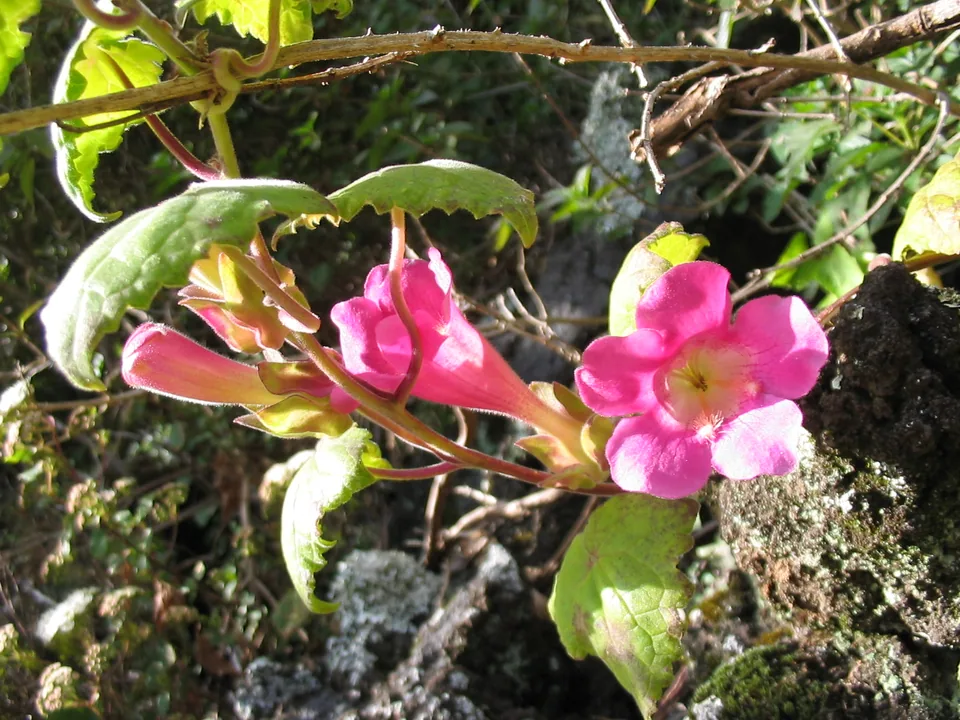


Cómo cultivar y cuidar Creeping Gloxinia
Lophospermum erubescens
Escrito por Emilio Marruso · última revisión
No tóxica para gatos y perros, según las fuentes · Fuentes
De un vistazo
Esta vivaz agradecida se siente a gusto a pleno sol o en semisombra, siempre que la tierra se mantenga húmeda y drene bien. Alcanza 91 cm de ancho, crece de maravilla en maceta y puedes conseguir nuevas plantas por semilla o por esquejes de tallo. Y lo mejor: no es tóxica para gatos, perros ni caballos, así que toda la familia puede disfrutarla.
- Sol
De pleno sol a semisombra
Qué dicen las fuentes (1)
Luz: Pleno sol a semisombra
Light: Full sun (6 or more hours of direct sunlight a day) Partial Shade (Direct sunlight only part of the day, 2-6 hours)
— Lophospermum erubescens (Creeping Gloxinia, Maurandya, Mexican Twist) | North Carolina Extension Gardener Plant Toolbox [1] - Riego
Mantén la tierra húmeda, pero que drene bien
Qué dicen las fuentes (1)
Notas sobre el riego: Le va mejor con suelo franco o arenoso húmedo y bien drenado
Creeping Gloxina does best in full sun with moist and well-drained loamy or sandy soil. It has escaped from cultivation and become naturalized in tropical and subtropical areas of the world.
— Lophospermum erubescens (Creeping Gloxinia, Maurandya, Mexican Twist) | North Carolina Extension Gardener Plant Toolbox [1] - Frío
Aguanta inviernos de hasta −1,1 °C (30 °F)
Semirrústica: inviernos suaves o invernadero sin calefacción · USDA 10a · RHS H3 · Z10
Qué dicen las fuentes (2)
Rusticidad, zona más fría: 10a [mínima invernal de −1,1 a 1,7 °C (de 30 a 35 °F)]
USDA Plant Hardiness Zone: 10a, 10b, 11a, 11b, 12a, 12b, 13a, 13b
— Lophospermum erubescens (Creeping Gloxinia, Maurandya, Mexican Twist) | North Carolina Extension Gardener Plant Toolbox [1] Rusticidad, zona más cálida: 13b [mínima invernal de 18,3 a 21,1 °C (de 65 a 70 °F)]
USDA Plant Hardiness Zone: 10a, 10b, 11a, 11b, 12a, 12b, 13a, 13b
— Lophospermum erubescens (Creeping Gloxinia, Maurandya, Mexican Twist) | North Carolina Extension Gardener Plant Toolbox [1] - Suelo
Suelo franco o arenoso con buen drenaje
Qué dicen las fuentes (1)
Notas sobre el riego: Le va mejor con suelo franco o arenoso húmedo y bien drenado
Creeping Gloxina does best in full sun with moist and well-drained loamy or sandy soil. It has escaped from cultivation and become naturalized in tropical and subtropical areas of the world.
— Lophospermum erubescens (Creeping Gloxinia, Maurandya, Mexican Twist) | North Carolina Extension Gardener Plant Toolbox [1] - Tamaño
Alcanza 91 cm de ancho
Qué dicen las fuentes (1)
Anchura adulta: 91.44 cm (3 pies)
It climbs by twining, can reach a length of 7 feet or more with a 3 foot spread, and plants in the wild tend to have showy pink flowers.
— Lophospermum erubescens (Creeping Gloxinia, Maurandya, Mexican Twist) | North Carolina Extension Gardener Plant Toolbox [1] - Multiplicación
Multiplícala por semilla o por esquejes de tallo
Qué dicen las fuentes (1)
Propagación: Semilla, esqueje de tallo
Recommended Propagation Strategy: Seed Stem Cutting Country Or
— Lophospermum erubescens (Creeping Gloxinia, Maurandya, Mexican Twist) | North Carolina Extension Gardener Plant Toolbox [1] - Maceta
Crece también en maceta
Qué dicen las fuentes (1)
En maceta: Sí
It is not frost hardy and, in cooler zones, will need to be grown in a container that can be moved indoors over the winter.
— Lophospermum erubescens (Creeping Gloxinia, Maurandya, Mexican Twist) | North Carolina Extension Gardener Plant Toolbox [1] - Seguridad
No es tóxica para gatos, perros ni caballos
Resumen
La gloxinia rastrera es una enredadera perenne tuberosa y voluble nativa de México. [1] Le va mejor a pleno sol con suelo húmedo y bien drenado y no es resistente a las heladas. [1]
Citado en inglés, como en la fuente.
Esta ficha está incompleta: las fuentes consultadas aún no cubren todos los campos.
Aún no cubierto por nuestras fuentes: Riego, Poda
Cuidados
Riego
Riego
No figura en las fuentes consultadas.
Notas sobre el riego
Le va mejor con suelo franco o arenoso húmedo y bien drenado
Qué dicen las fuentes (1)
Creeping Gloxina does best in full sun with moist and well-drained loamy or sandy soil. It has escaped from cultivation and become naturalized in tropical and subtropical areas of the world.Luz
Pleno sol a semisombra
Qué dicen las fuentes (1)
Light:
Full sun (6 or more hours of direct sunlight a day)
Partial Shade (Direct sunlight only part of the day, 2-6 hours)Clima y frío
Rusticidad, zona más fría
10a [mínima invernal de −1,1 a 1,7 °C (de 30 a 35 °F)]
Qué dicen las fuentes (1)
USDA Plant Hardiness Zone:
10a, 10b, 11a, 11b, 12a, 12b, 13a, 13bRusticidad, zona más cálida
13b [mínima invernal de 18,3 a 21,1 °C (de 65 a 70 °F)]
Qué dicen las fuentes (1)
USDA Plant Hardiness Zone:
10a, 10b, 11a, 11b, 12a, 12b, 13a, 13bDónde cultivarla
Sí
Qué dicen las fuentes (1)
It is not frost hardy and, in cooler zones, will need to be grown in a container that can be moved indoors over the winter.Propagación
Semilla, esqueje de tallo
Qué dicen las fuentes (1)
Recommended Propagation Strategy:
Seed
Stem Cutting
Country OrCultivo
La planta
Ciclo de vida
perenne
Qué dicen las fuentes (1)
Creeping Gloxinia is a climbing, tuberous, herbaceous perennial vine in the plantain family native to the mountains and canyons of Mexico.Familia
Plantaginaceae
Qué dicen las fuentes (1)
Family:
Plantaginaceae
Life Cycle:
Perennial
Recommended Propagation Strategy:Anchura adulta
91.44 cm (3 pies)
Qué dicen las fuentes (1)
It climbs by twining, can reach a length of 7 feet or more with a 3 foot spread, and plants in the wild tend to have showy pink flowers.Remedios
Cada remedio indica qué dicen las fuentes oficiales; los remedios tradicionales sin fuente oficial aparecen marcados. Los perjudiciales están para que sepas evitarlos.
Cuidar la planta
moscas blancas
jabón insecticida Funciona en parte
Application of oils and soaps should be done early in the day or late in the evening to avoid leaf scorching or phytotoxicity.
— extension.colostate.edu [2] Cómo: Rocía con cobertura completa incluyendo el envés de las hojas, repitiendo cada 7-10 días hasta que los huevos y las ninfas desaparezcan, temprano en el día o al final de la tarde.
Horticultural oils, insecticidal soaps, and Neem oils are less toxic to beneficial insects and effective at reducing whitefly populations.
— extension.colostate.edu [2] Qué dicen las pruebas Choose products that are least harmful to natural enemies—such as insecticidal soaps and oils—and combine their use with the other practices listed above.
— ipm.ucanr.edu [3] trampas amarillas pegajosas Funciona
Cómo: Cuelga trampas amarillas con pegamento cerca de las plantas.
Hang sticky-coated yellow traps. Use one trap for every medium-size vegetable plant.
— ipm.ucanr.edu [3] Qué dicen las pruebas Yellow sticky traps and biological controls are effective tactics in whitefly prevention and management
— extension.colostate.edu [2] chorro fuerte de agua Fuente oficial, sin prueba independiente
Cómo: Quita las moscas blancas adultas de las plantas con un chorro fuerte de agua.
Hose adults off plants with a strong stream of water.
— ipm.ucanr.edu [3] Poda las hojas infestadas Fuente oficial, sin prueba independiente
Cómo: Poda las hojas infestadas aisladas en cuanto las detectes.
Prune out isolated infested leaves when you first detect them.
— ipm.ucanr.edu [3]
Toxicidad
Según la fuente, citada textualmente. No es un consejo médico ni veterinario: si una persona o un animal pudo haber ingerido esta planta, contacta con un centro de toxicología o con un veterinario.
#non-toxic for cats #non-toxic for horses #non-toxic for dogs
[1]La fuente señala el riesgo para este animal pero no explica por qué.
Calendario
Poda
No figura en las fuentes consultadas.
Meses tal como los dan las fuentes, en su mayoría de Estados Unidos (hemisferio norte). En el hemisferio sur se desplazan unos seis meses.
Plantas similares
- Angelonia Angelonia angustifolia
- Birdeye Speedwell Veronica persica
- Blue Toadflax Linaria canadensis
- Brazilian Snapdragon Achetaria azurea
- O linaria Linaria vulgaris
- Lágrimas de Cupido Russelia equisetiformis
- Culver's Root Veronicastrum virginicum
- Dew Flower Penstemon cobaea
Fuentes
Cada valor anterior se cita de estos documentos. Los enlaces llevan al editor original.
- Lophospermum erubescens (Creeping Gloxinia, Maurandya, Mexican Twist) | North Carolina Extension Gardener Plant Toolbox · plants.ces.ncsu.edu, consultado
- extension.colostate.edu · extension.colostate.edu
- ipm.ucanr.edu · ipm.ucanr.edu
Escrito por Emilio Marruso · última revisión