
How to Grow and Care for Culver's Root
Veronicastrum virginicum
Written by Emilio Marruso · last checked
At a glance
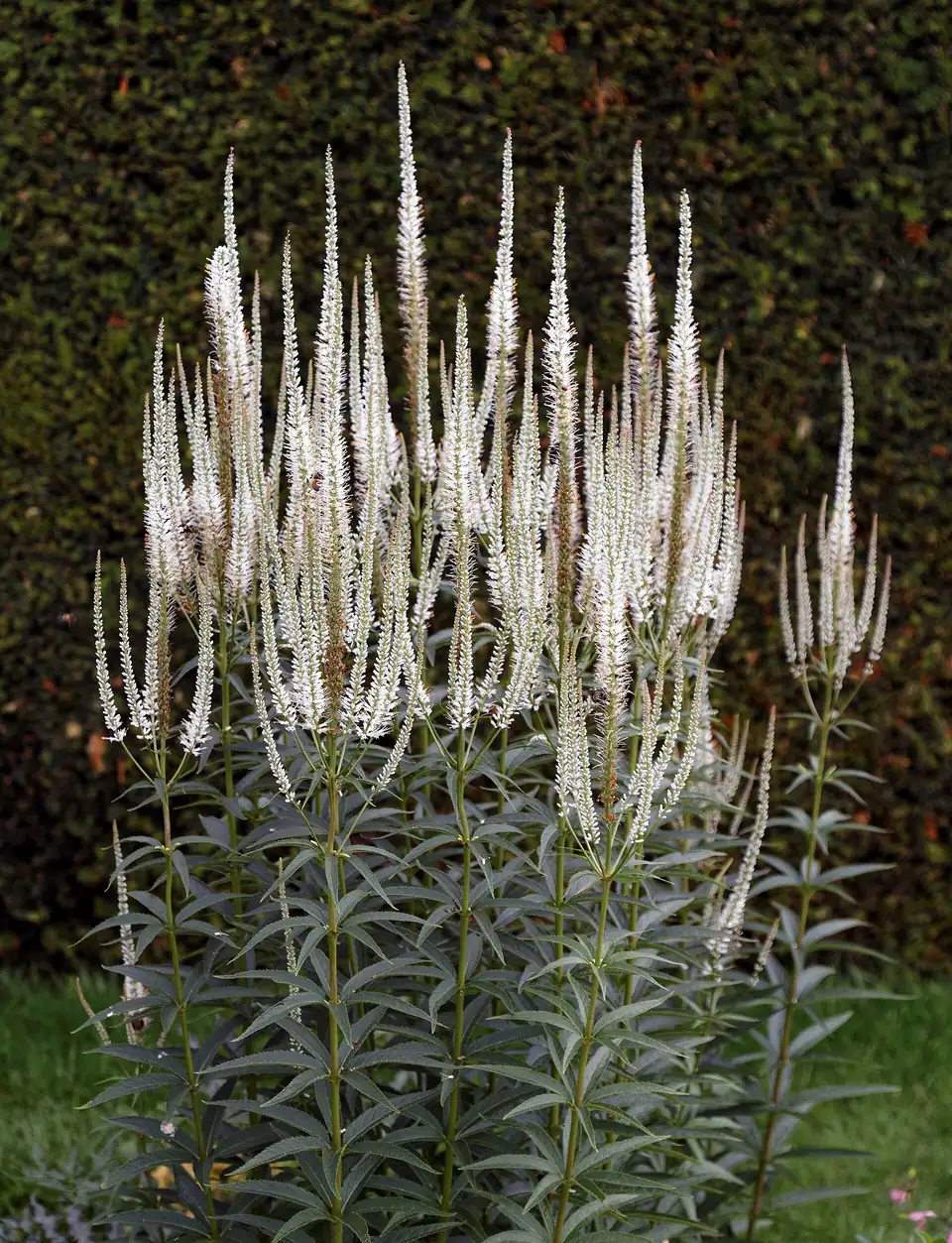
This tall perennial reaches 4–7 ft and makes a striking show in full sun to light shade. It likes average to moist soil and forgives conditions that are less than perfect. Cut the flower spikes for a vase as soon as the first fifth opens, and enjoy it coming back year after year.
- Sun
Full sun to light shade
What the sources say (2)
Light: Full sun to light shade
Full sun (6 or more hours of direct sunlight a day)
— Veronicastrum virginicum (Bowman’s Root, Culver's Root) | North Carolina Extension Gardener Plant Toolbox [1] It grows in full sun or light shade.
— Culver's Root: the Perfect Native Plant For Pollinators — Adams County — Master Gardener [3] - Water
Likes average to wet soil, but puts up with less than ideal moisture
What the sources say (3)
Watering: Prefers average, medium to wet soil
Culver's Root is a native wildflower that prefers average, medium to wet soil.
— Veronicastrum virginicum (Bowman’s Root, Culver's Root) | North Carolina Extension Gardener Plant Toolbox [1] Watering notes: Tolerates less than optimum soils and moisture levels; cut-flower trial notes it needs wet soil
but it will also tolerate less than optimum soils and moisture levels.
— Culver's Root: the Perfect Native Plant For Pollinators — Adams County — Master Gardener [3] Needs wet soil; White and went kind of seedy looking.
— Veronicastrum Virginicum - Cut Flowers | NC State Extension [2] - Cold
Survives winters down to −40 °F (−40 °C)
Very hardy · USDA 3a · RHS H7 · Z3
What the sources say (2)
Hardiness, coldest zone: 3a [winter low −40 to −37.2 °C (−40 to −35 °F)]
3a, 3b, 4a, 4b, 6a, 6b, 7a, 7b, 8a, 8b
— Veronicastrum virginicum (Bowman’s Root, Culver's Root) | North Carolina Extension Gardener Plant Toolbox [1] Hardiness, warmest zone: 8b [winter low −9.4 to −6.7 °C (15 to 20 °F)]
3a, 3b, 4a, 4b, 6a, 6b, 7a, 7b, 8a, 8b
— Veronicastrum virginicum (Bowman’s Root, Culver's Root) | North Carolina Extension Gardener Plant Toolbox [1] - Pruning
Prune after flowering
What the sources say (1)
Pruning: After flowering
You can cut back the stems after flowering to promote growth of new foliage and reblooming.
— Culver's Root: the Perfect Native Plant For Pollinators — Adams County — Master Gardener [3] - Harvest
For a vase, cut stems when the first fifth of the spike opens, or the flowers fade fast
What the sources say (2)
Harvest: Cut stems as the first 1/5 of the spike opens
Must cut as first 1/5 of spike opens or it goes quickly
— Veronicastrum Virginicum - Cut Flowers | NC State Extension [2] How to harvest: Cut as the first fifth of the spike opens, otherwise the flowers go over quickly
Very short time frame for cutting. Must cut as first 1/5 of spike opens or it goes quickly; White not very popular.
— Veronicastrum Virginicum - Cut Flowers | NC State Extension [2] - Watch out
In too much shade the tall stems flop: hold them up with stakes and string
- Size
4–7 ft tall and 2–4 ft wide
What the sources say (2)
Mature height: 122-213 cm (4-7 ft)
Height: 4 ft. 0 in.
— Veronicastrum virginicum (Bowman’s Root, Culver's Root) | North Carolina Extension Gardener Plant Toolbox [1] Mature width: 61-122 cm (2-4 ft)
Height: 4 ft. 0 in.
— Veronicastrum virginicum (Bowman’s Root, Culver's Root) | North Carolina Extension Gardener Plant Toolbox [1] - Propagation
Divide in late fall or early spring, or grow it from seed
What the sources say (2)
Propagation: Division in late fall or early spring; seed (direct sown or stratified)
It is most easily propagated by division in the late fall or early spring.
— Culver's Root: the Perfect Native Plant For Pollinators — Adams County — Master Gardener [3] The small seeds can be directly sown into the soil or stratified to grow indoors.
— Culver's Root: the Perfect Native Plant For Pollinators — Adams County — Master Gardener [3]
Overview
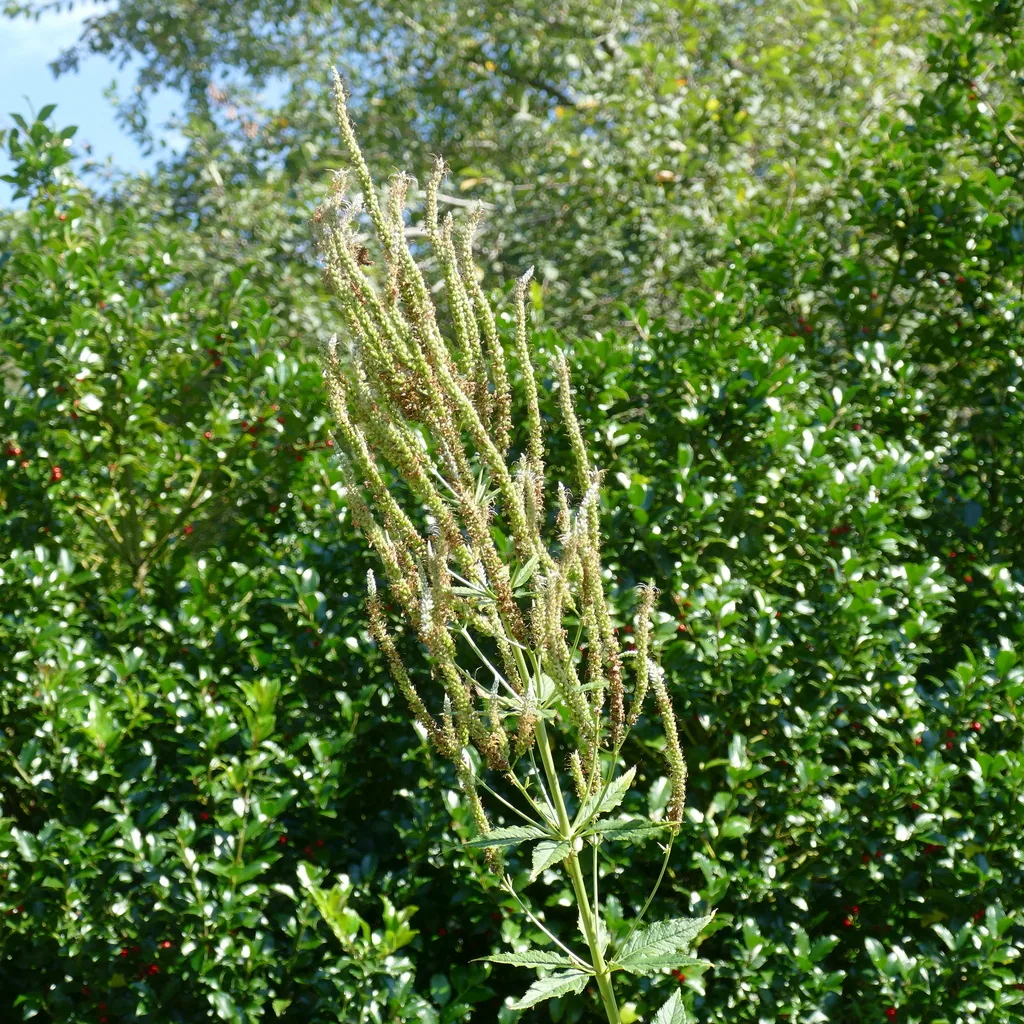
Culver's root is a native herbaceous perennial that grows about five feet [1.5 m] tall and is used as a border or accent plant. [3] It prefers average, medium to wet soil and is slow to get established. [1] It attracts bees, butterflies and other pollinators, and its foliage is unpalatable to deer. [3]
Culver's Root care
Measurements in square brackets are our conversion into the other unit system; the quoted text is unchanged.
How to water Culver's Root
Watering
Prefers average, medium to wet soil
What the sources say (1)
Culver's Root is a native wildflower that prefers average, medium to wet soil.Watering notes
Tolerates less than optimum soils and moisture levels; cut-flower trial notes it needs wet soil
What the sources say (2)
but it will also tolerate less than optimum soils and moisture levels.Needs wet soil; White and went kind of seedy looking.How much light Culver's Root needs
Full sun to light shade
What the sources say (2)
Full sun (6 or more hours of direct sunlight a day)It grows in full sun or light shade.How much cold Culver's Root can take
Hardiness, coldest zone
3a [winter low −40 to −37.2 °C (−40 to −35 °F)]
What the sources say (1)
3a, 3b, 4a, 4b, 6a, 6b, 7a, 7b, 8a, 8bHardiness, warmest zone
8b [winter low −9.4 to −6.7 °C (15 to 20 °F)]
What the sources say (1)
3a, 3b, 4a, 4b, 6a, 6b, 7a, 7b, 8a, 8bHow to propagate Culver's Root
Division in late fall or early spring; seed (direct sown or stratified)
What the sources say (2)
It is most easily propagated by division in the late fall or early spring.The small seeds can be directly sown into the soil or stratified to grow indoors.How to grow Culver's Root
The plant
Life cycle
perennial
What the sources say (1)
Life Cycle:
Perennial
Recommended Propagation Strategy:
Seed
Country Or Region Of Origin:
North AmericaFamily
Plantaginaceae
What the sources say (1)
Genus:
Veronicastrum
Species:
virginicum
Family:
Plantaginaceae
Uses (Ethnobotany):
The Cherokee, Iroquois,Mature height
122-213 cm (4-7 ft)
What the sources say (1)
Height: 4 ft. 0 in.Mature width
61-122 cm (2-4 ft)
What the sources say (1)
Height: 4 ft. 0 in.Harvest and storage
How to harvest
Cut as the first fifth of the spike opens, otherwise the flowers go over quickly
What the sources say (1)
Very short time frame for cutting. Must cut as first 1/5 of spike opens or it goes quickly; White not very popular.Culver's Root pests and problems
Leaning or flopping stems
Symptom: Tall stems may lean or flop in too much shade
What to do: Support with stakes and string
What the sources say (1)
If it gets too much shade the tall stems may lean or flop, but they can be supported with stakes and string.
— Culver's Root: the Perfect Native Plant For Pollinators — Adams County — Master Gardener [3] Ratty foliage in dry summer
Symptom: Foliage became ratty and did not hold up well in a vase
What to do: Source gives no management
What the sources say (1)
The foliage got kind of ratty (it was a dry summer) and they didn’t always hold up well in a vase
— Veronicastrum Virginicum - Cut Flowers | NC State Extension [2]
Remedies
The sources we checked give no remedies for this plant.
Calendar
Harvest
Cut stems as the first 1/5 of the spike opens
What the sources say (1)
Must cut as first 1/5 of spike opens or it goes quicklyPruning
After flowering
What the sources say (1)
You can cut back the stems after flowering to promote growth of new foliage and reblooming.Months as given by the sources, which are mostly from the United States (northern hemisphere). In the southern hemisphere they shift by about six months.
Indicative values
Values from a secondary source, not checked word for word like the rest of this page. Use them as a starting point.
- Hours of sun
- 6-8 hoursIndicative value, adapt it to your climate · Secondary source
- Soil
- Well-drainedIndicative value, adapt it to your climate · Secondary source
- Soil pH
- 5.5-7Indicative value, adapt it to your climate · Secondary source
- Care level
- MediumIndicative value, adapt it to your climate · Secondary source
- Growth rate
- HighIndicative value, adapt it to your climate · Secondary source
- Pests
- MildewIndicative value, adapt it to your climate · Secondary source
Similar plants
- Angelonia Angelonia angustifolia
- Birdeye Speedwell Veronica persica
- Blue Toadflax Linaria canadensis
- Brazilian Snapdragon Achetaria azurea
- Butter and Eggs Linaria vulgaris
- Coral Plant Russelia equisetiformis
- Creeping Gloxinia Lophospermum erubescens
- Dew Flower Penstemon cobaea
Sources
Every value above is quoted from these documents. Links lead to the original publisher.
- Veronicastrum virginicum (Bowman’s Root, Culver's Root) | North Carolina Extension Gardener Plant Toolbox · plants.ces.ncsu.edu, consulted
- Veronicastrum Virginicum - Cut Flowers | NC State Extension · cutflowers.ces.ncsu.edu, consulted
- Culver's Root: the Perfect Native Plant For Pollinators — Adams County — Master Gardener · extension.psu.edu, consulted
Written by Emilio Marruso · last checked