
How to Grow and Care for Acanthus hungaricus
Acanthus hungaricus
Written by Emilio Marruso · last checked
At a glance
Hungarian bear's breeches is an easygoing plant for beginners: it grows in full sun or partial shade and, once settled in, it handles dry weather with just a moderate drink during long dry spells. It is happy in soils from slightly acidic to slightly alkaline, and you can easily make new plants by division, root cuttings or seed.
- Sun
Full sun to partial shade; in hot climates give it some shade
What the sources say (2)
Light: Full sun to partial shade (partial shade especially in hot areas)
According to The Globe and Mail: This acanthus needs full sun, but I've had it in a bit of shade and it's grown well if slowly.
— Add a striking centrepiece to your garden with Bear’s Breeches - The Globe and Mail [2] Light: full sun or part shade Soil: normal, well draining soil, tolerates a wide range, pH 5.8 – 7.5
— Acanthus hungaricus - Hungarian Bear's Breeches [3] - Water
Handles drought once settled; water moderately during long dry spells
What the sources say (3)
Watering: Drought tolerant once established; moderate watering during prolonged dry spells
According to Garden Myths: Water: drought tolerant once established, but prefers regular watering
— Acanthus hungaricus - Hungarian Bear's Breeches [3] According to The Globe and Mail: A species from the Balkans, it can be pretty tough and gets along in fairly thin soil, but add lots of compost anyway and don't let it dry out.
— Add a striking centrepiece to your garden with Bear’s Breeches - The Globe and Mail [2] Water: drought tolerant once established, but prefers regular watering
— Acanthus hungaricus - Hungarian Bear's Breeches [3] - Cold
Survives winters down to −20 °F (−28.9 °C)
Very hardy · USDA 5 · RHS H7 · Z5
What the sources say (3)
Hardiness, coldest zone: 5 [winter low −28.9 to −23.3 °C (−20 to −10 °F)]
According to Garden Myths: Water: drought tolerant once established, but prefers regular watering USDA Hardiness Zone: 5 – 10
— Acanthus hungaricus - Hungarian Bear's Breeches [3] Water: drought tolerant once established, but prefers regular watering USDA Hardiness Zone: 5 – 10
— Acanthus hungaricus - Hungarian Bear's Breeches [3] Hardiness, warmest zone: 10 [winter low −1.1 to 4.4 °C (30 to 40 °F)]
Water: drought tolerant once established, but prefers regular watering USDA Hardiness Zone: 5 – 10
— Acanthus hungaricus - Hungarian Bear's Breeches [3] - Soil
Slightly acidic to slightly alkaline soil, pH 5.8–7.5
What the sources say (2)
Soil pH, minimum: 5.8
Light: full sun or part shade Soil: normal, well draining soil, tolerates a wide range, pH 5.8 – 7.5
— Acanthus hungaricus - Hungarian Bear's Breeches [3] Soil pH, maximum: 7.5
Light: full sun or part shade Soil: normal, well draining soil, tolerates a wide range, pH 5.8 – 7.5
— Acanthus hungaricus - Hungarian Bear's Breeches [3] - Pests
Can get powdery mildew: give it room and don't crowd it
- Propagation
Make new plants by division, root cuttings or seed
What the sources say (1)
Propagation: Division; root cuttings; seed
USDA Hardiness Zone: 5 – 10 Propagation: root cuttings, division or seed
— Acanthus hungaricus - Hungarian Bear's Breeches [3]
Overview
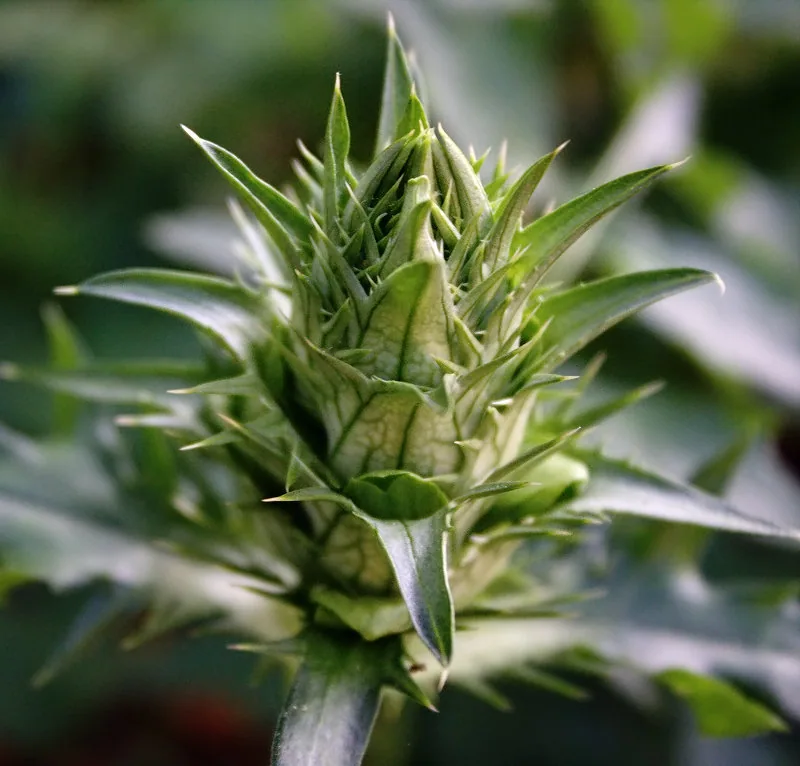
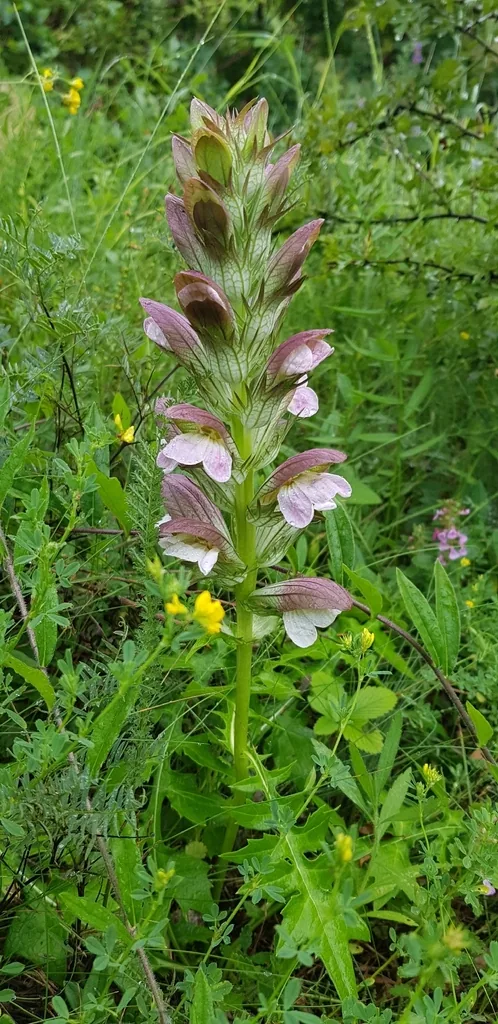
Hungarian bear's breeches is a clump-forming perennial from southeast Europe with deeply lobed leaves and tall spikes of pale pink to white flowers with purple bracts in summer. [1] It takes a few years to establish and flower, and can spread from root sections that are hard to remove. [3]
This record is incomplete: the sources we read do not cover every field yet.
Not yet covered by our sources: Pruning
Acanthus hungaricus care
How to water Acanthus hungaricus
Drought tolerant once established; moderate watering during prolonged dry spells
What each source says
According to Garden Myths: Drought tolerant once established, but prefers regular watering
According to The Globe and Mail: Do not let it dry out
What the sources say (3)
According to Garden Myths: Water: drought tolerant once established, but prefers regular wateringAccording to The Globe and Mail: A species from the Balkans, it can be pretty tough and gets along in fairly thin soil, but add lots of compost anyway and don't let it dry out.Water: drought tolerant once established, but prefers regular wateringHow much light Acanthus hungaricus needs
Full sun to partial shade (partial shade especially in hot areas)
What each source says
According to The Globe and Mail: Full sun; grows slowly in a bit of shade
What the sources say (2)
According to The Globe and Mail: This acanthus needs full sun, but I've had it in a bit of shade and it's grown well if slowly.Light: full sun or part shade
Soil: normal, well draining soil, tolerates a wide range, pH 5.8 – 7.5How much cold Acanthus hungaricus can take
Hardiness, coldest zone
5 [winter low −28.9 to −23.3 °C (−20 to −10 °F)]
What each source says
According to Garden Myths: 5 [winter low −28.9 to −23.3 °C (−20 to −10 °F)]
What the sources say (2)
According to Garden Myths: Water: drought tolerant once established, but prefers regular watering
USDA Hardiness Zone: 5 – 10Water: drought tolerant once established, but prefers regular watering
USDA Hardiness Zone: 5 – 10Hardiness, warmest zone
10 [winter low −1.1 to 4.4 °C (30 to 40 °F)]
What the sources say (1)
Water: drought tolerant once established, but prefers regular watering
USDA Hardiness Zone: 5 – 10Best soil for Acanthus hungaricus
Soil pH, minimum
5.8
What the sources say (1)
Light: full sun or part shade
Soil: normal, well draining soil, tolerates a wide range, pH 5.8 – 7.5Soil pH, maximum
7.5
What the sources say (1)
Light: full sun or part shade
Soil: normal, well draining soil, tolerates a wide range, pH 5.8 – 7.5How to propagate Acanthus hungaricus
Division; root cuttings; seed
What the sources say (1)
USDA Hardiness Zone: 5 – 10
Propagation: root cuttings, division or seedAcanthus hungaricus pests and problems
Powdery mildew
What to do: Give the plant space; avoid crowding
What the sources say (1)
Make sure it has space as it will develop powdery mildew if it's crowded.
— Add a striking centrepiece to your garden with Bear’s Breeches - The Globe and Mail [2]
Remedies
Each remedy shows what official sources say about it; traditional remedies without an official source are marked as such. Harmful ones are listed so you know to avoid them.
Treating the plant
powdery mildew
give the plant space Not verified
Traditional remedy, not verified by an official source.
How: Make sure the plant has space: it develops powdery mildew when crowded.
Calendar
Pruning
Not stated in the sources we read.
Months as given by the sources, which are mostly from the United States (northern hemisphere). In the southern hemisphere they shift by about six months.
Indicative values
Values from a secondary source, not checked word for word like the rest of this page. Use them as a starting point.
- Life cycle
- Herbaceous PerennialIndicative value, adapt it to your climate · Secondary source
- Mature height
- 91.4-121.9 cm (3-4 ft)Indicative value, adapt it to your climate · Secondary source
- Drought tolerant
- yesIndicative value, adapt it to your climate · Secondary source
- Care level
- MediumIndicative value, adapt it to your climate · Secondary source
- Growth rate
- LowIndicative value, adapt it to your climate · Secondary source
- Pruning
- March, April, August, March, April, August, MayIndicative value, adapt it to your climate · Secondary source
Similar plants
- Bear's Breeches Acanthus mollis
- Bear's Breeches Acanthus spinosus
- Abies grandis Abies grandis
- Abraham Trachystemon orientalis
- Abyssinian banana Ensete ventricosum
- Acacia longifolia Acacia longifolia
- Achlys triphylla Achlys triphylla
- Aconite Aconitum napellus
Sources
Every value above is quoted from these documents. Links lead to the original publisher.
- Acanthus hungaricus | Chicago Botanic Garden · chicagobotanic.org, consulted
- Add a striking centrepiece to your garden with Bear’s Breeches - The Globe and Mail · theglobeandmail.com, consulted
- Acanthus hungaricus - Hungarian Bear's Breeches · gardenmyths.com, consulted
Written by Emilio Marruso · last checked