
How to Grow and Care for Bear's Breeches
Acanthus mollis
Written by Emilio Marruso · last checked
At a glance
Acanthus is a tough perennial that grows 3 to 6 feet tall and thrives anywhere from full sun to partial shade. It grows well even in poor soil, asks only for a balanced organic feed in early spring, and is happy in a container too. Give it moist, well-drained soil and a little shade where summers are hot.
- Sun
Full sun to partial shade; give it some shade in hot climates to avoid scorched leaves
What the sources say (4)
Light: Full sun to partial shade; some shade in hot climates prevents leaf scorch
hot climates: will do better with some shade in hot climates to prevent leaf scorch
— Acanthus mollis (Bear's Breeches, Bear's Britches, Bearsfoot, Oyster Plant, Sea Dock) | North Carolina Extension Gardener Plant Toolbox [1] areas with hot summers: In areas with hot summers, acanthus appreciates some shade.
— Growing Acanthus | Napa Master Gardener Column [2] According to University of Arkansas: In most areas, except for those blessed with cool daytime temperatures, acanthus is best situated in partial shade at the back of the border.
— Acanthus [3] It will grow in full sun to partial shade and will do better with some shade in hot climates to prevent leaf scorch.
— Acanthus mollis (Bear's Breeches, Bear's Britches, Bearsfoot, Oyster Plant, Sea Dock) | North Carolina Extension Gardener Plant Toolbox [1] - Water
Keep the soil moist; without summer watering it may go dormant
What the sources say (2)
Watering notes: Prefers well-drained but moist, reasonably fertile soil; may go dormant in summer if not irrigated
Plant it in well drained but moist, reasonably fertile soil if you want it to spread.
— Acanthus [3] It may go dormant in summer if not irrigated but is drought tolerant once established.
— Acanthus mollis (Bear's Breeches, Bear's Britches, Bearsfoot, Oyster Plant, Sea Dock) | North Carolina Extension Gardener Plant Toolbox [1] - Soil
Moist, well-drained, fairly rich soil, though it also grows well in poor soil
What the sources say (3)
Watering notes: Prefers well-drained but moist, reasonably fertile soil; may go dormant in summer if not irrigated
Plant it in well drained but moist, reasonably fertile soil if you want it to spread.
— Acanthus [3] It may go dormant in summer if not irrigated but is drought tolerant once established.
— Acanthus mollis (Bear's Breeches, Bear's Britches, Bearsfoot, Oyster Plant, Sea Dock) | North Carolina Extension Gardener Plant Toolbox [1] Natural fertilizers: A balanced organic fertilizer in early spring and an occasional dose of compost; it also grows well in poor soil
In early spring I apply a balanced organic fertilizer. Acanthus grows well in poor soil but doesn’t mind a dose of compost now and then
— Growing Acanthus | Napa Master Gardener Column [2] - Feeding
A balanced organic fertilizer in early spring, plus some compost now and then
What the sources say (2)
When: Early spring
In early spring I apply a balanced organic fertilizer. Acanthus grows well in poor soil but doesn’t mind a dose of compost now and then
— Growing Acanthus | Napa Master Gardener Column [2] Natural fertilizers: A balanced organic fertilizer in early spring and an occasional dose of compost; it also grows well in poor soil
In early spring I apply a balanced organic fertilizer. Acanthus grows well in poor soil but doesn’t mind a dose of compost now and then
— Growing Acanthus | Napa Master Gardener Column [2] - Pruning
Cut back at the end of summer, once leaves and flowers turn brown
What the sources say (1)
Pruning: End of summer, when leaves and flowers are faded and brown
At the end of summer, when the leaves and flowers are faded and brown, I cut them back.
— Growing Acanthus | Napa Master Gardener Column [2] - Pests
Slugs, snails and powdery mildew; if you use slug bait, keep pets away
What the sources say (2)
Pests: slugs, snails
Insects, Diseases, and Other Plant Problems: Snails and slugs are occasional problems.
— Acanthus mollis (Bear's Breeches, Bear's Britches, Bearsfoot, Oyster Plant, Sea Dock) | North Carolina Extension Gardener Plant Toolbox [1] Diseases: powdery mildew
Powdery mildew is an occational disease . Be sure to plant it where you want it as it is difficult to get rid of once established.
— Acanthus mollis (Bear's Breeches, Bear's Britches, Bearsfoot, Oyster Plant, Sea Dock) | North Carolina Extension Gardener Plant Toolbox [1] - Watch out
Spreads by its roots and is hard to remove: use root barriers and cut flowers before seeds form
- Size
3 to 6 feet tall
What the sources say (1)
Mature height: 91-183 cm (3 to 6 feet)
Dimensions: Height: 3 ft. 0 in. - 6 ft. 0 in. Width: 2 ft. 0 in. - 3 ft. 0 in.
— Acanthus mollis (Bear's Breeches, Bear's Britches, Bearsfoot, Oyster Plant, Sea Dock) | North Carolina Extension Gardener Plant Toolbox [1] - Propagation
Divide the plant, take root cuttings or sow seeds
What the sources say (2)
Propagation: Division, root cuttings, seed
Propagation through root cuttings or division in the early spring but growing from seeds also works.
— Acanthus mollis (Bear's Breeches, Bear's Britches, Bearsfoot, Oyster Plant, Sea Dock) | North Carolina Extension Gardener Plant Toolbox [1] Acanthus can be grown from springtime divisions, 3-inch long root cuttings or seeds.
— Acanthus [3] - Sowing
Seeds sprout in 3 weeks at 55 °F (13 °C)
What the sources say (1)
Days to germination: about 21 (about three weeks, at 55 F / 13 C)
soak them in water for 24 hours, place them in potting mix and keep them at 55°F. They will sprout in about three weeks
— Growing Acanthus | Napa Master Gardener Column [2] - Containers
Grows in containers too
What the sources say (1)
In containers: Yes
Use this plant in the back of the border, in a container or an area surrounded by pavement like a patio, pool, or walkway.
— Acanthus mollis (Bear's Breeches, Bear's Britches, Bearsfoot, Oyster Plant, Sea Dock) | North Carolina Extension Gardener Plant Toolbox [1] - Safety
Not poisonous to people
Overview
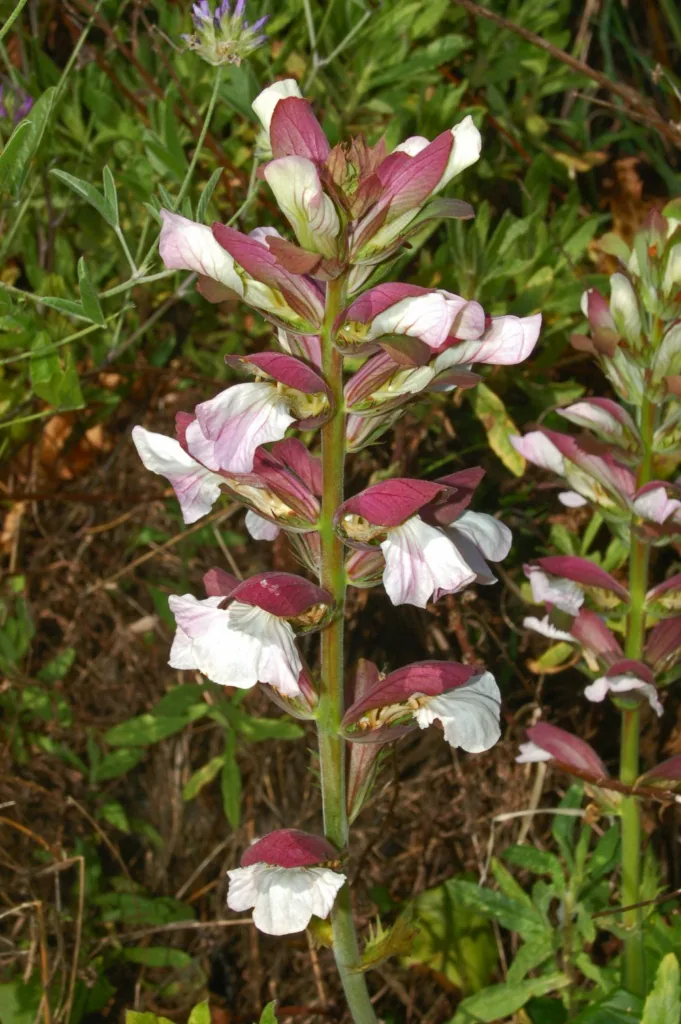
Acanthus mollis is a clumping herbaceous perennial with large, deeply lobed glossy leaves and showy flower spikes. [1] It grows in full sun to partial shade and is drought tolerant once established. [1] It spreads by rhizomes and can be aggressive, so root barriers are suggested. [1]
Bear's Breeches care
How to water Bear's Breeches
Watering
The sources give different values depending on region, zone or growing conditions.
What each source says
According to NC State Extension: Drought tolerant once established; may go dormant in summer if not irrigated
According to UC Master Gardener of Napa County: No water except during the hottest part of summer
According to University of Arkansas: Moisture loving; wilts quickly when dry
What the sources say (5)
According to NC State Extension: It may go dormant in summer if not irrigated but is drought tolerant once established.According to UC Master Gardener of Napa County: They don’t need any water except during the hottest part of summerAccording to University of Arkansas: Members of the acanthus family tend to be moisture loving plants that wilt quicklyIt may go dormant in summer if not irrigated but is drought tolerant once established.any water except during the hottest part of summerWatering notes
Prefers well-drained but moist, reasonably fertile soil; may go dormant in summer if not irrigated
What the sources say (2)
Plant it in well drained but moist, reasonably fertile soil if you want it to spread.It may go dormant in summer if not irrigated but is drought tolerant once established.How much light Bear's Breeches needs
Full sun to partial shade; some shade in hot climates prevents leaf scorch
What each source says
hot climates: Some shade to prevent leaf scorch
areas with hot summers: Some shade
According to University of Arkansas: Partial shade at the back of the border
What the sources say (4)
hot climates: will do better with some shade in hot climates to prevent leaf scorchareas with hot summers: In areas with hot summers, acanthus appreciates some shade.According to University of Arkansas: In most areas, except for those blessed with cool daytime temperatures, acanthus is best situated in partial shade at the back of the border.It will grow in full sun to partial shade and will do better with some shade in hot climates to prevent leaf scorch.How much cold Bear's Breeches can take
Hardiness, coldest zone
The sources give different values depending on region, zone or growing conditions.
What each source says
According to NC State Extension: 7a [winter low −17.8 to −15 °C (0 to 5 °F)]
with wintertime protection of mulch: 5 [winter low −28.9 to −23.3 °C (−20 to −10 °F)]
What the sources say (3)
According to NC State Extension: 7a, 7b, 8a, 8b, 9a, 9b, 10a, 10bwith wintertime protection of mulch: It's winter hardy as far north as zone 5 with a wintertime protection of mulch.7a, 7b, 8a, 8b, 9a, 9b, 10a, 10bHardiness, warmest zone
10b [winter low 1.7 to 4.4 °C (35 to 40 °F)]
What the sources say (1)
7a, 7b, 8a, 8b, 9a, 9b, 10a, 10bWhere to grow Bear's Breeches
Yes
What the sources say (1)
Use this plant in the back of the border, in a container or an area surrounded by pavement like a patio, pool, or walkway.How to propagate Bear's Breeches
Division, root cuttings, seed
What the sources say (2)
Propagation through root cuttings or division in the early spring but growing from seeds also works.Acanthus can be grown from springtime divisions, 3-inch long root cuttings or seeds.How to grow Bear's Breeches
The plant
Life cycle
perennial
What the sources say (1)
Genus: Acanthus Species: mollis Family: Acanthaceae Life Cycle: Perennial Recommended Propagation Strategy: Division Root Cutting SeedFamily
Acanthaceae
What the sources say (1)
Genus: Acanthus Species: mollis Family: Acanthaceae Life Cycle: Perennial Recommended Propagation Strategy: Division Root Cutting SeedMature height
91-183 cm (3 to 6 feet)
What the sources say (1)
Dimensions: Height: 3 ft. 0 in. - 6 ft. 0 in. Width: 2 ft. 0 in. - 3 ft. 0 in.Sowing and growth
Days to germination
about 21 (about three weeks, at 55 F / 13 C)
What the sources say (1)
soak them in water for 24 hours, place them in potting mix and keep them at 55°F. They will sprout in about three weeksPests and diseases
Pests
slugs, snails
What the sources say (1)
Insects, Diseases, and Other Plant Problems: Snails and slugs are occasional problems.Diseases
powdery mildew
What the sources say (1)
Powdery mildew is an occational disease . Be sure to plant it where you want it as it is difficult to get rid of once established.Fertilizing
When
Early spring
What the sources say (1)
In early spring I apply a balanced organic fertilizer. Acanthus grows well in poor soil but doesn’t mind a dose of compost now and thenNatural fertilizers
A balanced organic fertilizer in early spring and an occasional dose of compost; it also grows well in poor soil
What the sources say (1)
In early spring I apply a balanced organic fertilizer. Acanthus grows well in poor soil but doesn’t mind a dose of compost now and thenBear's Breeches pests and problems
Snails and slugs
Symptom: Occasional feeding damage
What to do: If using slug bait, keep pets away from it
What the sources say (2)
Insects, Diseases, and Other Plant Problems: Snails and slugs are occasional problems.
— Acanthus mollis (Bear's Breeches, Bear's Britches, Bearsfoot, Oyster Plant, Sea Dock) | North Carolina Extension Gardener Plant Toolbox [1] If you are bothered by slugs and use slug bait, keep pets away from it
— Growing Acanthus | Napa Master Gardener Column [2] Powdery mildew
Symptom: Occasional disease
What to do: Not specified in sources
What the sources say (1)
Snails and slugs are occasional problems. Powdery mildew is an occational disease
— Acanthus mollis (Bear's Breeches, Bear's Britches, Bearsfoot, Oyster Plant, Sea Dock) | North Carolina Extension Gardener Plant Toolbox [1] Aggressive spread
Symptom: Spreads by rhizomes and root sections; hard to eradicate
What to do: Use root barriers such as those used for bamboo; cut flowers back before seed capsules form
What the sources say (2)
root barriers such as those used for bamboo can be used but is shown to be invasive in some areas of the US
— Acanthus mollis (Bear's Breeches, Bear's Britches, Bearsfoot, Oyster Plant, Sea Dock) | North Carolina Extension Gardener Plant Toolbox [1] If you don’t want the seeds, cut the flowers back before the seed capsules form.
— Growing Acanthus | Napa Master Gardener Column [2]
Remedies
Each remedy shows what official sources say about it; traditional remedies without an official source are marked as such. Harmful ones are listed so you know to avoid them.
Treating the plant
slugs and snails
salt spray Harmful
How: A simple salt spray eliminates slugs and snails, per the source.
A simple salt spray or a spread of diatomaceous earth will eliminate these garden invaders.
— 8billiontrees.com [4] What the evidence says Salt is soluble and thus highly mobile in your soil allowing it to spread to areas planted with desirable vegetables and ornamentals, damaging them along with your weeds.
— extension.illinois.edu [5] diatomaceous earth Not verified
Traditional remedy, not verified by an official source.
How: A spread of diatomaceous earth around the plant, per the source.
hand-picking Partly works
How: Pick off snails and slugs by hand; hand-pick in the evening.
You can also pick off snails and slugs by hand, or use a garden hose to spray them away.
— 8billiontrees.com [4] What the evidence says Many insect and disease issues can be solved in the home garden by hand-picking insects or clipping and disposing of diseased plant parts.
— extension.unh.edu [6] hose water spray Not verified
Traditional remedy, not verified by an official source.
How: Use a garden hose to spray the snails and slugs away.
crushed eggshells Not verified
Traditional remedy, not verified by an official source.
How: Crushed eggshells around the base of the plants as a deterrent.
copper tape barrier Not verified
Traditional remedy, not verified by an official source.
How: Copper tape or wool pellets as barriers around new shoots, checked weekly.
powdery mildew
milk spray Not verified
Traditional remedy, not verified by an official source.
How: Prepare a homemade milk spray solution; the sun acting on the milk fat is said to make a natural fungicide.
aphids
neem oil Partly works
How: Apply neem oil to manage infestations.
Use organic pest control methods, like introducing beneficial insects or applying neem oil, to manage infestations without harming the environment.
— decohousegarden.com [7] What the evidence says However, neem oil is not effective against every insect and disease, and often must be frequently reapplied to reach the desired outcome.
— extension.unh.edu [6]
aggressive spread
deadheading before seed set Official source, not independently tested
How: Cut the flowers back before the seed capsules form; mature capsules pop open and scatter seeds.
cut the flowers back before the seed capsules form. If the seed capsules mature, they will pop open and send seeds out into the world to sprout.
— Growing Acanthus | Napa Master Gardener Column [2]
Getting rid of it
aggressive spread
digging out the roots Partly works
How: Dig the plant out; it might return for a few seasons. Do not rototill, which spreads root pieces that sprout.
You will have to dig the plant out, and it might return for a few seasons. Do not rototill where you have planted acanthus as that just spreads root pieces, which will sprout
— Growing Acanthus | Napa Master Gardener Column [2] What the evidence says And because acanthus can propagate from root sections, they are hard to eradicate if they do spread. You will have to dig the plant out, and it might return for a few seasons.
— Growing Acanthus | Napa Master Gardener Column [2]
Is Bear's Breeches poisonous?
Reported by the source, quoted verbatim. This is not medical or veterinary advice: if a person or an animal may have eaten this plant, contact a poison control centre or a veterinarian.
The flower is lavender and white, and shaped rather like a foxglove. Unlike the foxglove, the acanthus is not poisonous
[2]
Calendar
Pruning
End of summer, when leaves and flowers are faded and brown
What the sources say (1)
At the end of summer, when the leaves and flowers are faded and brown, I cut them back.Months as given by the sources, which are mostly from the United States (northern hemisphere). In the southern hemisphere they shift by about six months.
Indicative values
Values from a secondary source, not checked word for word like the rest of this page. Use them as a starting point.
- Soil
- Humus rich, Well-drainedIndicative value, adapt it to your climate · Secondary source
- Soil pH
- 6-7.5Indicative value, adapt it to your climate · Secondary source
- Care level
- MediumIndicative value, adapt it to your climate · Secondary source
- Growth rate
- ModerateIndicative value, adapt it to your climate · Secondary source
Similar plants
- Bear's Breeches Acanthus spinosus
- Acanthus hungaricus Acanthus hungaricus
- American Water-willow Dianthera americana
- Bengal clock vine Thunbergia grandiflora
- Black-eyed Susan Vine Thunbergia alata
- Dicliptera Dicliptera squarrosa
- Fringe-Leaf Wild Petunia Ruellia humilis
- Lollipop-plant Pachystachys lutea
Sources
Every value above is quoted from these documents. Links lead to the original publisher.
- Acanthus mollis (Bear's Breeches, Bear's Britches, Bearsfoot, Oyster Plant, Sea Dock) | North Carolina Extension Gardener Plant Toolbox · plants.ces.ncsu.edu, consulted
- Growing Acanthus | Napa Master Gardener Column · ucanr.edu, consulted
- Acanthus · uaex.uada.edu, consulted
- 8billiontrees.com · 8billiontrees.com
- extension.illinois.edu · extension.illinois.edu
- extension.unh.edu · extension.unh.edu
- decohousegarden.com · decohousegarden.com
Written by Emilio Marruso · last checked