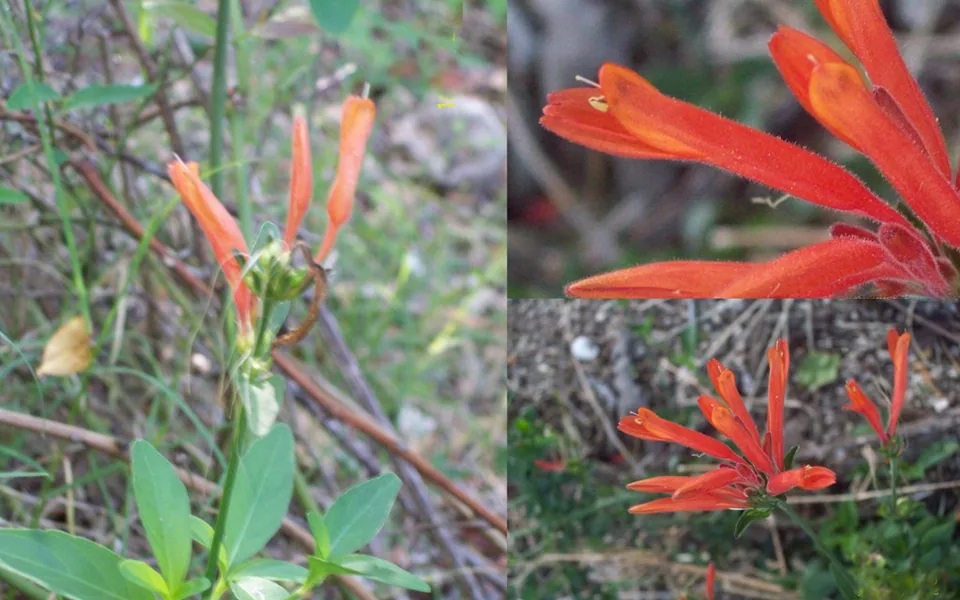


How to Grow and Care for Dicliptera
Dicliptera squarrosa
Written by Emilio Marruso · last checked
At a glance
This tough perennial asks for very little: give it full sun, or even a bit of light shade, and it handles dry spells with ease. It stays a tidy 18 to 24 inches tall and wide, so it fits a small bed or a pot on the patio. Grow new plants from stem cuttings kept over winter and planted out in spring.
- Sun
Full sun; it also accepts some light shade
What the sources say (1)
Light: Full sun; tolerates some light shade
The Hummingbird plant is easy to grow in average, medium, well-drained soils in full sun. It tolerates some light shade and drought
— Dicliptera squarrosa (Dicliptera, Firecracker Plant, Hummingbird Plant) | North Carolina Extension Gardener Plant Toolbox [1] - Water
Handles dry spells well: it needs little water
What the sources say (1)
Watering: Drought tolerant
It is drought tolerant and endures humidity, making this an ideal plant
— Dicliptera squarrosa (Dicliptera, Firecracker Plant, Hummingbird Plant) | North Carolina Extension Gardener Plant Toolbox [1] - Cold
Survives winters down to 0 °F (−17.8 °C)
Hardy in very cold winters · USDA 7a · RHS H6 · Z7
What the sources say (2)
Hardiness, coldest zone: 7a [winter low −17.8 to −15 °C (0 to 5 °F)]
USDA Plant Hardiness Zone: 7a, 7b, 8a, 8b, 9a, 9b, 10a, 10b
— Dicliptera squarrosa (Dicliptera, Firecracker Plant, Hummingbird Plant) | North Carolina Extension Gardener Plant Toolbox [1] Hardiness, warmest zone: 10b [winter low 1.7 to 4.4 °C (35 to 40 °F)]
USDA Plant Hardiness Zone: 7a, 7b, 8a, 8b, 9a, 9b, 10a, 10b
— Dicliptera squarrosa (Dicliptera, Firecracker Plant, Hummingbird Plant) | North Carolina Extension Gardener Plant Toolbox [1] - Planting
Plant in spring, using cuttings kept over winter
What the sources say (1)
Planting: Spring (overwintered cuttings)
You can also take cuttings that can be overwintered indoors and planted in the spring.
— Dicliptera squarrosa (Dicliptera, Firecracker Plant, Hummingbird Plant) | North Carolina Extension Gardener Plant Toolbox [1] - Size
18–24 in tall and just as wide
What the sources say (2)
Mature height: 45.72-60.96 cm (18 to 24 in)
It typically forms a shrubby mound 18 to 24 inches tall and as wide.
— Dicliptera squarrosa (Dicliptera, Firecracker Plant, Hummingbird Plant) | North Carolina Extension Gardener Plant Toolbox [1] Mature width: 45.72-60.96 cm (18 to 24 in)
It typically forms a shrubby mound 18 to 24 inches tall and as wide.
— Dicliptera squarrosa (Dicliptera, Firecracker Plant, Hummingbird Plant) | North Carolina Extension Gardener Plant Toolbox [1] - Propagation
Make new plants from stem cuttings
What the sources say (2)
Propagation: Stem cuttings
Life Cycle: Perennial Recommended Propagation Strategy: Stem Cutting
— Dicliptera squarrosa (Dicliptera, Firecracker Plant, Hummingbird Plant) | North Carolina Extension Gardener Plant Toolbox [1] You can also take cuttings that can be overwintered indoors and planted in the spring.
— Dicliptera squarrosa (Dicliptera, Firecracker Plant, Hummingbird Plant) | North Carolina Extension Gardener Plant Toolbox [1] - Containers
Grows in containers too
What the sources say (1)
In containers: Yes
It can also be grown in containers or hanging baskets.
— Dicliptera squarrosa (Dicliptera, Firecracker Plant, Hummingbird Plant) | North Carolina Extension Gardener Plant Toolbox [1]
Overview
Dicliptera squarrosa is a tender herbaceous perennial with orange-red flowers that attract hummingbirds and butterflies. [1] It grows in well-drained soil in full sun, tolerates some light shade and drought, and can be grown in containers or hanging baskets. [1]
This record is incomplete: the sources we read do not cover every field yet.
Not yet covered by our sources: Pruning
Dicliptera care
How to water Dicliptera
Drought tolerant
What the sources say (1)
It is drought tolerant and endures humidity, making this an ideal plantHow much light Dicliptera needs
Full sun; tolerates some light shade
What the sources say (1)
The Hummingbird plant is easy to grow in average, medium, well-drained soils in full sun. It tolerates some light shade and droughtHow much cold Dicliptera can take
Hardiness, coldest zone
7a [winter low −17.8 to −15 °C (0 to 5 °F)]
What the sources say (1)
USDA Plant Hardiness Zone:
7a, 7b, 8a, 8b, 9a, 9b, 10a, 10bHardiness, warmest zone
10b [winter low 1.7 to 4.4 °C (35 to 40 °F)]
What the sources say (1)
USDA Plant Hardiness Zone:
7a, 7b, 8a, 8b, 9a, 9b, 10a, 10bWhere to grow Dicliptera
Yes
What the sources say (1)
It can also be grown in containers or hanging baskets.How to propagate Dicliptera
Stem cuttings
What the sources say (2)
Life Cycle:
Perennial
Recommended Propagation Strategy:
Stem CuttingYou can also take cuttings that can be overwintered indoors and planted in the spring.How to grow Dicliptera
The plant
Life cycle
perennial
What the sources say (1)
The Hummingbird plant is a tender herbaceous perennial, though often grown as an annual.Family
Acanthaceae
What the sources say (1)
Genus:
Dicliptera
Species:
squarrosa
Family:
Acanthaceae
Life Cycle:
PerennialMature height
45.72-60.96 cm (18 to 24 in)
What the sources say (1)
It typically forms a shrubby mound 18 to 24 inches tall and as wide.Mature width
45.72-60.96 cm (18 to 24 in)
What the sources say (1)
It typically forms a shrubby mound 18 to 24 inches tall and as wide.Remedies
The sources we checked give no remedies for this plant.
Calendar
Planting
Spring (overwintered cuttings)
What the sources say (1)
You can also take cuttings that can be overwintered indoors and planted in the spring.Pruning
Not stated in the sources we read.
Months as given by the sources, which are mostly from the United States (northern hemisphere). In the southern hemisphere they shift by about six months.
Indicative values
Values from a secondary source, not checked word for word like the rest of this page. Use them as a starting point.
- Hours of sun
- 6-8 hoursIndicative value, adapt it to your climate · Secondary source
- Drought tolerant
- yesIndicative value, adapt it to your climate · Secondary source
- Soil pH
- 6-7.5Indicative value, adapt it to your climate · Secondary source
- Care level
- MediumIndicative value, adapt it to your climate · Secondary source
- Growth rate
- LowIndicative value, adapt it to your climate · Secondary source
- Pruning
- June, July, August, MayIndicative value, adapt it to your climate · Secondary source
Similar plants
- American Water-willow Dianthera americana
- Bear's Breeches Acanthus mollis
- Bengal clock vine Thunbergia grandiflora
- Black-eyed Susan Vine Thunbergia alata
- Fringe-Leaf Wild Petunia Ruellia humilis
- Lollipop-plant Pachystachys lutea
- Mexican Petunia Ruellia simplex
- Philippine violet Barleria cristata
Sources
Every value above is quoted from these documents. Links lead to the original publisher.
- Dicliptera squarrosa (Dicliptera, Firecracker Plant, Hummingbird Plant) | North Carolina Extension Gardener Plant Toolbox · plants.ces.ncsu.edu, consulted
- Firecracker Plant - Dicliptera squarrosa | North Carolina Extension Gardener Plant Toolbox · plants.ces.ncsu.edu, consulted
Written by Emilio Marruso · last checked