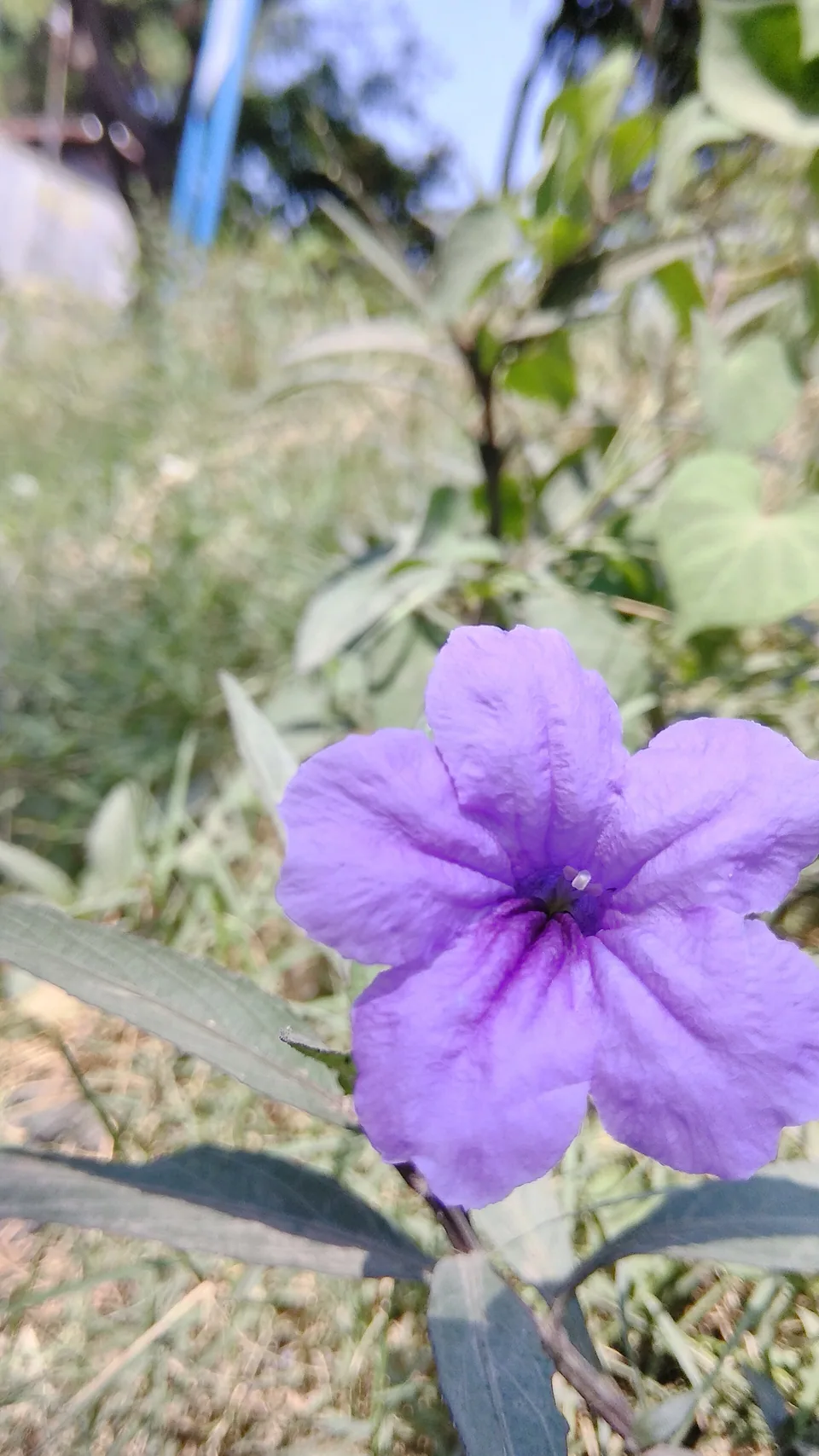
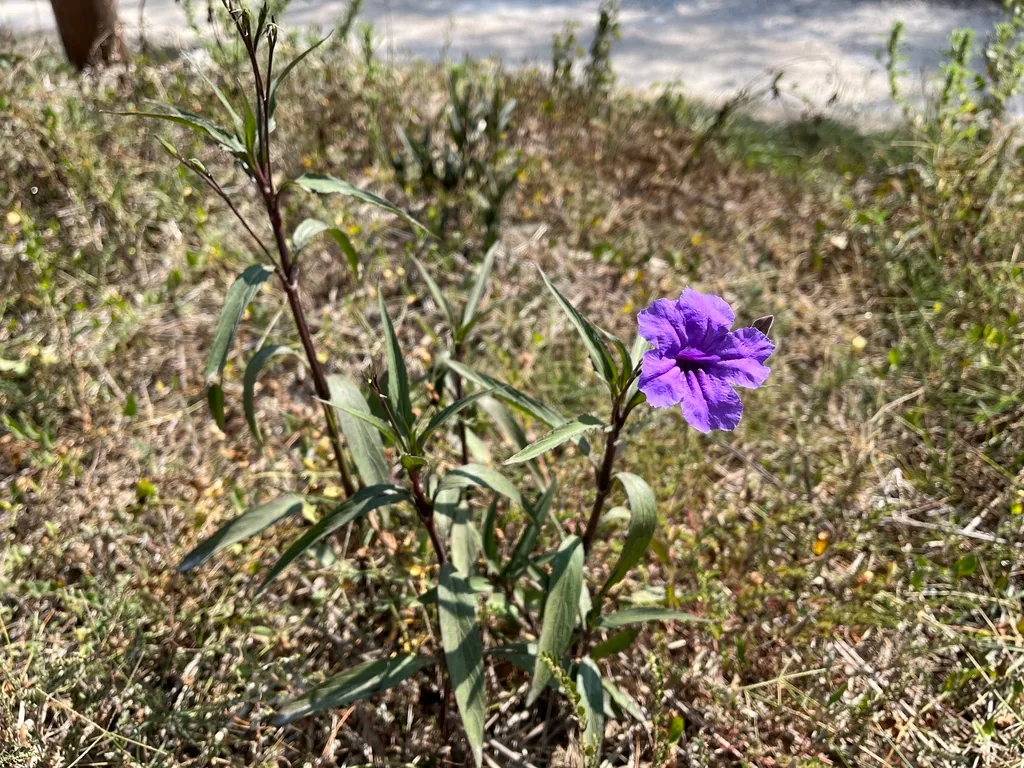

How to Grow and Care for Mexican Petunia
Ruellia simplex
Written by Emilio Marruso · last checked
At a glance
This easygoing perennial grows in full sun or partial shade and takes soil that swings from wet to dry, even boggy spots, and once established it handles drought. Cut back the stems after flowering and it will reward you with new flowers. It grows in containers and indoors too, so it fits almost any garden or home.
- Sun
Full sun to partial shade
What the sources say (1)
Light: Full sun to partial shade
Full sun (6 or more hours of direct sunlight a day) Partial Shade (Direct sunlight only part of the day, 2-6 hours)
— Ruellia simplex (Britton's Wild Petunia, Mexican Bluebell, Mexican Petunia, Texas Petunia) | North Carolina Extension Gardener Plant Toolbox [1] - Water
Likes moist to wet soil, even boggy; once established it handles drought
What the sources say (3)
Watering: Medium to wet soil; once established does well in drought conditions
Mexican petunia prefers medium to wet soil that is fertile, well-drained, and flowers best in full sun.
— Ruellia simplex (Britton's Wild Petunia, Mexican Bluebell, Mexican Petunia, Texas Petunia) | North Carolina Extension Gardener Plant Toolbox [1] Once established, the plant does well in drought conditions.
— Ruellia simplex (Britton's Wild Petunia, Mexican Bluebell, Mexican Petunia, Texas Petunia) | North Carolina Extension Gardener Plant Toolbox [1] Watering notes: Tolerates boggy wet conditions and soil that varies from wet to dry
It is willing to grow in boggy wet conditions, in soil that varies from wet to dry, and tolerates high heat and humidity.
— Ruellia simplex (Britton's Wild Petunia, Mexican Bluebell, Mexican Petunia, Texas Petunia) | North Carolina Extension Gardener Plant Toolbox [1] - Cold
Survives winters down to 10 °F (−12.2 °C)
Hardy in cold winters · USDA 8a · RHS H5 · Z8
What the sources say (2)
Hardiness, coldest zone: 8a [winter low −12.2 to −9.4 °C (10 to 15 °F)]
USDA Plant Hardiness Zone: 8a, 8b, 9a, 9b, 10a, 10b
— Ruellia simplex (Britton's Wild Petunia, Mexican Bluebell, Mexican Petunia, Texas Petunia) | North Carolina Extension Gardener Plant Toolbox [1] Hardiness, warmest zone: 10b [winter low 1.7 to 4.4 °C (35 to 40 °F)]
USDA Plant Hardiness Zone: 8a, 8b, 9a, 9b, 10a, 10b
— Ruellia simplex (Britton's Wild Petunia, Mexican Bluebell, Mexican Petunia, Texas Petunia) | North Carolina Extension Gardener Plant Toolbox [1] - Pruning
After flowering, cut back the stems to get new flowers
What the sources say (1)
Pruning: After flowering (cut back stems to encourage new flowers)
Cut back stems after flowering to encourage new flowers. They are easily propagated
— Ruellia simplex (Britton's Wild Petunia, Mexican Bluebell, Mexican Petunia, Texas Petunia) | North Carolina Extension Gardener Plant Toolbox [1] - Watch out
Spreads by roots and seeds and is hard to get rid of: dig out the whole root mass
- Size
3–4 ft tall and 2–3 ft wide
What the sources say (2)
Mature height: 91-122 cm (3 ft - 4 ft)
Dimensions: Height: 3 ft. 0 in. - 4 ft. 0 in. Width: 2 ft. 0 in. - 3 ft. 0 in.
— Ruellia simplex (Britton's Wild Petunia, Mexican Bluebell, Mexican Petunia, Texas Petunia) | North Carolina Extension Gardener Plant Toolbox [1] Mature width: 61-91 cm (2 ft - 3 ft)
Dimensions: Height: 3 ft. 0 in. - 4 ft. 0 in. Width: 2 ft. 0 in. - 3 ft. 0 in.
— Ruellia simplex (Britton's Wild Petunia, Mexican Bluebell, Mexican Petunia, Texas Petunia) | North Carolina Extension Gardener Plant Toolbox [1] - Propagation
From cuttings, by dividing the clump, or from seed
What the sources say (1)
Propagation: Cuttings, division, and seed
Cut back stems after flowering to encourage new flowers. They are easily propagated by cuttings, division, and seed.
— Ruellia simplex (Britton's Wild Petunia, Mexican Bluebell, Mexican Petunia, Texas Petunia) | North Carolina Extension Gardener Plant Toolbox [1] - Containers
Grows in containers and indoors too
What the sources say (2)
In containers: Yes
It may also be used as a container plant on patios or as a houseplant.
— Ruellia simplex (Britton's Wild Petunia, Mexican Bluebell, Mexican Petunia, Texas Petunia) | North Carolina Extension Gardener Plant Toolbox [1] Indoors: Yes
It may also be used as a container plant on patios or as a houseplant.
— Ruellia simplex (Britton's Wild Petunia, Mexican Bluebell, Mexican Petunia, Texas Petunia) | North Carolina Extension Gardener Plant Toolbox [1]
Overview
Mexican petunia is an ornamental herbaceous perennial that is hardy in zones 8 through 10 and evergreen in warm climates. [1] It prefers medium to wet fertile, well-drained soil and flowers best in full sun, but tolerates a wide range of conditions. [1] It is listed as a Category One invasive species in Florida and is difficult to eradicate once established. [1]
Mexican Petunia care
How to water Mexican Petunia
Watering
Medium to wet soil; once established does well in drought conditions
What the sources say (2)
Mexican petunia prefers medium to wet soil that is fertile, well-drained, and flowers best in full sun.Once established, the plant does well in drought conditions.Watering notes
Tolerates boggy wet conditions and soil that varies from wet to dry
What the sources say (1)
It is willing to grow in boggy wet conditions, in soil that varies from wet to dry, and tolerates high heat and humidity.How much light Mexican Petunia needs
Full sun to partial shade
What the sources say (1)
Full sun (6 or more hours of direct sunlight a day)
Partial Shade (Direct sunlight only part of the day, 2-6 hours)How much cold Mexican Petunia can take
Hardiness, coldest zone
8a [winter low −12.2 to −9.4 °C (10 to 15 °F)]
What the sources say (1)
USDA Plant Hardiness Zone:
8a, 8b, 9a, 9b, 10a, 10bHardiness, warmest zone
10b [winter low 1.7 to 4.4 °C (35 to 40 °F)]
What the sources say (1)
USDA Plant Hardiness Zone:
8a, 8b, 9a, 9b, 10a, 10bWhere to grow Mexican Petunia
Indoors
Yes
What the sources say (1)
It may also be used as a container plant on patios or as a houseplant.In containers
Yes
What the sources say (1)
It may also be used as a container plant on patios or as a houseplant.How to propagate Mexican Petunia
Cuttings, division, and seed
What the sources say (1)
Cut back stems after flowering to encourage new flowers. They are easily propagated by cuttings, division, and seed.How to grow Mexican Petunia
The plant
Life cycle
perennial
What the sources say (1)
Mexican petunia is an ornamental herbaceous perennial of the Acanthaceae family.Family
Acanthaceae
What the sources say (1)
Mexican petunia is an ornamental herbaceous perennial of the Acanthaceae family.Mature height
91-122 cm (3 ft - 4 ft)
What the sources say (1)
Dimensions:
Height: 3 ft. 0 in. - 4 ft. 0 in.
Width: 2 ft. 0 in. - 3 ft. 0 in.Mature width
61-91 cm (2 ft - 3 ft)
What the sources say (1)
Dimensions:
Height: 3 ft. 0 in. - 4 ft. 0 in.
Width: 2 ft. 0 in. - 3 ft. 0 in.Mexican Petunia pests and problems
Aggressive spread and difficult eradication
Symptom: Spreads by rhizomes and self-seeding; seeds are explosively expelled and persist in the soil; the plant is difficult to eradicate once established.
What to do: Remove plants completely, both above and belowground, or they will continue to resprout; digging up the whole root mass is recommended.
What the sources say (2)
The plant's self-seeding and rhizomes contribute to its aggressiveness. The seeds are explosively expelled from their capsules and can persist in the soil.
— Ruellia simplex (Britton's Wild Petunia, Mexican Bluebell, Mexican Petunia, Texas Petunia) | North Carolina Extension Gardener Plant Toolbox [1] Plants must be removed completely, both above and belowground, or they will continue to resprout
— | Center for Aquatic and Invasive Plants | University of Florida, IFAS [2]
Remedies
Each remedy shows what official sources say about it; traditional remedies without an official source are marked as such. Harmful ones are listed so you know to avoid them.
Treating the plant
aggressive spread
root barrier Not verified
Traditional remedy, not verified by an official source.
How: A physical root barrier should be installed around the planting area, extending at least a foot deep into the soil.
aphids
soap and water spray Works
Applications should be made in the early morning or late evening to prevent leaf burn in direct sun and high heat.
— scienceinsights.org [7] For example, a common home remedy uses dish detergent or antibacterial soap mixed with other products to control insects on plants.
— extension.psu.edu [8] How: Spray a solution of water and mild liquid soap onto the affected plants.
Aphids: These small, sap-sucking insects can be controlled by spraying a solution of water and mild liquid soap onto the affected plants.
— rusticrootsliving.com [5] What the evidence says insecticidal soap is a safe, effective organic insecticide with minimal environmental impact.
— extension.psu.edu [6]
whiteflies
insecticidal soap Works
Applications should be made in the early morning or late evening to prevent leaf burn in direct sun and high heat.
— scienceinsights.org [7] How: The soap must directly coat the pest to be effective; repeated applications are needed to eliminate subsequent generations.
The most effective treatment for whiteflies and aphids is insecticidal soap. Like horticultural oil, the soap must directly coat the pest to be effective.
— scienceinsights.org [7] What the evidence says insecticidal soap is a safe, effective organic insecticide with minimal environmental impact.
— extension.psu.edu [6] sticky traps Not verified
Traditional remedy, not verified by an official source.
How: Use sticky traps to catch whiteflies; regularly inspect the undersides of leaves for eggs and larvae.
spider mites
strong water stream Not verified
Traditional remedy, not verified by an official source.
How: A strong stream of water can dislodge many mites.
leaf spot
removing affected leaves Not verified
Traditional remedy, not verified by an official source.
How: Remove and destroy all affected foliage, increase air circulation by pruning dense interior growth and avoid overhead irrigation.
Getting rid of it
invasive spread
digging up the whole root mass Partly works
Even when the plant is removed, regrowth may occur for years.
— blogs.ifas.ufl.edu [9] How: Plants can be dug up with a shovel or equipment, with the aim to remove the entire root mass.
Instead, plants can be dug up with a shovel or equipment, with the aim to remove the entire root mass.
— | Center for Aquatic and Invasive Plants | University of Florida, IFAS [2] What the evidence says Plants should be dug up with a shovel to remove all vegetative parts including the entire root mass.
— blogs.ifas.ufl.edu [9] cutting off the tops Not proven
How: Cut the plants back by hand and carefully dispose of the vegetation so that it doesn't have a chance to regrow; recut every time it starts to leaf out.
Cut the plants back by hand and carefully dispose of the vegetation so that it doesn’t have a chance to regrow.
— gardeningknowhow.com [10] What the evidence says Plants must be removed completely, both above and belowground, or they will continue to resprout making mowing, tillage or weed-eating the tops off Mexican-petunia ineffective.
— | Center for Aquatic and Invasive Plants | University of Florida, IFAS [2] smothering with black plastic or newspaper Partly works
Be cautious about the weed barrier material used because items such as plastic shower curtains or old tarps are good barriers but can be difficult to work with later when it is time to rework the site.
— extension.usu.edu [12] How: Smother the plants with heavy black plastic or a lot of newspaper.
The only other way is to try and smothering them with heavy black playtic or a lot of newspaper.
— hometalk.com [11] What the evidence says A variety of household items, such as newspapers, can be used as weed barriers. Lay the material down to prevent sunlight from reaching the unwanted plants
— extension.usu.edu [12] boiling water Partly works
how safe is it to carry big pans of boiling water out the door to your garden?
— extension.illinois.edu [13] How: Pour boiling water only on the plants you wish to eradicate.
One of the natives in our area said that her grandmother used boiling water. You would have to make sure that you poured it on only the plants you wish to eradicate.
— hometalk.com [11] What the evidence says Take boiling water, for example. Pouring it on green leaves would mean certain death, but the roots underground are still protected.
— extension.illinois.edu [13] vinegar, salt and dish soap mix Not proven
If the plant is in the ground, it does NOT get the root; many plants will grow back.
— extension.uconn.edu [15] How: The vinegar, water, salt and dish soap mix is suggested when nothing else grows around the flower bed.
If there is nothing else around that flower bed you can try the vinegar,water,salt and dish soap.
— hometalk.com [11] What the evidence says Simply put, kitchen vinegar does not make a good herbicide. The concentration of acetic acid, a compound found in kitchen vinegar, is typically around 5%.
— extension.illinois.edu [14]
Calendar
Pruning
After flowering (cut back stems to encourage new flowers)
What the sources say (1)
Cut back stems after flowering to encourage new flowers. They are easily propagatedMonths as given by the sources, which are mostly from the United States (northern hemisphere). In the southern hemisphere they shift by about six months.
Indicative values
Values from a secondary source, not checked word for word like the rest of this page. Use them as a starting point.
- Hours of sun
- 6-8 hoursIndicative value, adapt it to your climate · Secondary source
- Drought tolerant
- yesIndicative value, adapt it to your climate · Secondary source
- Soil pH
- 6-7.5Indicative value, adapt it to your climate · Secondary source
- Growth rate
- HighIndicative value, adapt it to your climate · Secondary source
Similar plants
- Fringe-Leaf Wild Petunia Ruellia humilis
- Red Ruellia Ruellia elegans
- Carolina Wild-petunia Ruellia caroliniensis
- American Water-willow Dianthera americana
- Bear's Breeches Acanthus mollis
- Bear's Breeches Acanthus spinosus
- Bengal clock vine Thunbergia grandiflora
- Black-eyed Susan Vine Thunbergia alata
Sources
Every value above is quoted from these documents. Links lead to the original publisher.
- Ruellia simplex (Britton's Wild Petunia, Mexican Bluebell, Mexican Petunia, Texas Petunia) | North Carolina Extension Gardener Plant Toolbox · plants.ces.ncsu.edu, consulted
- | Center for Aquatic and Invasive Plants | University of Florida, IFAS · plant-directory.ifas.ufl.edu, consulted
- Mexican Petunia – Gardening Solutions · gardeningsolutions.ifas.ufl.edu, consulted
- Texas Petunia - Ruellia simplex | North Carolina Extension Gardener Plant Toolbox · plants.ces.ncsu.edu, consulted
- rusticrootsliving.com · rusticrootsliving.com
- extension.psu.edu · extension.psu.edu
- scienceinsights.org · scienceinsights.org
- extension.psu.edu · extension.psu.edu
- blogs.ifas.ufl.edu · blogs.ifas.ufl.edu
- gardeningknowhow.com · gardeningknowhow.com
- hometalk.com · hometalk.com
- extension.usu.edu · extension.usu.edu
- extension.illinois.edu · extension.illinois.edu
- extension.illinois.edu · extension.illinois.edu
- extension.uconn.edu · extension.uconn.edu
Written by Emilio Marruso · last checked