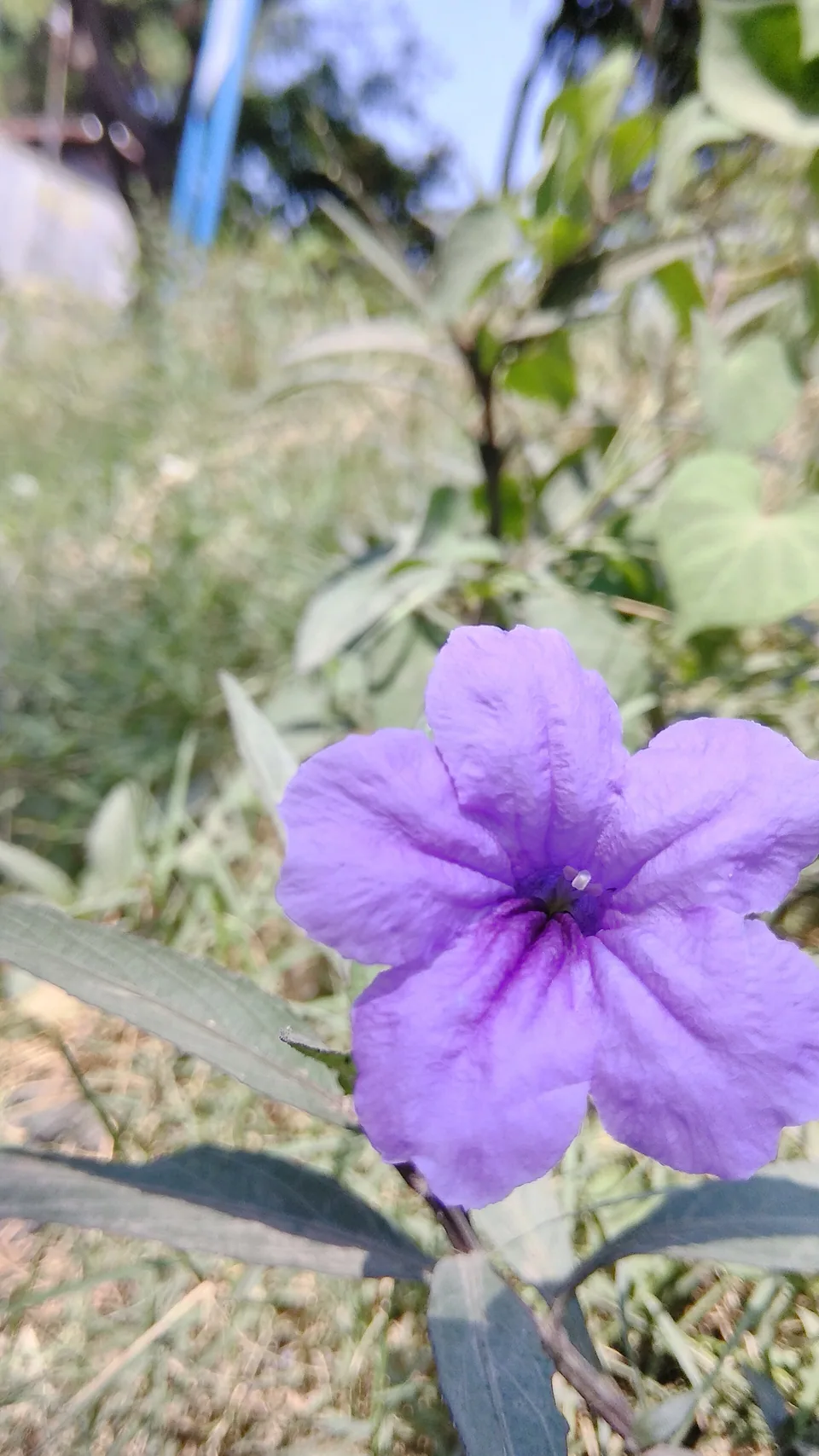
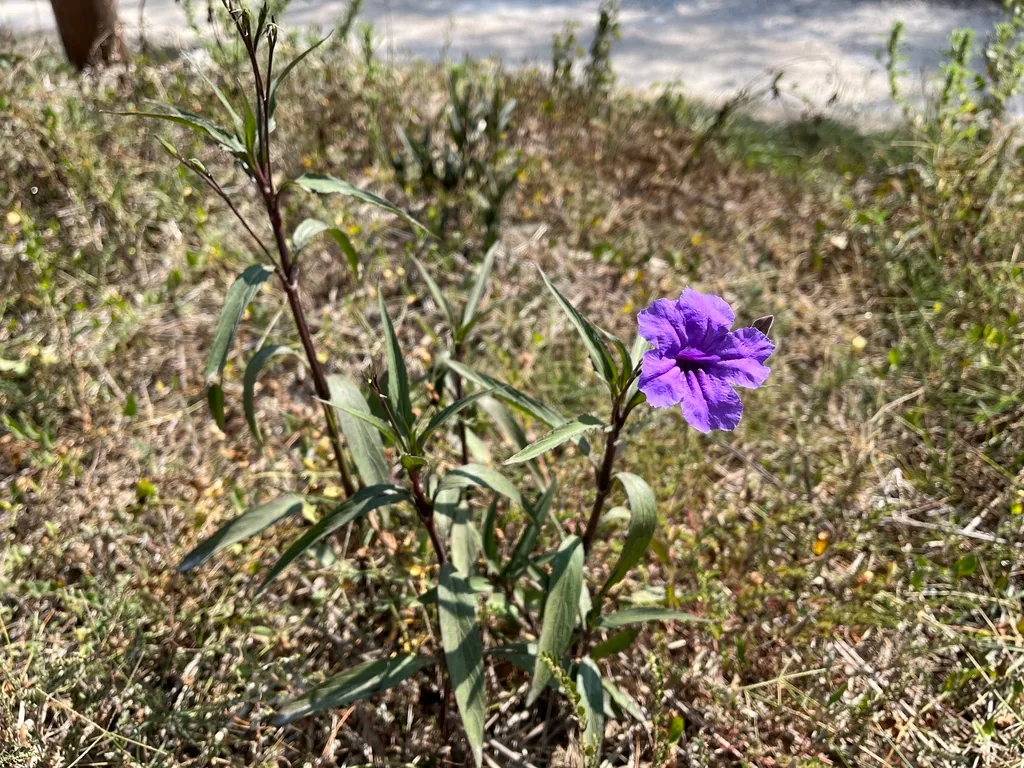

Cómo cultivar y cuidar Petunia mexicana
Ruellia simplex
Escrito por Emilio Marruso · última revisión
De un vistazo
Esta perenne agradecida crece a pleno sol o en semisombra y acepta un suelo que pasa de húmedo a seco, incluso encharcado; una vez establecida, aguanta la sequía. Corta los tallos después de la floración y te premiará con flores nuevas. También crece en maceta y en interior, así que encaja en casi cualquier jardín o casa.
- Sol
De pleno sol a semisombra
Qué dicen las fuentes (1)
Luz: Pleno sol a semisombra
Full sun (6 or more hours of direct sunlight a day) Partial Shade (Direct sunlight only part of the day, 2-6 hours)
— Ruellia simplex (Britton's Wild Petunia, Mexican Bluebell, Mexican Petunia, Texas Petunia) | North Carolina Extension Gardener Plant Toolbox [1] - Riego
Le gusta el suelo de húmedo a mojado, incluso encharcado; una vez establecida aguanta la sequía
Qué dicen las fuentes (3)
Riego: Suelo de medio a húmedo; una vez establecido, tolera bien las condiciones de sequía.
Mexican petunia prefers medium to wet soil that is fertile, well-drained, and flowers best in full sun.
— Ruellia simplex (Britton's Wild Petunia, Mexican Bluebell, Mexican Petunia, Texas Petunia) | North Carolina Extension Gardener Plant Toolbox [1] Once established, the plant does well in drought conditions.
— Ruellia simplex (Britton's Wild Petunia, Mexican Bluebell, Mexican Petunia, Texas Petunia) | North Carolina Extension Gardener Plant Toolbox [1] Notas sobre el riego: Tolera condiciones pantanosas y suelo que varía de húmedo a seco.
It is willing to grow in boggy wet conditions, in soil that varies from wet to dry, and tolerates high heat and humidity.
— Ruellia simplex (Britton's Wild Petunia, Mexican Bluebell, Mexican Petunia, Texas Petunia) | North Carolina Extension Gardener Plant Toolbox [1] - Frío
Aguanta inviernos de hasta −12,2 °C (10 °F)
Rústica en inviernos fríos · USDA 8a · RHS H5 · Z8
Qué dicen las fuentes (2)
Rusticidad, zona más fría: 8a [mínima invernal de −12,2 a −9,4 °C (de 10 a 15 °F)]
USDA Plant Hardiness Zone: 8a, 8b, 9a, 9b, 10a, 10b
— Ruellia simplex (Britton's Wild Petunia, Mexican Bluebell, Mexican Petunia, Texas Petunia) | North Carolina Extension Gardener Plant Toolbox [1] Rusticidad, zona más cálida: 10b [mínima invernal de 1,7 a 4,4 °C (de 35 a 40 °F)]
USDA Plant Hardiness Zone: 8a, 8b, 9a, 9b, 10a, 10b
— Ruellia simplex (Britton's Wild Petunia, Mexican Bluebell, Mexican Petunia, Texas Petunia) | North Carolina Extension Gardener Plant Toolbox [1] - Poda
Después de la floración, corta los tallos para que dé flores nuevas
Qué dicen las fuentes (1)
Poda: Después de la floración (corta los tallos para fomentar nuevas flores).
Cut back stems after flowering to encourage new flowers. They are easily propagated
— Ruellia simplex (Britton's Wild Petunia, Mexican Bluebell, Mexican Petunia, Texas Petunia) | North Carolina Extension Gardener Plant Toolbox [1] - Atención
Se extiende por raíces y semillas y cuesta eliminarla: saca todo el cepellón de raíces
- Tamaño
0,9–1,2 m de alto y 61–91 cm de ancho
Qué dicen las fuentes (2)
Altura adulta: 91-122 cm (3 pies - 4 pies)
Dimensions: Height: 3 ft. 0 in. - 4 ft. 0 in. Width: 2 ft. 0 in. - 3 ft. 0 in.
— Ruellia simplex (Britton's Wild Petunia, Mexican Bluebell, Mexican Petunia, Texas Petunia) | North Carolina Extension Gardener Plant Toolbox [1] Anchura adulta: 61-91 cm (2 pies - 3 pies)
Dimensions: Height: 3 ft. 0 in. - 4 ft. 0 in. Width: 2 ft. 0 in. - 3 ft. 0 in.
— Ruellia simplex (Britton's Wild Petunia, Mexican Bluebell, Mexican Petunia, Texas Petunia) | North Carolina Extension Gardener Plant Toolbox [1] - Multiplicación
Por esquejes, dividiendo la mata o por semilla
Qué dicen las fuentes (1)
Propagación: Esquejes, división y semilla.
Cut back stems after flowering to encourage new flowers. They are easily propagated by cuttings, division, and seed.
— Ruellia simplex (Britton's Wild Petunia, Mexican Bluebell, Mexican Petunia, Texas Petunia) | North Carolina Extension Gardener Plant Toolbox [1] - Maceta
Crece también en maceta y en interior
Qué dicen las fuentes (2)
En maceta: Sí
It may also be used as a container plant on patios or as a houseplant.
— Ruellia simplex (Britton's Wild Petunia, Mexican Bluebell, Mexican Petunia, Texas Petunia) | North Carolina Extension Gardener Plant Toolbox [1] En interior: Sí
It may also be used as a container plant on patios or as a houseplant.
— Ruellia simplex (Britton's Wild Petunia, Mexican Bluebell, Mexican Petunia, Texas Petunia) | North Carolina Extension Gardener Plant Toolbox [1]
Resumen
La petunia mexicana es una herbácea perenne ornamental resistente en las zonas 8 a 10 y siempreverde en climas cálidos. [1] Prefiere suelos fértiles, bien drenados, de húmedos a mojados, y florece mejor a pleno sol, pero tolera una amplia gama de condiciones. [1] Está catalogada como especie invasora de Categoría Uno en Florida y es difícil de erradicar una vez establecida. [1]
Citado en inglés, como en la fuente.
Cuidados
Riego
Riego
Suelo de medio a húmedo; una vez establecido, tolera bien las condiciones de sequía.
Qué dicen las fuentes (2)
Mexican petunia prefers medium to wet soil that is fertile, well-drained, and flowers best in full sun.Once established, the plant does well in drought conditions.Notas sobre el riego
Tolera condiciones pantanosas y suelo que varía de húmedo a seco.
Qué dicen las fuentes (1)
It is willing to grow in boggy wet conditions, in soil that varies from wet to dry, and tolerates high heat and humidity.Luz
Pleno sol a semisombra
Qué dicen las fuentes (1)
Full sun (6 or more hours of direct sunlight a day)
Partial Shade (Direct sunlight only part of the day, 2-6 hours)Clima y frío
Rusticidad, zona más fría
8a [mínima invernal de −12,2 a −9,4 °C (de 10 a 15 °F)]
Qué dicen las fuentes (1)
USDA Plant Hardiness Zone:
8a, 8b, 9a, 9b, 10a, 10bRusticidad, zona más cálida
10b [mínima invernal de 1,7 a 4,4 °C (de 35 a 40 °F)]
Qué dicen las fuentes (1)
USDA Plant Hardiness Zone:
8a, 8b, 9a, 9b, 10a, 10bDónde cultivarla
En interior
Sí
Qué dicen las fuentes (1)
It may also be used as a container plant on patios or as a houseplant.En maceta
Sí
Qué dicen las fuentes (1)
It may also be used as a container plant on patios or as a houseplant.Propagación
Esquejes, división y semilla.
Qué dicen las fuentes (1)
Cut back stems after flowering to encourage new flowers. They are easily propagated by cuttings, division, and seed.Cultivo
La planta
Ciclo de vida
perenne
Qué dicen las fuentes (1)
Mexican petunia is an ornamental herbaceous perennial of the Acanthaceae family.Familia
Acanthaceae
Qué dicen las fuentes (1)
Mexican petunia is an ornamental herbaceous perennial of the Acanthaceae family.Altura adulta
91-122 cm (3 pies - 4 pies)
Qué dicen las fuentes (1)
Dimensions:
Height: 3 ft. 0 in. - 4 ft. 0 in.
Width: 2 ft. 0 in. - 3 ft. 0 in.Anchura adulta
61-91 cm (2 pies - 3 pies)
Qué dicen las fuentes (1)
Dimensions:
Height: 3 ft. 0 in. - 4 ft. 0 in.
Width: 2 ft. 0 in. - 3 ft. 0 in.Problemas
Propagación agresiva y erradicación difícil.
Síntoma: Se propaga por rizomas y auto-siembra; las semillas se expulsan explosivamente y persisten en el suelo; la planta es difícil de erradicar una vez establecida.
Qué hacer: Elimina las plantas por completo, tanto por encima como por debajo del suelo, o seguirán rebrotando; se recomienda desenterrar toda la masa de raíces.
Qué dicen las fuentes (2)
The plant's self-seeding and rhizomes contribute to its aggressiveness. The seeds are explosively expelled from their capsules and can persist in the soil.
— Ruellia simplex (Britton's Wild Petunia, Mexican Bluebell, Mexican Petunia, Texas Petunia) | North Carolina Extension Gardener Plant Toolbox [1] Plants must be removed completely, both above and belowground, or they will continue to resprout
— | Center for Aquatic and Invasive Plants | University of Florida, IFAS [2]
Remedios
Cada remedio indica qué dicen las fuentes oficiales; los remedios tradicionales sin fuente oficial aparecen marcados. Los perjudiciales están para que sepas evitarlos.
Cuidar la planta
propagación agresiva
barrera de raíces No verificado
Remedio tradicional, no verificado por una fuente oficial.
Cómo: Se debe instalar una barrera física de raíces alrededor del área de plantación, extendiéndose al menos un pie de profundidad en el suelo.
pulgones
spray de jabón y agua Funciona
Applications should be made in the early morning or late evening to prevent leaf burn in direct sun and high heat.
— scienceinsights.org [7] For example, a common home remedy uses dish detergent or antibacterial soap mixed with other products to control insects on plants.
— extension.psu.edu [8] Cómo: Rocía una solución de agua y jabón líquido suave sobre las plantas afectadas.
Aphids: These small, sap-sucking insects can be controlled by spraying a solution of water and mild liquid soap onto the affected plants.
— rusticrootsliving.com [5] Qué dicen las pruebas insecticidal soap is a safe, effective organic insecticide with minimal environmental impact.
— extension.psu.edu [6]
moscas blancas
jabón insecticida Funciona
Applications should be made in the early morning or late evening to prevent leaf burn in direct sun and high heat.
— scienceinsights.org [7] Cómo: El jabón debe cubrir directamente la plaga para ser efectivo; se necesitan aplicaciones repetidas para eliminar las generaciones posteriores.
The most effective treatment for whiteflies and aphids is insecticidal soap. Like horticultural oil, the soap must directly coat the pest to be effective.
— scienceinsights.org [7] Qué dicen las pruebas insecticidal soap is a safe, effective organic insecticide with minimal environmental impact.
— extension.psu.edu [6] trampas pegajosas No verificado
Remedio tradicional, no verificado por una fuente oficial.
Cómo: Usa trampas pegajosas para atrapar moscas blancas; revisa regularmente el envés de las hojas para detectar huevos y larvas.
ácaros araña
chorro de agua fuerte No verificado
Remedio tradicional, no verificado por una fuente oficial.
Cómo: Una corriente fuerte de agua puede desprender muchos ácaros.
mancha foliar
eliminación de las hojas afectadas No verificado
Remedio tradicional, no verificado por una fuente oficial.
Cómo: Retira y destruye todo el follaje afectado, aumenta la circulación de aire podando el crecimiento interior denso y evita el riego por aspersión.
Cómo eliminarla
propagación invasiva
Desentierra toda la masa de raíces. Funciona en parte
Even when the plant is removed, regrowth may occur for years.
— blogs.ifas.ufl.edu [9] Cómo: Las plantas se pueden desenterrar con una pala o equipo, con el objetivo de eliminar toda la masa de raíces.
Instead, plants can be dug up with a shovel or equipment, with the aim to remove the entire root mass.
— | Center for Aquatic and Invasive Plants | University of Florida, IFAS [2] Qué dicen las pruebas Plants should be dug up with a shovel to remove all vegetative parts including the entire root mass.
— blogs.ifas.ufl.edu [9] Corta las puntas No demostrado
Cómo: Corta las plantas a mano y deshazte con cuidado de la vegetación para que no tenga oportunidad de volver a crecer; vuelve a cortar cada vez que empiece a dar hojas.
Cut the plants back by hand and carefully dispose of the vegetation so that it doesn’t have a chance to regrow.
— gardeningknowhow.com [10] Qué dicen las pruebas Plants must be removed completely, both above and belowground, or they will continue to resprout making mowing, tillage or weed-eating the tops off Mexican-petunia ineffective.
— | Center for Aquatic and Invasive Plants | University of Florida, IFAS [2] Sofoca con plástico negro o periódico Funciona en parte
Be cautious about the weed barrier material used because items such as plastic shower curtains or old tarps are good barriers but can be difficult to work with later when it is time to rework the site.
— extension.usu.edu [12] Cómo: Sofoca las plantas con plástico negro grueso o mucho periódico.
The only other way is to try and smothering them with heavy black playtic or a lot of newspaper.
— hometalk.com [11] Qué dicen las pruebas A variety of household items, such as newspapers, can be used as weed barriers. Lay the material down to prevent sunlight from reaching the unwanted plants
— extension.usu.edu [12] agua hirviendo Funciona en parte
how safe is it to carry big pans of boiling water out the door to your garden?
— extension.illinois.edu [13] Cómo: Vierte agua hirviendo solo sobre las plantas que deseas eliminar.
One of the natives in our area said that her grandmother used boiling water. You would have to make sure that you poured it on only the plants you wish to eradicate.
— hometalk.com [11] Qué dicen las pruebas Take boiling water, for example. Pouring it on green leaves would mean certain death, but the roots underground are still protected.
— extension.illinois.edu [13] mezcla de vinagre, sal y jabón para platos No demostrado
If the plant is in the ground, it does NOT get the root; many plants will grow back.
— extension.uconn.edu [15] Cómo: La mezcla de vinagre, agua, sal y jabón para platos se sugiere cuando nada más crece alrededor del macizo de flores.
If there is nothing else around that flower bed you can try the vinegar,water,salt and dish soap.
— hometalk.com [11] Qué dicen las pruebas Simply put, kitchen vinegar does not make a good herbicide. The concentration of acetic acid, a compound found in kitchen vinegar, is typically around 5%.
— extension.illinois.edu [14]
Calendario
Poda
Después de la floración (corta los tallos para fomentar nuevas flores).
Qué dicen las fuentes (1)
Cut back stems after flowering to encourage new flowers. They are easily propagatedMeses tal como los dan las fuentes, en su mayoría de Estados Unidos (hemisferio norte). En el hemisferio sur se desplazan unos seis meses.
Valores orientativos
Valores de una fuente secundaria, no comprobados palabra por palabra como el resto de esta página. Úselos como punto de partida.
- Horas de sol
- 6-8 horasValor orientativo, adáptalo a tu clima · Fuente secundaria
- Resiste la sequía
- SíValor orientativo, adáptalo a tu clima · Fuente secundaria
- pH del suelo
- 6-7.5Valor orientativo, adáptalo a tu clima · Fuente secundaria
- Crecimiento
- AltaValor orientativo, adáptalo a tu clima · Fuente secundaria
Plantas similares
- Fringe-Leaf Wild Petunia Ruellia humilis
- Red Ruellia Ruellia elegans
- Carolina Wild-petunia Ruellia caroliniensis
- Muicle acuático Dianthera americana
- Acanto Acanthus mollis
- Acanto espinoso Acanthus spinosus
- Bengal clock vine Thunbergia grandiflora
- Susanita, tunbergia, susana de los ojos negros, ojo de poeta, ojo morado,anteojo de poeta, ojitos, ojitos negros, ojo de venus, ojo de pajarito Thunbergia alata
Fuentes
Cada valor anterior se cita de estos documentos. Los enlaces llevan al editor original.
- Ruellia simplex (Britton's Wild Petunia, Mexican Bluebell, Mexican Petunia, Texas Petunia) | North Carolina Extension Gardener Plant Toolbox · plants.ces.ncsu.edu, consultado
- | Center for Aquatic and Invasive Plants | University of Florida, IFAS · plant-directory.ifas.ufl.edu, consultado
- Mexican Petunia – Gardening Solutions · gardeningsolutions.ifas.ufl.edu, consultado
- Texas Petunia - Ruellia simplex | North Carolina Extension Gardener Plant Toolbox · plants.ces.ncsu.edu, consultado
- rusticrootsliving.com · rusticrootsliving.com
- extension.psu.edu · extension.psu.edu
- scienceinsights.org · scienceinsights.org
- extension.psu.edu · extension.psu.edu
- blogs.ifas.ufl.edu · blogs.ifas.ufl.edu
- gardeningknowhow.com · gardeningknowhow.com
- hometalk.com · hometalk.com
- extension.usu.edu · extension.usu.edu
- extension.illinois.edu · extension.illinois.edu
- extension.illinois.edu · extension.illinois.edu
- extension.uconn.edu · extension.uconn.edu
Escrito por Emilio Marruso · última revisión