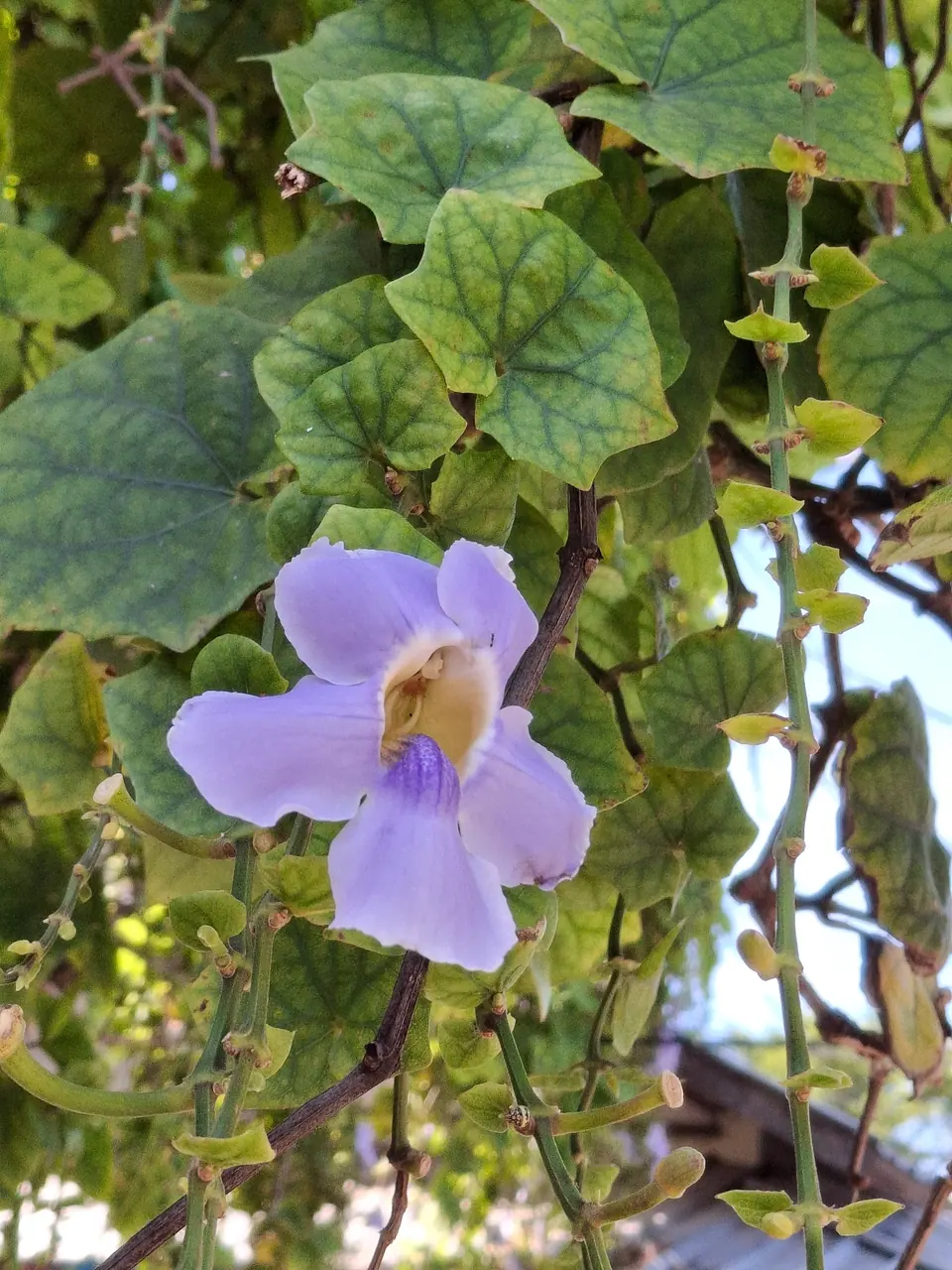
Cómo cultivar y cuidar Bengal clock vine
Thunbergia grandiflora
Escrito por Emilio Marruso · última revisión
De un vistazo
Esta planta se adapta desde el sol pleno hasta la semisombra, y también crece en maceta. Siembra en interior seis semanas antes de la última helada de primavera y sácala al exterior cuando las noches superen los 10 °C. Una poda después de cada floración la mantiene ordenada, y puedes multiplicarla por semilla o por esquejes.
- Sol
Sol pleno o semisombra
Qué dicen las fuentes (3)
Luz: Pleno sol a semisombra
Light Needs: Full sun - partial shade.
— Sky Vine – Port St. Lucie Botanical Gardens [7] Growing in sun or part- shade, it is known to do well even with some shade especially during the heat of the summer.
— A fine vine is the sky vine - UF/IFAS Extension Charlotte County [6] This vigorous vine grows in full sun, with a southern exposure, but stays greener and prettier with a little shade protection from the blazing afternoon sunshine, especially in warmer climates.
— Care Of Sky Vine Thunbergia - Learn About Sky Vine Propagation And Growing Info | Gardening Know How [5] - Riego
Riega menos en invierno, cuando crece más despacio
Qué dicen las fuentes (1)
Notas sobre el riego: En invierno, cuando el crecimiento se ralentiza, reduce el riego
The plants might go into slow-growth mode in winter, when you can cut down on watering and fertilization.
— Thunbergia grandiflora | Bengal clockvine - Flowering plants - GCI [8] - Suelo
Suelo de ligeramente ácido a ligeramente alcalino, pH 6,1–7,8
Qué dicen las fuentes (2)
pH del suelo, mínimo: 6.1
Grows best in organically rich soil but will tolerate many soils (slightly acidic - slightly alkaline (pH 6.1 - 7.8).
— Sky Vine – Port St. Lucie Botanical Gardens [7] pH del suelo, máximo: 7.8
Grows best in organically rich soil but will tolerate many soils (slightly acidic - slightly alkaline (pH 6.1 - 7.8).
— Sky Vine – Port St. Lucie Botanical Gardens [7] - Plantación
Planta en el exterior cuando las noches superen los 10 °C
Qué dicen las fuentes (1)
Plantación: Cuando la temperatura nocturna supere los 10 °C (50 °F)
Plant the seedlings when the night-time temperature is above 50 degrees F. (10 C.).
— Care Of Sky Vine Thunbergia - Learn About Sky Vine Propagation And Growing Info | Gardening Know How [5] - Poda
Poda al terminar la floración y otra vez a finales de verano
Qué dicen las fuentes (1)
Poda: Después de que termine el ciclo de floración, y nuevamente a fines del verano
Prune after the blooming cycle is over to encourage a quick re-sprout, and prune again in late summer.
— Care Of Sky Vine Thunbergia - Learn About Sky Vine Propagation And Growing Info | Gardening Know How [5] - Plagas
Vigila la araña roja y la mosca blanca; los bordes de las hojas pueden quemarse
- Atención
Invasora: puede ahogar otras plantas y rebrotar de trozos de tallo o raíz; mantenla a raya
- Multiplicación
Por semilla, esquejes de tallo, acodo o división del cepellón
Qué dicen las fuentes (3)
Propagación: Semilla, esquejes de tallo, acodo, acodo aéreo, división de la bola de raíces
sky vine plants can be propagated by seeds , cuttings , and layering .
— Care Of Sky Vine Thunbergia - Learn About Sky Vine Propagation And Growing Info | Gardening Know How [5] It is incredibly easy to propagate from cuttings or air-layering.
— A fine vine is the sky vine - UF/IFAS Extension Charlotte County [6] Propagation: By dividing root ball, leaf or stem cuttings and seed.
— Sky Vine – Port St. Lucie Botanical Gardens [7] - Siembra
Siembra en interior seis semanas antes de la última helada de primavera
Qué dicen las fuentes (1)
Siembra: En interiores, seis semanas antes de la última helada de primavera
Sky vine thunbergia can be grown from seed started indoors six weeks before the last spring frost date.
— Care Of Sky Vine Thunbergia - Learn About Sky Vine Propagation And Growing Info | Gardening Know How [5] - Maceta
Crece también en maceta
Qué dicen las fuentes (2)
En maceta: Sí
They can also thrive in pots.
— Care Of Sky Vine Thunbergia - Learn About Sky Vine Propagation And Growing Info | Gardening Know How [5] Besides using the sky vine on a trellis or fence, also consider using it as a container plant, as a screen
— A fine vine is the sky vine - UF/IFAS Extension Charlotte County [6]
Resumen
La vid del cielo (Thunbergia grandiflora) es una enredadera trepadora de hoja perenne y crecimiento rápido, originaria de la India, con flores en trompeta de color azul lavanda. [6][4] Crece a pleno sol o semisombra en suelo rico, húmedo y bien drenado, con riego regular y un soporte para trepar. [7][6] Su crecimiento agresivo la hace invasiva en climas cálidos, por lo que debe manejarse para evitar que se escape. [6][7]
Citado en inglés, como en la fuente.
Cuidados
Riego
Riego
Las fuentes dan valores distintos según la región, la zona o las condiciones de cultivo.
Lo que dice cada fuente
Según UF/IFAS Extension Charlotte County: Riego regular
Según Port St. Lucie Botanical Gardens: Humedad media en un suelo bien drenado, se mantiene húmedo y no se seca
Según Gardening Know How: Riega cuando el suelo esté seco
Qué dicen las fuentes (5)
Según UF/IFAS Extension Charlotte County: The sky vine will benefit from regular watering and may require some pruning to keep it in bounds.Según Port St. Lucie Botanical Gardens: Soil Moisture: Medium moisture in a well-drained soil, likes to stay moist and not dry out.Según Gardening Know How: Water the plant when the soil is dry and fertilize in spring and fall with a granular fertilizer.The sky vine will benefit from regular watering and may require some pruning to keep it in bounds.Soil Moisture: Medium moisture in a well-drained soil, likes to stay moist and not dry out.Notas sobre el riego
En invierno, cuando el crecimiento se ralentiza, reduce el riego
Qué dicen las fuentes (1)
The plants might go into slow-growth mode in winter, when you can cut down on watering and fertilization.Luz
Pleno sol a semisombra
Qué dicen las fuentes (3)
Light Needs: Full sun - partial shade.Growing in sun or part- shade, it is known to do well even with some shade especially during the heat of the summer.This vigorous vine grows in full sun, with a southern exposure, but stays greener and prettier with a little shade protection from the blazing afternoon sunshine, especially in warmer climates.Clima y frío
Rusticidad, zona más fría
Las fuentes dan valores distintos según la región, la zona o las condiciones de cultivo.
Lo que dice cada fuente
Según Gardening Know How: 8 [mínima invernal de −12,2 a −6,7 °C (de 10 a 20 °F)]
Según Port St. Lucie Botanical Gardens: 10a [mínima invernal de −1,1 a 1,7 °C (de 30 a 35 °F)]
Qué dicen las fuentes (2)
Según Gardening Know How: It is hardy in zones 8 to 11.Según Port St. Lucie Botanical Gardens: Zone: 10A - 11
- Light Needs: Full sun - partial shade.Rusticidad, zona más cálida
11 [mínima invernal de 4,4 a 10 °C (de 40 a 50 °F)]
Suelo
pH del suelo, mínimo
6.1
Qué dicen las fuentes (1)
Grows best in organically rich soil but will tolerate many soils (slightly acidic - slightly alkaline (pH 6.1 - 7.8).pH del suelo, máximo
7.8
Qué dicen las fuentes (1)
Grows best in organically rich soil but will tolerate many soils (slightly acidic - slightly alkaline (pH 6.1 - 7.8).Dónde cultivarla
Sí
Qué dicen las fuentes (2)
They can also thrive in pots.Besides using the sky vine on a trellis or fence, also consider using it as a container plant, as a screenPropagación
Semilla, esquejes de tallo, acodo, acodo aéreo, división de la bola de raíces
Qué dicen las fuentes (3)
sky vine plants can be propagated by seeds , cuttings , and layering .It is incredibly easy to propagate from cuttings or air-layering.Propagation: By dividing root ball, leaf or stem cuttings and seed.Cultivo
La planta
Familia
Acanthaceae
Qué dicen las fuentes (1)
Classification
Order
LAMIALES
Family
ACANTHACEAEProblemas
Crecimiento invasivo
Síntoma: Puede sofocar la vegetación y regenerarse a partir de fragmentos del tallo o porciones de las raíces tuberosas
Qué hacer: Maneja la planta para evitar que se escape
Qué dicen las fuentes (2)
this woody-stemmed, twining evergreen can be invasive, as it can easily regenerate from stem fragments or portions of the tuberous roots.
— Care Of Sky Vine Thunbergia - Learn About Sky Vine Propagation And Growing Info | Gardening Know How [5] Its aggressive nature can make it a bit invasive, so manage this plant to prevent its escape.
— A fine vine is the sky vine - UF/IFAS Extension Charlotte County [6] Plagas
Síntoma: Los ácaros, las moscas blancas y el quemado de los bordes pueden dañar la planta
Qué dicen las fuentes (1)
Spider mites , whiteflies , and edge burn may damage the plant.
— Care Of Sky Vine Thunbergia - Learn About Sky Vine Propagation And Growing Info | Gardening Know How [5]
Remedios
Cada remedio indica qué dicen las fuentes oficiales; los remedios tradicionales sin fuente oficial aparecen marcados. Los perjudiciales están para que sepas evitarlos.
Cómo eliminarla
propagación invasiva
Desentierra las plantas pequeñas Fuente oficial, sin prueba independiente
Cómo: Desentierra las plantas pequeñas, quitando los tubérculos y todas las raíces.
Dig out small plants. Remove the tubers and all of the roots.
— weeds.dpi.nsw.gov.au [9] cortando las enredaderas a nivel del suelo Funciona en parte
Cómo: Corta las enredaderas a nivel del suelo para que las plantas sofocadas sobrevivan, pero se requiere un control de seguimiento.
Cutting vines at ground level will help smothered plants survive but laurel clock vine will regrow from tubers.
— weeds.dpi.nsw.gov.au [9] Qué dicen las pruebas Cutting vines at ground level will help smothered plants survive but laurel clock vine will regrow from tubers.
— weeds.dpi.nsw.gov.au [9]
Calendario
Siembra
En interiores, seis semanas antes de la última helada de primavera
Qué dicen las fuentes (1)
Sky vine thunbergia can be grown from seed started indoors six weeks before the last spring frost date.Plantación
Cuando la temperatura nocturna supere los 10 °C (50 °F)
Qué dicen las fuentes (1)
Plant the seedlings when the night-time temperature is above 50 degrees F. (10 C.).Poda
Después de que termine el ciclo de floración, y nuevamente a fines del verano
Qué dicen las fuentes (1)
Prune after the blooming cycle is over to encourage a quick re-sprout, and prune again in late summer.Meses tal como los dan las fuentes, en su mayoría de Estados Unidos (hemisferio norte). En el hemisferio sur se desplazan unos seis meses.
Valores orientativos
Valores de una fuente secundaria, no comprobados palabra por palabra como el resto de esta página. Úselos como punto de partida.
- Ciclo de vida
- PerenneValor orientativo, adáptalo a tu clima · Fuente secundaria
- Altura adulta
- 457.2-914.4 cm (15-30 pies)Valor orientativo, adáptalo a tu clima · Fuente secundaria
- Horas de sol
- 4-6 horasValor orientativo, adáptalo a tu clima · Fuente secundaria
- Resiste la sequía
- SíValor orientativo, adáptalo a tu clima · Fuente secundaria
- Nivel de cuidado
- MedioValor orientativo, adáptalo a tu clima · Fuente secundaria
- Crecimiento
- AltaValor orientativo, adáptalo a tu clima · Fuente secundaria
Plantas similares
- Susanita, tunbergia, susana de los ojos negros, ojo de poeta, ojo morado,anteojo de poeta, ojitos, ojitos negros, ojo de venus, ojo de pajarito Thunbergia alata
- Muicle acuático Dianthera americana
- Acanto Acanthus mollis
- Acanto espinoso Acanthus spinosus
- Canario rojo Dicliptera squarrosa
- Fringe-Leaf Wild Petunia Ruellia humilis
- Camarón Pachystachys lutea
- Petunia mexicana Ruellia simplex
Fuentes
Cada valor anterior se cita de estos documentos. Los enlaces llevan al editor original.
- Thunbergia grandiflora / [Species detail] / Plant Atlas · florida.plantatlas.usf.edu, consultado
- Flora of New Zealand | Taxon Profile | Thunbergia grandiflora · nzflora.info, consultado
- HortFlora · hortflora.rbg.vic.gov.au, consultado
- Plant 24 Thunbergia grandiflora | Kranji Primary School · kranjipri.moe.edu.sg, consultado
- Care Of Sky Vine Thunbergia - Learn About Sky Vine Propagation And Growing Info | Gardening Know How · gardeningknowhow.com, consultado
- A fine vine is the sky vine - UF/IFAS Extension Charlotte County · blogs.ifas.ufl.edu, consultado
- Sky Vine – Port St. Lucie Botanical Gardens · pslbg.org, consultado
- Thunbergia grandiflora | Bengal clockvine - Flowering plants - GCI · greencoverinitiative.com, consultado
- weeds.dpi.nsw.gov.au · weeds.dpi.nsw.gov.au
Escrito por Emilio Marruso · última revisión