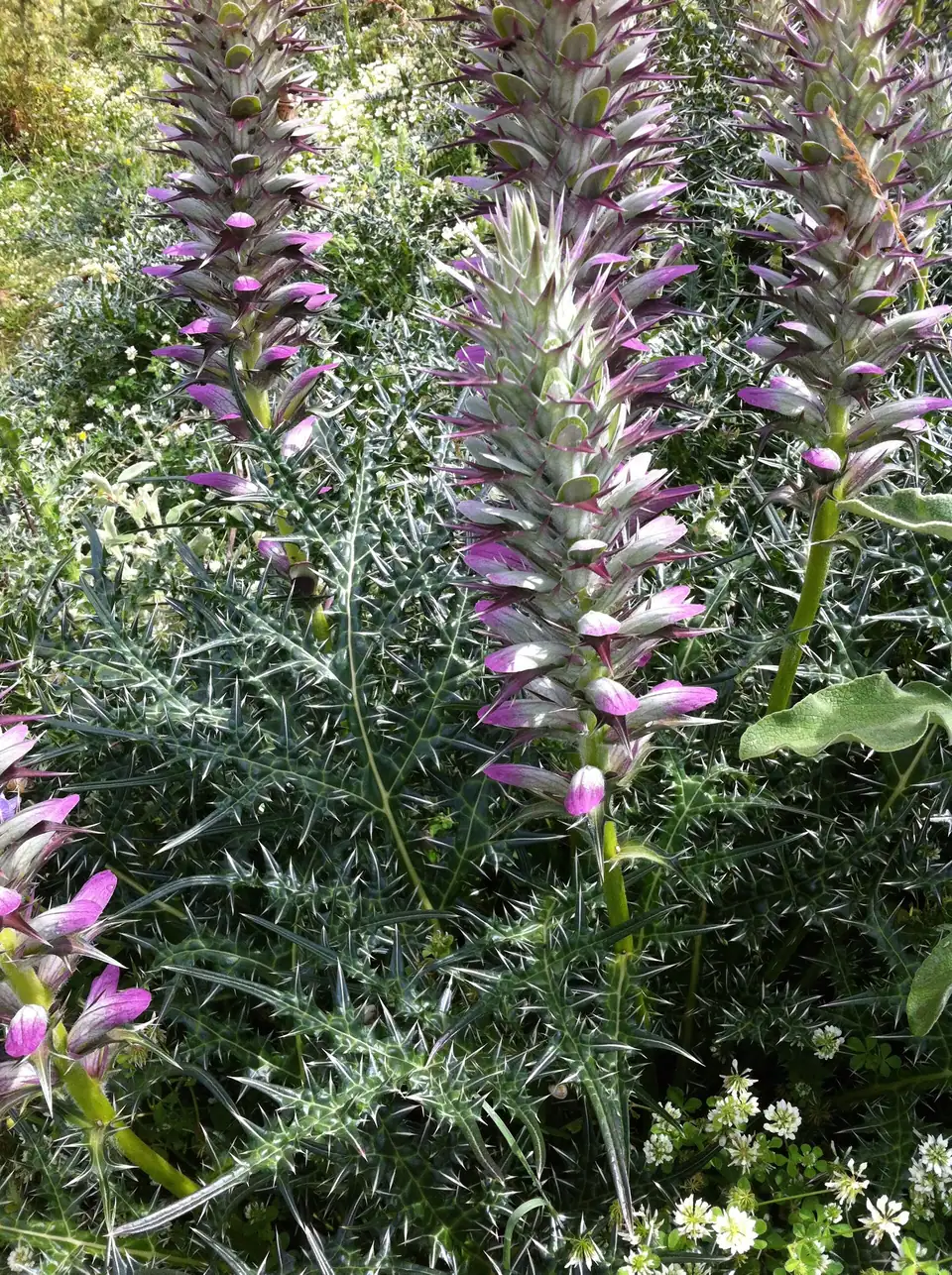


How to Grow and Care for Bear's Breeches
Acanthus spinosus
Written by Emilio Marruso · last checked
At a glance
Acanthus is a perennial that grows into a bold clump 3–4 ft tall and just as wide. It is happy in partial shade, with 2–6 hours of direct sun, and asks only for well-drained soil that never stays wet. Start new plants from root cuttings or seed, and keep an eye out for slugs and snails.
- Sun
Partial shade: 2–6 hours of direct sun; shield it from afternoon sun in hot climates
What the sources say (2)
Light: Partial shade (direct sunlight only part of the day, 2-6 hours), with some protection from afternoon sun in hot southern climates
Light: Partial Shade (Direct sunlight only part of the day, 2-6 hours)
— Acanthus spinosus (Bear's Breeches, Spiny Bear's Breech, Spiny Bear's Breeches) | North Carolina Extension Gardener Plant Toolbox [1] with some protection from the afternoon sun in our hot southern climates
— Acanthus spinosus (Bear's Breeches, Spiny Bear's Breech, Spiny Bear's Breeches) | North Carolina Extension Gardener Plant Toolbox [1] - Water
Never let the soil stay soggy: it does poorly in wet ground
What the sources say (1)
Watering notes: Prefers well-drained soil; does not do well in wet soils
This plant prefers well-drained soil in partial shade, with some protection from the afternoon sun in our hot southern climates. While it grows in a wide variety of soils it does not do well in wet soils.
— Acanthus spinosus (Bear's Breeches, Spiny Bear's Breech, Spiny Bear's Breeches) | North Carolina Extension Gardener Plant Toolbox [1] - Cold
Survives winters down to 0 °F (−17.8 °C)
Hardy in very cold winters · USDA 7a · RHS H6 · Z7
What the sources say (2)
Hardiness, coldest zone: 7a [winter low −17.8 to −15 °C (0 to 5 °F)]
USDA Plant Hardiness Zone: 7a, 7b, 8a, 8b, 9a, 9b, 10a, 10b
— Acanthus spinosus (Bear's Breeches, Spiny Bear's Breech, Spiny Bear's Breeches) | North Carolina Extension Gardener Plant Toolbox [1] Hardiness, warmest zone: 10b [winter low 1.7 to 4.4 °C (35 to 40 °F)]
USDA Plant Hardiness Zone: 7a, 7b, 8a, 8b, 9a, 9b, 10a, 10b
— Acanthus spinosus (Bear's Breeches, Spiny Bear's Breech, Spiny Bear's Breeches) | North Carolina Extension Gardener Plant Toolbox [1] - Soil
Well-drained soil
What the sources say (1)
Watering notes: Prefers well-drained soil; does not do well in wet soils
This plant prefers well-drained soil in partial shade, with some protection from the afternoon sun in our hot southern climates. While it grows in a wide variety of soils it does not do well in wet soils.
— Acanthus spinosus (Bear's Breeches, Spiny Bear's Breech, Spiny Bear's Breeches) | North Carolina Extension Gardener Plant Toolbox [1] - Pests
Slugs and snails can damage it
What the sources say (1)
Pests: slugs, snails
Insects, Diseases, and Other Plant Problems: Slugs and snails can do damage.
— Acanthus spinosus (Bear's Breeches, Spiny Bear's Breech, Spiny Bear's Breeches) | North Carolina Extension Gardener Plant Toolbox [1] - Size
3–4 ft tall and 3–4 ft wide
What the sources say (2)
Mature height: 91-122 cm (3-4 ft)
Dimensions: Height: 3 ft. 0 in. - 4 ft. 0 in.
— Acanthus spinosus (Bear's Breeches, Spiny Bear's Breech, Spiny Bear's Breeches) | North Carolina Extension Gardener Plant Toolbox [1] Mature width: 91-122 cm (3-4 ft)
Height: 3 ft. 0 in. - 4 ft. 0 in. Width: 3 ft. 0 in. - 4 ft. 0 in.
— Acanthus spinosus (Bear's Breeches, Spiny Bear's Breech, Spiny Bear's Breeches) | North Carolina Extension Gardener Plant Toolbox [1] - Propagation
From root cuttings or seed
What the sources say (1)
Propagation: Root cutting, seed
Recommended Propagation Strategy: Root Cutting Seed Country Or
— Acanthus spinosus (Bear's Breeches, Spiny Bear's Breech, Spiny Bear's Breeches) | North Carolina Extension Gardener Plant Toolbox [1]
Overview
Spiny bear's breeches is a clumping perennial grown as an accent or border plant. [1] It prefers well-drained soil in partial shade and does not do well in wet soils. [1] It spreads easily by seed and root cutting and is listed as weedy. [1]
This record is incomplete: the sources we read do not cover every field yet.
Not yet covered by our sources: Watering, Pruning
Bear's Breeches care
How to water Bear's Breeches
Watering
Not stated in the sources we read.
Watering notes
Prefers well-drained soil; does not do well in wet soils
What the sources say (1)
This plant prefers well-drained soil in partial shade, with some protection from the afternoon sun in our hot southern climates. While it grows in a wide variety of soils it does not do well in wet soils.How much light Bear's Breeches needs
Partial shade (direct sunlight only part of the day, 2-6 hours), with some protection from afternoon sun in hot southern climates
What the sources say (2)
Light:
Partial Shade (Direct sunlight only part of the day, 2-6 hours)with some protection from the afternoon sun in our hot southern climatesHow much cold Bear's Breeches can take
Hardiness, coldest zone
7a [winter low −17.8 to −15 °C (0 to 5 °F)]
What the sources say (1)
USDA Plant Hardiness Zone:
7a, 7b, 8a, 8b, 9a, 9b, 10a, 10bHardiness, warmest zone
10b [winter low 1.7 to 4.4 °C (35 to 40 °F)]
What the sources say (1)
USDA Plant Hardiness Zone:
7a, 7b, 8a, 8b, 9a, 9b, 10a, 10bHow to propagate Bear's Breeches
Root cutting, seed
What the sources say (1)
Recommended Propagation Strategy:
Root Cutting
Seed
Country OrHow to grow Bear's Breeches
The plant
Life cycle
perennial
What the sources say (1)
is a clumping perennial plant in the Acanthaceae (acanthus) family. It is native to Europe and the Mediterranean.Family
Acanthaceae
What the sources say (1)
is a clumping perennial plant in the Acanthaceae (acanthus) family. It is native to Europe and the Mediterranean.Mature height
91-122 cm (3-4 ft)
What the sources say (1)
Dimensions:
Height: 3 ft. 0 in. - 4 ft. 0 in.Mature width
91-122 cm (3-4 ft)
What the sources say (1)
Height: 3 ft. 0 in. - 4 ft. 0 in.
Width: 3 ft. 0 in. - 4 ft. 0 in.Pests and diseases
Pests
slugs, snails
What the sources say (1)
Insects, Diseases, and Other Plant Problems: Slugs and snails can do damage.Bear's Breeches pests and problems
Slugs and snails
Symptom: Slugs and snails can do damage.
What to do: Not stated in source.
What the sources say (1)
Slugs and snails can do damage. Profile Video:
— Acanthus spinosus (Bear's Breeches, Spiny Bear's Breech, Spiny Bear's Breeches) | North Carolina Extension Gardener Plant Toolbox [1]
Remedies
Each remedy shows what official sources say about it; traditional remedies without an official source are marked as such. Harmful ones are listed so you know to avoid them.
Treating the plant
slugs
beer trap Works
How: Shallow pans of stale beer sunk so that the lip of the container is even with the soil surface; replace the beer when it dries up or is diluted by rain.
When found, these pests can be removed by handpicking or by making simple, effective traps. Trap snails and slugs in shallow pans of stale beer sunken so that the lip of the container is even with the soil surface.
— hgic.clemson.edu [2] What the evidence says When found, these pests can be removed by handpicking or by making simple, effective traps. Trap snails and slugs in shallow pans of stale beer sunken so that the lip of the container is even with the soil surface.
— hgic.clemson.edu [2]
Calendar
Pruning
Not stated in the sources we read.
Months as given by the sources, which are mostly from the United States (northern hemisphere). In the southern hemisphere they shift by about six months.
Indicative values
Values from a secondary source, not checked word for word like the rest of this page. Use them as a starting point.
- Hours of sun
- 4-5 hoursIndicative value, adapt it to your climate · Secondary source
- Watering
- AverageIndicative value, adapt it to your climate · Secondary source
- Soil pH
- 6-7.5Indicative value, adapt it to your climate · Secondary source
- Care level
- MediumIndicative value, adapt it to your climate · Secondary source
- Growth rate
- LowIndicative value, adapt it to your climate · Secondary source
- Pruning
- March, April, March, April, MayIndicative value, adapt it to your climate · Secondary source
Similar plants
- Bear's Breeches Acanthus mollis
- Acanthus hungaricus Acanthus hungaricus
- American Water-willow Dianthera americana
- Bengal clock vine Thunbergia grandiflora
- Black-eyed Susan Vine Thunbergia alata
- Fringe-Leaf Wild Petunia Ruellia humilis
- Lollipop-plant Pachystachys lutea
- Mexican Petunia Ruellia simplex
Sources
Every value above is quoted from these documents. Links lead to the original publisher.
- Acanthus spinosus (Bear's Breeches, Spiny Bear's Breech, Spiny Bear's Breeches) | North Carolina Extension Gardener Plant Toolbox · plants.ces.ncsu.edu, consulted
- hgic.clemson.edu · hgic.clemson.edu
Written by Emilio Marruso · last checked