
How to Grow and Care for Lollipop-plant
Pachystachys lutea
Written by Emilio Marruso · last checked
At a glance
The shrimp plant is an easygoing perennial that thrives in full sun or partial shade, indoors or out. Grow it in a pot, or in the garden in warm climates, keep it evenly moist while it blooms, and feed it regularly through the growing season. In early summer, take cuttings to make new plants to share.
- Sun
Full sun to partial shade
What the sources say (3)
Light: Full sun to partial shade
The golden shrimp plant requires full sun to partial shade and fertile, acidic, well-drained soils.
— FPS452 [1] in fertile, moist soil in full sun (light shade in southern states)
— Golden Shrimp Plant, Pachystachys lutea – Wisconsin Horticulture [2] Light Preference | Full Sun
— NParks | Pachystachys lutea [3] - Water
Keep evenly moist in bloom; indoors, water little in winter and more from spring
What the sources say (2)
Watering: Keep plants evenly moist when in bloom
Keep plants evenly moist when in bloom.
— Golden Shrimp Plant, Pachystachys lutea – Wisconsin Horticulture [2] Watering notes: Indoors, water sparingly in winter and increase watering as growth resumes in spring
Indoors water sparingly in the winter and increase watering as the plant begins to resume growth in the spring
— Golden Shrimp Plant, Pachystachys lutea – Wisconsin Horticulture [2] - Cold
Survives winters down to 25 °F (−3.9 °C)
Half hardy: mild winters or an unheated greenhouse · USDA 9b · RHS H3 · Z9
- Spacing
24–36 in between plants
What the sources say (1)
Spacing: 61.0-91.4 cm (24-36 in)
Plant spacing: 24 to 36 inches
— FPS452 [1] - Planting
In warm climates, plant any time of year
- Feeding
Feed regularly during the growing season
What the sources say (3)
When: During the growing season
Golden shrimp plant can be effectively maintained in a container. Regular fertilization during the growing season helps keep foliage green.
— FPS452 [1] How often: Regularly
Golden shrimp plant can be effectively maintained in a container. Regular fertilization during the growing season helps keep foliage green.
— FPS452 [1] Pinching the growing tips will encourage branching for a fuller plant. Fertilize plants regularly to maintain strong blooming.
— Golden Shrimp Plant, Pachystachys lutea – Wisconsin Horticulture [2] - Pests
Aphids, mealybugs, scales, spider mites and whiteflies
What the sources say (2)
Pests: aphids, mealybugs, scales, spider mites, whiteflies
Scales and spider mites may be troublesome pests for the shrimp plant.
— FPS452 [1] This plant has few pests, but is susceptible to the common insects that often infest houseplants, including aphids, mealybugs, scales, spider mites and whiteflies.
— Golden Shrimp Plant, Pachystachys lutea – Wisconsin Horticulture [2] - Size
2–3 ft wide
What the sources say (1)
Mature width: 60.96-91.44 cm (2-3 ft)
Description Height: 2 to 3 feet Spread: 2 to 3 feet Plant habit: oval Plant density: dense
— FPS452 [1] - Propagation
Take soft or half-ripe cuttings in early summer
What the sources say (2)
Propagation: Softwood and semi-ripened cuttings, taken in early summer
Golden shrimp plant is easily propagated from softwood and semi-ripened cuttings
— FPS452 [1] Golden shrimp plant is easily propagated from softwood and semi-hardwood cuttings taken in early summer.
— Golden Shrimp Plant, Pachystachys lutea – Wisconsin Horticulture [2] - Containers
Grows well in pots, even indoors
What the sources say (2)
In containers: Yes
Golden shrimp plant can be effectively maintained in a container.
— FPS452 [1] Indoors: Yes
easily grown in the ground as a summer annual in fertile, moist soil in full sun (light shade in southern states) or as a houseplant
— Golden Shrimp Plant, Pachystachys lutea – Wisconsin Horticulture [2]
Overview
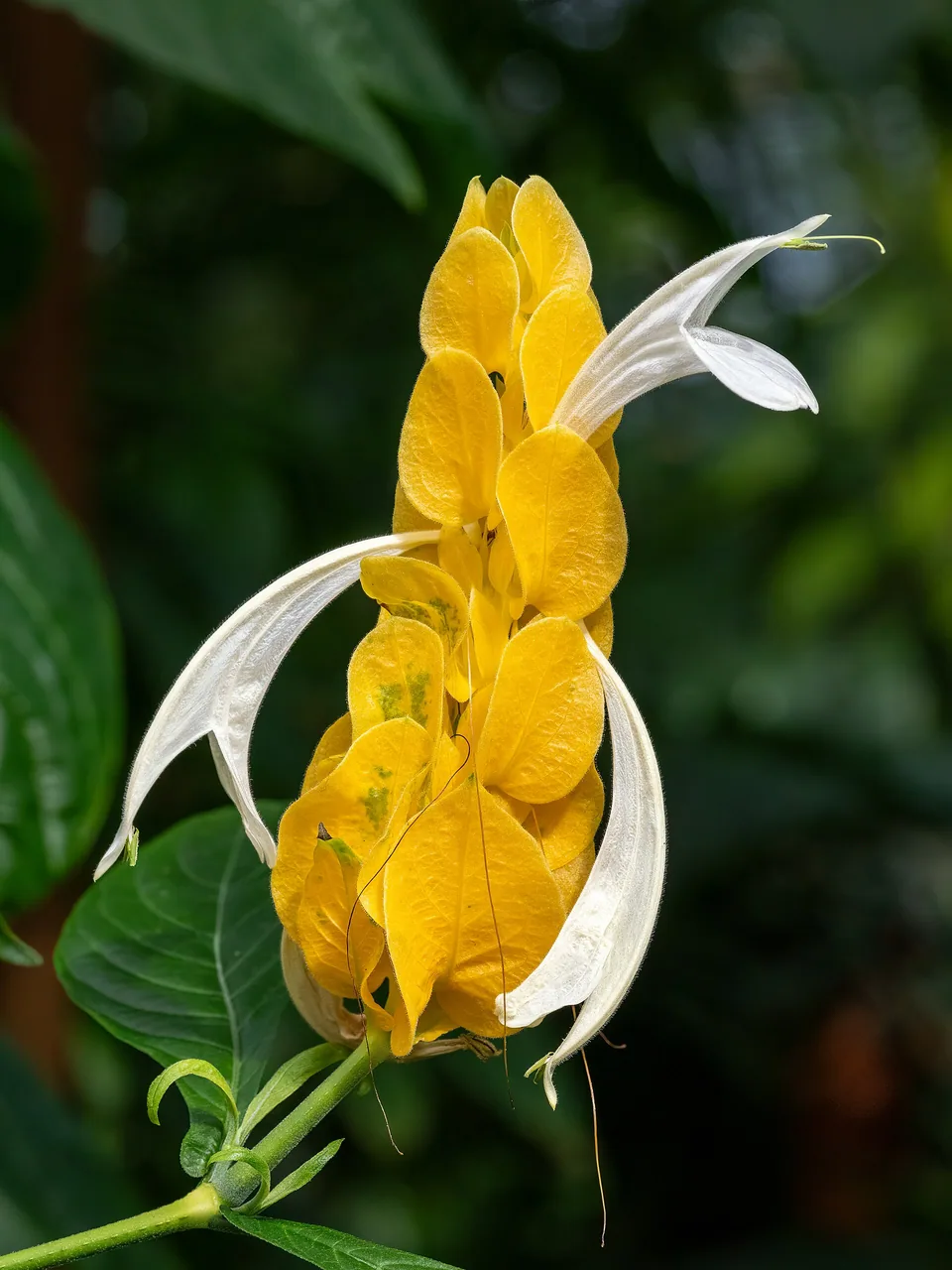
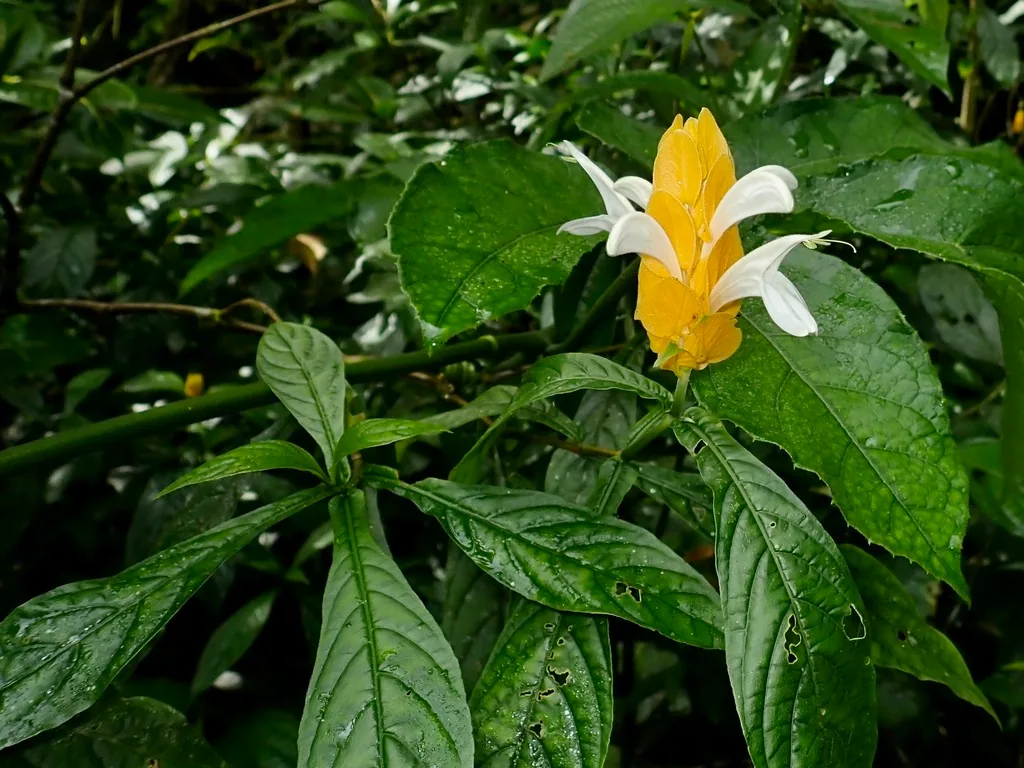
Golden shrimp plant is a soft-stemmed tropical shrub 2 to 3 feet [61–91 cm] tall with bright yellow bracts and white flowers. [1] It needs full sun to partial shade and well-drained soil, and is reliably frost-free only in zones 10 and 11. [1]
This record is incomplete: the sources we read do not cover every field yet.
Not yet covered by our sources: Pruning
Lollipop-plant care
Measurements in square brackets are our conversion into the other unit system; the quoted text is unchanged.
How to water Lollipop-plant
Watering
Keep plants evenly moist when in bloom
What the sources say (1)
Keep plants evenly moist when in bloom.Watering notes
Indoors, water sparingly in winter and increase watering as growth resumes in spring
What the sources say (1)
Indoors water sparingly in the winter and increase watering as the plant begins to resume growth in the springHow much light Lollipop-plant needs
Full sun to partial shade
What the sources say (3)
The golden shrimp plant requires full sun to partial shade and fertile, acidic, well-drained soils.in fertile, moist soil in full sun (light shade in southern states)Light Preference
| Full SunHow much cold Lollipop-plant can take
Hardiness, coldest zone
9b [winter low −3.9 to −1.1 °C (25 to 30 °F)]
What the sources say (1)
USDA hardiness zones: 9B through 11Hardiness, warmest zone
11 [winter low 4.4 to 10 °C (40 to 50 °F)]
What the sources say (1)
USDA hardiness zones: 9B through 11Where to grow Lollipop-plant
Indoors
Yes
What the sources say (1)
easily grown in the ground as a summer annual in fertile, moist soil in full sun (light shade in southern states) or as a houseplantIn containers
Yes
What the sources say (1)
Golden shrimp plant can be effectively maintained in a container.How to propagate Lollipop-plant
Softwood and semi-ripened cuttings, taken in early summer
How to grow Lollipop-plant
The plant
Life cycle
perennial
What the sources say (1)
This 36 to 48 inch tall, upright perennial has dark green, ovate leaves that are 6 inches long.Family
Acanthaceae
What the sources say (1)
Family: Acanthaceae Plant type: shrub USDA hardiness zones: 9B through 11 (Figure 4) Planting month for zone 9: year roundMature height
The sources disagree:
This 36 to 48 inch tall, upright perennial has dark green, ovate leaves that are 6 inches long.
[1]Description Height: 2 to 3 feet Spread: 2 to 3 feet Plant habit: oval Plant density: dense
[1]In warm climates golden shrimp plant can grow 3 to 6 feet tall, but in containers it can be kept much shorter.
[2]
Mature width
60.96-91.44 cm (2-3 ft)
What the sources say (1)
Description Height: 2 to 3 feet Spread: 2 to 3 feet Plant habit: oval Plant density: densePests and diseases
Pests
aphids, mealybugs, scales, spider mites, whiteflies
What the sources say (2)
Scales and spider mites may be troublesome pests for the shrimp plant.This plant has few pests, but is susceptible to the common insects that often infest houseplants, including aphids, mealybugs, scales, spider mites and whiteflies.Fertilizing
When
During the growing season
What the sources say (1)
Golden shrimp plant can be effectively maintained in a container. Regular fertilization during the growing season helps keep foliage green.How often
Regularly
What the sources say (2)
Golden shrimp plant can be effectively maintained in a container. Regular fertilization during the growing season helps keep foliage green.Pinching the growing tips will encourage branching for a fuller plant. Fertilize plants regularly to maintain strong blooming.Lollipop-plant pests and problems
Scales and spider mites
Symptom: Troublesome pests of the shrimp plant
What to do: No control given in the source
What the sources say (1)
Scales and spider mites may be troublesome pests for the shrimp plant.
— FPS452 [1] Houseplant insects
Symptom: Aphids, mealybugs, scales, spider mites and whiteflies
What to do: No control given in the source
What the sources say (1)
susceptible to the common insects that often infest houseplants, including aphids, mealybugs, scales, spider mites and whiteflies.
— Golden Shrimp Plant, Pachystachys lutea – Wisconsin Horticulture [2]
Remedies
Each remedy shows what official sources say about it; traditional remedies without an official source are marked as such. Harmful ones are listed so you know to avoid them.
Treating the plant
spider mites
higher humidity and pruning Not verified
Traditional remedy, not verified by an official source.
How: Keep the plant well pruned. Increase humidity to discourage the pests.
pests
insecticidal soap Partly works
Any soap, even the insecticidal soaps intended for garden use, can injure plants if used incorrectly.
— gardeningsolutions.ifas.ufl.edu [7] How: Isolate the affected plant to prevent spread to other plants and treat it with neem oil or insecticidal soap as per the manufacturers' recommendations.
Isolate the affected plant to prevent spread to other plants and treat it with neem oil or insecticidal soap as per the manufacturers' recommendations.
— homeplantsguide.com [6] What the evidence says Soaps and detergents don’t discriminate between good bugs and bad bugs. The ingredients that damage soft-bodied insects and mites also attack beneficial insects and funguses.
— gardeningsolutions.ifas.ufl.edu [7] neem oil Partly works
How: Isolate the affected plant to prevent spread to other plants and treat it with neem oil or insecticidal soap as per the manufacturers' recommendations.
Isolate the affected plant to prevent spread to other plants and treat it with neem oil or insecticidal soap as per the manufacturers' recommendations.
— homeplantsguide.com [6] What the evidence says However, neem oil is not effective against every insect and disease, and often must be frequently reapplied to reach the desired outcome.
— extension.unh.edu [8]
Calendar
Planting
Year round (zones 9-11)
What each source says
USDA zone 9: Year round
USDA zones 10-11: Year round
Pruning
Not stated in the sources we read.
Months as given by the sources, which are mostly from the United States (northern hemisphere). In the southern hemisphere they shift by about six months.
Indicative values
Values from a secondary source, not checked word for word like the rest of this page. Use them as a starting point.
- Drought tolerant
- yesIndicative value, adapt it to your climate · Secondary source
- Soil
- Humus rich, Well-drainedIndicative value, adapt it to your climate · Secondary source
- Soil pH
- 6-7Indicative value, adapt it to your climate · Secondary source
- Care level
- MediumIndicative value, adapt it to your climate · Secondary source
- Growth rate
- ModerateIndicative value, adapt it to your climate · Secondary source
- Pruning
- JanuaryIndicative value, adapt it to your climate · Secondary source
Similar plants
- American Water-willow Dianthera americana
- Bear's Breeches Acanthus mollis
- Bear's Breeches Acanthus spinosus
- Bengal clock vine Thunbergia grandiflora
- Black-eyed Susan Vine Thunbergia alata
- Dicliptera Dicliptera squarrosa
- Fringe-Leaf Wild Petunia Ruellia humilis
- Mexican Petunia Ruellia simplex
Sources
Every value above is quoted from these documents. Links lead to the original publisher.
- FPS452 · edis.ifas.ufl.edu, consulted
- Golden Shrimp Plant, Pachystachys lutea – Wisconsin Horticulture · hort.extension.wisc.edu, consulted
- NParks | Pachystachys lutea · nparks.gov.sg, consulted
- Pachystachys lutea - Botany Brisbane · botanybrisbane.com, consulted
- How to Grow Pachystachys · harvesttotable.com, consulted
- homeplantsguide.com · homeplantsguide.com
- gardeningsolutions.ifas.ufl.edu · gardeningsolutions.ifas.ufl.edu
- extension.unh.edu · extension.unh.edu
Written by Emilio Marruso · last checked