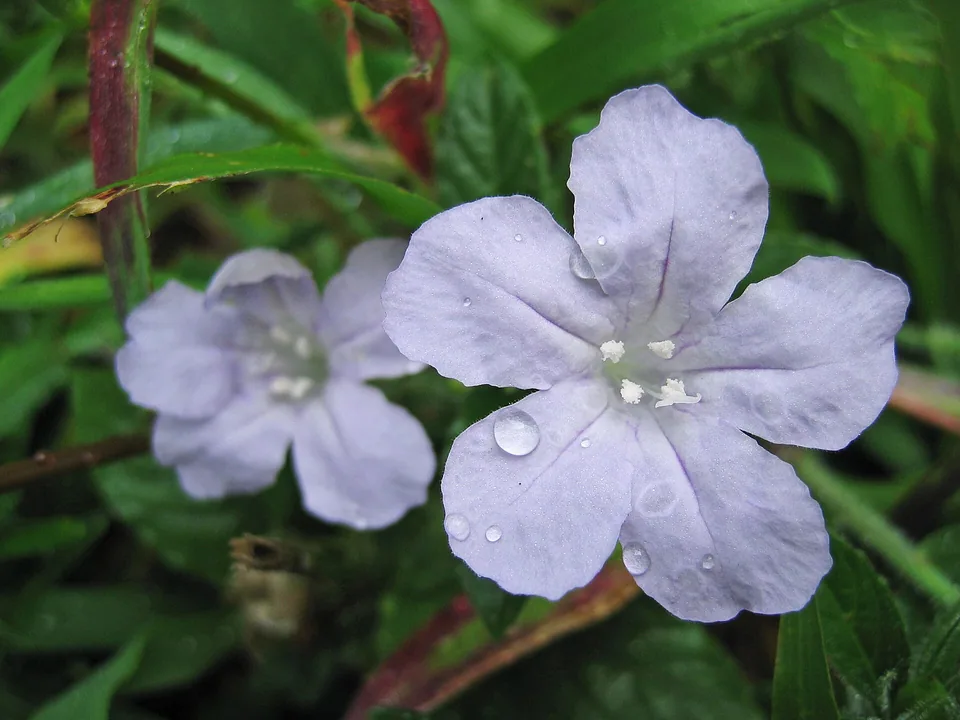


How to Grow and Care for Carolina Wild-petunia
Ruellia caroliniensis
Written by Emilio Marruso · last checked
At a glance
This easygoing perennial comes back year after year and handles dry spells well, so it forgives a forgotten watering. It stays compact, 1 to 3 feet tall and 6 inches to 1 foot wide, so it fits neatly into small spaces. Best of all, you can grow more plants for free from seed, from stem cuttings or by dividing a clump.
- Water
Handles dry spells well
What the sources say (1)
Watering: Good drought tolerance
It has good drought tolerance.
— Carolina Wild Petunia - UF/IFAS Extension Duval County [3] - Size
1 to 3 ft tall and 6 in to 1 ft wide
What the sources say (2)
Mature height: 30-91 cm (1-3 ft)
Height: 1 ft. 0 in. - 3 ft. 0 in. Width: 0 ft. 6 in. - 1 ft. 0 in.
— Ruellia caroliniensis (Carolina Wild-petunia, Wild Petunia) | North Carolina Extension Gardener Plant Toolbox [1] Mature width: 15-30 cm (6 in-1 ft)
Height: 1 ft. 0 in. - 3 ft. 0 in. Width: 0 ft. 6 in. - 1 ft. 0 in.
— Ruellia caroliniensis (Carolina Wild-petunia, Wild Petunia) | North Carolina Extension Gardener Plant Toolbox [1] - Propagation
Grow new plants from seed, stem cuttings or by dividing the clump
What the sources say (2)
Propagation: Seed, stem cutting and division
Recommended Propagation Strategy: Seed Stem Cutting
— Ruellia caroliniensis (Carolina Wild-petunia, Wild Petunia) | North Carolina Extension Gardener Plant Toolbox [1] It can also be propagated from cuttings and plant divisions after a few years.
— Carolina Wild Petunia - UF/IFAS Extension Duval County [3]
Overview
Carolina wild-petunia is a native perennial wildflower with purple flowers that bloom from spring to fall. [1] It is a source of nectar and pollen for pollinators but is sometimes considered a lawn weed. [3][1]
This record is incomplete: the sources we read do not cover every field yet.
Not yet covered by our sources: Hardiness, coldest zone, Hardiness, warmest zone, Pruning
Carolina Wild-petunia care
How to water Carolina Wild-petunia
Good drought tolerance
What the sources say (1)
It has good drought tolerance.How much light Carolina Wild-petunia needs
The sources give different values depending on region, zone or growing conditions.
What each source says
According to NC State Extension: Partial shade
According to UF/IFAS Extension Duval County: Full sun to partial shade
What the sources say (4)
According to NC State Extension: Light:
Partial Shade (Direct sunlight only part of the day, 2-6 hours)According to UF/IFAS Extension Duval County: It can handle full sun to part shade.It can handle full sun to part shade.Light:
Partial Shade (Direct sunlight only part of the day, 2-6 hours)How much cold Carolina Wild-petunia can take
Hardiness, coldest zone
Not stated in the sources we read.
Hardiness, warmest zone
Not stated in the sources we read.
Best soil for Carolina Wild-petunia
The sources give different values depending on region, zone or growing conditions.
What each source says
According to NC State Extension: 6.0
What the sources say (1)
According to NC State Extension: Soil Texture:
Sand
Soil pH:
Acid (<6.0)How to propagate Carolina Wild-petunia
Seed, stem cutting and division
What the sources say (2)
Recommended Propagation Strategy:
Seed
Stem CuttingIt can also be propagated from cuttings and plant divisions after a few years.How to grow Carolina Wild-petunia
The plant
Life cycle
perennial
What the sources say (1)
Genus:
Ruellia
Species:
caroliniensis
Family:
Acanthaceae
Life Cycle:
PerennialFamily
Acanthaceae
What the sources say (1)
Genus:
Ruellia
Species:
caroliniensis
Family:
Acanthaceae
Life Cycle:
PerennialMature height
30-91 cm (1-3 ft)
What the sources say (1)
Height: 1 ft. 0 in. - 3 ft. 0 in.
Width: 0 ft. 6 in. - 1 ft. 0 in.Mature width
15-30 cm (6 in-1 ft)
What the sources say (1)
Height: 1 ft. 0 in. - 3 ft. 0 in.
Width: 0 ft. 6 in. - 1 ft. 0 in.Remedies
Each remedy shows what official sources say about it; traditional remedies without an official source are marked as such. Harmful ones are listed so you know to avoid them.
Getting rid of it
weeds
transplanting to a garden Official source, not independently tested
How: If it grows in your lawn, transplant it to a garden; it holds up very well for transplanting.
If you find it growing in your lawn, consider transplanting it to a garden where you can enjoy its beauty and it can benefit the pollinators.
— Carolina Wild Petunia - UF/IFAS Extension Duval County [3]
Calendar
Pruning
Not stated in the sources we read.
Months as given by the sources, which are mostly from the United States (northern hemisphere). In the southern hemisphere they shift by about six months.
Similar plants
- Fringe-Leaf Wild Petunia Ruellia humilis
- Mexican Petunia Ruellia simplex
- Red Ruellia Ruellia elegans
- American Water-willow Dianthera americana
- Bear's Breeches Acanthus mollis
- Bear's Breeches Acanthus spinosus
- Bengal clock vine Thunbergia grandiflora
- Black-eyed Susan Vine Thunbergia alata
Sources
Every value above is quoted from these documents. Links lead to the original publisher.
- Ruellia caroliniensis (Carolina Wild-petunia, Wild Petunia) | North Carolina Extension Gardener Plant Toolbox · plants.ces.ncsu.edu, consulted
- Carolina Wild-petunia - Ruellia caroliniensis | North Carolina Extension Gardener Plant Toolbox · plants.ces.ncsu.edu, consulted
- Carolina Wild Petunia - UF/IFAS Extension Duval County · blogs.ifas.ufl.edu, consulted
Written by Emilio Marruso · last checked