
How to Grow and Care for Aconite
Aconitum napellus
Written by Emilio Marruso · last checked
Toxic to: People · Why
At a glance
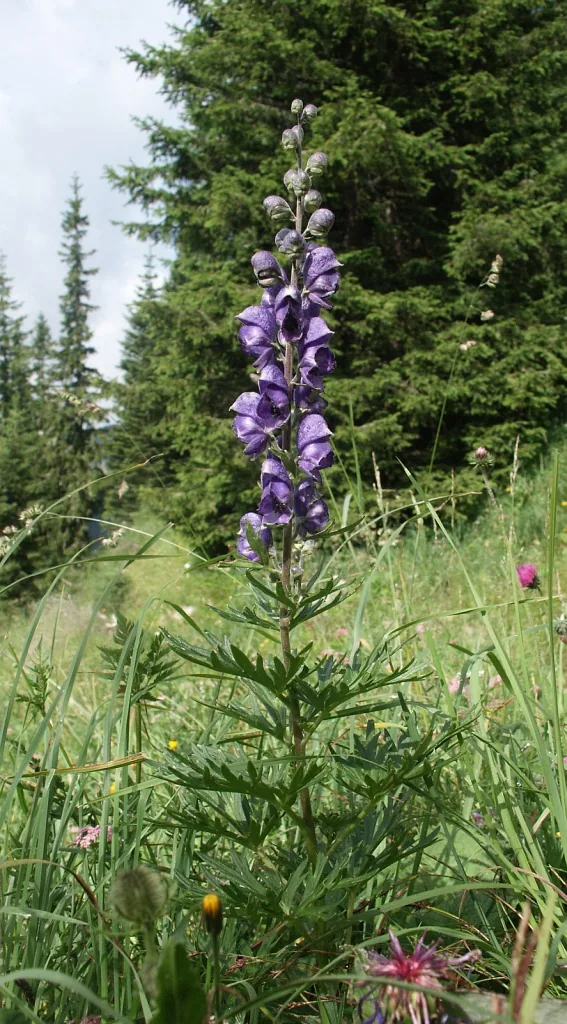
Wolfsbane is a perennial that grows 2 to 4 feet tall and thrives anywhere from full sun to partial shade, as long as its soil stays moist all season. It adapts to soils from acidic to neutral, and you can multiply it by division or from seed. Just handle it with care: every part of the plant is poisonous.
- Sun
Full sun to partial shade; in sun it needs soil that stays moist
What the sources say (3)
Light: Full sun to partial shade
For best results, grow Aconitum napellus in full sun or partial shade, in moist, well-drained soil.
— Aconitum napellus | BBC Gardeners World Magazine [6] I grow mine in stony, sandy soil on chalk bedrock in full sun or part shade.
— How to grow aconitum | Gardens Illustrated [3] Watering notes: Plants only thrive in a sunny position if the soil remains moist throughout the growing season
Plants only thrive in a sunny position if the soil remains moist throughout the growing season [16] .
— Aconite (Aconitum napellus) — Practical Plants [7] - Water
Keep the soil moist all season; it does not like drought
What the sources say (3)
Watering: Keep the soil moist; not particularly drought tolerant
They do best, however, in a moist soil and are not particularly drought tolerant.
— How to grow aconitum | Gardens Illustrated [3] Prefers a moist soil in sun or semi-shade [13] .
— Aconite (Aconitum napellus) — Practical Plants [7] Watering notes: Plants only thrive in a sunny position if the soil remains moist throughout the growing season
Plants only thrive in a sunny position if the soil remains moist throughout the growing season [16] .
— Aconite (Aconitum napellus) — Practical Plants [7] - Soil
Acidic to neutral soil, pH 4.5–7.5
- Pests
Watch for crown rot, powdery mildew and verticillium wilt
What the sources say (1)
Diseases: crown rot, powdery mildew, verticillium wilt
Insect, Disease and Other Plant Problems: Crown rot, powdery mildew, and verticillium wilt can affect this plant.
— Devil's helmet - Aconitum | North Carolina Extension Gardener Plant Toolbox [1] - Size
2 to 4 ft tall
What the sources say (1)
Mature height: 61-122 cm (2-4 ft)
Stems of this perennial grow 2-4 feet tall with flowers appearing from midsummer until fall.
— Monkshood, Wolfsbane in the home garden [2] - Propagation
Divide the clumps or grow new plants from seed
What the sources say (3)
Propagation: Division; seed
they are propagated by division in autumn or late winter.
— How to grow aconitum | Gardens Illustrated [3] Division - best done in spring but it can also be done in autumn [1] [3] .
— Aconite (Aconitum napellus) — Practical Plants [7] Seed - best sown as soon as it is ripe in a cold frame [3] .
— Aconite (Aconitum napellus) — Practical Plants [7] - Sowing
Sow seed as soon as it ripens in a cold frame; chilled seed can be sown in spring
What the sources say (1)
Sowing: As soon as the seed is ripe (in a cold frame); stratified seed can be sown in spring
Seed - best sown as soon as it is ripe in a cold frame [3] . The seed can be stratified and sown in spring but will then be slow to germinate [5] .
— Aconite (Aconitum napellus) — Practical Plants [7] - Safety
All parts of the plant are poisonous
Overview
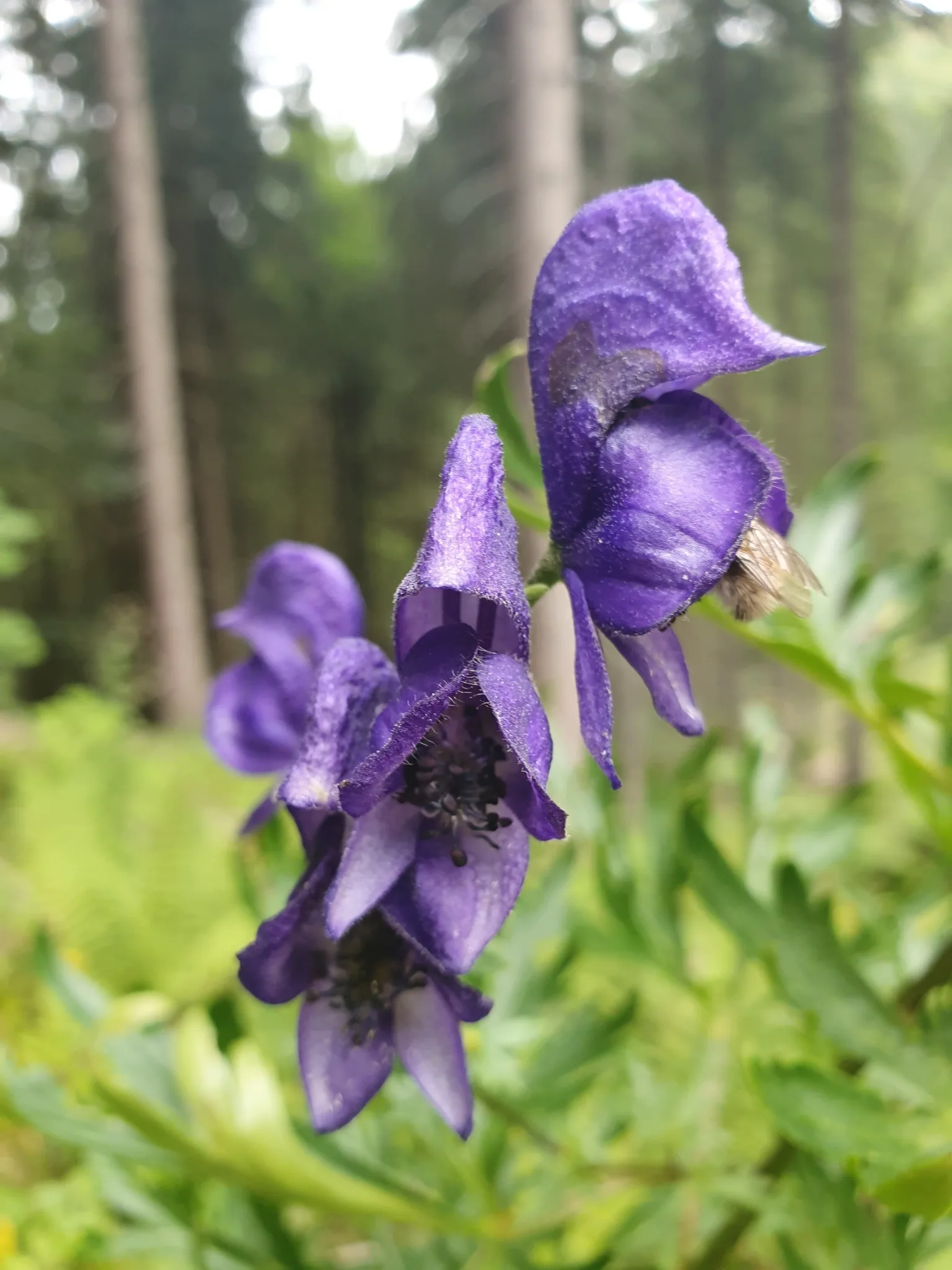
Monkshood (Aconitum napellus) is a long-lived tuber-forming herbaceous perennial of the buttercup family, native to Europe. [2] All parts of the plant are poisonous, and the key toxin is aconitine. [2][3] It grows in full sun or partial shade in moist, well-drained soil and is propagated by division or seed. [6][3]
This record is incomplete: the sources we read do not cover every field yet.
Not yet covered by our sources: Hardiness, coldest zone, Hardiness, warmest zone, Pruning
Aconite care
How to water Aconite
Watering
Keep the soil moist; not particularly drought tolerant
Watering notes
Plants only thrive in a sunny position if the soil remains moist throughout the growing season
What the sources say (1)
Plants only thrive in a sunny position if the soil remains moist throughout the growing season [16] .How much light Aconite needs
Full sun to partial shade
What the sources say (2)
For best results, grow Aconitum napellus in full sun or partial shade, in moist, well-drained soil.I grow mine in stony, sandy soil on chalk bedrock in full sun or part shade.How much cold Aconite can take
Hardiness, coldest zone
Not stated in the sources we read.
Hardiness, warmest zone
Not stated in the sources we read.
Best soil for Aconite
Soil pH, minimum
4.5
How to propagate Aconite
Division; seed
What the sources say (3)
they are propagated by division in autumn or late winter.Division - best done in spring but it can also be done in autumn [1] [3] .Seed - best sown as soon as it is ripe in a cold frame [3] .How to grow Aconite
The plant
Life cycle
perennial
What the sources say (1)
Wolfsbane/Monkshood is a long lived tuber forming herbaceous perennial of the ranunculus family that is most closely related to delphiniums.Family
Ranunculaceae
What the sources say (1)
This is a genus of over 250 species of herbaceous perennials in the buttercup family (Ranunculaceae) of which most are extremely poisonous.Mature height
61-122 cm (2-4 ft)
What the sources say (1)
Stems of this perennial grow 2-4 feet tall with flowers appearing from midsummer until fall.Pests and diseases
Diseases
crown rot, powdery mildew, verticillium wilt
What the sources say (1)
Insect, Disease and Other Plant Problems: Crown rot, powdery mildew, and verticillium wilt can affect this plant.Remedies
Each remedy shows what official sources say about it; traditional remedies without an official source are marked as such. Harmful ones are listed so you know to avoid them.
First aid
First aid: not a substitute for a doctor
skin contact
rinsing with water or mild soapy water Official source, not independently tested
If you suspect oral ingestion, contact a Poison Centre immediately.
— bfr.bund.de [8] If someone swallows monkshood or an herbal product made from it, use the web POISON CONTROL online tool to get help, or call your poison center at 1-800-222-1222 .
— poison.org [9] How: After skin contact, rinse thoroughly with water or mild soapy water (for approx. 5 minutes).
After skin contact, rinse thoroughly with water or mild soapy water (for approx. 5 minutes).
— bfr.bund.de [8]
eye contact
rinsing with water Official source, not independently tested
If you suspect oral ingestion, contact a Poison Centre immediately.
— bfr.bund.de [8] If someone swallows monkshood or an herbal product made from it, use the web POISON CONTROL online tool to get help, or call your poison center at 1-800-222-1222 .
— poison.org [9] How: After eye contact, rinse thoroughly with water (for approx. 5 minutes; 10 minutes if there is severe stinging).
After eye contact, rinse thoroughly with water (for approx. 5 minutes; 10 minutes if there is severe stinging).
— bfr.bund.de [8]
ingestion
removing plant matter from the mouth Official source, not independently tested
If you suspect oral ingestion, contact a Poison Centre immediately.
— bfr.bund.de [8] If someone swallows monkshood or an herbal product made from it, use the web POISON CONTROL online tool to get help, or call your poison center at 1-800-222-1222 .
— poison.org [9] How: Remove any plant matter from the mouth if possible.
Remove any plant matter from the mouth if possible.
— bfr.bund.de [8]
Is Aconite poisonous?
Reported by the source, quoted verbatim. This is not medical or veterinary advice: if a person or an animal may have eaten this plant, contact a poison control centre or a veterinarian.
All parts of the plant are poisonous. The name “wolfsbane” comes from the old European practice of poisoning wolves with
[2]- Poisonous parts
Its foliage, fruit, pollen, roots, sap, seed capsules and seeds are toxic.
[6]- Toxic principle
All parts especially tubers: aconitine, mesaconitine, lycoctonine and other terpene alkaloids (up to 2% in tubers).
[4]- Symptoms
Other symptoms of poisoning include a burning sensation on the tongue, vomiting, stomach pain and diarrhoea.
[7]- Severity
Toxicity 1a: extremely hazardous. Aconitine activates Na+ channels and is thus a strong nerve and muscle poison, causes numbness, causes paralysis.
[4]
Calendar
Sowing
As soon as the seed is ripe (in a cold frame); stratified seed can be sown in spring
What the sources say (1)
Seed - best sown as soon as it is ripe in a cold frame [3] . The seed can be stratified and sown in spring but will then be slow to germinate [5] .Planting
The sources give different values depending on region, zone or growing conditions.
What each source says
According to Gardens Illustrated: Early spring or autumn
According to BBC Gardeners World (plant calendar): March to May
seedlings from cold frame: Late spring or early summer
What the sources say (3)
According to Gardens Illustrated: The most suitable time for planting is early spring or autumn.According to BBC Gardeners World (plant calendar): | Plant | | | yes | yes | yes | | | | | | | seedlings from cold frame: Plant them out in late spring or early summer.Pruning
Not stated in the sources we read.
Months as given by the sources, which are mostly from the United States (northern hemisphere). In the southern hemisphere they shift by about six months.
Indicative values
Values from a secondary source, not checked word for word like the rest of this page. Use them as a starting point.
- Hours of sun
- 2-4 hoursIndicative value, adapt it to your climate · Secondary source
- Soil
- Well-drainedIndicative value, adapt it to your climate · Secondary source
- USDA hardiness zones
- 3-7 [winter low −40 to −12.2 °C (−40 to 10 °F)]Indicative value, adapt it to your climate · Secondary source
- Care level
- MediumIndicative value, adapt it to your climate · Secondary source
- Growth rate
- HighIndicative value, adapt it to your climate · Secondary source
- Pruning
- March, April, MayIndicative value, adapt it to your climate · Secondary source
- Pests
- Mildew, Pest resistant, Disease resistant, Deer resistant, Rabbit resistantIndicative value, adapt it to your climate · Secondary source
Similar plants
- Manchurian monkshood Aconitum variegatum
- Monkshood Aconitum uncinatum
- Black caraway Nigella sativa
- Black Cohosh Actaea racemosa
- Blue Jasmine Clematis crispa
- Bugbane Actaea podocarpa
- Bugbane Actaea simplex
- Bush Clematis Clematis integrifolia
Sources
Every value above is quoted from these documents. Links lead to the original publisher.
- Devil's helmet - Aconitum | North Carolina Extension Gardener Plant Toolbox · plants.ces.ncsu.edu, consulted
- Monkshood, Wolfsbane in the home garden · uaex.uada.edu, consulted
- How to grow aconitum | Gardens Illustrated · gardensillustrated.com, consulted
- Aconitum napellus L. · garden.rcp.ac.uk, consulted
- Aconitum napellus - Useful Temperate Plants · temperate.theferns.info, consulted
- Aconitum napellus | BBC Gardeners World Magazine · gardenersworld.com, consulted
- Aconite (Aconitum napellus) — Practical Plants · practicalplants.org, consulted
- bfr.bund.de · bfr.bund.de
- poison.org · poison.org
Written by Emilio Marruso · last checked