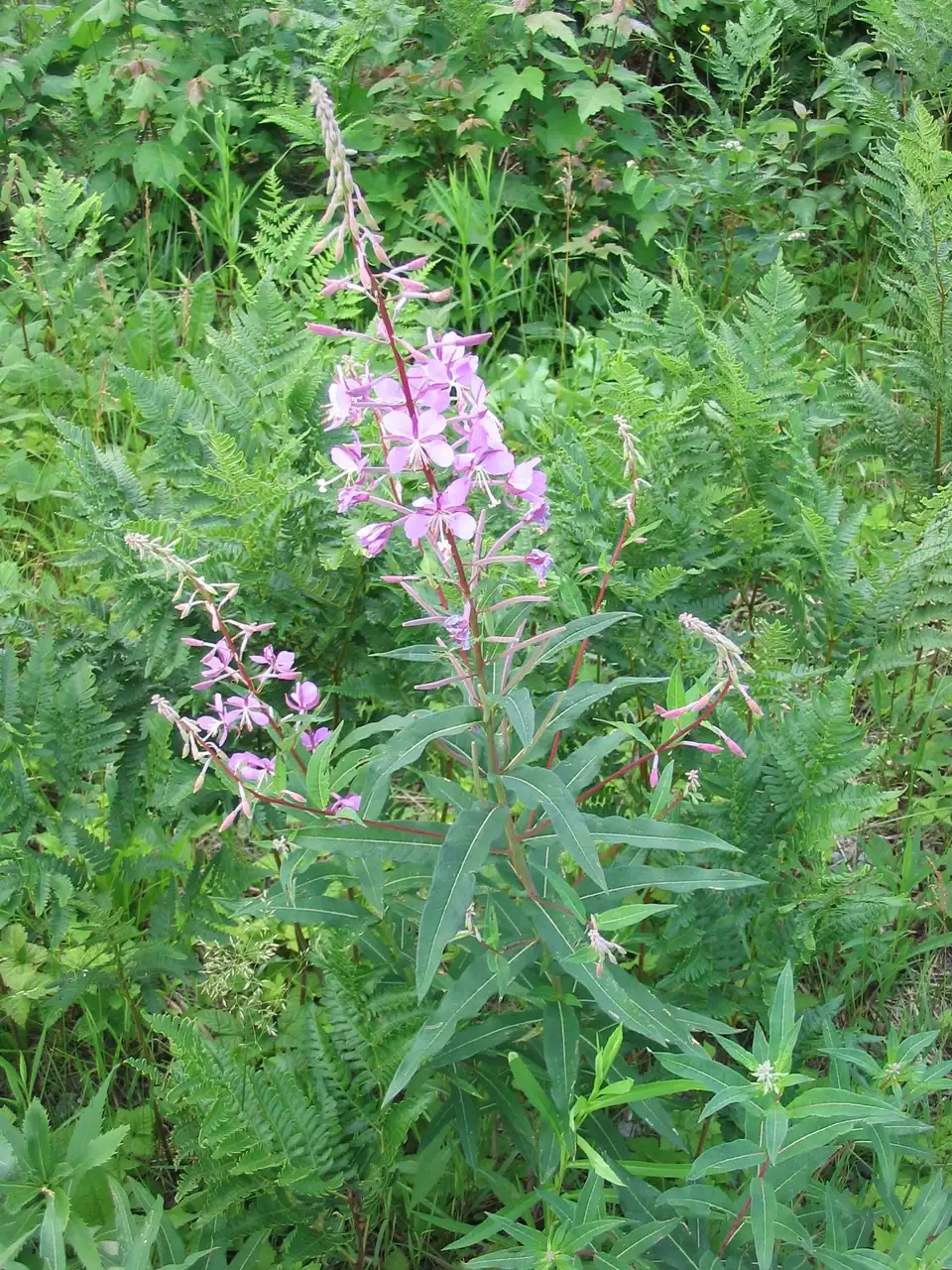


How to Grow and Care for Fireweed
Epilobium angustifolium
Written by Emilio Marruso · last checked
Not toxic to cats and dogs, according to the sources · Sources
At a glance
Fireweed is a hardy perennial for full sun to partial shade that loves moist soil that never gets waterlogged. It's also a treat to eat: pick the shoots as they first come up and the leaves early in spring, then enjoy them raw in salads or steamed like asparagus. Its dried leaves even make a sweet-tasting tea.
- Sun
Full sun to partial shade
What the sources say (1)
Light: Full sun to partial shade
Fireweed is a rhizomatous perennial wildflower that is easy to grow in full sun to partial shade, high organic matter, and well-drained soil.
— Epilobium angustifolium (Almaruat, Blooming Sally, Bomb Weed, Fireweed, Fire Weed, French willow, Great Willowherb, Great Willow Herb, Rose bay, Rosebay Willowherb, Saint Anthony's Laurel, Willow Herb) | North Carolina Extension Gardener Plant Toolbox [1] - Water
Keep the soil moist, but never waterlogged
What the sources say (4)
Watering: Moist soils
Southern North Carolina summers (NC State Extension): It can struggle in our hot southern summers, requiring afternoon shade and moist soils and does best in the mountain region of the state.
— Epilobium angustifolium (Almaruat, Blooming Sally, Bomb Weed, Fireweed, Fire Weed, French willow, Great Willowherb, Great Willow Herb, Rose bay, Rosebay Willowherb, Saint Anthony's Laurel, Willow Herb) | North Carolina Extension Gardener Plant Toolbox [1] According to OSU Extension: Found in moist to dry disturbed areas, including clearings, roadsides and recently burned sites.
— Chamaenerion angustifolium (fireweed) | OSU Extension Service [5] According to University of Maine Extension: -moist areas - not waterlogged
— Fireweed - Cooperative Extension: Maine Wild Blueberries - University of Maine Cooperative Extension [6] It can struggle in our hot southern summers, requiring afternoon shade and moist soils and does best in the mountain region of the state.
— Epilobium angustifolium (Almaruat, Blooming Sally, Bomb Weed, Fireweed, Fire Weed, French willow, Great Willowherb, Great Willow Herb, Rose bay, Rosebay Willowherb, Saint Anthony's Laurel, Willow Herb) | North Carolina Extension Gardener Plant Toolbox [1] - Cold
Survives winters down to −50 °F (−45.6 °C)
Very hardy · USDA 2a · RHS H7 · Z2
What the sources say (2)
Hardiness, coldest zone: 2a [winter low −45.6 to −42.8 °C (−50 to −45 °F)]
2a, 2b, 3a, 3b, 4a, 4b, 5a, 5b, 6a, 7a, 7b
— Epilobium angustifolium (Almaruat, Blooming Sally, Bomb Weed, Fireweed, Fire Weed, French willow, Great Willowherb, Great Willow Herb, Rose bay, Rosebay Willowherb, Saint Anthony's Laurel, Willow Herb) | North Carolina Extension Gardener Plant Toolbox [1] Hardiness, warmest zone: 7b [winter low −15 to −12.2 °C (5 to 10 °F)]
2a, 2b, 3a, 3b, 4a, 4b, 5a, 5b, 6a, 7a, 7b
— Epilobium angustifolium (Almaruat, Blooming Sally, Bomb Weed, Fireweed, Fire Weed, French willow, Great Willowherb, Great Willow Herb, Rose bay, Rosebay Willowherb, Saint Anthony's Laurel, Willow Herb) | North Carolina Extension Gardener Plant Toolbox [1] - Feeding
Feed it when you plant it, to help it settle in
What the sources say (1)
When: At establishment
Fireweed may be grown in well-drained, moist soil but they establish best with the addition of fertilizer.
— [7] - Harvest
Pick shoots as they come up and leaves in early spring; eat raw, steamed or dried as a sweet tea
What the sources say (7)
Harvest: Shoots when first emerging from the ground; leaves early in the spring, before the taste becomes stronger and the leaves tougher
Alaska (UAF Extension): shoots: When first emerging from the ground, fireweed shoots can be harvested for food.
— Fireweed | Cooperative Extension Service [2] Alaska (UAF Extension): leaves: season, so harvest and eat leaves early in the spring.
— Fireweed | Cooperative Extension Service [2] When first emerging from the ground, fireweed shoots can be harvested for food. They
— Fireweed | Cooperative Extension Service [2] season, so harvest and eat leaves early in the spring.
— Fireweed | Cooperative Extension Service [2] How to harvest: Harvest shoots when they first emerge from the ground; pick leaves and unopened buds before the blossoms develop, early in spring, because leaves become tougher and stronger-tasting later in the season; for flowers, select young, undamaged blossoms.
When first emerging from the ground, fireweed shoots can be harvested for food.
— Fireweed | Cooperative Extension Service [2] the taste becomes stronger and the leaves become tougher later in the season, so harvest and eat leaves early in the spring.
— Fireweed | Cooperative Extension Service [2] After the fireweed begins to bloom, select young, undamaged blossoms for use in recipes.
— Fireweed | Cooperative Extension Service [2] - Pests
Snails and slugs; sometimes powdery mildew, rust and leaf spot
What the sources say (2)
Pests: snails, slugs
Snails and slugs are occasional visitors.
— Epilobium angustifolium (Almaruat, Blooming Sally, Bomb Weed, Fireweed, Fire Weed, French willow, Great Willowherb, Great Willow Herb, Rose bay, Rosebay Willowherb, Saint Anthony's Laurel, Willow Herb) | North Carolina Extension Gardener Plant Toolbox [1] Diseases: powdery mildew, rust, leaf spot
Powdery mildew, rust, and leaf spot are occasional problems.
— Epilobium angustifolium (Almaruat, Blooming Sally, Bomb Weed, Fireweed, Fire Weed, French willow, Great Willowherb, Great Willow Herb, Rose bay, Rosebay Willowherb, Saint Anthony's Laurel, Willow Herb) | North Carolina Extension Gardener Plant Toolbox [1] - Watch out
Its seeds travel on the wind, so it can spread like an aggressive weed
- Size
1 to 3 ft wide
What the sources say (1)
Mature width: 30-91 cm (1 ft. 0 in. - 3 ft. 0 in.)
Width: 1 ft. 0 in. - 3 ft. 0 in.
— Epilobium angustifolium (Almaruat, Blooming Sally, Bomb Weed, Fireweed, Fire Weed, French willow, Great Willowherb, Great Willow Herb, Rose bay, Rosebay Willowherb, Saint Anthony's Laurel, Willow Herb) | North Carolina Extension Gardener Plant Toolbox [1] - Propagation
Divide it in spring or fall, or grow it from seed
What the sources say (3)
Propagation: Division in the spring or fall; seed
According to NC State Extension: Propagation can be accomplished through division in the spring or fall.
— Epilobium angustifolium (Almaruat, Blooming Sally, Bomb Weed, Fireweed, Fire Weed, French willow, Great Willowherb, Great Willow Herb, Rose bay, Rosebay Willowherb, Saint Anthony's Laurel, Willow Herb) | North Carolina Extension Gardener Plant Toolbox [1] Propagation can be accomplished through division in the spring or fall.
— Epilobium angustifolium (Almaruat, Blooming Sally, Bomb Weed, Fireweed, Fire Weed, French willow, Great Willowherb, Great Willow Herb, Rose bay, Rosebay Willowherb, Saint Anthony's Laurel, Willow Herb) | North Carolina Extension Gardener Plant Toolbox [1] Propagation can be accomplished through division in the spring or fall.
— Epilobium angustifolium (Almaruat, Blooming Sally, Bomb Weed, Fireweed, Fire Weed, French willow, Great Willowherb, Great Willow Herb, Rose bay, Rosebay Willowherb, Saint Anthony's Laurel, Willow Herb) | North Carolina Extension Gardener Plant Toolbox [1] - Safety
Not toxic to cats, dogs or horses
Overview
Fireweed is a rhizomatous perennial wildflower grown in full sun to partial shade and well-drained soil. [1] Its young shoots, leaves and blossoms are eaten as food. [2] It spreads by seeds and rhizomes and can become weedy. [1]
This record is incomplete: the sources we read do not cover every field yet.
Not yet covered by our sources: Pruning
Fireweed care
How to water Fireweed
Moist soils
What each source says
Southern North Carolina summers (NC State Extension): Afternoon shade and moist soils
According to OSU Extension: Moist to dry disturbed areas
According to University of Maine Extension: Moist areas, not waterlogged
What the sources say (4)
Southern North Carolina summers (NC State Extension): It can struggle in our hot southern summers, requiring afternoon shade and moist soils and does best in the mountain region of the state.According to OSU Extension: Found in moist to dry disturbed areas, including clearings, roadsides and recently burned sites.According to University of Maine Extension: -moist areas
- not waterloggedIt can struggle in our hot southern summers, requiring afternoon shade and moist soils and does best in the mountain region of the state.How much light Fireweed needs
Full sun to partial shade
What the sources say (1)
Fireweed is a rhizomatous perennial wildflower that is easy to grow in full sun to partial shade, high organic matter, and well-drained soil.How much cold Fireweed can take
Hardiness, coldest zone
2a [winter low −45.6 to −42.8 °C (−50 to −45 °F)]
What the sources say (1)
2a, 2b, 3a, 3b, 4a, 4b, 5a, 5b, 6a, 7a, 7bHardiness, warmest zone
7b [winter low −15 to −12.2 °C (5 to 10 °F)]
What the sources say (1)
2a, 2b, 3a, 3b, 4a, 4b, 5a, 5b, 6a, 7a, 7bHow to propagate Fireweed
Division in the spring or fall; seed
What each source says
According to NC State Extension: Division in the spring or fall; seed
What the sources say (3)
According to NC State Extension: Propagation can be accomplished through division in the spring or fall.Propagation can be accomplished through division in the spring or fall.Propagation can be accomplished through division in the spring or fall.How to grow Fireweed
The plant
Life cycle
perennial
What the sources say (1)
Fireweed is an herbaceous perennial in the willowherb family (Onagraceae)Family
Onagraceae
What the sources say (1)
Fireweed is an herbaceous perennial in the willowherb family (Onagraceae)Mature height
Mature width
30-91 cm (1 ft. 0 in. - 3 ft. 0 in.)
What the sources say (1)
Width: 1 ft. 0 in. - 3 ft. 0 in.Harvest and storage
How to harvest
Harvest shoots when they first emerge from the ground; pick leaves and unopened buds before the blossoms develop, early in spring, because leaves become tougher and stronger-tasting later in the season; for flowers, select young, undamaged blossoms.
What the sources say (3)
When first emerging from the ground, fireweed shoots can be harvested for food.the taste becomes stronger and the leaves become tougher later in the season, so harvest and eat leaves early in the spring.After the fireweed begins to bloom, select young, undamaged blossoms for use in recipes.Storage
Store fresh fireweed in a covered container in the refrigerator like salad greens; to dry, spread blossoms or leaves in a single layer on paper towels, air dry about two days, then keep in a sealed container in a cool, dry place.
What the sources say (2)
Fireweed should be stored in a covered container in the refrigerator as you would other salad greens.Spread the fireweed (blossoms or leaves) on paper towels in a single layer and allow to air dry approximately two days. Store in a sealed container in a cool, dry place.Pests and diseases
Pests
snails, slugs
What the sources say (1)
Snails and slugs are occasional visitors.Diseases
powdery mildew, rust, leaf spot
What the sources say (1)
Powdery mildew, rust, and leaf spot are occasional problems.Fertilizing
When
At establishment
What the sources say (1)
Fireweed may be grown in well-drained, moist soil but they establish best with the addition of fertilizer.Fireweed pests and problems
Snails and slugs
Symptom: Occasional visitors.
What to do: No management given.
What the sources say (1)
Snails and slugs are occasional visitors. Powdery mildew, rust, and leaf spot are occasional problems.
— Epilobium angustifolium (Almaruat, Blooming Sally, Bomb Weed, Fireweed, Fire Weed, French willow, Great Willowherb, Great Willow Herb, Rose bay, Rosebay Willowherb, Saint Anthony's Laurel, Willow Herb) | North Carolina Extension Gardener Plant Toolbox [1] Powdery mildew, rust and leaf spot
Symptom: Occasional problems.
What to do: No management given.
What the sources say (1)
Snails and slugs are occasional visitors. Powdery mildew, rust, and leaf spot are occasional problems.
— Epilobium angustifolium (Almaruat, Blooming Sally, Bomb Weed, Fireweed, Fire Weed, French willow, Great Willowherb, Great Willow Herb, Rose bay, Rosebay Willowherb, Saint Anthony's Laurel, Willow Herb) | North Carolina Extension Gardener Plant Toolbox [1] Weedy and aggressive spread
Symptom: Wind-dispersed seeds make the plant weedy and aggressive.
What to do: No management given.
What the sources say (1)
The wind-dispersed seeds can make fireweed weedy and aggressive.
— Epilobium angustifolium (Almaruat, Blooming Sally, Bomb Weed, Fireweed, Fire Weed, French willow, Great Willowherb, Great Willow Herb, Rose bay, Rosebay Willowherb, Saint Anthony's Laurel, Willow Herb) | North Carolina Extension Gardener Plant Toolbox [1]
Remedies
Each remedy shows what official sources say about it; traditional remedies without an official source are marked as such. Harmful ones are listed so you know to avoid them.
Treating the plant
powdery mildew
proper spacing and no overhead watering Not verified
Traditional remedy, not verified by an official source.
How: Ensure proper spacing and avoid overhead watering in humid, poorly ventilated sites.
pests
remove affected plant material Not verified
Traditional remedy, not verified by an official source.
How: Remove any affected plant material immediately and discard it in the trash (do not compost it).
Getting rid of it
weedy spread
barriers or regular division to contain spread Not verified
Traditional remedy, not verified by an official source.
How: Use barriers or regular division to contain growth in ornamental settings.
Is Fireweed poisonous?
Reported by the source, quoted verbatim. This is not medical or veterinary advice: if a person or an animal may have eaten this plant, contact a poison control centre or a veterinarian.
#non-toxic for cats #non-toxic for horses #non-toxic for dogs
[1]The source flags the risk for this animal but does not explain why.
Calendar
Harvest
Shoots when first emerging from the ground; leaves early in the spring, before the taste becomes stronger and the leaves tougher
What each source says
Alaska (UAF Extension): shoots: When first emerging from the ground
Alaska (UAF Extension): leaves: Early in the spring
What the sources say (4)
Alaska (UAF Extension): shoots: When first emerging from the ground, fireweed shoots can be harvested for food.Alaska (UAF Extension): leaves: season, so harvest and eat leaves early in the spring.When first emerging from the ground, fireweed shoots can be harvested for food. Theyseason, so harvest and eat leaves early in the spring.Pruning
Not stated in the sources we read.
Months as given by the sources, which are mostly from the United States (northern hemisphere). In the southern hemisphere they shift by about six months.
Edibility
Reported by the source, quoted verbatim. Do not eat a plant on the basis of this page alone: identification mistakes can be dangerous.
Indicative values
Values from a secondary source, not checked word for word like the rest of this page. Use them as a starting point.
- Hours of sun
- 8-10 hoursIndicative value, adapt it to your climate · Secondary source
- Drought tolerant
- yesIndicative value, adapt it to your climate · Secondary source
- Soil pH
- 5.5-7Indicative value, adapt it to your climate · Secondary source
- Care level
- MediumIndicative value, adapt it to your climate · Secondary source
- Growth rate
- LowIndicative value, adapt it to your climate · Secondary source
- Pruning
- February, March, April, MayIndicative value, adapt it to your climate · Secondary source
Similar plants
- Fringed Willowherb Epilobium ciliatum
- Hairy Willowherb Epilobium hirsutum
- Bigfruit evening primrose Oenothera macrocarpa
- Broadleaf Enchanter's Nightshade Circaea canadensis
- Creeping Water Primrose Ludwigia hexapetala
- Hardy Fushia Fuchsia magellanica
- Marsh Purslane Ludwigia palustris
- Mosaic Plant Ludwigia sedoides
Sources
Every value above is quoted from these documents. Links lead to the original publisher.
- Epilobium angustifolium (Almaruat, Blooming Sally, Bomb Weed, Fireweed, Fire Weed, French willow, Great Willowherb, Great Willow Herb, Rose bay, Rosebay Willowherb, Saint Anthony's Laurel, Willow Herb) | North Carolina Extension Gardener Plant Toolbox · plants.ces.ncsu.edu, consulted
- Fireweed | Cooperative Extension Service · uaf.edu, consulted
- Great Willow Herb - Epilobium angustifolium | North Carolina Extension Gardener Plant Toolbox · plants.ces.ncsu.edu, consulted
- Great Willowherb - Epilobium angustifolium | North Carolina Extension Gardener Plant Toolbox · plants.ces.ncsu.edu, consulted
- Chamaenerion angustifolium (fireweed) | OSU Extension Service · extension.oregonstate.edu, consulted
- Fireweed - Cooperative Extension: Maine Wild Blueberries - University of Maine Cooperative Extension · extension.umaine.edu, consulted
- courses.washington.edu · courses.washington.edu
Written by Emilio Marruso · last checked