

How to Grow and Care for Mosaic Plant
Ludwigia sedoides
Written by Emilio Marruso · last checked
At a glance
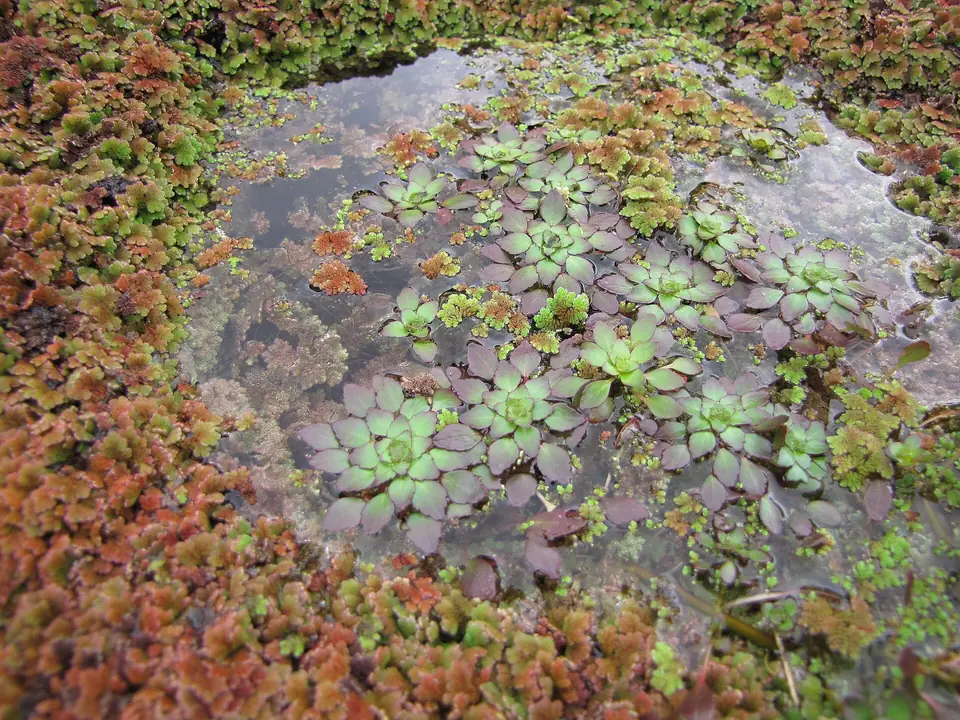
This perennial water plant is a joy to grow: rooted under 6–18 inches of water, it spreads its leaves 1–2 feet wide while staying just 4 inches tall. Give it full sun and generous liquid feeding to bring out its best leaf color, and it will thrive in a container or even indoors.
- Sun
Full sun
What the sources say (1)
Light: Full sun
Light: Full sun (6 or more hours of direct sunlight a day)
— Ludwigia sedoides (False Loosestrife, Mosaic Flower, Mosaic Plant) | North Carolina Extension Gardener Plant Toolbox [1] - Water
A water plant: root it under 6–18 in of water
What the sources say (2)
Watering: Aquatic; requires a wet environment, rooted under 6 to 18 inches [15–46 cm] of water
Mosaic Plant requires lots of sun or artificial light, a wet environment
— Ludwigia sedoides (False Loosestrife, Mosaic Flower, Mosaic Plant) | North Carolina Extension Gardener Plant Toolbox [1] in containers covered with 6 to 18 inches of 72 degree F. water
— Ludwigia sedoides (False Loosestrife, Mosaic Flower, Mosaic Plant) | North Carolina Extension Gardener Plant Toolbox [1] - Cold
Survives winters down to 30 °F (−1.1 °C)
Half hardy: mild winters or an unheated greenhouse · USDA 10a · RHS H3 · Z10
What the sources say (2)
Hardiness, coldest zone: 10a [winter low −1.1 to 1.7 °C (30 to 35 °F)]
USDA Plant Hardiness Zone: 10a, 10b, 11a, 11b
— Ludwigia sedoides (False Loosestrife, Mosaic Flower, Mosaic Plant) | North Carolina Extension Gardener Plant Toolbox [1] Hardiness, warmest zone: 11b [winter low 7.2 to 10 °C (45 to 50 °F)]
USDA Plant Hardiness Zone: 10a, 10b, 11a, 11b
— Ludwigia sedoides (False Loosestrife, Mosaic Flower, Mosaic Plant) | North Carolina Extension Gardener Plant Toolbox [1] - Feeding
Feed generously with liquid fertilizer; faded leaves mean it needs food or more light
What the sources say (3)
Mineral fertilizers: Liquid fertilizer, to encourage growth and enhance leaf color
If allowed to float in the water, the stems are just below the water's surface. Liquid fertilizers help to encourage growth and enhance the leaf color.
— Ludwigia (Primrose-Willow, Water Primrose, Water-Primrose, Water-Purslane) | North Carolina Extension Gardener Plant Toolbox [2] Micronutrients: Heavy fertilization with both macro- and micronutrients for attractive growth
Mosaic Plant requires lots of sun or artificial light, a wet environment, and heavy macro and micro fertilization to produce attractive growth.
— Ludwigia sedoides (False Loosestrife, Mosaic Flower, Mosaic Plant) | North Carolina Extension Gardener Plant Toolbox [1] Signs of deficiency: Loss of foliage color (also caused by inadequate light)
Inadequate light and nutrients can cause loss of foliage color.
— Ludwigia (Primrose-Willow, Water Primrose, Water-Primrose, Water-Purslane) | North Carolina Extension Gardener Plant Toolbox [2] - Pests
Watch for leaf spot and rust
What the sources say (1)
Diseases: leaf spot, rust
No known insect or disease problems. Can be susceptible to leaf spot and rust.
— Ludwigia sedoides (False Loosestrife, Mosaic Flower, Mosaic Plant) | North Carolina Extension Gardener Plant Toolbox [1] - Size
4 in tall, spreading 1–2 ft wide
What the sources say (2)
Mature height: 10.16 cm (4 in)
While only 4 inches high at maturity, it has colorful floating diamond leaves that form an intricate rose pattern
— Ludwigia sedoides (False Loosestrife, Mosaic Flower, Mosaic Plant) | North Carolina Extension Gardener Plant Toolbox [1] Mature width: 30.48-60.96 cm (1-2 ft)
Height: 0 ft. 4 in. - 0 ft. 4 in. Width: 1 ft. 0 in. - 2 ft. 0 in.
— Ludwigia sedoides (False Loosestrife, Mosaic Flower, Mosaic Plant) | North Carolina Extension Gardener Plant Toolbox [1] - Propagation
Grow new plants from stem cuttings
What the sources say (1)
Propagation: Stem cuttings
To propagate the plant, cut off the floating rosette leaving a piece of the stem.
— Ludwigia sedoides (False Loosestrife, Mosaic Flower, Mosaic Plant) | North Carolina Extension Gardener Plant Toolbox [1] - Containers
Grows in containers and indoors too
What the sources say (2)
In containers: Yes
needs to be brought indoors where it can be grown as an annual in containers
— Ludwigia sedoides (False Loosestrife, Mosaic Flower, Mosaic Plant) | North Carolina Extension Gardener Plant Toolbox [1] Indoors: Yes
needs to be brought indoors where it can be grown as an annual in containers
— Ludwigia sedoides (False Loosestrife, Mosaic Flower, Mosaic Plant) | North Carolina Extension Gardener Plant Toolbox [1]
Overview
Mosaic plant is a floating aquatic herbaceous perennial native to Brazil, with colorful floating diamond leaves and yellow cup-shaped flowers. [1] It is not winter hardy in North Carolina and is difficult to overwinter indoors, though large aquariums can be used. [1]
This record is incomplete: the sources we read do not cover every field yet.
Not yet covered by our sources: Pruning
Mosaic Plant care
Measurements in square brackets are our conversion into the other unit system; the quoted text is unchanged.
How to water Mosaic Plant
Aquatic; requires a wet environment, rooted under 6 to 18 inches [15–46 cm] of water
What the sources say (2)
Mosaic Plant requires lots of sun or artificial light, a wet environmentin containers covered with 6 to 18 inches of 72 degree F. waterHow much light Mosaic Plant needs
Full sun
What the sources say (1)
Light:
Full sun (6 or more hours of direct sunlight a day)How much cold Mosaic Plant can take
Hardiness, coldest zone
10a [winter low −1.1 to 1.7 °C (30 to 35 °F)]
What the sources say (1)
USDA Plant Hardiness Zone:
10a, 10b, 11a, 11bHardiness, warmest zone
11b [winter low 7.2 to 10 °C (45 to 50 °F)]
What the sources say (1)
USDA Plant Hardiness Zone:
10a, 10b, 11a, 11bWhere to grow Mosaic Plant
Indoors
Yes
What the sources say (1)
needs to be brought indoors where it can be grown as an annual in containersIn containers
Yes
What the sources say (1)
needs to be brought indoors where it can be grown as an annual in containersHow to propagate Mosaic Plant
Stem cuttings
What the sources say (1)
To propagate the plant, cut off the floating rosette leaving a piece of the stem.How to grow Mosaic Plant
The plant
Life cycle
perennial
What the sources say (1)
The mosaic plant is a floating, aquatic, herbaceous perennial in the primrose family, native to Brazil, but often grown as an annual in other climates.Family
Onagraceae
What the sources say (1)
Genus:
Ludwigia
Species:
sedoides
Family:
Onagraceae
Life Cycle:
PerennialMature height
10.16 cm (4 in)
What the sources say (1)
While only 4 inches high at maturity, it has colorful floating diamond leaves that form an intricate rose patternMature width
30.48-60.96 cm (1-2 ft)
What the sources say (1)
Height: 0 ft. 4 in. - 0 ft. 4 in.
Width: 1 ft. 0 in. - 2 ft. 0 in.Pests and diseases
Diseases
leaf spot, rust
What the sources say (1)
No known insect or disease problems. Can be susceptible to leaf spot and rust.Fertilizing
Mineral fertilizers
Liquid fertilizer, to encourage growth and enhance leaf color
What the sources say (1)
If allowed to float in the water, the stems are just below the water's surface. Liquid fertilizers help to encourage growth and enhance the leaf color.Micronutrients
Heavy fertilization with both macro- and micronutrients for attractive growth
What the sources say (1)
Mosaic Plant requires lots of sun or artificial light, a wet environment, and heavy macro and micro fertilization to produce attractive growth.Signs of deficiency
Loss of foliage color (also caused by inadequate light)
What the sources say (1)
Inadequate light and nutrients can cause loss of foliage color.Mosaic Plant pests and problems
Leaf spot and rust
What the sources say (1)
No known insect or disease problems. Can be susceptible to leaf spot and rust.
— Ludwigia sedoides (False Loosestrife, Mosaic Flower, Mosaic Plant) | North Carolina Extension Gardener Plant Toolbox [1]
Remedies
Each remedy shows what official sources say about it; traditional remedies without an official source are marked as such. Harmful ones are listed so you know to avoid them.
Treating the plant
leaf spot
removing and destroying infected leaves Not verified
Traditional remedy, not verified by an official source.
How: Remove and destroy, or hot compost the leaves to help break the cycle.
Getting rid of it
dense mats
cutting back Not verified
Traditional remedy, not verified by an official source.
Be sure to properly dispose of any cuttings in the trash or compost; don’t just toss them aside, as mosaic plant primarily spreads via cuttings
— pondinformer.com [3] How: Keep the plant cut back so that it does not overtake the rest of the pond; dispose of cuttings in the trash or compost.
Calendar
Pruning
Not stated in the sources we read.
Months as given by the sources, which are mostly from the United States (northern hemisphere). In the southern hemisphere they shift by about six months.
Similar plants
- Marsh Purslane Ludwigia palustris
- Seedbox Ludwigia alternifolia
- Creeping Water Primrose Ludwigia hexapetala
- Fireweed Epilobium angustifolium
- Fringed Willowherb Epilobium ciliatum
- Hardy Fushia Fuchsia magellanica
- Showy Evening Primrose Oenothera speciosa
- Sundrops Oenothera fruticosa
Sources
Every value above is quoted from these documents. Links lead to the original publisher.
- Ludwigia sedoides (False Loosestrife, Mosaic Flower, Mosaic Plant) | North Carolina Extension Gardener Plant Toolbox · plants.ces.ncsu.edu, consulted
- Ludwigia (Primrose-Willow, Water Primrose, Water-Primrose, Water-Purslane) | North Carolina Extension Gardener Plant Toolbox · plants.ces.ncsu.edu, consulted
- pondinformer.com · pondinformer.com
Written by Emilio Marruso · last checked