
How to Grow and Care for Marsh Purslane
Ludwigia palustris
Written by Emilio Marruso · last checked
At a glance
This easygoing perennial loves wet feet: give it muddy ground or clear, shallow water a few inches deep, plus full sun. Making more is simple, by division, by seed or from little rootlets that form near its lower leaves. As a bonus, its leaves and stems are edible, fresh or cooked, so your pond edge can also feed you.
- Sun
Full sun
What the sources say (2)
Light: Full sun
Light: Full sun (6 or more hours of direct sunlight a day)
— Ludwigia palustris (Marsh Purslane, Marsh Seedbox, Water Purslane) | North Carolina Extension Gardener Plant Toolbox [1] Water Purslane prefers full sun and wet conditions, either wet muddy ground or clear shallow water a few inches deep.
— Ludwigia palustris (Marsh Purslane, Marsh Seedbox, Water Purslane) | North Carolina Extension Gardener Plant Toolbox [1] - Water
Keep it in wet, muddy ground or clear, shallow water a few inches deep
What the sources say (1)
Watering: Wet muddy ground or clear shallow water a few inches deep
Water Purslane prefers full sun and wet conditions, either wet muddy ground or clear shallow water a few inches deep.
— Ludwigia palustris (Marsh Purslane, Marsh Seedbox, Water Purslane) | North Carolina Extension Gardener Plant Toolbox [1] - Cold
Survives winters down to −40 °F (−40 °C)
Very hardy · USDA 3a · RHS H7 · Z3
What the sources say (2)
Hardiness, coldest zone: 3a [winter low −40 to −37.2 °C (−40 to −35 °F)]
USDA Plant Hardiness Zone: 3a, 3b, 4a, 4b, 5a, 5b, 6a, 6b, 7a, 7b
— Ludwigia palustris (Marsh Purslane, Marsh Seedbox, Water Purslane) | North Carolina Extension Gardener Plant Toolbox [1] Hardiness, warmest zone: 7b [winter low −15 to −12.2 °C (5 to 10 °F)]
USDA Plant Hardiness Zone: 3a, 3b, 4a, 4b, 5a, 5b, 6a, 6b, 7a, 7b
— Ludwigia palustris (Marsh Purslane, Marsh Seedbox, Water Purslane) | North Carolina Extension Gardener Plant Toolbox [1] - Harvest
Leaves and stems are edible, fresh or cooked
- Propagation
Divide it, sow seed, or use the rootlets that form near the lower leaves
What the sources say (2)
Propagation: Division, seed, rootlets forming near the axils of the lower leaves
Life Cycle: Perennial Recommended Propagation Strategy: Division Seed
— Ludwigia palustris (Marsh Purslane, Marsh Seedbox, Water Purslane) | North Carolina Extension Gardener Plant Toolbox [1] the plant reproduces by forming rootlets near the axils of the lower leaves
— Ludwigia palustris (Marsh Purslane, Marsh Seedbox, Water Purslane) | North Carolina Extension Gardener Plant Toolbox [1]
Overview
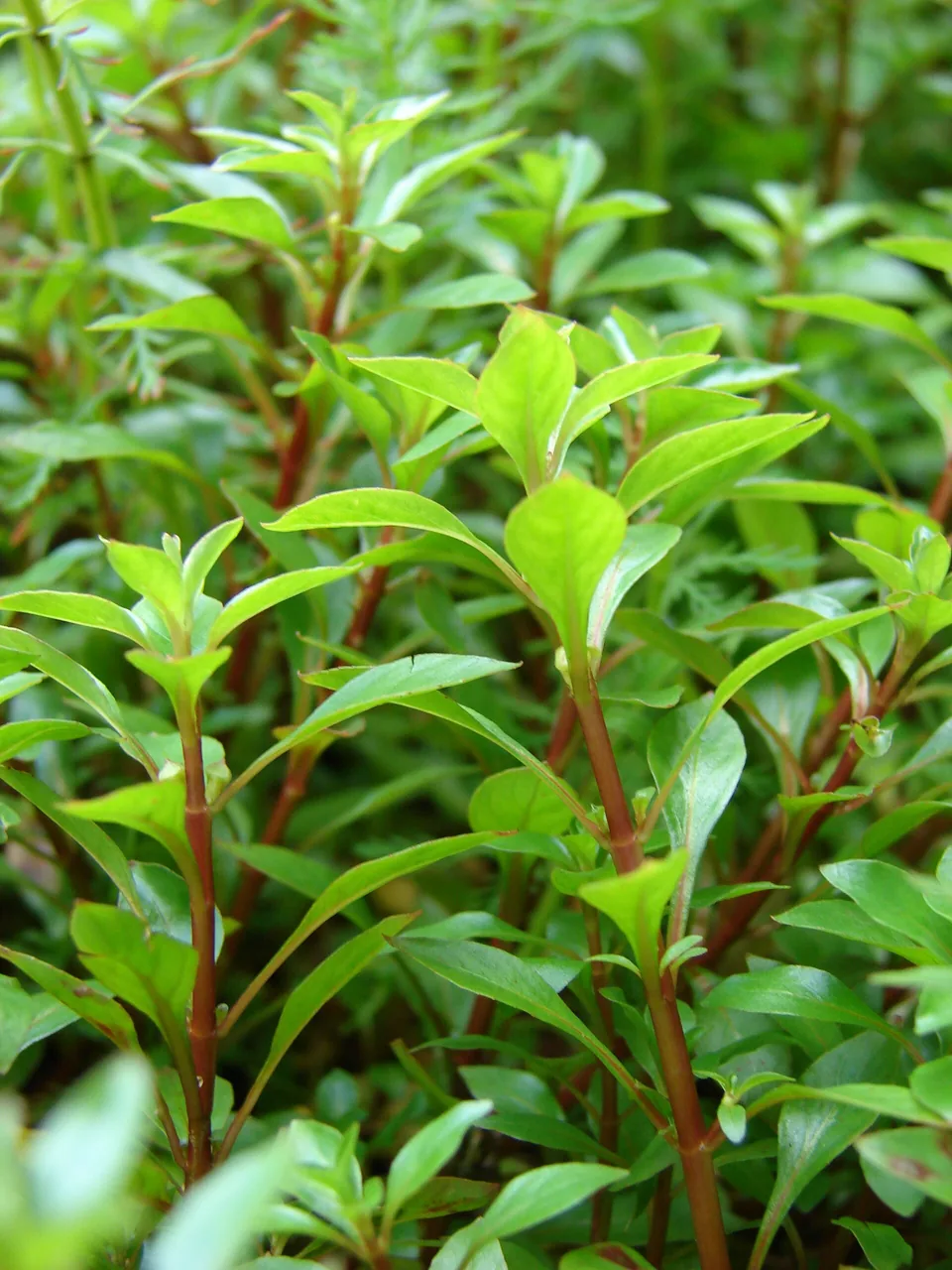
Marsh purslane is a mat-forming herbaceous perennial of wet areas, found along ponds, streams and muddy ground. [1] It prefers full sun and wet muddy ground or shallow clear water. [1] It can be considered weedy but also stabilizes muddy banks. [1]
This record is incomplete: the sources we read do not cover every field yet.
Not yet covered by our sources: Pruning
Marsh Purslane care
How to water Marsh Purslane
Wet muddy ground or clear shallow water a few inches deep
What the sources say (1)
Water Purslane prefers full sun and wet conditions, either wet muddy ground or clear shallow water a few inches deep.How much light Marsh Purslane needs
Full sun
What the sources say (2)
Light:
Full sun (6 or more hours of direct sunlight a day)Water Purslane prefers full sun and wet conditions, either wet muddy ground or clear shallow water a few inches deep.How much cold Marsh Purslane can take
Hardiness, coldest zone
3a [winter low −40 to −37.2 °C (−40 to −35 °F)]
What the sources say (1)
USDA Plant Hardiness Zone:
3a, 3b, 4a, 4b, 5a, 5b, 6a, 6b, 7a, 7bHardiness, warmest zone
7b [winter low −15 to −12.2 °C (5 to 10 °F)]
What the sources say (1)
USDA Plant Hardiness Zone:
3a, 3b, 4a, 4b, 5a, 5b, 6a, 6b, 7a, 7bHow to propagate Marsh Purslane
Division, seed, rootlets forming near the axils of the lower leaves
What the sources say (2)
Life Cycle:
Perennial
Recommended Propagation Strategy:
Division
Seedthe plant reproduces by forming rootlets near the axils of the lower leavesHow to grow Marsh Purslane
The plant
Life cycle
perennial
What the sources say (1)
Water Purslane is a mat-forming, herbaceous perennial, wet area subshrub in the evening primrose family.Family
Onagraceae
What the sources say (1)
Genus:
Ludwigia
Species:
palustris
Family:
Onagraceae
Life Cycle:
PerennialRemedies
Each remedy shows what official sources say about it; traditional remedies without an official source are marked as such. Harmful ones are listed so you know to avoid them.
Getting rid of it
invasive water primrose
manual digging up Not proven
Never throw pulled plants on the ground or into the street or sidewalk.
— portland.gov [3] How: pull it out, ideally before the plants go to seed; any fragment of stem left behind can grow into a new plant
If water primrose appears in your pond, you should pull it out, ideally before the plants go to seed. Keep in mind that just about any fragment of stem left behind can grow into a new plant.
— huntfish.mdc.mo.gov [2] What the evidence says Manual. Digging up water primrose is a lot of work and doesn't work very well on large patches. It is easy to leave roots still in the soil or to break off a piece of stem.
— portland.gov [3]
Calendar
Pruning
Not stated in the sources we read.
Months as given by the sources, which are mostly from the United States (northern hemisphere). In the southern hemisphere they shift by about six months.
Edibility
Reported by the source, quoted verbatim. Do not eat a plant on the basis of this page alone: identification mistakes can be dangerous.
Edibility: Leaves and stems are edible either fresh or cooked.
[1]
Similar plants
- Creeping Water Primrose Ludwigia hexapetala
- Mosaic Plant Ludwigia sedoides
- Seedbox Ludwigia alternifolia
- Fireweed Epilobium angustifolium
- Fringed Willowherb Epilobium ciliatum
- Hairy Willowherb Epilobium hirsutum
- Hardy Fushia Fuchsia magellanica
- Showy Evening Primrose Oenothera speciosa
Sources
Every value above is quoted from these documents. Links lead to the original publisher.
- Ludwigia palustris (Marsh Purslane, Marsh Seedbox, Water Purslane) | North Carolina Extension Gardener Plant Toolbox · plants.ces.ncsu.edu, consulted
- huntfish.mdc.mo.gov · huntfish.mdc.mo.gov
- portland.gov · portland.gov
Written by Emilio Marruso · last checked