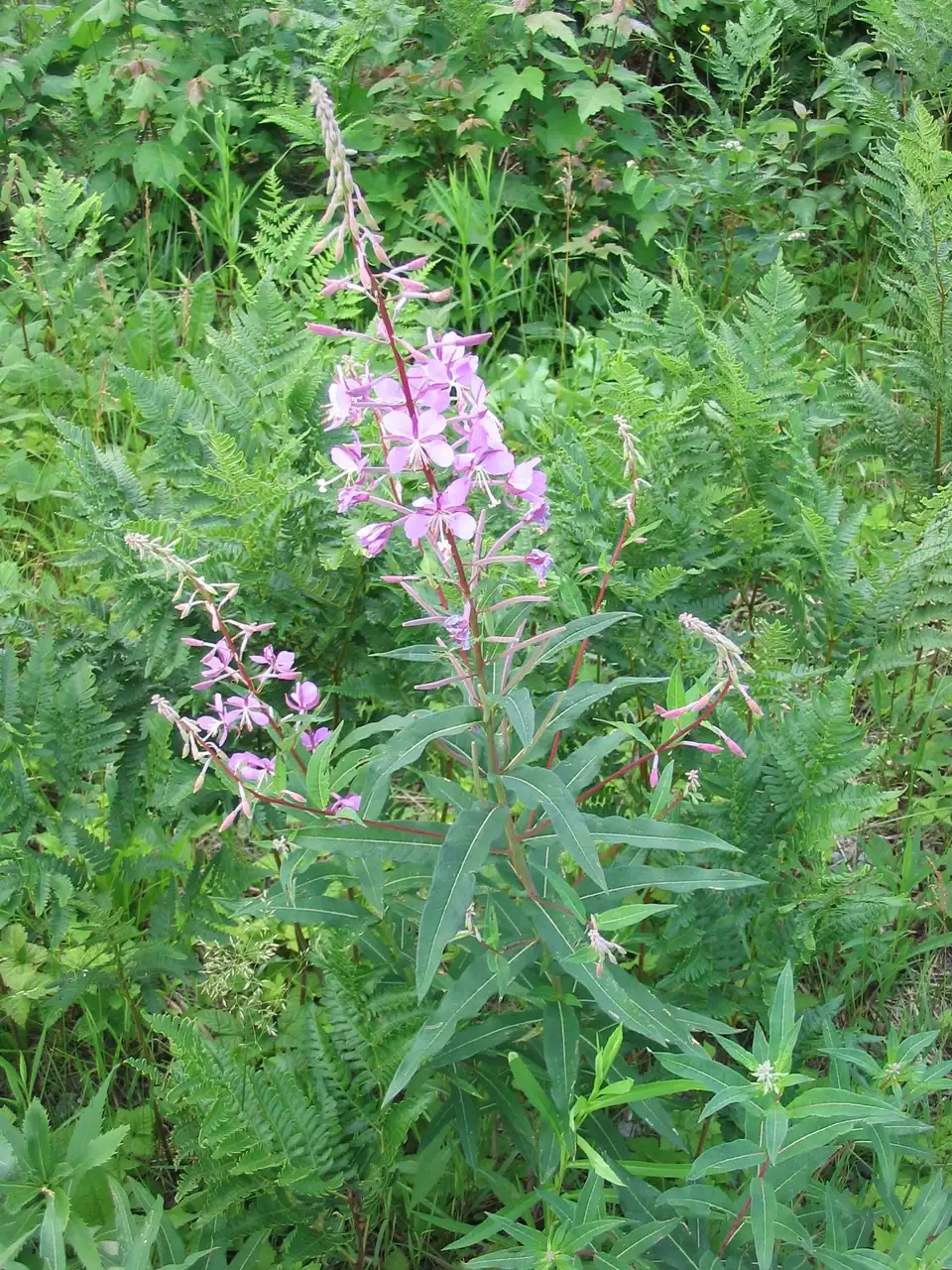


Cómo cultivar y cuidar Fireweed
Epilobium angustifolium
Escrito por Emilio Marruso · última revisión
No tóxica para gatos y perros, según las fuentes · Fuentes
De un vistazo
El epilobio es una perenne que crece a pleno sol o en semisombra, en suelo húmedo pero nunca encharcado. Además se come: recoge los brotes cuando asoman de la tierra y las hojas a principios de primavera, y disfrútalos crudos en ensalada o al vapor como los espárragos. Con sus hojas secas se prepara incluso una infusión de sabor dulce.
- Sol
Pleno sol o semisombra
Qué dicen las fuentes (1)
Luz: Pleno sol a semisombra
Fireweed is a rhizomatous perennial wildflower that is easy to grow in full sun to partial shade, high organic matter, and well-drained soil.
— Epilobium angustifolium (Almaruat, Blooming Sally, Bomb Weed, Fireweed, Fire Weed, French willow, Great Willowherb, Great Willow Herb, Rose bay, Rosebay Willowherb, Saint Anthony's Laurel, Willow Herb) | North Carolina Extension Gardener Plant Toolbox [1] - Riego
Mantén la tierra húmeda, pero nunca encharcada
Qué dicen las fuentes (4)
Riego: Suelos húmedos
Veranos del sur de Carolina del Norte (Extensión NC State): It can struggle in our hot southern summers, requiring afternoon shade and moist soils and does best in the mountain region of the state.
— Epilobium angustifolium (Almaruat, Blooming Sally, Bomb Weed, Fireweed, Fire Weed, French willow, Great Willowherb, Great Willow Herb, Rose bay, Rosebay Willowherb, Saint Anthony's Laurel, Willow Herb) | North Carolina Extension Gardener Plant Toolbox [1] Según OSU Extension: Found in moist to dry disturbed areas, including clearings, roadsides and recently burned sites.
— Chamaenerion angustifolium (fireweed) | OSU Extension Service [5] Según University of Maine Extension: -moist areas - not waterlogged
— Fireweed - Cooperative Extension: Maine Wild Blueberries - University of Maine Cooperative Extension [6] It can struggle in our hot southern summers, requiring afternoon shade and moist soils and does best in the mountain region of the state.
— Epilobium angustifolium (Almaruat, Blooming Sally, Bomb Weed, Fireweed, Fire Weed, French willow, Great Willowherb, Great Willow Herb, Rose bay, Rosebay Willowherb, Saint Anthony's Laurel, Willow Herb) | North Carolina Extension Gardener Plant Toolbox [1] - Frío
Aguanta inviernos de hasta −45,6 °C (−50 °F)
Muy rústica · USDA 2a · RHS H7 · Z2
Qué dicen las fuentes (2)
Rusticidad, zona más fría: 2a [mínima invernal de −45,6 a −42,8 °C (de −50 a −45 °F)]
2a, 2b, 3a, 3b, 4a, 4b, 5a, 5b, 6a, 7a, 7b
— Epilobium angustifolium (Almaruat, Blooming Sally, Bomb Weed, Fireweed, Fire Weed, French willow, Great Willowherb, Great Willow Herb, Rose bay, Rosebay Willowherb, Saint Anthony's Laurel, Willow Herb) | North Carolina Extension Gardener Plant Toolbox [1] Rusticidad, zona más cálida: 7b [mínima invernal de −15 a −12,2 °C (de 5 a 10 °F)]
2a, 2b, 3a, 3b, 4a, 4b, 5a, 5b, 6a, 7a, 7b
— Epilobium angustifolium (Almaruat, Blooming Sally, Bomb Weed, Fireweed, Fire Weed, French willow, Great Willowherb, Great Willow Herb, Rose bay, Rosebay Willowherb, Saint Anthony's Laurel, Willow Herb) | North Carolina Extension Gardener Plant Toolbox [1] - Abonado
Abónala al plantarla para ayudarla a arraigar
Qué dicen las fuentes (1)
Cuándo: Al establecerse
Fireweed may be grown in well-drained, moist soil but they establish best with the addition of fertilizer.
— [7] - Cosecha
Recoge los brotes al asomar y las hojas a principios de primavera; crudos, al vapor o secos en infusión
Qué dicen las fuentes (7)
Cosecha: Brotes cuando emergen por primera vez del suelo; hojas a principios de la primavera, antes de que el sabor se vuelva más fuerte y las hojas más duras
Alaska (Extensión UAF): brotes: When first emerging from the ground, fireweed shoots can be harvested for food.
— Fireweed | Cooperative Extension Service [2] Alaska (Extensión UAF): hojas: season, so harvest and eat leaves early in the spring.
— Fireweed | Cooperative Extension Service [2] When first emerging from the ground, fireweed shoots can be harvested for food. They
— Fireweed | Cooperative Extension Service [2] season, so harvest and eat leaves early in the spring.
— Fireweed | Cooperative Extension Service [2] Cómo cosechar: Cosecha los brotes cuando emergen del suelo; recoge las hojas y los brotes sin abrir antes de que se desarrollen las flores, a principios de primavera, porque las hojas se vuelven más duras y de sabor más fuerte más adelante en la temporada; para las flores, selecciona flores jóvenes y sin daños.
When first emerging from the ground, fireweed shoots can be harvested for food.
— Fireweed | Cooperative Extension Service [2] the taste becomes stronger and the leaves become tougher later in the season, so harvest and eat leaves early in the spring.
— Fireweed | Cooperative Extension Service [2] After the fireweed begins to bloom, select young, undamaged blossoms for use in recipes.
— Fireweed | Cooperative Extension Service [2] - Plagas
Caracoles y babosas; a veces oídio, roya y manchas en las hojas
Qué dicen las fuentes (2)
Plagas: caracoles, babosas
Snails and slugs are occasional visitors.
— Epilobium angustifolium (Almaruat, Blooming Sally, Bomb Weed, Fireweed, Fire Weed, French willow, Great Willowherb, Great Willow Herb, Rose bay, Rosebay Willowherb, Saint Anthony's Laurel, Willow Herb) | North Carolina Extension Gardener Plant Toolbox [1] Enfermedades: mildiu polvoriento, roya, mancha foliar
Powdery mildew, rust, and leaf spot are occasional problems.
— Epilobium angustifolium (Almaruat, Blooming Sally, Bomb Weed, Fireweed, Fire Weed, French willow, Great Willowherb, Great Willow Herb, Rose bay, Rosebay Willowherb, Saint Anthony's Laurel, Willow Herb) | North Carolina Extension Gardener Plant Toolbox [1] - Atención
Sus semillas vuelan con el viento y puede extenderse como una mala hierba invasora
- Tamaño
De 30 a 91 cm de ancho
Qué dicen las fuentes (1)
Anchura adulta: 30-91 cm (1 pie 0 pulg. - 3 pies 0 pulg.)
Width: 1 ft. 0 in. - 3 ft. 0 in.
— Epilobium angustifolium (Almaruat, Blooming Sally, Bomb Weed, Fireweed, Fire Weed, French willow, Great Willowherb, Great Willow Herb, Rose bay, Rosebay Willowherb, Saint Anthony's Laurel, Willow Herb) | North Carolina Extension Gardener Plant Toolbox [1] - Multiplicación
Divídela en primavera u otoño, o multiplícala por semilla
Qué dicen las fuentes (3)
Propagación: División en primavera u otoño; semilla
Según NC State Extension: Propagation can be accomplished through division in the spring or fall.
— Epilobium angustifolium (Almaruat, Blooming Sally, Bomb Weed, Fireweed, Fire Weed, French willow, Great Willowherb, Great Willow Herb, Rose bay, Rosebay Willowherb, Saint Anthony's Laurel, Willow Herb) | North Carolina Extension Gardener Plant Toolbox [1] Propagation can be accomplished through division in the spring or fall.
— Epilobium angustifolium (Almaruat, Blooming Sally, Bomb Weed, Fireweed, Fire Weed, French willow, Great Willowherb, Great Willow Herb, Rose bay, Rosebay Willowherb, Saint Anthony's Laurel, Willow Herb) | North Carolina Extension Gardener Plant Toolbox [1] Propagation can be accomplished through division in the spring or fall.
— Epilobium angustifolium (Almaruat, Blooming Sally, Bomb Weed, Fireweed, Fire Weed, French willow, Great Willowherb, Great Willow Herb, Rose bay, Rosebay Willowherb, Saint Anthony's Laurel, Willow Herb) | North Carolina Extension Gardener Plant Toolbox [1] - Seguridad
No es tóxica para gatos, perros ni caballos
Resumen
La epilobio es una flor silvestre perenne rizomatosa que se cultiva a pleno sol o semisombra y en suelo bien drenado. [1] Sus brotes jóvenes, hojas y flores se comen como alimento. [2] Se propaga por semillas y rizomas y puede convertirse en maleza. [1]
Citado en inglés, como en la fuente.
Esta ficha está incompleta: las fuentes consultadas aún no cubren todos los campos.
Aún no cubierto por nuestras fuentes: Poda
Cuidados
Riego
Suelos húmedos
Lo que dice cada fuente
Veranos del sur de Carolina del Norte (Extensión NC State): Sombra por la tarde y suelos húmedos
Según OSU Extension: Áreas perturbadas de húmedas a secas
Según University of Maine Extension: Áreas húmedas, no encharcadas
Qué dicen las fuentes (4)
Veranos del sur de Carolina del Norte (Extensión NC State): It can struggle in our hot southern summers, requiring afternoon shade and moist soils and does best in the mountain region of the state.Según OSU Extension: Found in moist to dry disturbed areas, including clearings, roadsides and recently burned sites.Según University of Maine Extension: -moist areas
- not waterloggedIt can struggle in our hot southern summers, requiring afternoon shade and moist soils and does best in the mountain region of the state.Luz
Pleno sol a semisombra
Qué dicen las fuentes (1)
Fireweed is a rhizomatous perennial wildflower that is easy to grow in full sun to partial shade, high organic matter, and well-drained soil.Clima y frío
Rusticidad, zona más fría
2a [mínima invernal de −45,6 a −42,8 °C (de −50 a −45 °F)]
Qué dicen las fuentes (1)
2a, 2b, 3a, 3b, 4a, 4b, 5a, 5b, 6a, 7a, 7bRusticidad, zona más cálida
7b [mínima invernal de −15 a −12,2 °C (de 5 a 10 °F)]
Qué dicen las fuentes (1)
2a, 2b, 3a, 3b, 4a, 4b, 5a, 5b, 6a, 7a, 7bPropagación
División en primavera u otoño; semilla
Lo que dice cada fuente
Según NC State Extension: División en primavera u otoño; semilla
Qué dicen las fuentes (3)
Según NC State Extension: Propagation can be accomplished through division in the spring or fall.Propagation can be accomplished through division in the spring or fall.Propagation can be accomplished through division in the spring or fall.Cultivo
La planta
Ciclo de vida
perenne
Qué dicen las fuentes (1)
Fireweed is an herbaceous perennial in the willowherb family (Onagraceae)Familia
Onagraceae
Qué dicen las fuentes (1)
Fireweed is an herbaceous perennial in the willowherb family (Onagraceae)Altura adulta
Anchura adulta
30-91 cm (1 pie 0 pulg. - 3 pies 0 pulg.)
Qué dicen las fuentes (1)
Width: 1 ft. 0 in. - 3 ft. 0 in.Cosecha y conservación
Cómo cosechar
Cosecha los brotes cuando emergen del suelo; recoge las hojas y los brotes sin abrir antes de que se desarrollen las flores, a principios de primavera, porque las hojas se vuelven más duras y de sabor más fuerte más adelante en la temporada; para las flores, selecciona flores jóvenes y sin daños.
Qué dicen las fuentes (3)
When first emerging from the ground, fireweed shoots can be harvested for food.the taste becomes stronger and the leaves become tougher later in the season, so harvest and eat leaves early in the spring.After the fireweed begins to bloom, select young, undamaged blossoms for use in recipes.Conservación
Guarda la adelfilla fresca en un recipiente con tapa en el refrigerador, como las verduras de ensalada; para secarla, extiende las flores o las hojas en una sola capa sobre toallas de papel, deja secar al aire unos dos días, luego guárdalas en un recipiente sellado en un lugar fresco y seco.
Qué dicen las fuentes (2)
Fireweed should be stored in a covered container in the refrigerator as you would other salad greens.Spread the fireweed (blossoms or leaves) on paper towels in a single layer and allow to air dry approximately two days. Store in a sealed container in a cool, dry place.Plagas y enfermedades
Plagas
caracoles, babosas
Qué dicen las fuentes (1)
Snails and slugs are occasional visitors.Enfermedades
mildiu polvoriento, roya, mancha foliar
Qué dicen las fuentes (1)
Powdery mildew, rust, and leaf spot are occasional problems.Abonado
Cuándo
Al establecerse
Qué dicen las fuentes (1)
Fireweed may be grown in well-drained, moist soil but they establish best with the addition of fertilizer.Problemas
Caracoles y babosas
Síntoma: Visitantes ocasionales.
Qué hacer: No se proporciona manejo.
Qué dicen las fuentes (1)
Snails and slugs are occasional visitors. Powdery mildew, rust, and leaf spot are occasional problems.
— Epilobium angustifolium (Almaruat, Blooming Sally, Bomb Weed, Fireweed, Fire Weed, French willow, Great Willowherb, Great Willow Herb, Rose bay, Rosebay Willowherb, Saint Anthony's Laurel, Willow Herb) | North Carolina Extension Gardener Plant Toolbox [1] Mildiu, roya y mancha foliar
Síntoma: Problemas ocasionales.
Qué hacer: No se proporciona manejo.
Qué dicen las fuentes (1)
Snails and slugs are occasional visitors. Powdery mildew, rust, and leaf spot are occasional problems.
— Epilobium angustifolium (Almaruat, Blooming Sally, Bomb Weed, Fireweed, Fire Weed, French willow, Great Willowherb, Great Willow Herb, Rose bay, Rosebay Willowherb, Saint Anthony's Laurel, Willow Herb) | North Carolina Extension Gardener Plant Toolbox [1] Maleza y propagación agresiva
Síntoma: Las semillas dispersadas por el viento hacen que la planta sea maleza y agresiva.
Qué hacer: No se proporciona manejo.
Qué dicen las fuentes (1)
The wind-dispersed seeds can make fireweed weedy and aggressive.
— Epilobium angustifolium (Almaruat, Blooming Sally, Bomb Weed, Fireweed, Fire Weed, French willow, Great Willowherb, Great Willow Herb, Rose bay, Rosebay Willowherb, Saint Anthony's Laurel, Willow Herb) | North Carolina Extension Gardener Plant Toolbox [1]
Remedios
Cada remedio indica qué dicen las fuentes oficiales; los remedios tradicionales sin fuente oficial aparecen marcados. Los perjudiciales están para que sepas evitarlos.
Cuidar la planta
mildiu polvoriento
espaciamiento adecuado y sin riego por aspersión No verificado
Remedio tradicional, no verificado por una fuente oficial.
Cómo: Asegura un espaciamiento adecuado y evita el riego por aspersión en sitios húmedos y con poca ventilación.
plagas
retira el material vegetal afectado No verificado
Remedio tradicional, no verificado por una fuente oficial.
Cómo: Retira cualquier material vegetal afectado de inmediato y deséchalo en la basura (no lo conviertas en compost).
Cómo eliminarla
propagación como maleza
barreras o división regular para contener la propagación No verificado
Remedio tradicional, no verificado por una fuente oficial.
Cómo: Usa barreras o división regular para contener el crecimiento en entornos ornamentales.
Toxicidad
Según la fuente, citada textualmente. No es un consejo médico ni veterinario: si una persona o un animal pudo haber ingerido esta planta, contacta con un centro de toxicología o con un veterinario.
#non-toxic for cats #non-toxic for horses #non-toxic for dogs
[1]La fuente señala el riesgo para este animal pero no explica por qué.
Calendario
Cosecha
Brotes cuando emergen por primera vez del suelo; hojas a principios de la primavera, antes de que el sabor se vuelva más fuerte y las hojas más duras
Lo que dice cada fuente
Alaska (Extensión UAF): brotes: Cuando emergen por primera vez del suelo
Alaska (Extensión UAF): hojas: A principios de la primavera
Qué dicen las fuentes (4)
Alaska (Extensión UAF): brotes: When first emerging from the ground, fireweed shoots can be harvested for food.Alaska (Extensión UAF): hojas: season, so harvest and eat leaves early in the spring.When first emerging from the ground, fireweed shoots can be harvested for food. Theyseason, so harvest and eat leaves early in the spring.Poda
No figura en las fuentes consultadas.
Meses tal como los dan las fuentes, en su mayoría de Estados Unidos (hemisferio norte). En el hemisferio sur se desplazan unos seis meses.
Comestibilidad
Según la fuente, citada textualmente. No comas una planta basándote solo en esta página: los errores de identificación pueden ser peligrosos.
Valores orientativos
Valores de una fuente secundaria, no comprobados palabra por palabra como el resto de esta página. Úselos como punto de partida.
- Horas de sol
- 8-10 horasValor orientativo, adáptalo a tu clima · Fuente secundaria
- Resiste la sequía
- SíValor orientativo, adáptalo a tu clima · Fuente secundaria
- pH del suelo
- 5.5-7Valor orientativo, adáptalo a tu clima · Fuente secundaria
- Nivel de cuidado
- MedioValor orientativo, adáptalo a tu clima · Fuente secundaria
- Crecimiento
- BajoValor orientativo, adáptalo a tu clima · Fuente secundaria
- Poda
- Febrero, marzo, abril, mayoValor orientativo, adáptalo a tu clima · Fuente secundaria
Plantas similares
- Fringed Willowherb Epilobium ciliatum
- Hierba de San Antonio Epilobium hirsutum
- Bigfruit evening primrose Oenothera macrocarpa
- Broadleaf Enchanter's Nightshade Circaea canadensis
- Creeping Water Primrose Ludwigia hexapetala
- Chilco Fuchsia magellanica
- Marsh Purslane Ludwigia palustris
- Mosaic Plant Ludwigia sedoides
Fuentes
Cada valor anterior se cita de estos documentos. Los enlaces llevan al editor original.
- Epilobium angustifolium (Almaruat, Blooming Sally, Bomb Weed, Fireweed, Fire Weed, French willow, Great Willowherb, Great Willow Herb, Rose bay, Rosebay Willowherb, Saint Anthony's Laurel, Willow Herb) | North Carolina Extension Gardener Plant Toolbox · plants.ces.ncsu.edu, consultado
- Fireweed | Cooperative Extension Service · uaf.edu, consultado
- Great Willow Herb - Epilobium angustifolium | North Carolina Extension Gardener Plant Toolbox · plants.ces.ncsu.edu, consultado
- Great Willowherb - Epilobium angustifolium | North Carolina Extension Gardener Plant Toolbox · plants.ces.ncsu.edu, consultado
- Chamaenerion angustifolium (fireweed) | OSU Extension Service · extension.oregonstate.edu, consultado
- Fireweed - Cooperative Extension: Maine Wild Blueberries - University of Maine Cooperative Extension · extension.umaine.edu, consultado
- courses.washington.edu · courses.washington.edu
Escrito por Emilio Marruso · última revisión