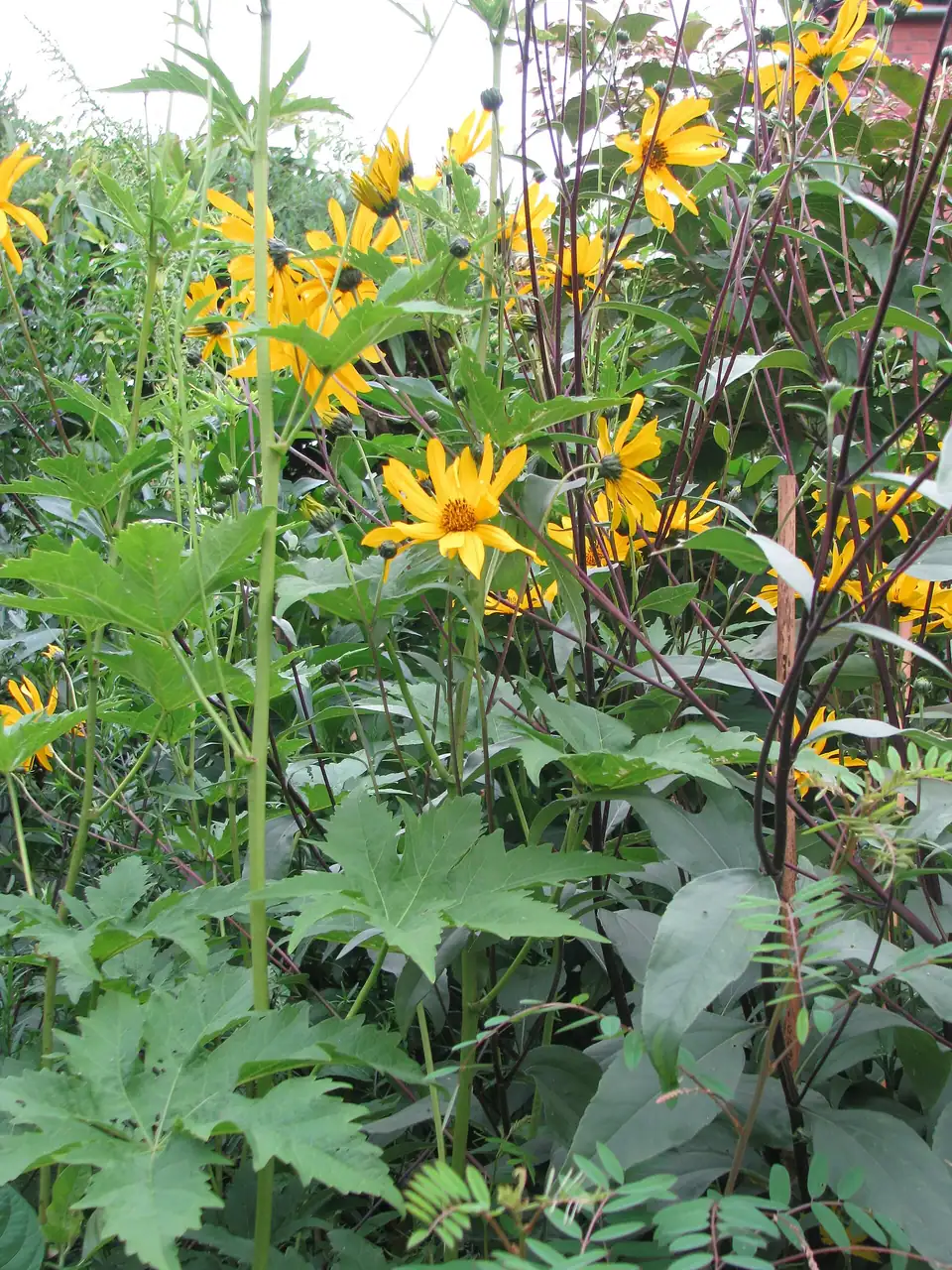


How to Grow and Care for Appalachian Sunflower
Helianthus atrorubens
Written by Emilio Marruso · last checked
At a glance
This perennial sunflower is an easygoing choice: it grows in full sun or partial shade and, once established, handles drought and dry soil. Plants reach 3–5 feet tall and 1–3 feet wide, coming back year after year. In fall, simply cut them to the ground, and make more plants by dividing clumps or sowing seed.
- Sun
Full sun to partial shade
What the sources say (1)
Light: Full sun to partial shade
This plant prefers full sun and tolerates partial shade.
— Helianthus atrorubens (Appalachian Sunflower, Dark-eye Sunflower, Dark Red Sunflower, Hairy Wood Sunflower, Purpledisk Sunflower) | North Carolina Extension Gardener Plant Toolbox [1] - Water
Once established, it handles drought and dry soil
What the sources say (1)
Watering: Drought and dry soil-tolerant once established
Drought and dry soil-tolerant once the plant is established. To prolong the blooming season
— Helianthus atrorubens (Appalachian Sunflower, Dark-eye Sunflower, Dark Red Sunflower, Hairy Wood Sunflower, Purpledisk Sunflower) | North Carolina Extension Gardener Plant Toolbox [1] - Cold
Survives winters down to −10 °F (−23.3 °C)
Very hardy · USDA 6a · RHS H7 · Z6
What the sources say (2)
Hardiness, coldest zone: 6a [winter low −23.3 to −20.6 °C (−10 to −5 °F)]
USDA Plant Hardiness Zone: 6a, 6b, 7a, 7b, 8a, 8b
— Helianthus atrorubens (Appalachian Sunflower, Dark-eye Sunflower, Dark Red Sunflower, Hairy Wood Sunflower, Purpledisk Sunflower) | North Carolina Extension Gardener Plant Toolbox [1] Hardiness, warmest zone: 8b [winter low −9.4 to −6.7 °C (15 to 20 °F)]
USDA Plant Hardiness Zone: 6a, 6b, 7a, 7b, 8a, 8b
— Helianthus atrorubens (Appalachian Sunflower, Dark-eye Sunflower, Dark Red Sunflower, Hairy Wood Sunflower, Purpledisk Sunflower) | North Carolina Extension Gardener Plant Toolbox [1] - Pruning
In fall, as it dies back, cut it down to the ground
What the sources say (1)
Pruning: Fall, as the plant fades and dies back (cut back to ground level)
As the plant begins to fade and die back in the fall, cut the plant back to ground level.
— Helianthus atrorubens (Appalachian Sunflower, Dark-eye Sunflower, Dark Red Sunflower, Hairy Wood Sunflower, Purpledisk Sunflower) | North Carolina Extension Gardener Plant Toolbox [1] - Pests
Watch for slugs and snails; it can get powdery mildew and white mold
What the sources say (2)
Pests: slugs, snails
No serious insect or disease problems. Monitor for slugs and snails. May be susceptible to powdery mildew and white mold.
— Helianthus atrorubens (Appalachian Sunflower, Dark-eye Sunflower, Dark Red Sunflower, Hairy Wood Sunflower, Purpledisk Sunflower) | North Carolina Extension Gardener Plant Toolbox [1] Diseases: powdery mildew, white mold
No serious insect or disease problems. Monitor for slugs and snails. May be susceptible to powdery mildew and white mold.
— Helianthus atrorubens (Appalachian Sunflower, Dark-eye Sunflower, Dark Red Sunflower, Hairy Wood Sunflower, Purpledisk Sunflower) | North Carolina Extension Gardener Plant Toolbox [1] - Watch out
Stems and flowers may flop over: give them a stake
- Size
3–5 ft tall and 1–3 ft wide
What the sources say (2)
Mature height: 91.44-152.4 cm (3-5 ft)
Height: 3 ft. 0 in. - 5 ft. 0 in. Width: 1 ft. 0 in. - 3 ft. 0 in.
— Helianthus atrorubens (Appalachian Sunflower, Dark-eye Sunflower, Dark Red Sunflower, Hairy Wood Sunflower, Purpledisk Sunflower) | North Carolina Extension Gardener Plant Toolbox [1] Mature width: 30.48-91.44 cm (1-3 ft)
Height: 3 ft. 0 in. - 5 ft. 0 in. Width: 1 ft. 0 in. - 3 ft. 0 in.
— Helianthus atrorubens (Appalachian Sunflower, Dark-eye Sunflower, Dark Red Sunflower, Hairy Wood Sunflower, Purpledisk Sunflower) | North Carolina Extension Gardener Plant Toolbox [1] - Propagation
Grow new plants from seed or by dividing clumps
What the sources say (1)
Propagation: Seed; division
It is best propagated by seeds or division.
— Helianthus atrorubens (Appalachian Sunflower, Dark-eye Sunflower, Dark Red Sunflower, Hairy Wood Sunflower, Purpledisk Sunflower) | North Carolina Extension Gardener Plant Toolbox [1]
Overview
Appalachian sunflower is a clumping, rhizomatous herbaceous perennial native from New Jersey to the southeastern United States. [1] It prefers full sun, tolerates partial shade, and is drought tolerant once established. [1] It is used in open woodland gardens, cottage gardens and mixed perennial beds, and attracts bees and butterflies. [1]
Appalachian Sunflower care
How to water Appalachian Sunflower
Drought and dry soil-tolerant once established
What the sources say (1)
Drought and dry soil-tolerant once the plant is established. To prolong the blooming seasonHow much light Appalachian Sunflower needs
Full sun to partial shade
What the sources say (1)
This plant prefers full sun and tolerates partial shade.How much cold Appalachian Sunflower can take
Hardiness, coldest zone
6a [winter low −23.3 to −20.6 °C (−10 to −5 °F)]
What the sources say (1)
USDA Plant Hardiness Zone:
6a, 6b, 7a, 7b, 8a, 8bHardiness, warmest zone
8b [winter low −9.4 to −6.7 °C (15 to 20 °F)]
What the sources say (1)
USDA Plant Hardiness Zone:
6a, 6b, 7a, 7b, 8a, 8bHow to propagate Appalachian Sunflower
Seed; division
What the sources say (1)
It is best propagated by seeds or division.How to grow Appalachian Sunflower
The plant
Life cycle
perennial
What the sources say (1)
Genus:
Helianthus
Species:
atrorubens
Family:
Asteraceae
Life Cycle:
PerennialFamily
Asteraceae
What the sources say (1)
Genus:
Helianthus
Species:
atrorubens
Family:
Asteraceae
Life Cycle:
PerennialMature height
91.44-152.4 cm (3-5 ft)
What the sources say (1)
Height: 3 ft. 0 in. - 5 ft. 0 in.
Width: 1 ft. 0 in. - 3 ft. 0 in.Mature width
30.48-91.44 cm (1-3 ft)
What the sources say (1)
Height: 3 ft. 0 in. - 5 ft. 0 in.
Width: 1 ft. 0 in. - 3 ft. 0 in.Pests and diseases
Pests
slugs, snails
What the sources say (1)
No serious insect or disease problems. Monitor for slugs and snails. May be susceptible to powdery mildew and white mold.Diseases
powdery mildew, white mold
What the sources say (1)
No serious insect or disease problems. Monitor for slugs and snails. May be susceptible to powdery mildew and white mold.Appalachian Sunflower pests and problems
Slugs, snails and fungal diseases
Symptom: Possible slug and snail damage, powdery mildew and white mold.
What to do: Monitor for slugs and snails.
What the sources say (1)
No serious insect or disease problems. Monitor for slugs and snails. May be susceptible to powdery mildew and white mold.
— Helianthus atrorubens (Appalachian Sunflower, Dark-eye Sunflower, Dark Red Sunflower, Hairy Wood Sunflower, Purpledisk Sunflower) | North Carolina Extension Gardener Plant Toolbox [1] Floppy stems
Symptom: Flowers and stems may need support.
What to do: Staking.
What the sources say (1)
May require staking to support the flowers and stems.
— Helianthus atrorubens (Appalachian Sunflower, Dark-eye Sunflower, Dark Red Sunflower, Hairy Wood Sunflower, Purpledisk Sunflower) | North Carolina Extension Gardener Plant Toolbox [1]
Remedies
Each remedy shows what official sources say about it; traditional remedies without an official source are marked as such. Harmful ones are listed so you know to avoid them.
Treating the plant
powdery mildew
spacing plants for air circulation Official source, not independently tested
How: Space plants for good air circulation and remove and destroy plant debris at the end of the season.
Space plants for good air circulation. - Remove and destroy plant debris at the end of the season.
— pnwhandbooks.org [3] removing plant debris at season end Official source, not independently tested
How: Remove and destroy plant debris at the end of the season.
Remove and destroy plant debris at the end of the season. - Plant in an area that receives full sun most of the day.
— pnwhandbooks.org [3]
slugs
beer trap Official source, not independently tested
How: Trap snails and slugs in shallow pans of stale beer sunken so the lip of the container is even with the soil surface; replace beer as necessary.
Trap snails and slugs in shallow pans of stale beer sunken so that the lip of the container is even with the soil surface.
— hgic.clemson.edu [4] handpicking Official source, not independently tested
How: Remove slugs and snails by handpicking or with simple traps.
When found, these pests can be removed by handpicking or by making simple, effective traps.
— hgic.clemson.edu [4] diatomaceous earth barrier Official source, not independently tested
How: Sprinkle diatomaceous earth around young seedlings; reapply after rain or watering.
Protect young seedlings by sprinkling diatomaceous earth around the plants.
— hgic.clemson.edu [4]
Calendar
Pruning
Fall, as the plant fades and dies back (cut back to ground level)
What the sources say (1)
As the plant begins to fade and die back in the fall, cut the plant back to ground level.Months as given by the sources, which are mostly from the United States (northern hemisphere). In the southern hemisphere they shift by about six months.
Similar plants
- Jerusalem Artichoke Helianthus tuberosus
- Maximilian Sunflower Helianthus maximiliani
- Muck Sunflower Helianthus simulans
- Naked-stem Sunflower Helianthus occidentalis
- Resinous Sunflower Helianthus resinosus
- Schweinitz's Sunflower Helianthus schweinitzii
- Sunflower Helianthus angustifolius
- Sunflower Helianthus annuus
Sources
Every value above is quoted from these documents. Links lead to the original publisher.
- Helianthus atrorubens (Appalachian Sunflower, Dark-eye Sunflower, Dark Red Sunflower, Hairy Wood Sunflower, Purpledisk Sunflower) | North Carolina Extension Gardener Plant Toolbox · plants.ces.ncsu.edu, consulted
- Helianthus (Sunflower) | North Carolina Extension Gardener Plant Toolbox · plants.ces.ncsu.edu, consulted
- pnwhandbooks.org · pnwhandbooks.org
- hgic.clemson.edu · hgic.clemson.edu
Written by Emilio Marruso · last checked