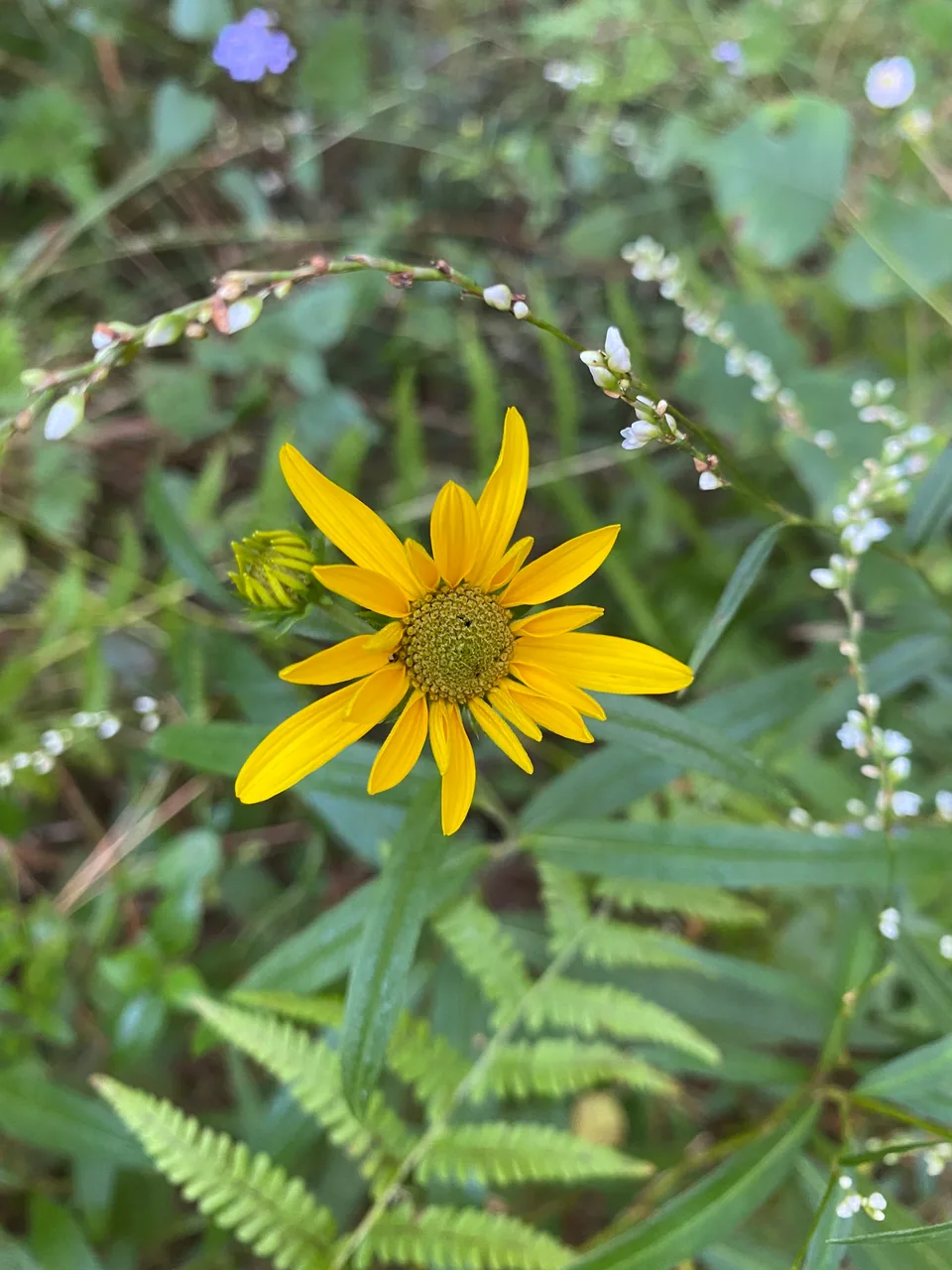


How to Grow and Care for Muck Sunflower
Helianthus simulans
Written by Emilio Marruso · last checked
At a glance
This perennial sunflower comes back year after year and grows 3 to 8 feet tall, happy in full sun or part shade. It loves moist to wet soil, so it is a great fit for the damp corners of the garden. Cut the stems back by a third in early summer, and it rewards you with a fuller, bushier plant.
- Sun
Full sun to part shade
What the sources say (1)
Light: Full sun to part shade
It is adaptable to soil types and does best in full sun to part shade.
— Helianthus simulans (Muck Sunflower, Narrow-Leaved Sunflower, Swamp Sunflower) | North Carolina Extension Gardener Plant Toolbox [1] - Water
Likes moist to wet soil: never let it dry out
What the sources say (1)
Watering: Moist to wet soils
This plant is appropriate for native gardens and naturalizing in moist to wet soils.
— Helianthus simulans (Muck Sunflower, Narrow-Leaved Sunflower, Swamp Sunflower) | North Carolina Extension Gardener Plant Toolbox [1] - Cold
Survives winters down to −10 °F (−23.3 °C)
Very hardy · USDA 6a · RHS H7 · Z6
What the sources say (2)
Hardiness, coldest zone: 6a [winter low −23.3 to −20.6 °C (−10 to −5 °F)]
USDA Plant Hardiness Zone: 6a, 6b, 7a, 7b, 8a, 8b, 9a, 9b
— Helianthus simulans (Muck Sunflower, Narrow-Leaved Sunflower, Swamp Sunflower) | North Carolina Extension Gardener Plant Toolbox [1] Hardiness, warmest zone: 9b [winter low −3.9 to −1.1 °C (25 to 30 °F)]
USDA Plant Hardiness Zone: 6a, 6b, 7a, 7b, 8a, 8b, 9a, 9b
— Helianthus simulans (Muck Sunflower, Narrow-Leaved Sunflower, Swamp Sunflower) | North Carolina Extension Gardener Plant Toolbox [1] - Pruning
In early summer, cut the stems back by a third for a bushier plant
What the sources say (1)
Pruning: Early summer: prune stems by 1/3 to encourage a bushier plant
Pruning the stems by 1/3 in early summer will encourage a bushier plant.
— Helianthus simulans (Muck Sunflower, Narrow-Leaved Sunflower, Swamp Sunflower) | North Carolina Extension Gardener Plant Toolbox [1] - Pests
Watch for Asiatic garden beetles, sunflower maggots, powdery mildew and leaf blights
What the sources say (2)
Pests: Asiatic garden beetle, sunflower maggot
Insects are Asiatic garden beetle and sunflower maggot.
— Helianthus simulans (Muck Sunflower, Narrow-Leaved Sunflower, Swamp Sunflower) | North Carolina Extension Gardener Plant Toolbox [1] Diseases: powdery mildew, leaf blights
Generally no problems but sunflowers in general can develop fungal diseases such as powdery mildew and leaf blights.
— Helianthus simulans (Muck Sunflower, Narrow-Leaved Sunflower, Swamp Sunflower) | North Carolina Extension Gardener Plant Toolbox [1] - Size
3 to 8 ft tall
What the sources say (1)
Mature height: 91.44-243.84 cm (3-8 ft)
This plant grows 3 to 8 feet tall and spreads by rhizomes.
— Helianthus simulans (Muck Sunflower, Narrow-Leaved Sunflower, Swamp Sunflower) | North Carolina Extension Gardener Plant Toolbox [1] - Propagation
Divide the clumps or grow new plants from seed
What the sources say (1)
Propagation: Division, seed
It spreads by rhizomes and can be propagated by division or seed.
— Helianthus simulans (Muck Sunflower, Narrow-Leaved Sunflower, Swamp Sunflower) | North Carolina Extension Gardener Plant Toolbox [1]
Overview
Muck sunflower is native from Texas to SC, grows in wet, mucky soils, reaches 3 to 8 feet [0.9–2.4 m] tall and spreads by rhizomes. [1] It suits native gardens and moist to wet soils and does best in full sun to part shade. [1] Pruning the stems by one third in early summer encourages a bushier plant. [1]
Muck Sunflower care
Measurements in square brackets are our conversion into the other unit system; the quoted text is unchanged.
How to water Muck Sunflower
Moist to wet soils
What the sources say (1)
This plant is appropriate for native gardens and naturalizing in moist to wet soils.How much light Muck Sunflower needs
Full sun to part shade
What the sources say (1)
It is adaptable to soil types and does best in full sun to part shade.How much cold Muck Sunflower can take
Hardiness, coldest zone
6a [winter low −23.3 to −20.6 °C (−10 to −5 °F)]
What the sources say (1)
USDA Plant Hardiness Zone:
6a, 6b, 7a, 7b, 8a, 8b, 9a, 9bHardiness, warmest zone
9b [winter low −3.9 to −1.1 °C (25 to 30 °F)]
What the sources say (1)
USDA Plant Hardiness Zone:
6a, 6b, 7a, 7b, 8a, 8b, 9a, 9bHow to propagate Muck Sunflower
Division, seed
What the sources say (1)
It spreads by rhizomes and can be propagated by division or seed.How to grow Muck Sunflower
The plant
Life cycle
perennial
What the sources say (1)
Muck sunflower is a North American native perennial in the aster (Asteraceae) family.Family
Asteraceae
What the sources say (1)
Muck sunflower is a North American native perennial in the aster (Asteraceae) family.Mature height
91.44-243.84 cm (3-8 ft)
What the sources say (1)
This plant grows 3 to 8 feet tall and spreads by rhizomes.Pests and diseases
Pests
Asiatic garden beetle, sunflower maggot
What the sources say (1)
Insects are Asiatic garden beetle and sunflower maggot.Diseases
powdery mildew, leaf blights
What the sources say (1)
Generally no problems but sunflowers in general can develop fungal diseases such as powdery mildew and leaf blights.Remedies
Each remedy shows what official sources say about it; traditional remedies without an official source are marked as such. Harmful ones are listed so you know to avoid them.
Treating the plant
powdery mildew
planting in open sunny spots without crowding Official source, not independently tested
How: Plant in open areas where plants are not crowded and are exposed to the sun.
Susceptible flowers should be planted in open areas where they will not be crowded and where they are exposed to the sun. Plants in shade are more prone to mildew than those growing in the sun.
— extension.usu.edu [3] summer pruning to thin dense foliage Official source, not independently tested
How: Prune during the summer to thin out dense foliage and increase aeration in the canopy.
Prune during the summer to thin out any dense foliage. This will increase aeration within the plant canopy.
— extension.usu.edu [3] cleaning up infected plant debris in fall Official source, not independently tested
How: In the fall, clean up and dispose of all mildew-infected plant debris.
In the fall, clean up and dispose of all mildew-infected plant debris. This will help to reduce the amount of disease next year.
— extension.usu.edu [3]
Calendar
Pruning
Early summer: prune stems by 1/3 to encourage a bushier plant
What the sources say (1)
Pruning the stems by 1/3 in early summer will encourage a bushier plant.Months as given by the sources, which are mostly from the United States (northern hemisphere). In the southern hemisphere they shift by about six months.
Similar plants
- Appalachian Sunflower Helianthus atrorubens
- Jerusalem Artichoke Helianthus tuberosus
- Maximilian Sunflower Helianthus maximiliani
- Naked-stem Sunflower Helianthus occidentalis
- Resinous Sunflower Helianthus resinosus
- Schweinitz's Sunflower Helianthus schweinitzii
- Sunflower Helianthus angustifolius
- Sunflower Helianthus annuus
Sources
Every value above is quoted from these documents. Links lead to the original publisher.
- Helianthus simulans (Muck Sunflower, Narrow-Leaved Sunflower, Swamp Sunflower) | North Carolina Extension Gardener Plant Toolbox · plants.ces.ncsu.edu, consulted
- Narrow-Leaved Sunflower - Helianthus simulans | North Carolina Extension Gardener Plant Toolbox · plants.ces.ncsu.edu, consulted
- extension.usu.edu · extension.usu.edu
Written by Emilio Marruso · last checked