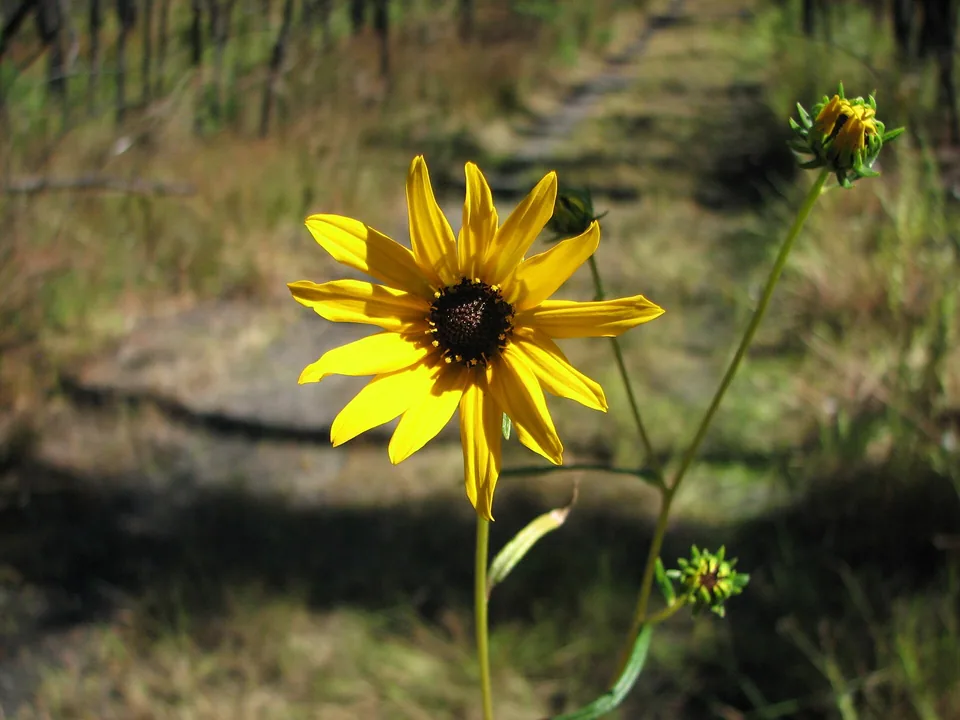


How to Grow and Care for Sunflower
Helianthus angustifolius
Written by Emilio Marruso · last checked
At a glance
This perennial sunflower is wonderfully easygoing: it handles wet, poor and even salty soil, and it shrugs off flooding. Give it full sun or partial shade, feed it only now and then, and trim it in June. Native Americans once ground its seeds into flour for bread and cakes, a lovely bit of history for your garden.
- Sun
Full sun to partial shade
What the sources say (2)
Light: Full sun to partial shade
It will tolerate part shade but flowers better in full sun.
— Helianthus angustifolius (Narrow Leaf Sunflower, Sunflower, Swamp Sunflower) | North Carolina Extension Gardener Plant Toolbox [1] The plant can tolerate part sun but will see reduced flowering.
— Swamp Sunflower [3] - Water
Copes with wet soil, flooding and salt
What the sources say (2)
Watering notes: Salt and flood tolerant; resistant to wet soil and poor soil
It’s salt and flood tolerant, making it a good choice for coastal areas and rain gardens.
— Sunflowers – Gardening Solutions [7] Resistance To Challenges: Deer Poor Soil Salt Wet Soil
— Helianthus angustifolius (Narrow Leaf Sunflower, Sunflower, Swamp Sunflower) | North Carolina Extension Gardener Plant Toolbox [1] - Soil
Acidic soil, pH up to 6.0; poor soil is fine
What the sources say (3)
Soil pH, maximum: 6.0
Clay Loam (Silt) Sand Soil pH: Acid (<6.0)
— Helianthus angustifolius (Narrow Leaf Sunflower, Sunflower, Swamp Sunflower) | North Carolina Extension Gardener Plant Toolbox [1] Watering notes: Salt and flood tolerant; resistant to wet soil and poor soil
It’s salt and flood tolerant, making it a good choice for coastal areas and rain gardens.
— Sunflowers – Gardening Solutions [7] Resistance To Challenges: Deer Poor Soil Salt Wet Soil
— Helianthus angustifolius (Narrow Leaf Sunflower, Sunflower, Swamp Sunflower) | North Carolina Extension Gardener Plant Toolbox [1] - Spacing
18–24 in between plants
What the sources say (1)
Spacing: 45.7-61.0 cm (18-24 in)
Space plants between 18 and 24 inches apart to leave room for its spreading growth habit.
— Swamp Sunflower – Gardening Solutions [5] - Planting
Plant from spring to summer; in the warmest climates, any month except January
What the sources say (4)
Planting: May-July (zone 8); April-August (zone 9); any month except January (zones 10-11)
USDA zone 8: We suggest adding it to your landscape between May and July in zone 8, between April and August in Zone 9, and any month except January in zones 10-11.
— Swamp Sunflower – Gardening Solutions [5] USDA zone 9: We suggest adding it to your landscape between May and July in zone 8, between April and August in Zone 9, and any month except January in zones 10-11.
— Swamp Sunflower – Gardening Solutions [5] USDA zones 10-11: We suggest adding it to your landscape between May and July in zone 8, between April and August in Zone 9, and any month except January in zones 10-11.
— Swamp Sunflower – Gardening Solutions [5] We suggest adding it to your landscape between May and July in zone 8, between April and August in Zone 9, and any month except January in zones 10-11.
— Swamp Sunflower – Gardening Solutions [5] - Feeding
Feed now and then, or not at all: it gets by without
What the sources say (1)
How often: Occasional applications; the plant also survives without
They respond well to occasional applications of fertilizer and to light irrigation in dry weather but will certainly survive without.
— Swamp Sunflower – Gardening Solutions [5] - Pruning
Prune in June
What the sources say (3)
Pruning: June
Prune plants back in June to encourage branching.
— Helianthus angustifolius (Narrow Leaf Sunflower, Sunflower, Swamp Sunflower) | North Carolina Extension Gardener Plant Toolbox [1] To encourage branching, prune the plant back in June.
— Swamp Sunflower [3] A June cut-back pruning will also help control size
— Helianthus angustifolius; Sunflower, Narrowleaf; Sunflower, Swamp [6] - Harvest
Native Americans ground the seeds into flour for bread and cakes
- Pests
Rust, leaf spots, powdery mildew, caterpillars and beetles; damage is usually minor
What the sources say (3)
Pests: caterpillars, beetles, spittle bugs
Caterpillars and beetles often chew on the foliage but seldom cause enough damage to warrant management.
— Helianthus angustifolius (Narrow Leaf Sunflower, Sunflower, Swamp Sunflower) | North Carolina Extension Gardener Plant Toolbox [1] Swamp sunflower is susceptible to powdery mildew and spittle bugs but these pests rarely cause extensive damage.
— Swamp Sunflower – Gardening Solutions [5] Diseases: rust, leaf fungal spots, powdery mildew
Rust, leaf fungal spots and powdery mildew are somewhat common.
— Helianthus angustifolius (Narrow Leaf Sunflower, Sunflower, Swamp Sunflower) | North Carolina Extension Gardener Plant Toolbox [1] - Watch out
Stems can flop over: stake them, especially in windy spots
- Propagation
By division, root cuttings or seed
What the sources say (2)
Propagation: Division; root cutting; seed
Life Cycle: Annual Perennial Recommended Propagation Strategy: Division Root Cutting Seed
— Helianthus angustifolius (Narrow Leaf Sunflower, Sunflower, Swamp Sunflower) | North Carolina Extension Gardener Plant Toolbox [1] The plants spread rapidly through rhizomes (underground stems). Once these send up new shoots they can be dug up, divided, and moved to add sunflowers to new locations
— Swamp Sunflower – Gardening Solutions [5]
Overview
Swamp sunflower is a native herbaceous perennial that can grow up to 8 feet [2.4 m] tall with showy yellow daisy-like flowers from mid to late summer into fall. [1] It prefers moist to occasionally wet acidic soils in full sun, tolerates part shade, and may need staking because the stems can be flimsy. [1] It spreads aggressively and is used in pollinator gardens, rain gardens and naturalized areas. [1]
Sunflower care
Measurements in square brackets are our conversion into the other unit system; the quoted text is unchanged.
How to water Sunflower
Watering
The sources disagree:
They respond well to occasional applications of fertilizer and to light irrigation in dry weather but will certainly survive without.
[5]
What the sources say (2)
It prefers moist to occasionally wet acidic sandy to clay loams in full sun. It can be grown on drier soils if adequate moisture is provided.Narrowleaf sunflower grows most vigorously in uniformly moist, sunny sites.Watering notes
Salt and flood tolerant; resistant to wet soil and poor soil
What the sources say (2)
It’s salt and flood tolerant, making it a good choice for coastal areas and rain gardens.Resistance To Challenges:
Deer
Poor Soil
Salt
Wet SoilHow much light Sunflower needs
Full sun to partial shade
How much cold Sunflower can take
Hardiness, coldest zone
The sources give different values depending on region, zone or growing conditions.
What each source says
According to NC State Extension: 5a [winter low −28.9 to −26.1 °C (−20 to −15 °F)]
According to Penn State Extension: 5a [winter low −28.9 to −26.1 °C (−20 to −15 °F)]
Florida: 8b [winter low −9.4 to −6.7 °C (15 to 20 °F)]
What the sources say (3)
According to NC State Extension: USDA Plant Hardiness Zone:
5a, 5b, 6a, 6b, 7a, 7b, 8a, 8b, 9a, 9bAccording to Penn State Extension: The tall, flimsy stems may require staking, especially in windy locations. Hardy from USDA zones 5a to 9b.Florida: It is cold hardy between USDA Hardiness Zones 8B through 10.Hardiness, warmest zone
The sources give different values depending on region, zone or growing conditions.
What each source says
According to NC State Extension: 9b [winter low −3.9 to −1.1 °C (25 to 30 °F)]
According to Penn State Extension: 9b [winter low −3.9 to −1.1 °C (25 to 30 °F)]
Florida: 10 [winter low −1.1 to 4.4 °C (30 to 40 °F)]
What the sources say (3)
According to NC State Extension: USDA Plant Hardiness Zone:
5a, 5b, 6a, 6b, 7a, 7b, 8a, 8b, 9a, 9bAccording to Penn State Extension: The tall, flimsy stems may require staking, especially in windy locations. Hardy from USDA zones 5a to 9b.Florida: It is cold hardy between USDA Hardiness Zones 8B through 10.Best soil for Sunflower
6.0
What the sources say (1)
Clay
Loam (Silt)
Sand
Soil pH:
Acid (<6.0)Where to grow Sunflower
45.7-61.0 cm (18-24 in)
What the sources say (1)
Space plants between 18 and 24 inches apart to leave room for its spreading growth habit.How to propagate Sunflower
Division; root cutting; seed
What the sources say (2)
Life Cycle:
Annual
Perennial
Recommended Propagation Strategy:
Division
Root Cutting
SeedThe plants spread rapidly through rhizomes (underground stems). Once these send up new shoots they can be dug up, divided, and moved to add sunflowers to new locationsHow to grow Sunflower
The plant
Life cycle
perennial
What the sources say (1)
Swamp sunflower is a native, herbaceous perennial member of the daisy family (Asteraceae) and can be found from NY to FL to TX.Family
Asteraceae
What the sources say (1)
Swamp sunflower is a native, herbaceous perennial member of the daisy family (Asteraceae) and can be found from NY to FL to TX.Mature height
Pests and diseases
Pests
caterpillars, beetles, spittle bugs
What the sources say (2)
Caterpillars and beetles often chew on the foliage but seldom cause enough damage to warrant management.Swamp sunflower is susceptible to powdery mildew and spittle bugs but these pests rarely cause extensive damage.Diseases
rust, leaf fungal spots, powdery mildew
What the sources say (1)
Rust, leaf fungal spots and powdery mildew are somewhat common.Fertilizing
How often
Occasional applications; the plant also survives without
What the sources say (1)
They respond well to occasional applications of fertilizer and to light irrigation in dry weather but will certainly survive without.Sunflower pests and problems
Foliar diseases
Symptom: Rust, leaf fungal spots and powdery mildew are somewhat common
What to do: Damage is usually minimal and does not require management
What the sources say (1)
Rust, leaf fungal spots, and powdery mildew are somewhat common.
— Swamp Sunflower [3] Chewing insects
Symptom: Caterpillars and beetles often chew on the foliage
What to do: They seldom cause enough damage to warrant management
What the sources say (1)
Caterpillars and beetles often chew on the foliage but seldom cause enough damage to warrant management.
— Helianthus angustifolius (Narrow Leaf Sunflower, Sunflower, Swamp Sunflower) | North Carolina Extension Gardener Plant Toolbox [1] Flimsy stems
Symptom: Stems can be flimsy and may topple
What to do: Stake plants, especially in a windy location
What the sources say (1)
Because stems can be flimsy, plants may need to be staked, especially if planted in a windy location.
— Helianthus angustifolius (Narrow Leaf Sunflower, Sunflower, Swamp Sunflower) | North Carolina Extension Gardener Plant Toolbox [1]
Remedies
Each remedy shows what official sources say about it; traditional remedies without an official source are marked as such. Harmful ones are listed so you know to avoid them.
Treating the plant
powdery mildew
baking soda spray Not verified
Traditional remedy, not verified by an official source.
Always test a spray on a few leaves before spraying the full plant or plants.
— farmersalmanac.com [8] How: Mix one tablespoon of baking soda with 1/2 teaspoon of liquid dishwashing soap in one gallon of water.
milk spray Not verified
Traditional remedy, not verified by an official source.
Always test a spray on a few leaves before spraying the full plant or plants.
— farmersalmanac.com [8] How: Mix one part milk to two parts water.
neem oil Partly works
Despite these being biological pesticides, it is important to read the directions on the label and wear safety equipment.
— extension.illinois.edu [10] How: Follow the instructions on the label for application.
Neem oil: Follow the instructions on the label for application.
— farmersalmanac.com [8] What the evidence says However, neem oil is not effective against every insect and disease, and often must be frequently reapplied to reach the desired outcome.
— extension.unh.edu [9] picking off affected leaves Partly works
How: Pull the infected leaves when only a few are affected.
If powdery mildew turns up on just a few leaves, pulling those infected leaves may slow the spread.
— farmersalmanac.com [8] What the evidence says Disease can be minimized by avoiding overcrowded spacing of plants and by carefully picking off affected leaves as soon as symptoms are evident.
— portal.ct.gov [11]
Calendar
May-July (zone 8); April-August (zone 9); any month except January (zones 10-11)
What each source says
USDA zone 8: May-July
USDA zone 9: April-August
USDA zones 10-11: Any month except January
What the sources say (4)
USDA zone 8: We suggest adding it to your landscape between May and July in zone 8, between April and August in Zone 9, and any month except January in zones 10-11.USDA zone 9: We suggest adding it to your landscape between May and July in zone 8, between April and August in Zone 9, and any month except January in zones 10-11.USDA zones 10-11: We suggest adding it to your landscape between May and July in zone 8, between April and August in Zone 9, and any month except January in zones 10-11.We suggest adding it to your landscape between May and July in zone 8, between April and August in Zone 9, and any month except January in zones 10-11.June
What the sources say (3)
Prune plants back in June to encourage branching.To encourage branching, prune the plant back in June.A June cut-back pruning will also help control sizeMonths as given by the sources, which are mostly from the United States (northern hemisphere). In the southern hemisphere they shift by about six months.
Edibility
Reported by the source, quoted verbatim. Do not eat a plant on the basis of this page alone: identification mistakes can be dangerous.
Commonly used among Native Americans, seeds were ground or pounded to make flour for bread and cakes.
[3]
Similar plants
- Appalachian Sunflower Helianthus atrorubens
- Jerusalem Artichoke Helianthus tuberosus
- Maximilian Sunflower Helianthus maximiliani
- Muck Sunflower Helianthus simulans
- Naked-stem Sunflower Helianthus occidentalis
- Resinous Sunflower Helianthus resinosus
- Schweinitz's Sunflower Helianthus schweinitzii
- Sunflower Helianthus annuus
Sources
Every value above is quoted from these documents. Links lead to the original publisher.
- Helianthus angustifolius (Narrow Leaf Sunflower, Sunflower, Swamp Sunflower) | North Carolina Extension Gardener Plant Toolbox · plants.ces.ncsu.edu, consulted
- Sunflower - Helianthus angustifolius | North Carolina Extension Gardener Plant Toolbox · plants.ces.ncsu.edu, consulted
- Swamp Sunflower · extension.psu.edu, consulted
- Helianthus (Sunflower) | North Carolina Extension Gardener Plant Toolbox · plants.ces.ncsu.edu, consulted
- Swamp Sunflower – Gardening Solutions · gardeningsolutions.ifas.ufl.edu, consulted
- Helianthus angustifolius; Sunflower, Narrowleaf; Sunflower, Swamp · uaex.uada.edu, consulted
- Sunflowers – Gardening Solutions · gardeningsolutions.ifas.ufl.edu, consulted
- farmersalmanac.com · farmersalmanac.com
- extension.unh.edu · extension.unh.edu
- extension.illinois.edu · extension.illinois.edu
- portal.ct.gov · portal.ct.gov
Written by Emilio Marruso · last checked