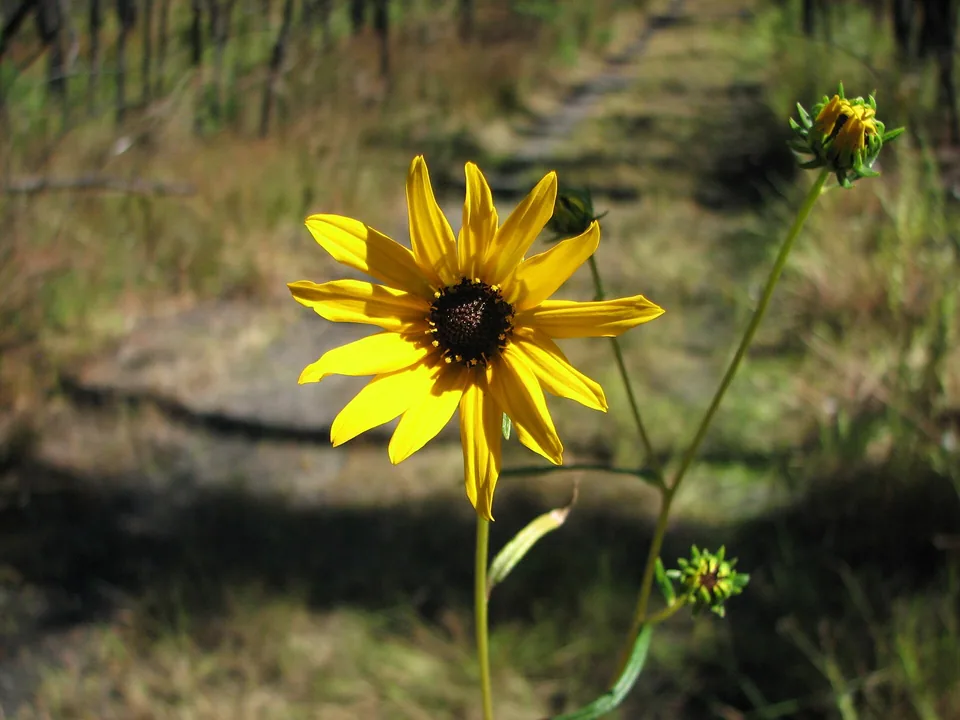


Cómo cultivar y cuidar Sunflower
Helianthus angustifolius
Escrito por Emilio Marruso · última revisión
De un vistazo
Este girasol perenne es de lo más agradecido: soporta suelos húmedos, pobres e incluso salinos, y aguanta los encharcamientos. Dale sol pleno o semisombra, abónalo solo de vez en cuando y pódalo en junio. Los pueblos nativos de América molían sus semillas para hacer harina de pan y tortas: un bonito pedazo de historia para tu jardín.
- Sol
Sol pleno o semisombra
Qué dicen las fuentes (2)
Luz: Pleno sol a semisombra
It will tolerate part shade but flowers better in full sun.
— Helianthus angustifolius (Narrow Leaf Sunflower, Sunflower, Swamp Sunflower) | North Carolina Extension Gardener Plant Toolbox [1] The plant can tolerate part sun but will see reduced flowering.
— Swamp Sunflower [3] - Riego
Soporta el suelo húmedo, los encharcamientos y la sal
Qué dicen las fuentes (2)
Notas sobre el riego: Tolerante a la sal y a las inundaciones; resistente a suelos húmedos y pobres
It’s salt and flood tolerant, making it a good choice for coastal areas and rain gardens.
— Sunflowers – Gardening Solutions [7] Resistance To Challenges: Deer Poor Soil Salt Wet Soil
— Helianthus angustifolius (Narrow Leaf Sunflower, Sunflower, Swamp Sunflower) | North Carolina Extension Gardener Plant Toolbox [1] - Suelo
Suelo ácido, pH hasta 6,0; le vale un suelo pobre
Qué dicen las fuentes (3)
pH del suelo, máximo: 6.0
Clay Loam (Silt) Sand Soil pH: Acid (<6.0)
— Helianthus angustifolius (Narrow Leaf Sunflower, Sunflower, Swamp Sunflower) | North Carolina Extension Gardener Plant Toolbox [1] Notas sobre el riego: Tolerante a la sal y a las inundaciones; resistente a suelos húmedos y pobres
It’s salt and flood tolerant, making it a good choice for coastal areas and rain gardens.
— Sunflowers – Gardening Solutions [7] Resistance To Challenges: Deer Poor Soil Salt Wet Soil
— Helianthus angustifolius (Narrow Leaf Sunflower, Sunflower, Swamp Sunflower) | North Carolina Extension Gardener Plant Toolbox [1] - Distancia
46–61 cm entre plantas
Qué dicen las fuentes (1)
Distancia de plantación: 45.7-61.0 cm (18-24 pulgadas)
Space plants between 18 and 24 inches apart to leave room for its spreading growth habit.
— Swamp Sunflower – Gardening Solutions [5] - Plantación
Planta de primavera a verano; en los climas más cálidos, cualquier mes salvo enero
Qué dicen las fuentes (4)
Plantación: Mayo-julio (zona 8); abril-agosto (zona 9); cualquier mes excepto enero (zonas 10-11)
Zona 8 del USDA: We suggest adding it to your landscape between May and July in zone 8, between April and August in Zone 9, and any month except January in zones 10-11.
— Swamp Sunflower – Gardening Solutions [5] Zona 9 del USDA: We suggest adding it to your landscape between May and July in zone 8, between April and August in Zone 9, and any month except January in zones 10-11.
— Swamp Sunflower – Gardening Solutions [5] Zonas 10-11 del USDA: We suggest adding it to your landscape between May and July in zone 8, between April and August in Zone 9, and any month except January in zones 10-11.
— Swamp Sunflower – Gardening Solutions [5] We suggest adding it to your landscape between May and July in zone 8, between April and August in Zone 9, and any month except January in zones 10-11.
— Swamp Sunflower – Gardening Solutions [5] - Abonado
Abona de vez en cuando, o nada: se las arregla sin abono
Qué dicen las fuentes (1)
Frecuencia: Aplicaciones ocasionales; la planta también sobrevive sin ellas
They respond well to occasional applications of fertilizer and to light irrigation in dry weather but will certainly survive without.
— Swamp Sunflower – Gardening Solutions [5] - Poda
Pódalo en junio
Qué dicen las fuentes (3)
Poda: junio
Prune plants back in June to encourage branching.
— Helianthus angustifolius (Narrow Leaf Sunflower, Sunflower, Swamp Sunflower) | North Carolina Extension Gardener Plant Toolbox [1] To encourage branching, prune the plant back in June.
— Swamp Sunflower [3] A June cut-back pruning will also help control size
— Helianthus angustifolius; Sunflower, Narrowleaf; Sunflower, Swamp [6] - Cosecha
Los pueblos nativos de América molían las semillas para hacer harina de pan y tortas
- Plagas
Roya, manchas en las hojas, oídio, orugas y escarabajos; el daño suele ser leve
Qué dicen las fuentes (3)
Plagas: orugas, escarabajos, salivazos
Caterpillars and beetles often chew on the foliage but seldom cause enough damage to warrant management.
— Helianthus angustifolius (Narrow Leaf Sunflower, Sunflower, Swamp Sunflower) | North Carolina Extension Gardener Plant Toolbox [1] Swamp sunflower is susceptible to powdery mildew and spittle bugs but these pests rarely cause extensive damage.
— Swamp Sunflower – Gardening Solutions [5] Enfermedades: roya, manchas foliares por hongos, mildiu polvoriento
Rust, leaf fungal spots and powdery mildew are somewhat common.
— Helianthus angustifolius (Narrow Leaf Sunflower, Sunflower, Swamp Sunflower) | North Carolina Extension Gardener Plant Toolbox [1] - Atención
Los tallos pueden doblarse: ponles tutores, sobre todo en sitios con viento
- Multiplicación
Por división, esquejes de raíz o semilla
Qué dicen las fuentes (2)
Propagación: División; esqueje de raíz; semilla
Life Cycle: Annual Perennial Recommended Propagation Strategy: Division Root Cutting Seed
— Helianthus angustifolius (Narrow Leaf Sunflower, Sunflower, Swamp Sunflower) | North Carolina Extension Gardener Plant Toolbox [1] The plants spread rapidly through rhizomes (underground stems). Once these send up new shoots they can be dug up, divided, and moved to add sunflowers to new locations
— Swamp Sunflower – Gardening Solutions [5]
Resumen
El girasol de pantano es una herbácea perenne nativa que puede crecer hasta 8 pies [2,4 m] de altura con llamativas flores amarillas parecidas a margaritas desde mediados hasta finales del verano y hasta el otoño. [1] Prefiere suelos ácidos húmedos a ocasionalmente húmedos a pleno sol, tolera semisombra y puede necesitar entutorado porque los tallos pueden ser frágiles. [1] Se extiende agresivamente y se usa en jardines de polinizadores, jardines de lluvia y áreas naturalizadas. [1]
Citado en inglés, como en la fuente.
Cuidados
Las medidas entre corchetes son nuestra conversión al otro sistema de unidades; el texto citado no cambia.
Riego
Riego
Las fuentes no coinciden:
They respond well to occasional applications of fertilizer and to light irrigation in dry weather but will certainly survive without.
[5]
Qué dicen las fuentes (2)
It prefers moist to occasionally wet acidic sandy to clay loams in full sun. It can be grown on drier soils if adequate moisture is provided.Narrowleaf sunflower grows most vigorously in uniformly moist, sunny sites.Notas sobre el riego
Tolerante a la sal y a las inundaciones; resistente a suelos húmedos y pobres
Qué dicen las fuentes (2)
It’s salt and flood tolerant, making it a good choice for coastal areas and rain gardens.Resistance To Challenges:
Deer
Poor Soil
Salt
Wet SoilLuz
Pleno sol a semisombra
Qué dicen las fuentes (2)
It will tolerate part shade but flowers better in full sun.The plant can tolerate part sun but will see reduced flowering.Clima y frío
Rusticidad, zona más fría
Las fuentes dan valores distintos según la región, la zona o las condiciones de cultivo.
Lo que dice cada fuente
Según NC State Extension: 5a [mínima invernal de −28,9 a −26,1 °C (de −20 a −15 °F)]
Según Penn State Extension: 5a [mínima invernal de −28,9 a −26,1 °C (de −20 a −15 °F)]
Florida: 8b [mínima invernal de −9,4 a −6,7 °C (de 15 a 20 °F)]
Qué dicen las fuentes (3)
Según NC State Extension: USDA Plant Hardiness Zone:
5a, 5b, 6a, 6b, 7a, 7b, 8a, 8b, 9a, 9bSegún Penn State Extension: The tall, flimsy stems may require staking, especially in windy locations. Hardy from USDA zones 5a to 9b.Florida: It is cold hardy between USDA Hardiness Zones 8B through 10.Rusticidad, zona más cálida
Las fuentes dan valores distintos según la región, la zona o las condiciones de cultivo.
Lo que dice cada fuente
Según NC State Extension: 9b [mínima invernal de −3,9 a −1,1 °C (de 25 a 30 °F)]
Según Penn State Extension: 9b [mínima invernal de −3,9 a −1,1 °C (de 25 a 30 °F)]
Florida: 10 [mínima invernal de −1,1 a 4,4 °C (de 30 a 40 °F)]
Qué dicen las fuentes (3)
Según NC State Extension: USDA Plant Hardiness Zone:
5a, 5b, 6a, 6b, 7a, 7b, 8a, 8b, 9a, 9bSegún Penn State Extension: The tall, flimsy stems may require staking, especially in windy locations. Hardy from USDA zones 5a to 9b.Florida: It is cold hardy between USDA Hardiness Zones 8B through 10.Suelo
6.0
Qué dicen las fuentes (1)
Clay
Loam (Silt)
Sand
Soil pH:
Acid (<6.0)Dónde cultivarla
45.7-61.0 cm (18-24 pulgadas)
Qué dicen las fuentes (1)
Space plants between 18 and 24 inches apart to leave room for its spreading growth habit.Propagación
División; esqueje de raíz; semilla
Qué dicen las fuentes (2)
Life Cycle:
Annual
Perennial
Recommended Propagation Strategy:
Division
Root Cutting
SeedThe plants spread rapidly through rhizomes (underground stems). Once these send up new shoots they can be dug up, divided, and moved to add sunflowers to new locationsCultivo
La planta
Ciclo de vida
perenne
Qué dicen las fuentes (1)
Swamp sunflower is a native, herbaceous perennial member of the daisy family (Asteraceae) and can be found from NY to FL to TX.Familia
Asteraceae
Qué dicen las fuentes (1)
Swamp sunflower is a native, herbaceous perennial member of the daisy family (Asteraceae) and can be found from NY to FL to TX.Altura adulta
Plagas y enfermedades
Plagas
orugas, escarabajos, salivazos
Qué dicen las fuentes (2)
Caterpillars and beetles often chew on the foliage but seldom cause enough damage to warrant management.Swamp sunflower is susceptible to powdery mildew and spittle bugs but these pests rarely cause extensive damage.Enfermedades
roya, manchas foliares por hongos, mildiu polvoriento
Qué dicen las fuentes (1)
Rust, leaf fungal spots and powdery mildew are somewhat common.Abonado
Frecuencia
Aplicaciones ocasionales; la planta también sobrevive sin ellas
Qué dicen las fuentes (1)
They respond well to occasional applications of fertilizer and to light irrigation in dry weather but will certainly survive without.Problemas
Enfermedades foliares.
Síntoma: La roya, las manchas foliares por hongos y el mildiu polvoriento son algo comunes
Qué hacer: El daño suele ser mínimo y no requiere manejo
Qué dicen las fuentes (1)
Rust, leaf fungal spots, and powdery mildew are somewhat common.
— Swamp Sunflower [3] Insectos masticadores
Síntoma: Las orugas y los escarabajos a menudo mastican el follaje
Qué hacer: Rara vez causan daños suficientes como para justificar su control
Qué dicen las fuentes (1)
Caterpillars and beetles often chew on the foliage but seldom cause enough damage to warrant management.
— Helianthus angustifolius (Narrow Leaf Sunflower, Sunflower, Swamp Sunflower) | North Carolina Extension Gardener Plant Toolbox [1] Tallos frágiles
Síntoma: Los tallos pueden ser frágiles y pueden caerse
Qué hacer: Entutora las plantas, especialmente en un lugar ventoso.
Qué dicen las fuentes (1)
Because stems can be flimsy, plants may need to be staked, especially if planted in a windy location.
— Helianthus angustifolius (Narrow Leaf Sunflower, Sunflower, Swamp Sunflower) | North Carolina Extension Gardener Plant Toolbox [1]
Remedios
Cada remedio indica qué dicen las fuentes oficiales; los remedios tradicionales sin fuente oficial aparecen marcados. Los perjudiciales están para que sepas evitarlos.
Cuidar la planta
mildiu polvoriento
rociado con bicarbonato de sodio No verificado
Remedio tradicional, no verificado por una fuente oficial.
Always test a spray on a few leaves before spraying the full plant or plants.
— farmersalmanac.com [8] Cómo: Mezcla una cucharada de bicarbonato de sodio con 1/2 cucharadita de jabón líquido para lavar platos en un galón de agua.
rociado con leche No verificado
Remedio tradicional, no verificado por una fuente oficial.
Always test a spray on a few leaves before spraying the full plant or plants.
— farmersalmanac.com [8] Cómo: Mezcla una parte de leche con dos partes de agua.
aceite de neem Funciona en parte
Despite these being biological pesticides, it is important to read the directions on the label and wear safety equipment.
— extension.illinois.edu [10] Cómo: Sigue las instrucciones de la etiqueta para la aplicación.
Neem oil: Follow the instructions on the label for application.
— farmersalmanac.com [8] Qué dicen las pruebas However, neem oil is not effective against every insect and disease, and often must be frequently reapplied to reach the desired outcome.
— extension.unh.edu [9] Retira las hojas afectadas Funciona en parte
Cómo: Arranca las hojas infectadas cuando solo unas pocas estén afectadas.
If powdery mildew turns up on just a few leaves, pulling those infected leaves may slow the spread.
— farmersalmanac.com [8] Qué dicen las pruebas Disease can be minimized by avoiding overcrowded spacing of plants and by carefully picking off affected leaves as soon as symptoms are evident.
— portal.ct.gov [11]
Calendario
Mayo-julio (zona 8); abril-agosto (zona 9); cualquier mes excepto enero (zonas 10-11)
Lo que dice cada fuente
Zona 8 del USDA: Mayo-julio
Zona 9 del USDA: Abril-agosto
Zonas 10-11 del USDA: Cualquier mes excepto enero
Qué dicen las fuentes (4)
Zona 8 del USDA: We suggest adding it to your landscape between May and July in zone 8, between April and August in Zone 9, and any month except January in zones 10-11.Zona 9 del USDA: We suggest adding it to your landscape between May and July in zone 8, between April and August in Zone 9, and any month except January in zones 10-11.Zonas 10-11 del USDA: We suggest adding it to your landscape between May and July in zone 8, between April and August in Zone 9, and any month except January in zones 10-11.We suggest adding it to your landscape between May and July in zone 8, between April and August in Zone 9, and any month except January in zones 10-11.junio
Qué dicen las fuentes (3)
Prune plants back in June to encourage branching.To encourage branching, prune the plant back in June.A June cut-back pruning will also help control sizeMeses tal como los dan las fuentes, en su mayoría de Estados Unidos (hemisferio norte). En el hemisferio sur se desplazan unos seis meses.
Comestibilidad
Según la fuente, citada textualmente. No comas una planta basándote solo en esta página: los errores de identificación pueden ser peligrosos.
Commonly used among Native Americans, seeds were ground or pounded to make flour for bread and cakes.
[3]
Plantas similares
- Appalachian Sunflower Helianthus atrorubens
- Tupinambo Helianthus tuberosus
- Maximilian Sunflower Helianthus maximiliani
- Muck Sunflower Helianthus simulans
- Naked-stem Sunflower Helianthus occidentalis
- Resinous Sunflower Helianthus resinosus
- Schweinitz's Sunflower Helianthus schweinitzii
- Girasol Helianthus annuus
Fuentes
Cada valor anterior se cita de estos documentos. Los enlaces llevan al editor original.
- Helianthus angustifolius (Narrow Leaf Sunflower, Sunflower, Swamp Sunflower) | North Carolina Extension Gardener Plant Toolbox · plants.ces.ncsu.edu, consultado
- Sunflower - Helianthus angustifolius | North Carolina Extension Gardener Plant Toolbox · plants.ces.ncsu.edu, consultado
- Swamp Sunflower · extension.psu.edu, consultado
- Helianthus (Sunflower) | North Carolina Extension Gardener Plant Toolbox · plants.ces.ncsu.edu, consultado
- Swamp Sunflower – Gardening Solutions · gardeningsolutions.ifas.ufl.edu, consultado
- Helianthus angustifolius; Sunflower, Narrowleaf; Sunflower, Swamp · uaex.uada.edu, consultado
- Sunflowers – Gardening Solutions · gardeningsolutions.ifas.ufl.edu, consultado
- farmersalmanac.com · farmersalmanac.com
- extension.unh.edu · extension.unh.edu
- extension.illinois.edu · extension.illinois.edu
- portal.ct.gov · portal.ct.gov
Escrito por Emilio Marruso · última revisión