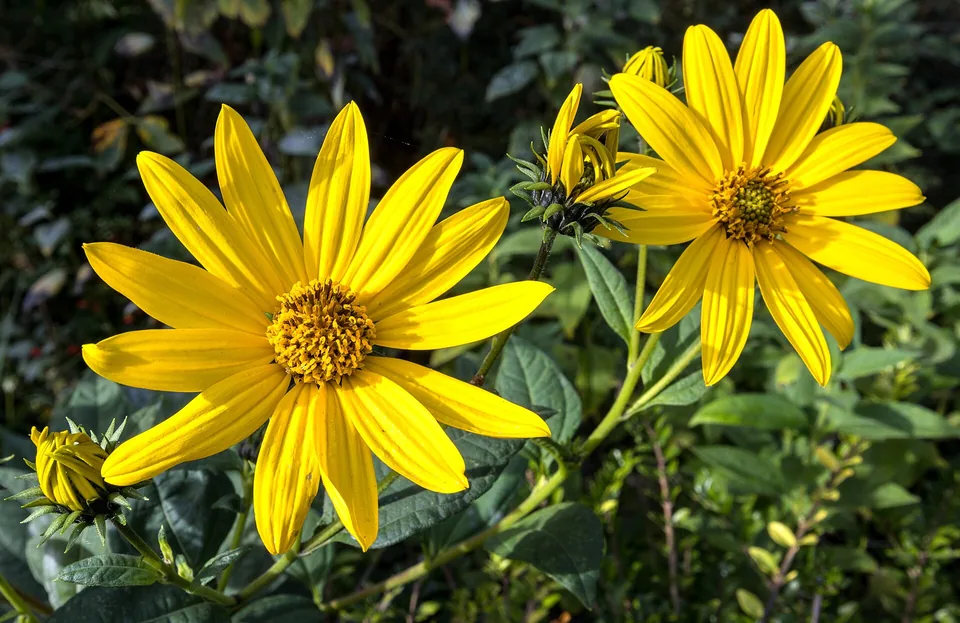


Cómo cultivar y cuidar Tupinambo
Helianthus tuberosus
Escrito por Emilio Marruso · última revisión
De un vistazo
El tupinambo es una planta perenne y agradecida que te regala tubérculos nudosos de sabor a fruto seco, crujientes como la castaña de agua. Planta trozos a principios de primavera en un rincón soleado y, a los 120 días, podrás desenterrarlos en otoño cuando se marchiten las flores, y seguir cosechando hasta la primavera. Disfrútalos crudos, en puré o asados como patatas.
- Sol
Sol pleno o semisombra ligera; no soporta la sombra densa
Qué dicen las fuentes (3)
Luz: Pleno sol a semisombra; no tolera sombra profunda
Grow in full to part sun. This is a tall bushy (6-10' x 5'wide) plant that may require some staking or protection from strong wind.
— Helianthus tuberosus (Earth Apple, Jerusalem Artichoke, Sunchoke, Sunroot) | North Carolina Extension Gardener Plant Toolbox [1] Heavy clay soils prone to waterlogging will reduce yields. It does not tolerate deep shade or maritime exposure.
— Helianthus tuberosus (Earth Apple, Jerusalem Artichoke, Sunchoke, Sunroot) | North Carolina Extension Gardener Plant Toolbox [1] Pick a spot that has full sun. It will be 120 days to maturity.
— Jerusalem Artichokes - Chatham County Center | N.C. Cooperative Extension [2] - Riego
Mejor con humedad constante; acolcha para conservarla y evita suelos arcillosos encharcados
Qué dicen las fuentes (3)
Riego: Promedio, seco a humedad media; mejor con humedad constante
Average, dry to medium moisture is required; however, this plant is best with consistent moisture. Mulch to conserve moisture.
— Helianthus tuberosus (Earth Apple, Jerusalem Artichoke, Sunchoke, Sunroot) | North Carolina Extension Gardener Plant Toolbox [1] Notas sobre el riego: Aplica mantillo para conservar la humedad; los suelos arcillosos pesados propensos al encharcamiento reducen los rendimientos.
Average, dry to medium moisture is required; however, this plant is best with consistent moisture. Mulch to conserve moisture.
— Helianthus tuberosus (Earth Apple, Jerusalem Artichoke, Sunchoke, Sunroot) | North Carolina Extension Gardener Plant Toolbox [1] Heavy clay soils prone to waterlogging will reduce yields. It does not tolerate deep shade or maritime exposure.
— Helianthus tuberosus (Earth Apple, Jerusalem Artichoke, Sunchoke, Sunroot) | North Carolina Extension Gardener Plant Toolbox [1] - Frío
Aguanta inviernos de hasta −40 °C (−40 °F)
Muy rústica · USDA 3a · RHS H7 · Z3
Qué dicen las fuentes (2)
Rusticidad, zona más fría: 3a [mínima invernal de −40 a −37,2 °C (de −40 a −35 °F)]
3a, 3b, 4a, 4b, 5a, 5b, 6a, 6b, 7a, 7b, 8a, 8b, 9a, 9b
— Helianthus tuberosus (Earth Apple, Jerusalem Artichoke, Sunchoke, Sunroot) | North Carolina Extension Gardener Plant Toolbox [1] Rusticidad, zona más cálida: 9b [mínima invernal de −3,9 a −1,1 °C (de 25 a 30 °F)]
3a, 3b, 4a, 4b, 5a, 5b, 6a, 6b, 7a, 7b, 8a, 8b, 9a, 9b
— Helianthus tuberosus (Earth Apple, Jerusalem Artichoke, Sunchoke, Sunroot) | North Carolina Extension Gardener Plant Toolbox [1] - Suelo
Suelo neutro o ligeramente alcalino, pH 7,0–7,5
Qué dicen las fuentes (2)
pH del suelo, mínimo: 7.0
Jerusalem artichoke will tolerate most soil types as long as they are well drained, but is happiest in slightly alkaline soils (7-7.5).
— Helianthus tuberosus (Earth Apple, Jerusalem Artichoke, Sunchoke, Sunroot) | North Carolina Extension Gardener Plant Toolbox [1] pH del suelo, máximo: 7.5
Jerusalem artichoke will tolerate most soil types as long as they are well drained, but is happiest in slightly alkaline soils (7-7.5).
— Helianthus tuberosus (Earth Apple, Jerusalem Artichoke, Sunchoke, Sunroot) | North Carolina Extension Gardener Plant Toolbox [1] - Distancia
30–45 cm entre plantas
Qué dicen las fuentes (1)
Distancia de plantación: 30.5-45.7 cm (12-18 pulgadas) de separación
The tubers are planted 4 to 6 inches deep and 12 to 18 inches apart the first two weeks in March.
— Jerusalem Artichokes - Chatham County Center | N.C. Cooperative Extension [2] - Plantación
Planta los tubérculos a principios de primavera, a 10–15 cm de profundidad
Qué dicen las fuentes (5)
Plantación: Principios de primavera; primeras dos semanas de marzo (Carolina del Norte)
Según NC State Plant Toolbox: Tubers may be planted in early spring. Similar to potatoes
— Helianthus tuberosus (Earth Apple, Jerusalem Artichoke, Sunchoke, Sunroot) | North Carolina Extension Gardener Plant Toolbox [1] Condado de Chatham (fuente: NC State Extension): The tubers are planted 4 to 6 inches deep and 12 to 18 inches apart the first two weeks in March.
— Jerusalem Artichokes - Chatham County Center | N.C. Cooperative Extension [2] Tubers may be planted in early spring. Similar to potatoes, whole tubers or pieces of tuber with at least two to three strong buds should be planted.
— Helianthus tuberosus (Earth Apple, Jerusalem Artichoke, Sunchoke, Sunroot) | North Carolina Extension Gardener Plant Toolbox [1] The tubers are planted 4 to 6 inches deep and 12 to 18 inches apart the first two weeks in March.
— Jerusalem Artichokes - Chatham County Center | N.C. Cooperative Extension [2] Profundidad de siembra: 10-15 cm (4 a 6 pulgadas) para tubérculos
The tubers are planted 4 to 6 inches deep and 12 to 18 inches apart the first two weeks in March.
— Jerusalem Artichokes - Chatham County Center | N.C. Cooperative Extension [2] - Abonado
Mezcla compost con la tierra; un abono equilibrado cada dos semanas o cada mes da más cosecha
Qué dicen las fuentes (7)
Abonos naturales: Compost incorporado al suelo
en contenedores: For containers, a 50/50 mix of native soil and compost is preferred.
— [6] Sunchokes will grow in relatively infertile soil, but it's best to amend with compost.
— [6] Abonos minerales: Fertilizante NPK equilibrado como 20-20-20
bancales de prueba elevados: Plants were fertilized every two weeks with water-soluble fertilizer [28-8-16; nitrogen, phosphorus, and potassium (NPK)].
— [4] producción en campo: Nitrogen: 150-200 lb N/acre. Apply no more than half the total before planting. Phosphorus: 80-150 (P205) lb/acre Potash: 80-100 lb K2O/acre Sulfur: 15-20 lb S/acre
— [3] Sunchoke plants show higher yields with regular applications (biweekly or monthly) of fertilizer with a balanced nitrogen, phosphorus, and potassium (NPK) ratio (e.g., 20-20-20).
— [5] Frecuencia: Cada dos semanas o mensualmente, para rendimientos más altos
bancales de prueba elevados: Plants were fertilized every two weeks with water-soluble fertilizer [28-8-16; nitrogen, phosphorus, and potassium (NPK)].
— [4] Sunchoke plants show higher yields with regular applications (biweekly or monthly) of fertilizer with a balanced nitrogen, phosphorus, and potassium (NPK) ratio (e.g., 20-20-20).
— [5] - Poda
Poda tras la floración, de agosto a octubre
Qué dicen las fuentes (1)
Poda: Después de la floración, agosto-octubre
Trim back after bloom time, August-October, or leave seeds as a treat for the birds.
— Helianthus tuberosus (Earth Apple, Jerusalem Artichoke, Sunchoke, Sunroot) | North Carolina Extension Gardener Plant Toolbox [1] - Cosecha
Desentierra los tubérculos en otoño, dos semanas tras marchitarse las flores, y hasta primavera; cómelos con moderación
Qué dicen las fuentes (6)
Cosecha: Otoño, aproximadamente dos semanas después de que las flores se marchiten (octubre-diciembre); la cosecha comienza después de la primera helada en otoño/invierno y termina en primavera
Según NC State Plant Toolbox: The knobby tubers are harvested in the fall approximately two weeks after the flowers fade (October-December).
— Helianthus tuberosus (Earth Apple, Jerusalem Artichoke, Sunchoke, Sunroot) | North Carolina Extension Gardener Plant Toolbox [1] Condado de Chatham (fuente: NC State Extension): Harvesting should start after the first frost in fall/winter and ends in the spring.
— Jerusalem Artichokes - Chatham County Center | N.C. Cooperative Extension [2] The knobby tubers are harvested in the fall approximately two weeks after the flowers fade (October-December).
— Helianthus tuberosus (Earth Apple, Jerusalem Artichoke, Sunchoke, Sunroot) | North Carolina Extension Gardener Plant Toolbox [1] Harvesting should start after the first frost in fall/winter and ends in the spring.
— Jerusalem Artichokes - Chatham County Center | N.C. Cooperative Extension [2] Cómo cosechar: Excava los tubérculos nudosos en otoño, unas dos semanas después de que las flores se marchiten; la cosecha puede comenzar después de la primera helada y continuar hasta la primavera, excavándolos según sea necesario.
The knobby tubers are harvested in the fall approximately two weeks after the flowers fade (October-December).
— Helianthus tuberosus (Earth Apple, Jerusalem Artichoke, Sunchoke, Sunroot) | North Carolina Extension Gardener Plant Toolbox [1] Harvesting should start after the first frost in fall/winter and ends in the spring. Also, it is best to dig when you need them.
— Jerusalem Artichokes - Chatham County Center | N.C. Cooperative Extension [2] - Plagas
Babosas y polillas agujerean los tubérculos; la roya, las manchas en las hojas y el oídio son frecuentes
Qué dicen las fuentes (2)
Plagas: babosas, polillas rápidas
Slugs and swift moths may eat holes in the tubers. Consistent weeding and moisture control may help prevent damage.
— Helianthus tuberosus (Earth Apple, Jerusalem Artichoke, Sunchoke, Sunroot) | North Carolina Extension Gardener Plant Toolbox [1] Enfermedades: roya, manchas foliares por hongos, mildiu polvoriento
This plant has few pesticides labeled for it. Rust, leaf fungal spots and powdery mildew occur frequently.
— Helianthus tuberosus (Earth Apple, Jerusalem Artichoke, Sunchoke, Sunroot) | North Carolina Extension Gardener Plant Toolbox [1] - Atención
Se extiende mucho: cualquier trocito que quede en la tierra brota como planta nueva
- Tamaño
De 0,9 a 1,5 m de ancho
Qué dicen las fuentes (1)
Anchura adulta: 91-152 cm (3 a 5 pies)
Height: 6 ft. 0 in. - 10 ft. 0 in. Width: 3 ft. 0 in. - 5 ft. 0 in.
— Helianthus tuberosus (Earth Apple, Jerusalem Artichoke, Sunchoke, Sunroot) | North Carolina Extension Gardener Plant Toolbox [1] - Multiplicación
Planta tubérculos enteros o trozos con 2–3 yemas fuertes; también por semilla o esquejes
Qué dicen las fuentes (2)
Propagación: Tubérculos (enteros o trozos con al menos dos o tres yemas fuertes); esqueje de raíz; semilla; esqueje de tallo
Life Cycle: Perennial Recommended Propagation Strategy: Root Cutting Seed Stem Cutting
— Helianthus tuberosus (Earth Apple, Jerusalem Artichoke, Sunchoke, Sunroot) | North Carolina Extension Gardener Plant Toolbox [1] Planting is similar to planting Irish potatoes because you can cut larger ones in pieces but making sure there are 2 to 3 buds on each section.
— Jerusalem Artichokes - Chatham County Center | N.C. Cooperative Extension [2]
Resumen
El topinambur es una hortaliza perenne de raíz herbácea de la familia de los girasoles, cultivada por sus flores amarillas tardías o por sus tubérculos comestibles. [1] Crece a pleno sol o semisombra, tolera la mayoría de los suelos bien drenados y puede necesitar tutores o protección contra el viento fuerte. [1] Se propaga por rizomas y se autosiembra para formar colonias, y puede convertirse en un problema de malezas. [1]
Citado en inglés, como en la fuente.
Cuidados
Riego
Riego
Promedio, seco a humedad media; mejor con humedad constante
Qué dicen las fuentes (1)
Average, dry to medium moisture is required; however, this plant is best with consistent moisture. Mulch to conserve moisture.Notas sobre el riego
Aplica mantillo para conservar la humedad; los suelos arcillosos pesados propensos al encharcamiento reducen los rendimientos.
Qué dicen las fuentes (2)
Average, dry to medium moisture is required; however, this plant is best with consistent moisture. Mulch to conserve moisture.Heavy clay soils prone to waterlogging will reduce yields. It does not tolerate deep shade or maritime exposure.Luz
Pleno sol a semisombra; no tolera sombra profunda
Qué dicen las fuentes (3)
Grow in full to part sun. This is a tall bushy (6-10' x 5'wide) plant that may require some staking or protection from strong wind.Heavy clay soils prone to waterlogging will reduce yields. It does not tolerate deep shade or maritime exposure.Pick a spot that has full sun. It will be 120 days to maturity.Clima y frío
Rusticidad, zona más fría
3a [mínima invernal de −40 a −37,2 °C (de −40 a −35 °F)]
Qué dicen las fuentes (1)
3a, 3b, 4a, 4b, 5a, 5b, 6a, 6b, 7a, 7b, 8a, 8b, 9a, 9bRusticidad, zona más cálida
9b [mínima invernal de −3,9 a −1,1 °C (de 25 a 30 °F)]
Qué dicen las fuentes (1)
3a, 3b, 4a, 4b, 5a, 5b, 6a, 6b, 7a, 7b, 8a, 8b, 9a, 9bSuelo
pH del suelo, mínimo
7.0
Qué dicen las fuentes (1)
Jerusalem artichoke will tolerate most soil types as long as they are well drained, but is happiest in slightly alkaline soils (7-7.5).pH del suelo, máximo
7.5
Qué dicen las fuentes (1)
Jerusalem artichoke will tolerate most soil types as long as they are well drained, but is happiest in slightly alkaline soils (7-7.5).Dónde cultivarla
30.5-45.7 cm (12-18 pulgadas) de separación
Qué dicen las fuentes (1)
The tubers are planted 4 to 6 inches deep and 12 to 18 inches apart the first two weeks in March.Propagación
Tubérculos (enteros o trozos con al menos dos o tres yemas fuertes); esqueje de raíz; semilla; esqueje de tallo
Qué dicen las fuentes (2)
Life Cycle:
Perennial
Recommended Propagation Strategy:
Root Cutting
Seed
Stem CuttingPlanting is similar to planting Irish potatoes because you can cut larger ones in pieces but making sure there are 2 to 3 buds on each section.Cultivo
La planta
Ciclo de vida
perenne
Qué dicen las fuentes (1)
Jerusalem artichoke, (also called Sunchoke, or Sunroot) is an herbaceous perennial root vegetable in the sunflower family.Familia
Asteraceae
Qué dicen las fuentes (1)
Genus: Helianthus Species: tuberosus Family: Asteraceae Uses (Ethnobotany): First cultivation of this important food crop was by Native Americans.Altura adulta
Anchura adulta
91-152 cm (3 a 5 pies)
Qué dicen las fuentes (1)
Height: 6 ft. 0 in. - 10 ft. 0 in. Width: 3 ft. 0 in. - 5 ft. 0 in.Siembra y crecimiento
Profundidad de siembra
10-15 cm (4 a 6 pulgadas) para tubérculos
Qué dicen las fuentes (1)
The tubers are planted 4 to 6 inches deep and 12 to 18 inches apart the first two weeks in March.Días hasta la madurez
120 días
Qué dicen las fuentes (1)
Pick a spot that has full sun. It will be 120 days to maturity.Cosecha y conservación
Cómo cosechar
Excava los tubérculos nudosos en otoño, unas dos semanas después de que las flores se marchiten; la cosecha puede comenzar después de la primera helada y continuar hasta la primavera, excavándolos según sea necesario.
Qué dicen las fuentes (2)
The knobby tubers are harvested in the fall approximately two weeks after the flowers fade (October-December).Harvesting should start after the first frost in fall/winter and ends in the spring. Also, it is best to dig when you need them.Conservación
En el refrigerador, en una bolsa de plástico con unas servilletas de papel ligeramente húmedas; duran hasta dos meses, cambiando de color con el tiempo.
Qué dicen las fuentes (1)
They will store in the refrigerator if placed in a plastic bag with a few slightly damp paper towels. Over time, they will change in color but will last up to two months.Plagas y enfermedades
Plagas
babosas, polillas rápidas
Qué dicen las fuentes (1)
Slugs and swift moths may eat holes in the tubers. Consistent weeding and moisture control may help prevent damage.Enfermedades
roya, manchas foliares por hongos, mildiu polvoriento
Qué dicen las fuentes (1)
This plant has few pesticides labeled for it. Rust, leaf fungal spots and powdery mildew occur frequently.Abonado
Cuándo
Las fuentes dan valores distintos según la región, la zona o las condiciones de cultivo.
Lo que dice cada fuente
producción en campo: No más de la mitad del nitrógeno total antes de plantar
Qué dicen las fuentes (1)
producción en campo: Nitrogen: 150-200 lb N/acre. Apply no more than half the total before planting.Frecuencia
Cada dos semanas o mensualmente, para rendimientos más altos
Lo que dice cada fuente
bancales de prueba elevados: Cada dos semanas con un fertilizante soluble en agua
Qué dicen las fuentes (2)
bancales de prueba elevados: Plants were fertilized every two weeks with water-soluble fertilizer [28-8-16; nitrogen, phosphorus, and potassium (NPK)].Sunchoke plants show higher yields with regular applications (biweekly or monthly) of fertilizer with a balanced nitrogen, phosphorus, and potassium (NPK) ratio (e.g., 20-20-20).Abonos naturales
Compost incorporado al suelo
Lo que dice cada fuente
en contenedores: Una mezcla 50/50 de tierra nativa y compost
Abonos minerales
Fertilizante NPK equilibrado como 20-20-20
Lo que dice cada fuente
bancales de prueba elevados: Soluble en agua 28-8-16 cada dos semanas
producción en campo: Nitrógeno 168 a 224 kg [370,4–493,8 lb]/ha (no más de la mitad antes de plantar), P2O5 89.7 a 168 kg [197,8–370,4 lb]/ha, K2O 89.7 a 112 kg [197,8–246,9 lb]/ha, azufre 16.8 a 22.4 kg [37–49,4 lb]/ha
Qué dicen las fuentes (3)
bancales de prueba elevados: Plants were fertilized every two weeks with water-soluble fertilizer [28-8-16; nitrogen, phosphorus, and potassium (NPK)].producción en campo: Nitrogen: 150-200 lb N/acre. Apply no more than half the total before planting. Phosphorus: 80-150 (P205) lb/acre Potash: 80-100 lb K2O/acre Sulfur: 15-20 lb S/acreSunchoke plants show higher yields with regular applications (biweekly or monthly) of fertilizer with a balanced nitrogen, phosphorus, and potassium (NPK) ratio (e.g., 20-20-20).Signos de carencia
Hojas amarillentas o crecimiento atrofiado
Qué dicen las fuentes (1)
It is best to monitor the plants during the growing season for signs of nutrient deficiencies, such as yellowing leaves or stunted growth.Problemas
Babosas y polillas ghost (Hepialidae)
Síntoma: Las babosas y las polillas ghost (Hepialidae) pueden hacer agujeros en los tubérculos.
Qué hacer: El deshierbe constante y el control de la humedad pueden ayudar a prevenir daños.
Qué dicen las fuentes (1)
Slugs and swift moths may eat holes in the tubers. Consistent weeding and moisture control may help prevent damage.
— Helianthus tuberosus (Earth Apple, Jerusalem Artichoke, Sunchoke, Sunroot) | North Carolina Extension Gardener Plant Toolbox [1] Roya, manchas foliares por hongos y mildiu polvoriento
Síntoma: La roya, las manchas foliares por hongos y el mildiu polvoriento ocurren con frecuencia.
Qué dicen las fuentes (1)
This plant has few pesticides labeled for it. Rust, leaf fungal spots and powdery mildew occur frequently.
— Helianthus tuberosus (Earth Apple, Jerusalem Artichoke, Sunchoke, Sunroot) | North Carolina Extension Gardener Plant Toolbox [1] Propagación como maleza
Síntoma: Se propaga por rizomas y se autosiembra para formar colonias; cualquier trozo diminuto que quede en el suelo brotará nuevas plantas y puede ser difícil de eliminar una vez establecido.
Qué dicen las fuentes (1)
Once established in the garden it may be difficult to remove. Any tiny piece of the plant left in the soil will sprout new plants.
— Helianthus tuberosus (Earth Apple, Jerusalem Artichoke, Sunchoke, Sunroot) | North Carolina Extension Gardener Plant Toolbox [1]
Remedios
Cada remedio indica qué dicen las fuentes oficiales; los remedios tradicionales sin fuente oficial aparecen marcados. Los perjudiciales están para que sepas evitarlos.
Cuidar la planta
babosas
trampas para babosas No verificado
Remedio tradicional, no verificado por una fuente oficial.
Cómo: Protege el nuevo crecimiento con trampas o barreras orgánicas para babosas.
Cómo eliminarla
propagación como maleza
Arranca los brotes jóvenes. Funciona
Cómo: Arranca las plantas jóvenes tan pronto como emergen en primavera, preferiblemente cuando midan unas 4 a 8 pulgadas (10-20 cm) de altura. Los nuevos tubérculos no pueden desarrollarse sin los brotes aéreos, pero el control total requiere eliminar cada brote individual.
A more effective way of managing Jerusalem artichoke weeds is to pull the young plants as soon as they emerge in spring-- preferably when they are about 4 to 8 inches (10-20 cm.) tall.
— gardeningknowhow.com [7] Qué dicen las pruebas Regularly pulling, hoeing or mowing weeds and encouraging grass to grow and out-compete the weeds is an excellent solution.
— extension.usu.edu [8] Siega los brotes jóvenes. Funciona
Cómo: Si tienes un parche grande o las plantas están brotando en tu césped, siégalas; los nuevos tubérculos no pueden desarrollarse sin los brotes aéreos. El control total requiere eliminar cada brote.
If you have a large patch of Jerusalem artichoke or if the plants are sprouting in your lawn, you can mow them down.
— gardeningknowhow.com [7] Qué dicen las pruebas Regularly pulling, hoeing or mowing weeds and encouraging grass to grow and out-compete the weeds is an excellent solution.
— extension.usu.edu [8] Desentierra todos los tubérculos No verificado
Remedio tradicional, no verificado por una fuente oficial.
locating all of the tubers, which grow on long stolons, is nearly impossible.
— gardeningknowhow.com [7] Cómo: Desentierra los tubérculos con cuidado, asegurándote de sacar todas las raíces, y deséchalos adecuadamente porque pueden volver a brotar fácilmente. Al cosechar en otoño, desentierra tantos tubérculos como sea posible para mantener el crecimiento bajo control.
Corta las flores. No verificado
Remedio tradicional, no verificado por una fuente oficial.
Cómo: Si cultivas un parche pequeño para los tubérculos, corta las flores de las plantas antes de que produzcan semillas; las flores funcionan bien en ramos.
mantillo Funciona en parte
Cómo: El acolchado alrededor de las plantas puede ayudar a suprimir el crecimiento de malezas, incluidas las plantas de alcachofa de Jerusalén.
Mulching: Mulching around plants can help to suppress the growth of weeds, including Jerusalem artichoke plants.
— susanhomecare.com [9] Qué dicen las pruebas Lay the material down to prevent sunlight from reaching the unwanted plants, and cover with mulch or other plant-resistant material.
— extension.usu.edu [8] solarización No verificado
Remedio tradicional, no verificado por una fuente oficial.
Cómo: Cubre el suelo con una lona de plástico transparente durante los meses de verano para calentar el suelo y matar los tubérculos.
Calendario
Principios de primavera; primeras dos semanas de marzo (Carolina del Norte)
Lo que dice cada fuente
Según NC State Plant Toolbox: Principios de primavera
Condado de Chatham (fuente: NC State Extension): Primeras dos semanas de marzo
Qué dicen las fuentes (4)
Según NC State Plant Toolbox: Tubers may be planted in early spring. Similar to potatoesCondado de Chatham (fuente: NC State Extension): The tubers are planted 4 to 6 inches deep and 12 to 18 inches apart the first two weeks in March.Tubers may be planted in early spring. Similar to potatoes, whole tubers or pieces of tuber with at least two to three strong buds should be planted.The tubers are planted 4 to 6 inches deep and 12 to 18 inches apart the first two weeks in March.Otoño, aproximadamente dos semanas después de que las flores se marchiten (octubre-diciembre); la cosecha comienza después de la primera helada en otoño/invierno y termina en primavera
Lo que dice cada fuente
Según NC State Plant Toolbox: Otoño, aproximadamente dos semanas después de que las flores se marchiten (octubre-diciembre)
Condado de Chatham (fuente: NC State Extension): Comienza después de la primera helada en otoño/invierno y termina en primavera
Qué dicen las fuentes (4)
Según NC State Plant Toolbox: The knobby tubers are harvested in the fall approximately two weeks after the flowers fade (October-December).Condado de Chatham (fuente: NC State Extension): Harvesting should start after the first frost in fall/winter and ends in the spring.The knobby tubers are harvested in the fall approximately two weeks after the flowers fade (October-December).Harvesting should start after the first frost in fall/winter and ends in the spring.Después de la floración, agosto-octubre
Qué dicen las fuentes (1)
Trim back after bloom time, August-October, or leave seeds as a treat for the birds.Meses tal como los dan las fuentes, en su mayoría de Estados Unidos (hemisferio norte). En el hemisferio sur se desplazan unos seis meses.
Respecto a las heladas
Estimación menos precisa: no hay ninguna estación meteorológica a menos de 300 km.
Busca las fechas de heladas por código postal o ciudad
Cosecha: hacia la primera helada
Harvesting should start after the first frost in fall/winter and ends in the spring.
— Jerusalem Artichokes - Chatham County Center | N.C. Cooperative Extension [2]
Cuenta desde las fechas medias de las heladas de tu zona.
Comestibilidad
Según la fuente, citada textualmente. No comas una planta basándote solo en esta página: los errores de identificación pueden ser peligrosos.
Fresh Jerusalem artichoke tubers are edible, and are similar in texture to water chestnuts with a nutty flavor. They may be boiled, mashed, roasted like potatoes, or eaten raw.
[1]eat in moderation, as they contain inulin, which can cause flatulence, especially if it is more than half of your meal.
[2]
Valores orientativos
Valores de una fuente secundaria, no comprobados palabra por palabra como el resto de esta página. Úselos como punto de partida.
- Horas de sol
- 4-6 horasValor orientativo, adáptalo a tu clima · Fuente secundaria
- Nivel de cuidado
- MedioValor orientativo, adáptalo a tu clima · Fuente secundaria
- Crecimiento
- AltaValor orientativo, adáptalo a tu clima · Fuente secundaria
Plantas similares
- Appalachian Sunflower Helianthus atrorubens
- Maximilian Sunflower Helianthus maximiliani
- Muck Sunflower Helianthus simulans
- Naked-stem Sunflower Helianthus occidentalis
- Resinous Sunflower Helianthus resinosus
- Schweinitz's Sunflower Helianthus schweinitzii
- Sunflower Helianthus angustifolius
- Girasol Helianthus annuus
Fuentes
Cada valor anterior se cita de estos documentos. Los enlaces llevan al editor original.
- Helianthus tuberosus (Earth Apple, Jerusalem Artichoke, Sunchoke, Sunroot) | North Carolina Extension Gardener Plant Toolbox · plants.ces.ncsu.edu, consultado
- Jerusalem Artichokes - Chatham County Center | N.C. Cooperative Extension · chatham.ces.ncsu.edu, consultado
- horticulture.oregonstate.edu · horticulture.oregonstate.edu
- ohioline.osu.edu · ohioline.osu.edu
- ohioline.osu.edu · ohioline.osu.edu
- ucanr.edu · ucanr.edu
- gardeningknowhow.com · gardeningknowhow.com
- extension.usu.edu · extension.usu.edu
- susanhomecare.com · susanhomecare.com
Escrito por Emilio Marruso · última revisión