

How to Grow and Care for Aji
Capsicum chinense
Written by Emilio Marruso · last checked
Toxic to: Birds, People · Why
At a glance
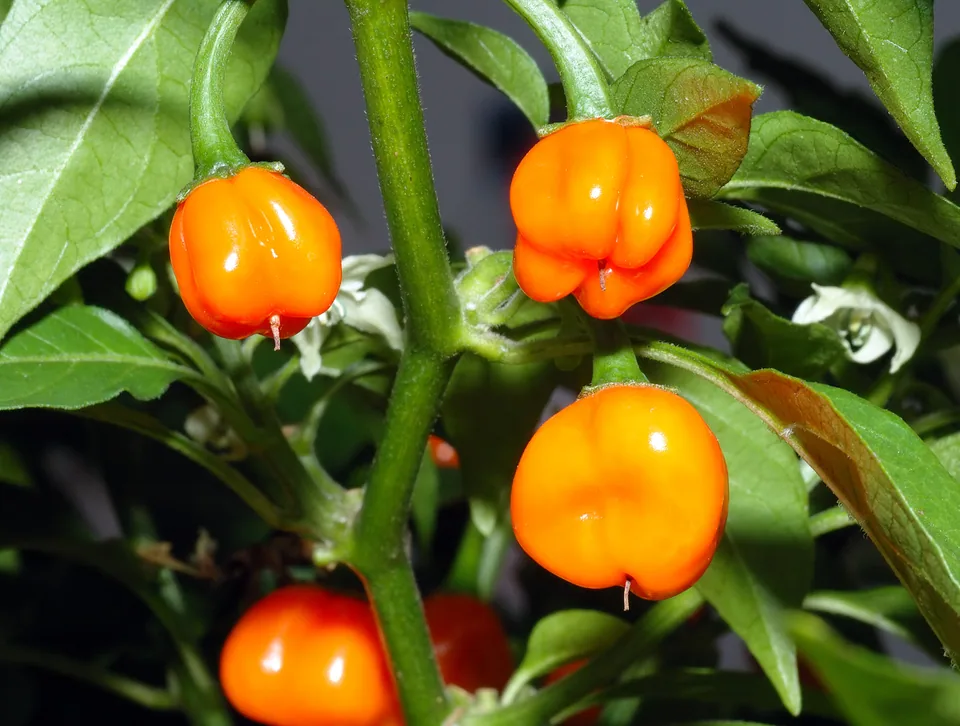
The datil pepper has been grown since the 1700s, and its hot fruit ends up in sauces, chowders, jams, jellies and even popsicles. Plant it out once the frost is over and nights stay warm, keep the soil evenly moist, and the first peppers arrive 8 to 10 weeks after transplanting. It grows happily in a container too.
- Water
Keep the soil evenly moist; water the soil, not the leaves
What the sources say (8)
Watering: Tolerates drought, though prolonged drought may affect fruit quality; keep the soil consistently moist rather than letting it dry out between waterings
According to NC State Extension: These plants enjoy heat and tolerate drought, though prolonged drought may affect fruit quality.
— Capsicum chinense (Carolina Reaper, Habanero, Habanero Pepper, Habanero Type Pepper) | North Carolina Extension Gardener Plant Toolbox [1] According to Oregon State University Extension: Try to keep the soil consistently moist rather than allowing it to dry out between waterings.
— Grow your own peppers | OSU Extension Service [2] According to UF/IFAS (datil peppers, Florida): Hot peppers are relatively drought-tolerant, but you should water them regularly to keep them productive.
— Datil Peppers – Gardening Solutions [4] These plants enjoy heat and tolerate drought, though prolonged drought may affect fruit quality.
— Capsicum chinense (Carolina Reaper, Habanero, Habanero Pepper, Habanero Type Pepper) | North Carolina Extension Gardener Plant Toolbox [1] Try to keep the soil consistently moist rather than allowing it to dry out between waterings.
— Grow your own peppers | OSU Extension Service [2] Hot peppers are relatively drought-tolerant, but you should water them regularly to keep them productive.
— Datil Peppers – Gardening Solutions [4] Watering notes: Avoid wetting the leaves with overhead sprinklers (use drip irrigation or hand water at the soil surface); container plants may need daily watering in warm weather
Avoid wetting the leaves with overhead sprinklers. Instead, use drip irrigation (micro emitters, drip lines or soaker hoses) or hand water at the soil surface.
— Grow your own peppers | OSU Extension Service [2] Container plants may need daily irrigation in warm weather.
— Grow your own peppers | OSU Extension Service [2] - Cold
Survives winters down to 30 °F (−1.1 °C)
Half hardy: mild winters or an unheated greenhouse · USDA 10a · RHS H3 · Z10
What the sources say (2)
Hardiness, coldest zone: 10a [winter low −1.1 to 1.7 °C (30 to 35 °F)]
USDA Plant Hardiness Zone: 10a, 10b, 11a, 11b
— Capsicum chinense (Carolina Reaper, Habanero, Habanero Pepper, Habanero Type Pepper) | North Carolina Extension Gardener Plant Toolbox [1] Hardiness, warmest zone: 11b [winter low 7.2 to 10 °C (45 to 50 °F)]
USDA Plant Hardiness Zone: 10a, 10b, 11a, 11b
— Capsicum chinense (Carolina Reaper, Habanero, Habanero Pepper, Habanero Type Pepper) | North Carolina Extension Gardener Plant Toolbox [1] - Soil
Slightly acidic to neutral soil, pH 6.0–7.0
- Spacing
14–18 in between plants, 24–36 in between rows
What the sources say (2)
Spacing: 35.6-45.7 cm (14-18 in) apart in the row; rows 61.0-91.4 cm (24-36 in) apart
Make the transplant holes 3 to 4 inches deep and about 14 to 18 inches apart in the row. Space the rows 24 to 36 inches apart.
— Grow your own peppers | OSU Extension Service [2] Row spacing: 61-91 cm (24 to 36 in)
Make the transplant holes 3 to 4 inches deep and about 14 to 18 inches apart in the row. Space the rows 24 to 36 inches apart.
— Grow your own peppers | OSU Extension Service [2] - Planting
After the last frost, when nights stay above 55 °F (13 °C) and the soil reaches 60 °F (16 °C)
What the sources say (6)
Planting: After the last frost, when nighttime temperatures are at least 55F and the soil has warmed to at least 60F; in Florida, after the last frost in February or March
According to NC State Extension: Plant only when nighttime temperatures are at least 55F; seedlings may be started indoors earlier and transplanted at this time.
— Capsicum chinense (Carolina Reaper, Habanero, Habanero Pepper, Habanero Type Pepper) | North Carolina Extension Gardener Plant Toolbox [1] According to Oregon State University Extension: Delay transplant until the danger of frost is past and until the soil has warmed to at least 60°F.
— Grow your own peppers | OSU Extension Service [2] Florida: Be sure to plant after the last frost in the spring in either February or March.
— Datil Peppers – Gardening Solutions [4] Plant only when nighttime temperatures are at least 55F; seedlings may be started indoors earlier and transplanted at this time.
— Capsicum chinense (Carolina Reaper, Habanero, Habanero Pepper, Habanero Type Pepper) | North Carolina Extension Gardener Plant Toolbox [1] Delay transplant until the danger of frost is past and until the soil has warmed to at least 60°F.
— Grow your own peppers | OSU Extension Service [2] Be sure to plant after the last frost in the spring in either February or March.
— Datil Peppers – Gardening Solutions [4] - Feeding
Half before transplanting, half at flowering; too much nitrogen means leaves, not peppers
What the sources say (7)
When: Half worked into the soil at least two weeks before transplanting, the other half when the plants begin to flower
organic fertilizers: Most organic fertilizers should be applied as a single application early in spring. Organic fertilizers can be purchased as a complete formulation (containing NPK) or as individual components (nitrogen, phosphorous or potassium-only).
— Grow your own peppers | OSU Extension Service [2] in containers: If fertilizer is not listed, then mix in a nitrogen fertilizer labeled for use with vegetables prior to transplanting. Apply fertilizer again when the plants begin to flower.
— Grow your own peppers | OSU Extension Service [2] Split your fertilizer into two applications. Work half of the recommended fertilizer amount into the top 4–6 inches of soil at least two weeks before transplanting.
— Grow your own peppers | OSU Extension Service [2] As soon as peppers begin to flower, fertilize again with the other half by sidedressing.
— Grow your own peppers | OSU Extension Service [2] Avoid: Overfertilizing with nitrogen (leaf growth at the expense of fruit, blossom end rot); fertilizer touching the plant
Avoid overfertilizing with nitrogen, as this encourages leaf growth and can divert nutrients from the fruit.
— Grow your own peppers | OSU Extension Service [2] Use caution because too much nitrogen may encourage blossom end rot.
— Grow your own peppers | OSU Extension Service [2] This means to apply the fertilizer to the soil in a circle around the plant. Don’t let the fertilizer contact the plant.
— Grow your own peppers | OSU Extension Service [2] - Harvest
First peppers 8–10 weeks after transplanting; pick with the stem on and wear gloves
What the sources say (7)
Harvest: First peppers 8 to 10 weeks after transplanting; for datil peppers in Florida, harvest season normally runs from July through November
According to Oregon State University Extension: The first peppers should be ready eight to 10 weeks after transplanting.
— Grow your own peppers | OSU Extension Service [2] Florida: In three to five months, plants will begin producing peppers ready for harvest season, which normally runs from July through November.
— Datil Peppers – Gardening Solutions [4] The first peppers should be ready eight to 10 weeks after transplanting.
— Grow your own peppers | OSU Extension Service [2] In three to five months, plants will begin producing peppers ready for harvest season, which normally runs from July through November.
— Datil Peppers – Gardening Solutions [4] How to harvest: Break the peppers off the plant, leaving the stem attached to the fruit; hot peppers are usually harvested at the red ripe stage (jalapeño and ancho are usually harvested green); wear gloves when harvesting and handling.
Harvest peppers by breaking them from the plant, leaving the stem attached to the fruits.
— Grow your own peppers | OSU Extension Service [2] Hot peppers are usually harvested at the red ripe stage, with the exception of Jalapeño and Ancho, which are usually harvested green.
— Grow your own peppers | OSU Extension Service [2] It’s strongly recommended that you wear gloves when harvesting and handling your datil peppers.
— Datil Peppers – Gardening Solutions [4] - Pests
Aphids, whiteflies and cutworms; watch for mosaic virus and wilt
What the sources say (8)
Pests: aphids, whiteflies, cutworms, pepper maggots, Colorado potato beetles, pepper weevils, flea beetles, brown marmorated stink bugs
It is important to look out for aphids, whiteflies, cutworms, pepper maggots, and Colorado potato beetles.
— Capsicum chinense (Carolina Reaper, Habanero, Habanero Pepper, Habanero Type Pepper) | North Carolina Extension Gardener Plant Toolbox [1] Common pests include aphids and pepper weevils, which insert an egg at the base of the fruit and the larvae then cause the peppers to drop.
— Datil Peppers – Gardening Solutions [4] Flea beetle feeding can cause holes or other damage to pepper leaves.
— Grow your own peppers | OSU Extension Service [2] Brown marmorated stink bug can be an occasional pest of peppers.
— Grow your own peppers | OSU Extension Service [2] Diseases: Verticillium wilt, mosaic virus, Phytophthora root rot, white mold, tomato spotted wilt virus, tomato mosaic virus, tobacco mosaic virus
This plant is also sensitive to Verticillium wilt (a fungal pathogen) and mosaic virus
— Capsicum chinense (Carolina Reaper, Habanero, Habanero Pepper, Habanero Type Pepper) | North Carolina Extension Gardener Plant Toolbox [1] If your pepper patch is affected by Phytophthora root rot, verticillium wilt, white mold or others, you need careful management.
— Grow your own peppers | OSU Extension Service [2] Tomato spotted wilt virus is one of the most common viruses in peppers.
— Grow your own peppers | OSU Extension Service [2] Tomato mosaic virus and tobacco mosaic virus are related viruses that cause symptoms similar to herbicide damage.
— Grow your own peppers | OSU Extension Service [2] - Watch out
Shade ripening fruit from late afternoon sun to prevent sunscald
- Size
1 to 2 ft wide
What the sources say (1)
Mature width: 30-61 cm (1 to 2 ft)
Width: 1 ft. 0 in. - 2 ft. 0 in.
— Capsicum chinense (Carolina Reaper, Habanero, Habanero Pepper, Habanero Type Pepper) | North Carolina Extension Gardener Plant Toolbox [1] - Propagation
From seed or nursery transplants
What the sources say (2)
- Containers
Grows in containers; may need water every day in warm weather
What the sources say (4)
In containers: Yes
Landscape Location: Container Landscape Theme: Drought Tolerant Garden
— Capsicum chinense (Carolina Reaper, Habanero, Habanero Pepper, Habanero Type Pepper) | North Carolina Extension Gardener Plant Toolbox [1] Peppers grow well in containers. You’ll get the best plant growth and fruit set when the container is big enough to support a large root system.
— Grow your own peppers | OSU Extension Service [2] Watering notes: Avoid wetting the leaves with overhead sprinklers (use drip irrigation or hand water at the soil surface); container plants may need daily watering in warm weather
Avoid wetting the leaves with overhead sprinklers. Instead, use drip irrigation (micro emitters, drip lines or soaker hoses) or hand water at the soil surface.
— Grow your own peppers | OSU Extension Service [2] Container plants may need daily irrigation in warm weather.
— Grow your own peppers | OSU Extension Service [2] - Safety
Very irritating to skin and eyes; eaten whole, it can upset the stomach
Overview
Capsicum chinense is a species of habanero-type peppers, grown for hot, brightly colored fruits used as food and spice. [1] It is grown in rich, moist, well-drained soil, tolerates drought and can be grown in containers. [1][2] Plants should go out only after frost danger has passed and nights are warm. [1][2]
Aji care
How to water Aji
Watering
Tolerates drought, though prolonged drought may affect fruit quality; keep the soil consistently moist rather than letting it dry out between waterings
What each source says
According to NC State Extension: Tolerates drought; prolonged drought may affect fruit quality
According to Oregon State University Extension: Keep the soil consistently moist rather than letting it dry out between waterings
According to UF/IFAS (datil peppers, Florida): Relatively drought-tolerant; water regularly to keep productive
What the sources say (6)
According to NC State Extension: These plants enjoy heat and tolerate drought, though prolonged drought may affect fruit quality.According to Oregon State University Extension: Try to keep the soil consistently moist rather than allowing it to dry out between waterings.According to UF/IFAS (datil peppers, Florida): Hot peppers are relatively drought-tolerant, but you should water them regularly to keep them productive.These plants enjoy heat and tolerate drought, though prolonged drought may affect fruit quality.Try to keep the soil consistently moist rather than allowing it to dry out between waterings.Hot peppers are relatively drought-tolerant, but you should water them regularly to keep them productive.Watering notes
Avoid wetting the leaves with overhead sprinklers (use drip irrigation or hand water at the soil surface); container plants may need daily watering in warm weather
What the sources say (2)
Avoid wetting the leaves with overhead sprinklers. Instead, use drip irrigation (micro emitters, drip lines or soaker hoses) or hand water at the soil surface.Container plants may need daily irrigation in warm weather.How much light Aji needs
The sources give different values depending on region, zone or growing conditions.
What each source says
According to NC State Extension: Full sun
According to Oregon State University Extension: Full sun for at least six to eight hours
According to UF/IFAS (datil peppers, Florida): 60% to 70% shade
What the sources say (3)
According to NC State Extension: Grow in rich, moist, well-drained soil in full sun.According to Oregon State University Extension: Chose a site that provides full sun for at least six to eight hours.According to UF/IFAS (datil peppers, Florida): Datil peppers prefer 60% to 70% shade and well-drained soil.How much cold Aji can take
Hardiness, coldest zone
10a [winter low −1.1 to 1.7 °C (30 to 35 °F)]
What the sources say (1)
USDA Plant Hardiness Zone:
10a, 10b, 11a, 11bHardiness, warmest zone
11b [winter low 7.2 to 10 °C (45 to 50 °F)]
What the sources say (1)
USDA Plant Hardiness Zone:
10a, 10b, 11a, 11bBest soil for Aji
Soil pH, minimum
6.0
What the sources say (1)
Peppers grow best at soil pH between 6.0 and 7.0.Soil pH, maximum
7.0
What the sources say (1)
Peppers grow best at soil pH between 6.0 and 7.0.Where to grow Aji
In containers
Yes
What the sources say (2)
Landscape Location:
Container
Landscape Theme:
Drought Tolerant GardenPeppers grow well in containers. You’ll get the best plant growth and fruit set when the container is big enough to support a large root system.Spacing
35.6-45.7 cm (14-18 in) apart in the row; rows 61.0-91.4 cm (24-36 in) apart
What the sources say (1)
Make the transplant holes 3 to 4 inches deep and about 14 to 18 inches apart in the row. Space the rows 24 to 36 inches apart.How to propagate Aji
Seed; transplants
How to grow Aji
The plant
Life cycle
annual (can be kept as a perennial in a warm greenhouse)
What the sources say (2)
In Oregon, peppers are usually grown as summer annuals, although they can be overwintered in greenhouses.Peppers can be grown as perennials in greenhouses if optimal temperatures are maintained.Family
Solanaceae
What the sources say (1)
The genus of peppers, composed of species native across Central and South America, is in the Solanaceae (nightshade) familyMature height
Mature width
30-61 cm (1 to 2 ft)
What the sources say (1)
Width: 1 ft. 0 in. - 2 ft. 0 in.Sowing and growth
Row spacing
61-91 cm (24 to 36 in)
What the sources say (1)
Make the transplant holes 3 to 4 inches deep and about 14 to 18 inches apart in the row. Space the rows 24 to 36 inches apart.Harvest and storage
How to harvest
Break the peppers off the plant, leaving the stem attached to the fruit; hot peppers are usually harvested at the red ripe stage (jalapeño and ancho are usually harvested green); wear gloves when harvesting and handling.
What the sources say (3)
Harvest peppers by breaking them from the plant, leaving the stem attached to the fruits.Hot peppers are usually harvested at the red ripe stage, with the exception of Jalapeño and Ancho, which are usually harvested green.It’s strongly recommended that you wear gloves when harvesting and handling your datil peppers.Storage
Fresh peppers keep one to two weeks; ideal storage is cool, moist conditions at 7-10 °C (45-50 °F) and 85-90% relative humidity; they can also be canned, dried, frozen or pickled.
What the sources say (2)
In general, fresh peppers have a short storage life (one to two weeks). Cool, moist conditions (45°F–50°F) and 85%–90% relative humidity make for ideal storage.You can preserve peppers by canning, drying, freezing or pickling.Pests and diseases
Pests
aphids, whiteflies, cutworms, pepper maggots, Colorado potato beetles, pepper weevils, flea beetles, brown marmorated stink bugs
What the sources say (4)
It is important to look out for aphids, whiteflies, cutworms, pepper maggots, and Colorado potato beetles.Common pests include aphids and pepper weevils, which insert an egg at the base of the fruit and the larvae then cause the peppers to drop.Flea beetle feeding can cause holes or other damage to pepper leaves.Brown marmorated stink bug can be an occasional pest of peppers.Diseases
Verticillium wilt, mosaic virus, Phytophthora root rot, white mold, tomato spotted wilt virus, tomato mosaic virus, tobacco mosaic virus
What the sources say (4)
This plant is also sensitive to Verticillium wilt (a fungal pathogen) and mosaic virusIf your pepper patch is affected by Phytophthora root rot, verticillium wilt, white mold or others, you need careful management.Tomato spotted wilt virus is one of the most common viruses in peppers.Tomato mosaic virus and tobacco mosaic virus are related viruses that cause symptoms similar to herbicide damage.Fertilizing
When
Half worked into the soil at least two weeks before transplanting, the other half when the plants begin to flower
What each source says
organic fertilizers: A single application early in spring
in containers: Before transplanting, if the potting mix has no fertilizer, and again when the plants begin to flower
What the sources say (4)
organic fertilizers: Most organic fertilizers should be applied as a single application early in spring. Organic fertilizers can be purchased as a complete formulation (containing NPK) or as individual components (nitrogen, phosphorous or potassium-only).in containers: If fertilizer is not listed, then mix in a nitrogen fertilizer labeled for use with vegetables prior to transplanting. Apply fertilizer again when the plants begin to flower.Split your fertilizer into two applications. Work half of the recommended fertilizer amount into the top 4–6 inches of soil at least two weeks before transplanting.As soon as peppers begin to flower, fertilize again with the other half by sidedressing.How often
Two applications
What each source says
in containers: Two applications during the growing season
What the sources say (2)
in containers: Apply fertilizer again when the plants begin to flower. Container plantings may need two fertilizer applications during the growing season.Split your fertilizer into two applications. Work half of the recommended fertilizer amount into the top 4–6 inches of soil at least two weeks before transplanting.Natural fertilizers
Organic fertilizers, complete or single-nutrient, in one application early in spring
What the sources say (1)
Most organic fertilizers should be applied as a single application early in spring. Organic fertilizers can be purchased as a complete formulation (containing NPK) or as individual components (nitrogen, phosphorous or potassium-only).Mineral fertilizers
Without a soil test, a balanced fertilizer labeled for vegetables or 16-16-16, split in two: half worked into the top 10.2–15.2 cm [4–6 in] of soil before transplanting, half side-dressed at flowering
What each source says
in containers: Nitrogen fertilizer labeled for vegetables, if the potting mix has none
What the sources say (4)
in containers: If fertilizer is not listed, then mix in a nitrogen fertilizer labeled for use with vegetables prior to transplanting. Apply fertilizer again when the plants begin to flower.If a soil test result is not available, choose a balanced fertilizer such as one labeled for use on vegetables or with an NPK ratio of 16-16-16.Split your fertilizer into two applications. Work half of the recommended fertilizer amount into the top 4–6 inches of soil at least two weeks before transplanting.As soon as peppers begin to flower, fertilize again with the other half by sidedressing.Micronutrients
Calcium nitrate applied through the season, with consistent soil moisture, helps prevent blossom end rot
What the sources say (1)
Calcium nitrate fertilizer applied throughout the season with consistent soil moisture will help to prevent blossom end rot.Avoid
Overfertilizing with nitrogen (leaf growth at the expense of fruit, blossom end rot); fertilizer touching the plant
What the sources say (3)
Avoid overfertilizing with nitrogen, as this encourages leaf growth and can divert nutrients from the fruit.Use caution because too much nitrogen may encourage blossom end rot.This means to apply the fertilizer to the soil in a circle around the plant. Don’t let the fertilizer contact the plant.Signs of deficiency
Blossom end rot: a dark sunken area at the tip of expanding fruit, most often from a water imbalance that limits calcium movement
What the sources say (2)
Blossom end rot is a physiological disorder that shows up in expanding fruit as a dark colored sunken area at the tip of the fruit.Most common is a water imbalance affecting the movement of calcium (key to healthy fruit) within the plant.Signs of excess
Excess leaf growth with nutrients diverted from the fruit; blossom end rot from too much nitrogen
What the sources say (2)
Avoid overfertilizing with nitrogen, as this encourages leaf growth and can divert nutrients from the fruit.Use caution because too much nitrogen may encourage blossom end rot.Aji pests and problems
Aphids, whiteflies, cutworms, pepper maggots, Colorado potato beetles
Symptom: Common pests of peppers
What the sources say (1)
It is important to look out for aphids, whiteflies, cutworms, pepper maggots, and Colorado potato beetles.
— Capsicum chinense (Carolina Reaper, Habanero, Habanero Pepper, Habanero Type Pepper) | North Carolina Extension Gardener Plant Toolbox [1] Verticillium wilt and mosaic virus
Symptom: Mosaic virus shows a uniform yellow-green mosaic across the leaves followed by wilt
What the sources say (1)
This plant is also sensitive to Verticillium wilt (a fungal pathogen) and mosaic virus (which should show a uniform yellow-green mosaic across the leaves followed by wilt).
— Capsicum chinense (Carolina Reaper, Habanero, Habanero Pepper, Habanero Type Pepper) | North Carolina Extension Gardener Plant Toolbox [1] Blossom end rot
Symptom: Dark colored sunken area at the tip of the expanding fruit
What to do: Maintain consistent soil moisture; avoid overfertilizing with nitrogen
What the sources say (2)
Blossom end rot is a physiological disorder that shows up in expanding fruit as a dark colored sunken area at the tip of the fruit.
— Grow your own peppers | OSU Extension Service [2] Reduce problems by maintaining consistent soil moisture throughout the growing season. (Avoid excessive dry and wet cycles.) Avoid overfertilizing with nitrogen, as this encourages leaf growth and can divert nutrients from the fruit.
— Grow your own peppers | OSU Extension Service [2] Sunscald
Symptom: Light brown or white patches on areas of the fruit exposed to the sun
What to do: Harden off transplants properly and add shade cloth to protect maturing fruit from late afternoon sun
What the sources say (2)
Sunscald shows up as light brown or white patches on areas of the fruit exposed to the sun.
— Grow your own peppers | OSU Extension Service [2] Reduce problems by properly hardening off transplants and add a shade cloth or screen to protect maturing fruit from the hottest late afternoon sun.
— Grow your own peppers | OSU Extension Service [2]
Remedies
Each remedy shows what official sources say about it; traditional remedies without an official source are marked as such. Harmful ones are listed so you know to avoid them.
First aid
First aid: not a substitute for a doctor
capsaicin eye exposure
irrigating the eye with warm water Official source, not independently tested
To get expert help with an exposure, use the web POISON CONTROL online tool or call your poison center at 1-800-222-1222
— poison.org [5] If the person is experiencing any trouble breathing or chest discomfort, call 911
— poison.org [5] How: If the eye has been affected, irrigation with copious warm water for 15 minutes is the first step; cool compresses may also provide relief.
If the eye has been affected, irrigation with copious warm water for 15 minutes is the first step.
— poison.org [5]
capsaicin skin burn
warm water flush and diluted vinegar soak Official source, not independently tested
To get expert help with an exposure, use the web POISON CONTROL online tool or call your poison center at 1-800-222-1222
— poison.org [5] Wear rubber, latex, or nitrile gloves when working with hot peppers.
— poison.org [5] How: If the skin is exposed, warm water flushes, vegetable oil, diluted vinegar with water soaks and an antacid preparation applied to the skin may be helpful; removal from the source is critical.
If the skin is exposed, warm water flushes, vegetable oil, diluted vinegar with water soaks and an antacid preparation
— poison.org [5]
capsaicin ingestion
sips of milk or water Official source, not independently tested
To get expert help with an exposure, use the web POISON CONTROL online tool or call your poison center at 1-800-222-1222
— poison.org [5] If the person is experiencing any trouble breathing or chest discomfort, call 911
— poison.org [5] How: Small sips of milk or water may help alleviate the burning sensation caused by eating capsaicin.
To help alleviate the burning sensation caused from eating capsaicin, small sips of milk or water may be helpful.
— poison.org [5]
Treating the plant
aphids
stream of water Works
How: Knock the aphids off the plant with a stream of water.
Manage aphids by knocking them off the plant with a stream of water or using an insecticidal soap.
— Grow your own peppers | OSU Extension Service [2] What the evidence says Manage aphids by knocking them off the plant with a stream of water or using an insecticidal soap.
— Grow your own peppers | OSU Extension Service [2] insecticidal soap spray Works
Read all label directions for use and safety before applying the soap.
— Grow your own peppers | OSU Extension Service [2] How: Spray the aphids with insecticidal soap, reading all label directions for use and safety first.
Manage aphids by knocking them off the plant with a stream of water or using an insecticidal soap.
— Grow your own peppers | OSU Extension Service [2] What the evidence says insecticidal soap is a safe, effective organic insecticide with minimal environmental impact.
— extension.psu.edu [6]
blossom end rot
crushed eggshells Not proven
How: Crushed eggshells are added to the garden for their calcium.
Eggshells are commonly incorporated in gardens due to their presence of calcium, which tomatoes and peppers require to set mature, ripe fruit
— extension.illinois.edu [7] What the evidence says Myth #1: Eggshells are a sufficient source of calcium to prevent blossom end rot
— extension.illinois.edu [7]
Is Aji toxic to pets?
Reported by the source, quoted verbatim. This is not medical or veterinary advice: if a person or an animal may have eaten this plant, contact a poison control centre or a veterinarian.
Animals
Birds are immune to the capsaicin in peppers and can safely eat the fruits with no ill effects.
[1]The source flags the risk for this animal but does not explain why.
People
Calendar
Planting
After the last frost, when nighttime temperatures are at least 55F and the soil has warmed to at least 60F; in Florida, after the last frost in February or March
What each source says
According to NC State Extension: When nighttime temperatures are at least 55F
According to Oregon State University Extension: After danger of frost is past and soil at least 60F
Florida: After the last frost, in February or March
What the sources say (6)
According to NC State Extension: Plant only when nighttime temperatures are at least 55F; seedlings may be started indoors earlier and transplanted at this time.According to Oregon State University Extension: Delay transplant until the danger of frost is past and until the soil has warmed to at least 60°F.Florida: Be sure to plant after the last frost in the spring in either February or March.Plant only when nighttime temperatures are at least 55F; seedlings may be started indoors earlier and transplanted at this time.Delay transplant until the danger of frost is past and until the soil has warmed to at least 60°F.Be sure to plant after the last frost in the spring in either February or March.Harvest
First peppers 8 to 10 weeks after transplanting; for datil peppers in Florida, harvest season normally runs from July through November
What each source says
According to Oregon State University Extension: First peppers 8 to 10 weeks after transplanting
Florida: Peppers 3 to 5 months after planting; harvest season July through November
What the sources say (4)
According to Oregon State University Extension: The first peppers should be ready eight to 10 weeks after transplanting.Florida: In three to five months, plants will begin producing peppers ready for harvest season, which normally runs from July through November.The first peppers should be ready eight to 10 weeks after transplanting.In three to five months, plants will begin producing peppers ready for harvest season, which normally runs from July through November.Months as given by the sources, which are mostly from the United States (northern hemisphere). In the southern hemisphere they shift by about six months.
Relative to frost
Less precise estimate: there is no weather station within 300 km.
Find frost dates by ZIP code or city
Transplant: around the last frost
Delay transplant until the danger of frost is past and until the soil has warmed to at least 60°F.
— Grow your own peppers | OSU Extension Service [2] Plant: around the last frost
Be sure to plant after the last frost in the spring in either February or March.
— Datil Peppers – Gardening Solutions [4]
Count from the average frost dates where you live.
Edibility
Reported by the source, quoted verbatim. Do not eat a plant on the basis of this page alone: identification mistakes can be dangerous.
Indicative values
Values from a secondary source, not checked word for word like the rest of this page. Use them as a starting point.
- Hours of sun
- 8-10 hoursIndicative value, adapt it to your climate · Secondary source
- Care level
- MediumIndicative value, adapt it to your climate · Secondary source
- Growth rate
- HighIndicative value, adapt it to your climate · Secondary source
Similar plants
- Cayenne Pepper Capsicum annuum
- Eggplant Solanum melongena
- Mexican groundcherry Physalis philadelphica
- Potato Solanum tuberosum
- Tomato Solanum lycopersicum
- Amethyst Flower Browallia speciosa
- Angel's-tears Brugmansia suaveolens
- Ashwagandha Withania somnifera
Sources
Every value above is quoted from these documents. Links lead to the original publisher.
- Capsicum chinense (Carolina Reaper, Habanero, Habanero Pepper, Habanero Type Pepper) | North Carolina Extension Gardener Plant Toolbox · plants.ces.ncsu.edu, consulted
- Grow your own peppers | OSU Extension Service · extension.oregonstate.edu, consulted
- Capsicum (Pepper, Peppers) | North Carolina Extension Gardener Plant Toolbox · plants.ces.ncsu.edu, consulted
- Datil Peppers – Gardening Solutions · gardeningsolutions.ifas.ufl.edu, consulted
- poison.org · poison.org
- extension.psu.edu · extension.psu.edu
- extension.illinois.edu · extension.illinois.edu
Written by Emilio Marruso · last checked