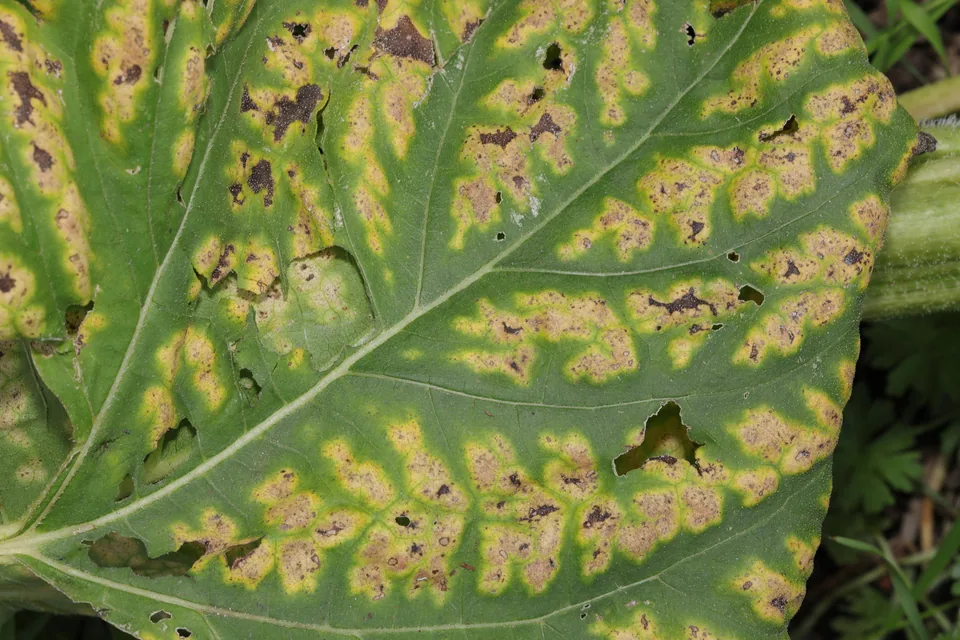
Fungus
Verticillium wilt
Verticillium
Written by Emilio Marruso
Classification: Ascomycota › Pezizomycotina › Sordariomycetes › Hypocreomycetidae › Glomerellales › Plectosphaerellaceae
Plants it attacks
Plants in our guide where this problem is reported. Open a plant to see the sources.
- Trident Maple
Symptom: Potential problem for maples
- Southern Sugar Maple
Symptom: Occasionally has problems with these diseases
- Rocky Mountain Maple
Symptom: Verticillium wilt attacks the vascular system and can be fatal
- Sugar Maple
Symptom: Verticillium wilt, anthracnose, cankers, leaf spot and tar spot can affect unhealthy trees
- Three-Flower Maple
Symptom: Wilt disease can occur; otherwise no serious problems
- Korean Barberry
Symptom: Listed among pests and problems for this shrub.
- Cayenne Pepper
Symptom: Mosaic virus shows a uniform yellow-green mosaic across the leaves followed by wilt
- Aji
Symptom: Mosaic virus shows a uniform yellow-green mosaic across the leaves followed by wilt
- Northern Catalpa
Symptom: No serious disease or insect problem, but the tree could be susceptible.
- Yellowwood
Symptom: Verticillium wilt may occur.
- Chinese Pistache
Symptom: May be susceptible to verticillium wilt; otherwise no serious pest or disease problems once established.
- Black Raspberry
Symptom: Most black raspberry cultivars are quite susceptible.
Also reported on: Afghan Redbud, American Smoketree, Appalachian Blazing Star, Big Leaf Maple, Bigleaf Linden, Black Maple, Blazing Star, Chalk Maple, Chinese catalpa, Desert Willow, Devil Maple, Doublefile Viburnum, Eggplant, Emerald Jade Maple, Ivy-Leaved Maple, Linden, Littleleaf Linden, Meadow Blazing Star, Mongolian Linden, Olive, Paperbark Maple, Peppermint, Prairie Blazing Star, Rough Blazing-star, Sage, Sargent Cherry, Scaly Blazing Star, Seaberry, Silver Maple, Smoketree, Snake Bark Maple, Wayfaringtree Viburnum
Remedies
What our plant sheets report, with the outcome checked against official sources. Traditional remedies without an official source are flagged.
Treat
prune and destroy infected limbs Works
How: Prune and destroy infected limbs. Disinfect pruning tools after use.
Reported for 1 plant: Snake Bark Maple
pruning infected limbs Works
How: Prune and destroy infected limbs. Disinfect pruning tools after use.
Reported for 1 plant: Three-Flower Maple
pruning out affected branches Works
How: Prune out all affected branches at least one foot below any discoloration in the wood.
Reported for 1 plant: Desert Willow
pruning tools cleaned with alcohol or bleach Works
Handle with care: read the plant sheet before using it.
How: Clean pruning tools between cuts by treating them for at least 30 seconds in a 10% bleach solution or 70% alcohol; if bleach is used, rinse and oil the tools afterwards.
Reported for 1 plant: American Smoketree
adequate watering and spring fertilizer Partly works
How: Adequate water during dry seasons and fertilizer in the spring help the tree resist the pathogen or prolong its life once infected.
Reported for 1 plant: Chinese catalpa
balanced fertilizer Partly works
How: A balanced fertilizer (10-10-10) may help alleviate symptoms in infected trees; never use high-nitrogen fertilizers.
Reported for 1 plant: Northern Catalpa
frequent watering and removing dead branches Partly works
How: Infected trees should be watered frequently to decrease wilt symptoms, and dead branches should be removed and burned.
Reported for 1 plant: Northern Catalpa
prune affected limbs and water Partly works
How: In mild cases prune out affected limbs and water to maintain tree vigor.
Reported for 1 plant: Black Maple
prune out affected limbs and water Partly works
How: With mild symptoms, prune out affected limbs and water to maintain tree vigor; do not fertilize heavily.
Reported for 1 plant: Paperbark Maple
prune out dead branches Partly works
How: Prune out dead branches as they occur and dispose of them by burning (where allowed) or landfilling; do not bury or compost them.
Reported for 1 plant: American Smoketree
pruning infected limbs Official source, not independently tested
How: Prune and destroy infected limbs and disinfect pruning tools after use.
Reported for 3 plants: Trident Maple, Rocky Mountain Maple, Chalk Maple
pruning out affected limbs Official source, not independently tested
How: When a tree exhibits mild symptoms, prune out affected limbs and water to maintain tree vigor; do not fertilize heavily.
Reported for 2 plants: Southern Sugar Maple, Big Leaf Maple
removing infected plants Official source, not independently tested
How: Remove infected plants with associated roots and soil, and dispose of them without spreading the pathogen.
Reported for 2 plants: Prairie Blazing Star, Scaly Blazing Star
adequate irrigation Official source, not independently tested
How: For trees with relatively minor symptoms, ensure adequate irrigation throughout the growing season.
Reported for 1 plant: Mongolian Linden
avoid infested soil Official source, not independently tested
How: Avoid planting mint in infested soil and maximize plant vigor with good cultural care and watering.
Reported for 1 plant: Peppermint
prune and destroy infected limbs Official source, not independently tested
How: Prune and destroy infected limbs. Disinfect pruning tools after use.
Reported for 1 plant: Emerald Jade Maple
removing affected branches Not verified
How: Improve the soil drainage and remove affected branches.
soil solarization with clear plastic Not verified
How: Place clear plastic over smooth, cultivated soil, burying the edges, to trap heat; leave it in place for at least four weeks during the hot summer.
Reported for 1 plant: American Smoketree
13 more remedies are reported in single plant sheets.
Where it is found
No distribution data.