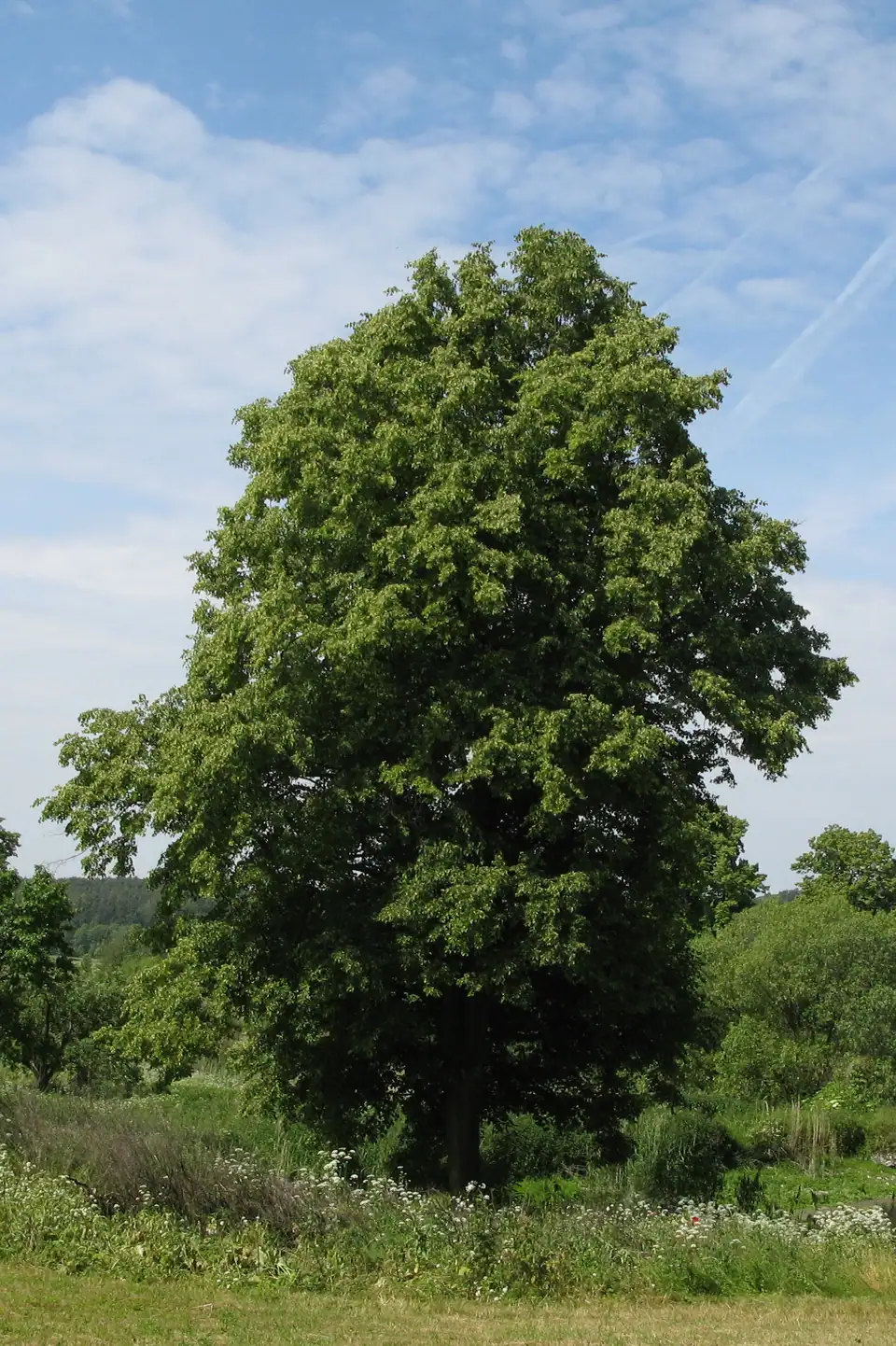


How to Grow and Care for Littleleaf Linden
Tilia cordata
Written by Emilio Marruso · last checked
At a glance
Littleleaf linden is an easygoing tree that grows in full sun or partial shade and accepts soils from very acidic to alkaline, pH 4.5 to 8.2. Water it during dry spells, especially while it is young, and over time it spreads its branches 35 to 50 feet wide. Give it plenty of room and it will fill your garden with green.
- Sun
Full sun to partial shade
What the sources say (1)
Light: Full sun to partial shade
The tree prefers full sun to partial shade, loamy, moist, and well-drained soils.
— Tilia cordata (Little-Leaf Linden, Littleleaf Linden, Small Leaf Lime Tree, Small-Leaved Lime) | North Carolina Extension Gardener Plant Toolbox [1] - Water
Water during dry spells, especially while the tree is young
What the sources say (2)
Watering: Water during dry spells, especially when young; moist to dry moisture range
The tree needs to be watered during dry spells especially if they are very young.
— Tilia cordata (Little-Leaf Linden, Littleleaf Linden, Small Leaf Lime Tree, Small-Leaved Lime) | North Carolina Extension Gardener Plant Toolbox [1] Zone: 3 to 8 Light: Partial shade to full sun Moisture: Moist to dry
— Littleleaf Linden (Tilia cordata) | VCE Publications | Virginia Tech [4] - Cold
Survives winters down to −35 °F (−37.2 °C)
Very hardy · USDA 3b · RHS H7 · Z3
What the sources say (6)
Hardiness, coldest zone: 3b [winter low −37.2 to −34.4 °C (−35 to −30 °F)]
According to NC State Extension: USDA Plant Hardiness Zone: 3b, 4a, 4b, 5a, 5b, 6a, 6b, 7a, 7b
— Tilia cordata (Little-Leaf Linden, Littleleaf Linden, Small Leaf Lime Tree, Small-Leaved Lime) | North Carolina Extension Gardener Plant Toolbox [1] According to University of Illinois Extension: USDA Hardiness Zone 4 - 7
— Littleleaf Linden (Tilia cordata)-Hort Answers - University of Illinois Extension [3] USDA Plant Hardiness Zone: 3b, 4a, 4b, 5a, 5b, 6a, 6b, 7a, 7b
— Tilia cordata (Little-Leaf Linden, Littleleaf Linden, Small Leaf Lime Tree, Small-Leaved Lime) | North Carolina Extension Gardener Plant Toolbox [1] Hardiness, warmest zone: 7b [winter low −15 to −12.2 °C (5 to 10 °F)]
According to NC State Extension: USDA Plant Hardiness Zone: 3b, 4a, 4b, 5a, 5b, 6a, 6b, 7a, 7b
— Tilia cordata (Little-Leaf Linden, Littleleaf Linden, Small Leaf Lime Tree, Small-Leaved Lime) | North Carolina Extension Gardener Plant Toolbox [1] According to University of Illinois Extension: USDA Hardiness Zone 4 - 7
— Littleleaf Linden (Tilia cordata)-Hort Answers - University of Illinois Extension [3] USDA Plant Hardiness Zone: 3b, 4a, 4b, 5a, 5b, 6a, 6b, 7a, 7b
— Tilia cordata (Little-Leaf Linden, Littleleaf Linden, Small Leaf Lime Tree, Small-Leaved Lime) | North Carolina Extension Gardener Plant Toolbox [1] - Soil
Very adaptable soil: from acidic to alkaline, pH 4.5–8.2
What the sources say (2)
Soil pH, minimum: 4.5
Soil Type: Sandy or loam or clay pH Range: 4.5 to 8.2
— Littleleaf Linden (Tilia cordata) | VCE Publications | Virginia Tech [4] Soil pH, maximum: 8.2
Soil Type: Sandy or loam or clay pH Range: 4.5 to 8.2
— Littleleaf Linden (Tilia cordata) | VCE Publications | Virginia Tech [4] - Pests
Japanese beetles, aphids, scale and spider mites; powdery mildew and leaf spots
What the sources say (6)
Pests: Japanese beetles, borers, scale, leaf miners, lace bugs, caterpillars, aphids, spider mites
Other insects that may be seen include borers, scale, leaf miners, lace bugs, caterpillars, and aphids.
— Tilia cordata (Little-Leaf Linden, Littleleaf Linden, Small Leaf Lime Tree, Small-Leaved Lime) | North Carolina Extension Gardener Plant Toolbox [1] Be aware that the Japanese Beetles can skeletonize the foliage.
— Tilia cordata (Little-Leaf Linden, Littleleaf Linden, Small Leaf Lime Tree, Small-Leaved Lime) | North Carolina Extension Gardener Plant Toolbox [1] Spider mites can occur in hot and dry weather.
— Tilia cordata (Little-Leaf Linden, Littleleaf Linden, Small Leaf Lime Tree, Small-Leaved Lime) | North Carolina Extension Gardener Plant Toolbox [1] Diseases: powdery mildew, leaf spots, canker, Verticillium wilt, sooty mold, leaf blight
Powdery mildew, leaf spots, and canker are possible. Verticillium Wilt does not occur often, but it can be fatal.
— Tilia cordata (Little-Leaf Linden, Littleleaf Linden, Small Leaf Lime Tree, Small-Leaved Lime) | North Carolina Extension Gardener Plant Toolbox [1] Japanese beetles, aphids, and a sooty mold which gives the tree a blackish appearance may occur.
— Littleleaf Linden (Tilia cordata) | VCE Publications | Virginia Tech [4] Mites, aphids, leaf miners, Japanese beetles, borers, Verticillium wilt and leaf blight.
— Littleleaf Linden (Tilia cordata)-Hort Answers - University of Illinois Extension [3] - Watch out
Japanese beetles can strip the leaves: avoid planting where they are common
- Size
Grows 35 to 50 ft wide
What the sources say (1)
Mature width: 107-152 cm (35-50 ft)
Height: 50 ft. 0 in. - 60 ft. 0 in. Width: 35 ft. 0 in. - 50 ft. 0 in.
— Tilia cordata (Little-Leaf Linden, Littleleaf Linden, Small Leaf Lime Tree, Small-Leaved Lime) | North Carolina Extension Gardener Plant Toolbox [1] - Propagation
Mostly grafted onto a rootstock
What the sources say (1)
Propagation: Grafting stem cuttings onto rootstock (mostly)
Propagation is mostly done by grafting stem cuttings onto rootstock.
— Tilia cordata (Little-Leaf Linden, Littleleaf Linden, Small Leaf Lime Tree, Small-Leaved Lime) | North Carolina Extension Gardener Plant Toolbox [1]
Overview
Littleleaf linden is a medium-sized deciduous tree native to Europe and widely planted as an ornamental shade tree. [1] It prefers full sun to partial shade and moist, well-drained soils, and should be watered during dry spells when young. [1] Japanese beetles are the main pest named in the sources. [1]
This record is incomplete: the sources we read do not cover every field yet.
Not yet covered by our sources: Pruning
Littleleaf Linden care
How to water Littleleaf Linden
Watering
Water during dry spells, especially when young; moist to dry moisture range
What the sources say (2)
The tree needs to be watered during dry spells especially if they are very young.Zone: 3 to 8
Light: Partial shade to full sun Moisture: Moist to dryWatering notes
The sources give different values depending on region, zone or growing conditions.
What each source says
According to NC State Extension: Does not tolerate wet conditions or severe drought
According to University of Illinois Extension: Tolerates dry sites and wet sites
What the sources say (4)
According to NC State Extension: It does not tolerate wet conditions, severe drought, pollution, or salt spray.According to University of Illinois Extension: Alkaline Soil
Dry Sites
Salt
Soil Compaction
Wet Sites
WindIt does not tolerate wet conditions, severe drought, pollution, or salt spray.Prefers moist, well-drained, fertile soil and full sun.How much light Littleleaf Linden needs
Full sun to partial shade
What the sources say (1)
The tree prefers full sun to partial shade, loamy, moist, and well-drained soils.How much cold Littleleaf Linden can take
Hardiness, coldest zone
3b [winter low −37.2 to −34.4 °C (−35 to −30 °F)]
What each source says
According to NC State Extension: 3b [winter low −37.2 to −34.4 °C (−35 to −30 °F)]
According to University of Illinois Extension: 4 [winter low −34.4 to −28.9 °C (−30 to −20 °F)]
What the sources say (3)
According to NC State Extension: USDA Plant Hardiness Zone:
3b, 4a, 4b, 5a, 5b, 6a, 6b, 7a, 7bAccording to University of Illinois Extension: USDA Hardiness Zone
4 - 7USDA Plant Hardiness Zone:
3b, 4a, 4b, 5a, 5b, 6a, 6b, 7a, 7bHardiness, warmest zone
7b [winter low −15 to −12.2 °C (5 to 10 °F)]
What each source says
According to NC State Extension: 7b [winter low −15 to −12.2 °C (5 to 10 °F)]
According to University of Illinois Extension: 7 [winter low −17.8 to −12.2 °C (0 to 10 °F)]
What the sources say (3)
According to NC State Extension: USDA Plant Hardiness Zone:
3b, 4a, 4b, 5a, 5b, 6a, 6b, 7a, 7bAccording to University of Illinois Extension: USDA Hardiness Zone
4 - 7USDA Plant Hardiness Zone:
3b, 4a, 4b, 5a, 5b, 6a, 6b, 7a, 7bBest soil for Littleleaf Linden
Soil pH, minimum
4.5
What the sources say (1)
Soil Type: Sandy or loam or clay pH Range: 4.5 to 8.2Soil pH, maximum
8.2
What the sources say (1)
Soil Type: Sandy or loam or clay pH Range: 4.5 to 8.2How to propagate Littleleaf Linden
Grafting stem cuttings onto rootstock (mostly)
What the sources say (1)
Propagation is mostly done by grafting stem cuttings onto rootstock.How to grow Littleleaf Linden
The plant
Life cycle
woody
What the sources say (1)
Life Cycle: Woody Recommended Propagation Strategy: GraftingFamily
Malvaceae
What the sources say (1)
It is a member of the Malvaceae family.Mature height
Mature width
107-152 cm (35-50 ft)
What the sources say (1)
Height: 50 ft. 0 in. - 60 ft. 0 in. Width: 35 ft. 0 in. - 50 ft. 0 in.Pests and diseases
Pests
Japanese beetles, borers, scale, leaf miners, lace bugs, caterpillars, aphids, spider mites
What the sources say (3)
Other insects that may be seen include borers, scale, leaf miners, lace bugs, caterpillars, and aphids.Be aware that the Japanese Beetles can skeletonize the foliage.Spider mites can occur in hot and dry weather.Diseases
powdery mildew, leaf spots, canker, Verticillium wilt, sooty mold, leaf blight
What the sources say (3)
Powdery mildew, leaf spots, and canker are possible. Verticillium Wilt does not occur often, but it can be fatal.Japanese beetles, aphids, and a sooty mold which gives the tree a blackish appearance may occur.Mites, aphids, leaf miners, Japanese beetles, borers, Verticillium wilt and leaf blight.Littleleaf Linden pests and problems
Japanese beetles
Symptom: Beetles can skeletonize the foliage; mature trees have been destroyed by heavy infestation
What to do: Avoid planting in areas with heavy Japanese beetle infestation; some cultivars are less susceptible
What the sources say (2)
it would be best not to plant these trees in areas that have a heavy infestation of Japanese Beetles.
— Tilia cordata (Little-Leaf Linden, Littleleaf Linden, Small Leaf Lime Tree, Small-Leaved Lime) | North Carolina Extension Gardener Plant Toolbox [1] Japanese beetles can be a problem; there are cultivars which are less susceptible to these insects.
— Littleleaf Linden (Tilia cordata) | VCE Publications | Virginia Tech [4] Verticillium wilt
Symptom: Does not occur often but can be fatal
What to do: Not specified in the sources
What the sources say (1)
Verticillium Wilt does not occur often, but it can be fatal.
— Tilia cordata (Little-Leaf Linden, Littleleaf Linden, Small Leaf Lime Tree, Small-Leaved Lime) | North Carolina Extension Gardener Plant Toolbox [1] Spider mites
Symptom: Can occur in hot and dry weather
What to do: Not specified in the sources
What the sources say (1)
Spider mites can occur in hot and dry weather.
— Tilia cordata (Little-Leaf Linden, Littleleaf Linden, Small Leaf Lime Tree, Small-Leaved Lime) | North Carolina Extension Gardener Plant Toolbox [1] Stress from street planting
Symptom: Stunted growth, leaf scorch and windthrow
What to do: Not specified in the sources; the cultivar Greenspire is described as more urban tolerant
What the sources say (1)
The result is stunted growth, leaf scorch, and windthrow.
— Tilia cordata (Little-Leaf Linden, Littleleaf Linden, Small Leaf Lime Tree, Small-Leaved Lime) | North Carolina Extension Gardener Plant Toolbox [1]
Remedies
Each remedy shows what official sources say about it; traditional remedies without an official source are marked as such. Harmful ones are listed so you know to avoid them.
Treating the plant
aphids
strong water spray Not verified
Traditional remedy, not verified by an official source.
How: A strong spray of water can remove aphids from leaves.
insecticidal soap Works
How: If the water spray does not solve the problem, insecticidal soap may help.
A strong spray of water can remove aphids from leaves. If the problem persists, insecticidal soap or horticultural oil may help.
— gardening.yardener.com [5] What the evidence says For example, insecticidal soap is a safe, effective organic insecticide with minimal environmental impact.
— extension.psu.edu [6]
borers
digging out with a wire Not verified
Traditional remedy, not verified by an official source.
How: Dig the borers out with a flexible wire.
canker
pruning out cankered branches Not verified
Traditional remedy, not verified by an official source.
How: Prune out all cankered branches and twigs and collect any that have fallen to the ground. Destroy them.
leaf blight
destroying fallen infected leaves Not verified
Traditional remedy, not verified by an official source.
How: Gather and destroy the infected leaves that fall on the ground.
leaf scorch
organic mulch over the root zone Works
How: Use a layer of organic mulch over the root zone to retain soil moisture and to moderate soil temperatures.
Use a layer of organic mulch over the root zone to retain soil moisture and to moderate soil temperatures.
— hortsense.cahnrs.wsu.edu [7] What the evidence says Use a layer of organic mulch over the root zone to retain soil moisture and to moderate soil temperatures.
— hortsense.cahnrs.wsu.edu [7]
Calendar
Pruning
Not stated in the sources we read.
Months as given by the sources, which are mostly from the United States (northern hemisphere). In the southern hemisphere they shift by about six months.
Indicative values
Values from a secondary source, not checked word for word like the rest of this page. Use them as a starting point.
- Drought tolerant
- yesIndicative value, adapt it to your climate · Secondary source
- Soil
- Well-drainedIndicative value, adapt it to your climate · Secondary source
- Growth rate
- ModerateIndicative value, adapt it to your climate · Secondary source
- Pruning
- February, March, April, June, July, AugustIndicative value, adapt it to your climate · Secondary source
Similar plants
- Bigleaf Linden Tilia platyphyllos
- Linden Tilia americana
- Mongolian Linden Tilia mongolica
- Silver Linden Tilia tomentosa
- Tilia amurensis Tilia amurensis
- Japanese lime Tilia japonica
- African Baobab Adansonia digitata
- Bastardcedar Guazuma ulmifolia
Sources
Every value above is quoted from these documents. Links lead to the original publisher.
- Tilia cordata (Little-Leaf Linden, Littleleaf Linden, Small Leaf Lime Tree, Small-Leaved Lime) | North Carolina Extension Gardener Plant Toolbox · plants.ces.ncsu.edu, consulted
- Selecting Trees for Your Home - Littleleaf Linden (Tilia cordata) · web.extension.illinois.edu, consulted
- Littleleaf Linden (Tilia cordata)-Hort Answers - University of Illinois Extension · web.extension.illinois.edu, consulted
- Littleleaf Linden (Tilia cordata) | VCE Publications | Virginia Tech · pubs.ext.vt.edu, consulted
- gardening.yardener.com · gardening.yardener.com
- extension.psu.edu · extension.psu.edu
- hortsense.cahnrs.wsu.edu · hortsense.cahnrs.wsu.edu
Written by Emilio Marruso · last checked