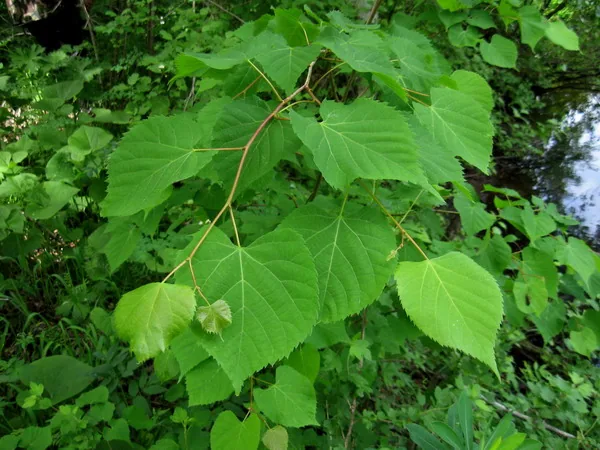

How to Grow and Care for Tilia amurensis
Tilia amurensis
Written by Emilio Marruso · last checked
At a glance
Amur linden is an easygoing tree for full sun or partial shade, happy with moderate watering in well-drained soil. Its ground fruits and flowers can even be turned into a paste that makes a very good chocolate substitute. You can start new trees from fresh seed, layering or suckers, so one tree can easily become many.
- Sun
Full sun to partial shade
What the sources say (2)
Light: Full sun to partial shade
Grows poorly on any very dry or very wet soil [6] . Dislikes exposed positions [6] . Succeeds in sun or semi-shade [4] .
— Tilia amurensis — Practical Plants [3] Light full sun Shade tolerance light shade Water moderate Hardiness Zone 4+
— Tilia amurensis — Practical Plants [3] - Water
Moderate watering; it does not handle drought
What the sources say (3)
Watering: Moderate
Light full sun Shade tolerance light shade Water moderate Hardiness Zone 4+
— Tilia amurensis — Practical Plants [3] Watering notes: Grows poorly on very dry or very wet soil; not drought tolerant; needs well-drained soil
Prefers a good moist loamy alkaline to neutral soil but succeeds on slightly acid soils [1] [6] . Grows poorly on any very dry or very wet soil [6] .
— Tilia amurensis — Practical Plants [3] Drainage well drained Tolerates Nutritionally Poor Soil No Drought intolerant
— Tilia amurensis — Practical Plants [3] - Cold
In mild-winter areas, late frosts can damage the early new growth
- Soil
Well-drained soil, neither very dry nor very wet
What the sources say (2)
Watering notes: Grows poorly on very dry or very wet soil; not drought tolerant; needs well-drained soil
Prefers a good moist loamy alkaline to neutral soil but succeeds on slightly acid soils [1] [6] . Grows poorly on any very dry or very wet soil [6] .
— Tilia amurensis — Practical Plants [3] Drainage well drained Tolerates Nutritionally Poor Soil No Drought intolerant
— Tilia amurensis — Practical Plants [3] - Planting
Seedlings in late spring or early summer, after the last frosts; suckers while dormant
What the sources say (4)
Planting: Late spring or early summer after the last frosts (seedlings); dormant season (suckers)
seedlings (Practical Plants, PFAF notes): Plant them out into their permanent positions in late spring or early summer, after the last expected frosts.
— Tilia amurensis — Practical Plants [3] suckers (Practical Plants, PFAF notes): Suckers, when formed, can be removed with as much root as possible during the dormant season and replanted immediately [6] .
— Tilia amurensis — Practical Plants [3] Plant them out into their permanent positions in late spring or early summer, after the last expected frosts.
— Tilia amurensis — Practical Plants [3] Suckers, when formed, can be removed with as much root as possible during the dormant season and replanted immediately [6] .
— Tilia amurensis — Practical Plants [3] - Harvest
Ground fruits and flowers make a chocolate substitute; young leaves can be eaten raw
- Pests
Aphids: watch for sticky honeydew on the leaves and the ground
- Propagation
From seed, layering or suckers
What the sources say (3)
Propagation: Seed; layering; suckers
If possible, obtain fresh seed that is ripe but has not as yet developed a hard seed coat and sow it immediately in a cold frame.
— Tilia amurensis — Practical Plants [3] Layering in spring just before the leaves unfurl. Takes 1 - 3 years [10] .
— Tilia amurensis — Practical Plants [3] Suckers, when formed, can be removed with as much root as possible during the dormant season and replanted immediately [6] .
— Tilia amurensis — Practical Plants [3] - Sowing
Sow fresh ripe seed right away, before the coat hardens; cut a few open to check they are full
What the sources say (1)
Sowing: Immediately, as fresh ripe seed before the seed coat hardens
If possible, obtain fresh seed that is ripe but has not as yet developed a hard seed coat and sow it immediately in a cold frame.
— Tilia amurensis — Practical Plants [3]
Overview
Amur lime is a deciduous tree up to 32 m [105 ft] tall from the mixed forests of northeastern China, Korea and north-east Siberia. [1] It is morphologically very similar to Tilia cordata and remains an uncommon tree in cultivation. [1] In areas with mild winters, trees from northern provenances leaf out early and can be damaged by spring frost, while Korean material breaks bud later. [1]
This record is incomplete: the sources we read do not cover every field yet.
Not yet covered by our sources: Hardiness, warmest zone, Pruning
Tilia amurensis care
Measurements in square brackets are our conversion into the other unit system; the quoted text is unchanged.
How to water Tilia amurensis
Watering
Moderate
What the sources say (1)
Light
full sun
Shade tolerance
light shade
Water
moderate
Hardiness
Zone 4+Watering notes
Grows poorly on very dry or very wet soil; not drought tolerant; needs well-drained soil
What the sources say (2)
Prefers a good moist loamy alkaline to neutral soil but succeeds on slightly acid soils [1] [6] . Grows poorly on any very dry or very wet soil [6] .Drainage
well drained
Tolerates Nutritionally Poor Soil
No
Drought
intolerantHow much light Tilia amurensis needs
Full sun to partial shade
How much cold Tilia amurensis can take
Hardiness, coldest zone
The sources give different values depending on region, zone or growing conditions.
What each source says
According to Trees and Shrubs Online: 3 [winter low −40 to −34.4 °C (−40 to −30 °F)]
According to Practical Plants (PFAF notes): 4 [winter low −34.4 to −28.9 °C (−30 to −20 °F)]
What the sources say (2)
According to Trees and Shrubs Online: Habitat  Mixed forests USDA Hardiness Zone  3 RHS Hardiness Rating  H7 Conservation status  Least concern (LC)According to Practical Plants (PFAF notes): Light
full sun
Shade tolerance
light shade
Water
moderate
Hardiness
Zone 4+Hardiness, warmest zone
Not stated in the sources we read.
How to propagate Tilia amurensis
Seed; layering; suckers
What the sources say (3)
If possible, obtain fresh seed that is ripe but has not as yet developed a hard seed coat and sow it immediately in a cold frame.Layering in spring just before the leaves unfurl. Takes 1 - 3 years [10] .Suckers, when formed, can be removed with as much root as possible during the dormant season and replanted immediately [6] .Tilia amurensis pests and problems
Aphids
Symptom: Sticky honeydew on leaves and the ground
What the sources say (1)
Trees are usually attacked by aphids which cover the ground and the leaves with a sticky honeydew [4] .
— Tilia amurensis — Practical Plants [3] Spring frost damage
Symptom: Early new growth frosted in mild-winter regions
What to do: Prefer Korean provenances, which break bud later
What the sources say (1)
In western Europe, new growth of Tilia amurensis from northern provenances is apt to be frosted, but material from South Korea breaks bud later.
— Tilia amurensis - Trees and Shrubs Online [1] Non-viable seed
Symptom: Much seed produced in Britain contains no seed
What to do: Cut a few seedcases open to check
What the sources say (1)
Seed - much of the seed produced in Britain is not viable, cut a few seedcases open to see if there is a seed inside [11] .
— Tilia amurensis — Practical Plants [3]
Remedies
The sources we checked give no remedies for this plant.
Calendar
Sowing
Immediately, as fresh ripe seed before the seed coat hardens
What the sources say (1)
If possible, obtain fresh seed that is ripe but has not as yet developed a hard seed coat and sow it immediately in a cold frame.Planting
Late spring or early summer after the last frosts (seedlings); dormant season (suckers)
What each source says
seedlings (Practical Plants, PFAF notes): Late spring or early summer, after the last expected frosts
suckers (Practical Plants, PFAF notes): Dormant season
What the sources say (4)
seedlings (Practical Plants, PFAF notes): Plant them out into their permanent positions in late spring or early summer, after the last expected frosts.suckers (Practical Plants, PFAF notes): Suckers, when formed, can be removed with as much root as possible during the dormant season and replanted immediately [6] .Plant them out into their permanent positions in late spring or early summer, after the last expected frosts.Suckers, when formed, can be removed with as much root as possible during the dormant season and replanted immediately [6] .Pruning
Not stated in the sources we read.
Months as given by the sources, which are mostly from the United States (northern hemisphere). In the southern hemisphere they shift by about six months.
Edibility
Reported by the source, quoted verbatim. Do not eat a plant on the basis of this page alone: identification mistakes can be dangerous.
Indicative values
Values from a secondary source, not checked word for word like the rest of this page. Use them as a starting point.
- Life cycle
- PerennialIndicative value, adapt it to your climate · Secondary source
- Mature height
- 1524-2286 cm (50-75 ft)Indicative value, adapt it to your climate · Secondary source
- Hours of sun
- 6-8 hoursIndicative value, adapt it to your climate · Secondary source
- Drought tolerant
- yesIndicative value, adapt it to your climate · Secondary source
- Soil pH
- 6-7.5Indicative value, adapt it to your climate · Secondary source
- Care level
- MediumIndicative value, adapt it to your climate · Secondary source
- Growth rate
- LowIndicative value, adapt it to your climate · Secondary source
- Pruning
- February, March, April, MayIndicative value, adapt it to your climate · Secondary source
Similar plants
- Bigleaf Linden Tilia platyphyllos
- Linden Tilia americana
- Littleleaf Linden Tilia cordata
- Mongolian Linden Tilia mongolica
- Silver Linden Tilia tomentosa
- Japanese lime Tilia japonica
- Abies grandis Abies grandis
- Abraham Trachystemon orientalis
Sources
Every value above is quoted from these documents. Links lead to the original publisher.
- Tilia amurensis - Trees and Shrubs Online · treesandshrubsonline.org, consulted
- Tilia amurensis - Useful Temperate Plants · temperate.theferns.info, consulted
- Tilia amurensis — Practical Plants · practicalplants.org, consulted
Written by Emilio Marruso · last checked