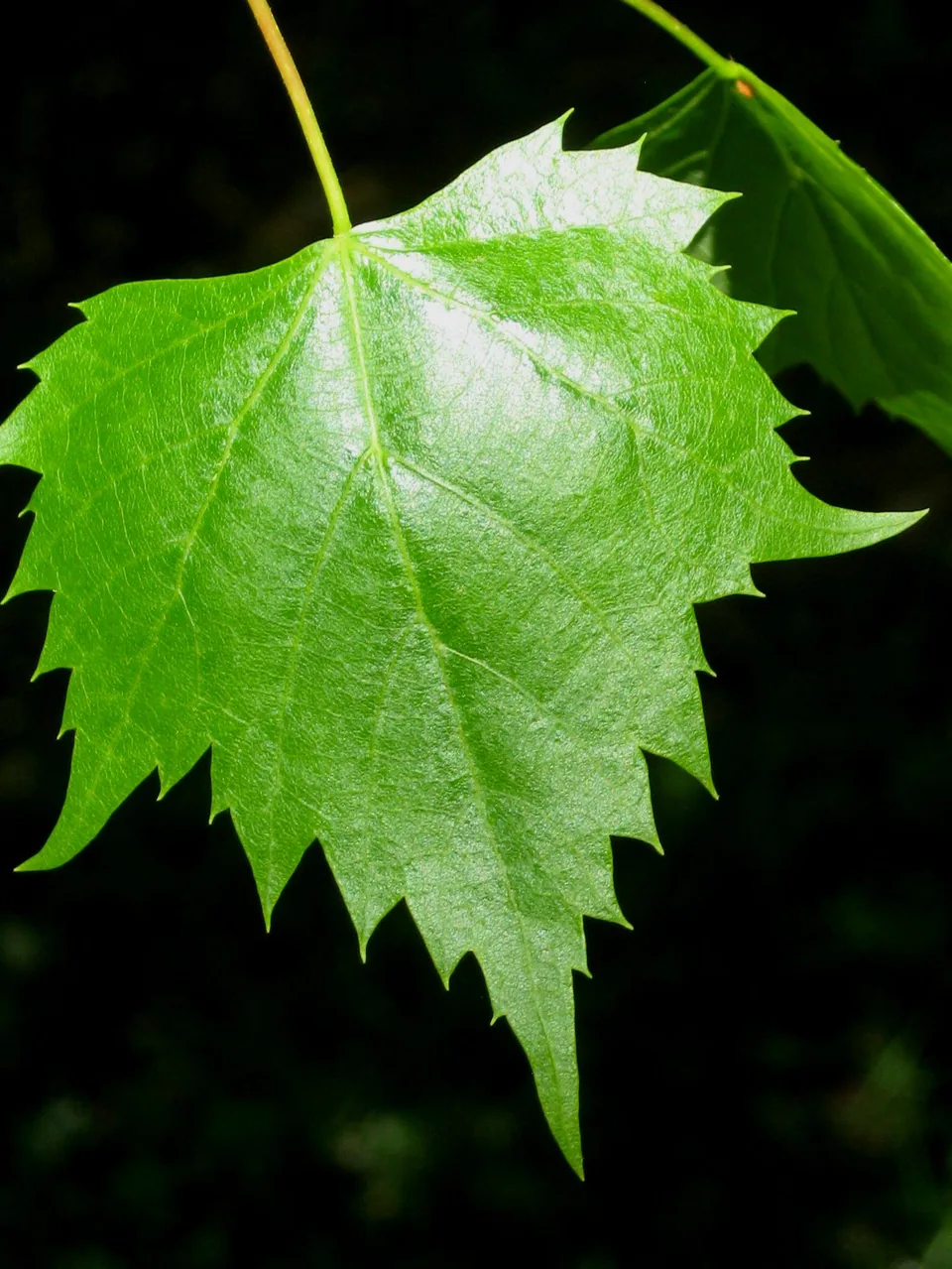
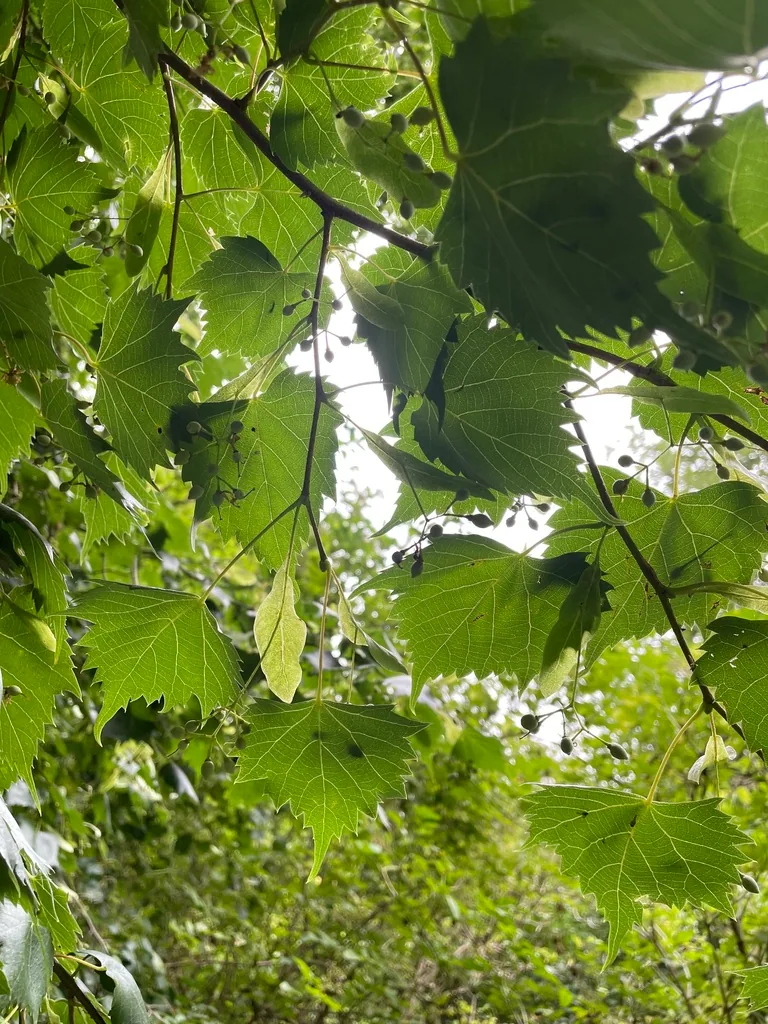

How to Grow and Care for Mongolian Linden
Tilia mongolica
Written by Emilio Marruso · last checked
At a glance
Mongolian linden is a charming tree, 20–30 feet tall, that grows happily in full sun or part shade. It gives you more than shade: the young leaves and shoots can be eaten raw or cooked, and its flowers make a tea. Just remember to water it, because it does not tolerate drought.
- Sun
Full sun to part shade
What the sources say (1)
Light: Full sun to part shade
The tree prefers full sun to part shade as well as alkaline, loamy, or well-drained soils.
— Tilia mongolica (Mongolian Lime, Mongolian Linden) | North Carolina Extension Gardener Plant Toolbox [1] - Water
Does not tolerate drought: water regularly
What the sources say (1)
Watering: Not drought tolerant
Unlike other Lindens, it is not drought or salt-spray tolerant.
— Tilia mongolica (Mongolian Lime, Mongolian Linden) | North Carolina Extension Gardener Plant Toolbox [1] - Cold
Survives winters down to −35 °F (−37.2 °C)
Very hardy · USDA 3b · RHS H7 · Z3
What the sources say (2)
Hardiness, coldest zone: 3b [winter low −37.2 to −34.4 °C (−35 to −30 °F)]
USDA Plant Hardiness Zone: 3b, 4a, 4b, 5a, 5b
— Tilia mongolica (Mongolian Lime, Mongolian Linden) | North Carolina Extension Gardener Plant Toolbox [1] Hardiness, warmest zone: 5b [winter low −26.1 to −23.3 °C (−15 to −10 °F)]
USDA Plant Hardiness Zone: 3b, 4a, 4b, 5a, 5b
— Tilia mongolica (Mongolian Lime, Mongolian Linden) | North Carolina Extension Gardener Plant Toolbox [1] - Harvest
Young leaves and shoots can be eaten raw or cooked; the flowers make tea
- Pests
Japanese beetles and linden borers; it can also get verticillium wilt
What the sources say (2)
Pests: Japanese beetles, linden borer
Verticillium wilt may occur. Japanese beetles and the linden borer are insects that may be problematic.
— Tilia mongolica (Mongolian Lime, Mongolian Linden) | North Carolina Extension Gardener Plant Toolbox [1] Diseases: Verticillium wilt
Verticillium wilt may occur. Japanese beetles and the linden borer are insects that may be problematic.
— Tilia mongolica (Mongolian Lime, Mongolian Linden) | North Carolina Extension Gardener Plant Toolbox [1] - Size
20–30 ft tall and 15–25 ft wide
What the sources say (2)
Mature height: 609.6-914.4 cm (20-30 ft)
Dimensions: Height: 20 ft. 0 in. - 30 ft. 0 in. Width: 15 ft. 0 in. - 25 ft. 0 in.
— Tilia mongolica (Mongolian Lime, Mongolian Linden) | North Carolina Extension Gardener Plant Toolbox [1] Mature width: 457.2-762 cm (15-25 ft)
Dimensions: Height: 20 ft. 0 in. - 30 ft. 0 in. Width: 15 ft. 0 in. - 25 ft. 0 in.
— Tilia mongolica (Mongolian Lime, Mongolian Linden) | North Carolina Extension Gardener Plant Toolbox [1] - Propagation
From seed, layering, or suckers and young shoots replanted with as much root as possible
What the sources say (2)
Propagation: Seed, layering, suckers or young shoots replanted with as much root as possible
Recommended Propagation Strategy: Layering Seed Country Or Region Of Origin:
— Tilia mongolica (Mongolian Lime, Mongolian Linden) | North Carolina Extension Gardener Plant Toolbox [1] Suckers or young shoots may be removed with as much root as possible and replanted.
— Tilia mongolica (Mongolian Lime, Mongolian Linden) | North Carolina Extension Gardener Plant Toolbox [1] - Sowing
Be patient: seeds can take up to 18 months to sprout
What the sources say (1)
Days to germination: up to 18 months
It may take the seeds up to 18 months to germinate.
— Tilia mongolica (Mongolian Lime, Mongolian Linden) | North Carolina Extension Gardener Plant Toolbox [1]
Overview
Mongolian linden is a medium-size ornamental deciduous tree that may reach 30 feet [9.1 m] tall and 25 feet [7.6 m] wide. [1] It prefers full sun to part shade and, unlike other lindens, is not drought tolerant. [1]
This record is incomplete: the sources we read do not cover every field yet.
Not yet covered by our sources: Pruning
Mongolian Linden care
Measurements in square brackets are our conversion into the other unit system; the quoted text is unchanged.
How to water Mongolian Linden
Not drought tolerant
What the sources say (1)
Unlike other Lindens, it is not drought or salt-spray tolerant.How much light Mongolian Linden needs
Full sun to part shade
What the sources say (1)
The tree prefers full sun to part shade as well as alkaline, loamy, or well-drained soils.How much cold Mongolian Linden can take
Hardiness, coldest zone
3b [winter low −37.2 to −34.4 °C (−35 to −30 °F)]
What the sources say (1)
USDA Plant Hardiness Zone:
3b, 4a, 4b, 5a, 5bHardiness, warmest zone
5b [winter low −26.1 to −23.3 °C (−15 to −10 °F)]
What the sources say (1)
USDA Plant Hardiness Zone:
3b, 4a, 4b, 5a, 5bHow to propagate Mongolian Linden
Seed, layering, suckers or young shoots replanted with as much root as possible
What the sources say (2)
Recommended Propagation Strategy:
Layering
Seed
Country Or Region Of Origin:Suckers or young shoots may be removed with as much root as possible and replanted.How to grow Mongolian Linden
The plant
Family
Malvaceae
What the sources say (1)
The Mongolian Linden is a medium-size ornamental deciduous broadleaf tree and a member of the Malvaceae family or Lindens.Mature height
609.6-914.4 cm (20-30 ft)
What the sources say (1)
Dimensions: Height: 20 ft. 0 in. - 30 ft. 0 in. Width: 15 ft. 0 in. - 25 ft. 0 in.Mature width
457.2-762 cm (15-25 ft)
What the sources say (1)
Dimensions: Height: 20 ft. 0 in. - 30 ft. 0 in. Width: 15 ft. 0 in. - 25 ft. 0 in.Sowing and growth
Days to germination
up to 18 months
What the sources say (1)
It may take the seeds up to 18 months to germinate.Pests and diseases
Pests
Japanese beetles, linden borer
What the sources say (1)
Verticillium wilt may occur. Japanese beetles and the linden borer are insects that may be problematic.Diseases
Verticillium wilt
What the sources say (1)
Verticillium wilt may occur. Japanese beetles and the linden borer are insects that may be problematic.Mongolian Linden pests and problems
Verticillium wilt and insect pests
Symptom: Verticillium wilt may occur; Japanese beetles and the linden borer may be problematic
What to do: No management given in the sources
What the sources say (1)
Verticillium wilt may occur. Japanese beetles and the linden borer are insects that may be problematic.
— Tilia mongolica (Mongolian Lime, Mongolian Linden) | North Carolina Extension Gardener Plant Toolbox [1]
Remedies
Each remedy shows what official sources say about it; traditional remedies without an official source are marked as such. Harmful ones are listed so you know to avoid them.
Treating the plant
japanese beetles
hand-picking into soapy water Works
How: Hand-pick the beetles every couple of days; hold a can or jar containing rubbing alcohol or water with dishwashing detergent below the foliage and the beetles drop into it.
Hand-picking the beetles every couple of days is effective, but time-consuming. When disturbed, particularly in late afternoon, the beetles fold their legs and drop to the ground.
— extension.illinois.edu [3] What the evidence says Hand-picking the beetles every couple of days is effective, but time-consuming.
— extension.illinois.edu [3]
verticillium wilt
pruning out dead branches Official source, not independently tested
There is no cure for Verticillium-infected trees and woody ornamentals.
— pubs.ext.vt.edu [4] How: Prune out dead branches back to healthy tissue, disinfest pruning tools between cuts and remove the pruned branches from the location.
Prune out any dead branches back to healthy tissue and disinfest pruning tools between cuts
— pubs.ext.vt.edu [4] adequate irrigation Official source, not independently tested
There is no cure for Verticillium-infected trees and woody ornamentals.
— pubs.ext.vt.edu [4] How: For trees with relatively minor symptoms, ensure adequate irrigation throughout the growing season.
ensuring adequate irrigation throughout the growing season may slow the progression of the disease
— pubs.ext.vt.edu [4]
linden borer
keeping the tree healthy with good cultural care Not verified
Traditional remedy, not verified by an official source.
How: Prevention: weakened trees are the most vulnerable, so give the tree the best cultural care possible.
Calendar
Pruning
Not stated in the sources we read.
Months as given by the sources, which are mostly from the United States (northern hemisphere). In the southern hemisphere they shift by about six months.
Edibility
Reported by the source, quoted verbatim. Do not eat a plant on the basis of this page alone: identification mistakes can be dangerous.
Similar plants
- Bigleaf Linden Tilia platyphyllos
- Linden Tilia americana
- Littleleaf Linden Tilia cordata
- Silver Linden Tilia tomentosa
- Tilia amurensis Tilia amurensis
- Japanese lime Tilia japonica
- African Baobab Adansonia digitata
- Bastardcedar Guazuma ulmifolia
Sources
Every value above is quoted from these documents. Links lead to the original publisher.
- Tilia mongolica (Mongolian Lime, Mongolian Linden) | North Carolina Extension Gardener Plant Toolbox · plants.ces.ncsu.edu, consulted
- Mongolian Lime - Tilia mongolica | North Carolina Extension Gardener Plant Toolbox · plants.ces.ncsu.edu, consulted
- extension.illinois.edu · extension.illinois.edu
- pubs.ext.vt.edu · pubs.ext.vt.edu
Written by Emilio Marruso · last checked