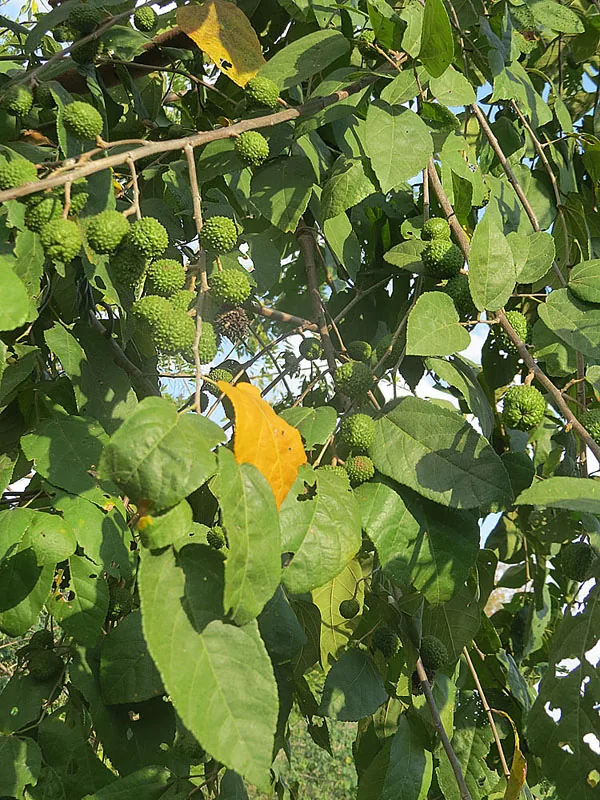
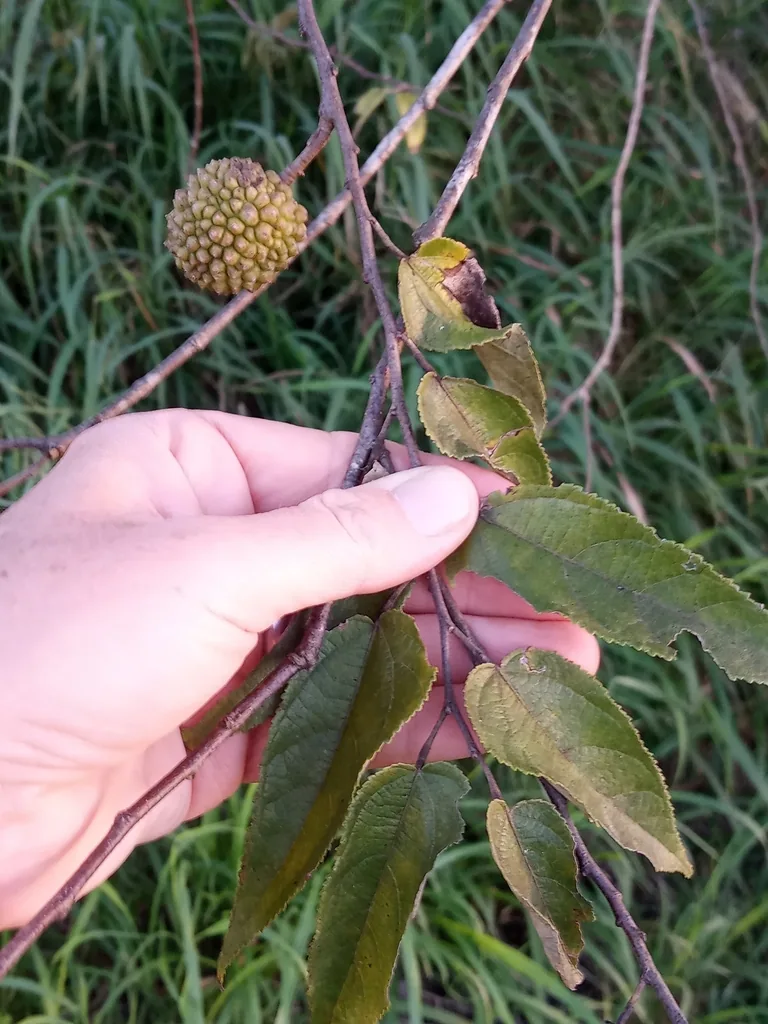

How to Grow and Care for Bastardcedar
Guazuma ulmifolia
Written by Emilio Marruso · last checked
Toxic to: Cattle, People · Why
At a glance
Here is a plant that shrugs off hardship: give it full sun and it withstands droughts lasting 4 to 7 months. Its seeds are edible fresh or cooked, and the green fruits can be crushed in water to make a drink. You can start it from seed, cuttings, root stumps or bare-root seedlings, so getting going is easy.
- Sun
Full sun
- Water
Very tough: withstands droughts of 4 to 7 months
What the sources say (1)
Watering notes: Withstands droughts of 4-7 months
GROWING PERIOD Perennial. Withstands droughts of 4-7 months.
— View crop [7] - Soil
Slightly acidic to neutral soil, pH 6–7
- Planting
Plant out seedlings at 12–16 in tall (15 weeks); root stumps after 5–8 months in the nursery
What the sources say (1)
Planting: When seedlings reach 30-40 cm [12–16 in] in height (about 15 weeks); root stumps after 5-8 months in the nursery
Seedlings are ready for outplanting when they reach a height of 30-40 cm (about 15 weeks). For root stumps, plants are left in the nursery for 5-8 months or until they reach a stem diameter of 1.5-2.5 cm.
— Guazuma ulmifolia: widely adapted tree for fodder and more - Winrock International [8] - Harvest
Seeds are edible fresh or cooked; crush the green fruits in water to make a drink
- Propagation
Start it from seed sown in place, cuttings, root stumps or bare-root seedlings
What the sources say (1)
Propagation: Direct seeding, cuttings, root stumps or bare-root seedlings
G. ulmifolia can be established by direct seeding or by planting cuttings, root stumps or bare-root seedlings.
— Agroforestree Species profile [3] - Safety
Use in moderation: large amounts cause nausea, vomiting and diarrhea; too much fruit harms cattle
Overview
West Indian elm is a small to medium-sized tree that reaches 2-30 m [6.6–98.4 ft] in height with a spreading rounded crown. [7] It grows best in full sunlight and is widely adapted to alluvial and clay soils and to humid and dry climates. [4] In dry areas of its native range it is an important source of livestock fodder. [4]
This record is incomplete: the sources we read do not cover every field yet.
Not yet covered by our sources: Watering, Hardiness, coldest zone, Hardiness, warmest zone, Pruning
Bastardcedar care
Measurements in square brackets are our conversion into the other unit system; the quoted text is unchanged.
How to water Bastardcedar
Watering
Not stated in the sources we read.
Watering notes
Withstands droughts of 4-7 months
What the sources say (1)
GROWING PERIOD Perennial. Withstands droughts of 4-7 months.How much light Bastardcedar needs
How much cold Bastardcedar can take
Hardiness, coldest zone
Not stated in the sources we read.
Hardiness, warmest zone
Not stated in the sources we read.
Best soil for Bastardcedar
Soil pH, minimum
6
What the sources say (1)
Prefers a pH in the range 6 - 7Soil pH, maximum
7
What the sources say (1)
Prefers a pH in the range 6 - 7How to propagate Bastardcedar
Direct seeding, cuttings, root stumps or bare-root seedlings
What the sources say (1)
G. ulmifolia can be established by direct seeding or by planting cuttings, root stumps or bare-root seedlings.How to grow Bastardcedar
The plant
Family
Malvaceae
What the sources say (1)
Guazuma ulmifolia ## Botanical Family: Malvaceae ## Other Common Name: Ajillá, Bastard cedar, Gunstock, Hay cedarRemedies
The sources we checked give no remedies for this plant.
Is Bastardcedar toxic to pets?
Reported by the source, quoted verbatim. This is not medical or veterinary advice: if a person or an animal may have eaten this plant, contact a poison control centre or a veterinarian.
Animals
If eaten to excess, however, friuts may cause intestinal obstruction in cattle.
[7]
People
Calendar
Planting
When seedlings reach 30-40 cm [12–16 in] in height (about 15 weeks); root stumps after 5-8 months in the nursery
What the sources say (1)
Seedlings are ready for outplanting when they reach a height of 30-40 cm (about 15 weeks). For root stumps, plants are left in the nursery for 5-8 months or until they reach a stem diameter of 1.5-2.5 cm.Pruning
Not stated in the sources we read.
Months as given by the sources, which are mostly from the United States (northern hemisphere). In the southern hemisphere they shift by about six months.
Edibility
Reported by the source, quoted verbatim. Do not eat a plant on the basis of this page alone: identification mistakes can be dangerous.
Indicative values
Values from a secondary source, not checked word for word like the rest of this page. Use them as a starting point.
- Life cycle
- PerennialIndicative value, adapt it to your climate · Secondary source
- Mature height
- 914.4-1828.8 cm (30-60 ft)Indicative value, adapt it to your climate · Secondary source
- Watering
- AverageIndicative value, adapt it to your climate · Secondary source
- Drought tolerant
- yesIndicative value, adapt it to your climate · Secondary source
- USDA hardiness zones
- 10-12 [winter low −1.1 to 15.6 °C (30 to 60 °F)]Indicative value, adapt it to your climate · Secondary source
- Care level
- ModerateIndicative value, adapt it to your climate · Secondary source
- Growth rate
- LowIndicative value, adapt it to your climate · Secondary source
- Pruning
- February, March, April, June, JulyIndicative value, adapt it to your climate · Secondary source
Similar plants
- African Baobab Adansonia digitata
- Bigleaf Linden Tilia platyphyllos
- Brazilian Bellflower Callianthe megapotamica
- Cape Mallow Anisodontea capensis
- Chinese Hibiscus Hibiscus × rosa-sinensis
- Common mallow Malva sylvestris
- Cranberry Hibiscus Hibiscus acetosella
- Flower of an hour Hibiscus trionum
Sources
Every value above is quoted from these documents. Links lead to the original publisher.
- Guazuma ulmifolia Lam. — Reforestation, Nurseries and Genetics Resources · rngr.net, consulted
- Guazuma ulmifolia Lam. (Sterculiaceae) — Reforestation, Nurseries and Genetics Resources · npn.rngr.net, consulted
- Agroforestree Species profile · apps.worldagroforestry.org, consulted
- Guazuma ulmifolia · apps.worldagroforestry.org, consulted
- West Indian Elm · utep.edu, consulted
- Guazuma ulmifolia - Useful Tropical Plants · tropical.theferns.info, consulted
- View crop · ecocrop.apps.fao.org, consulted
- Guazuma ulmifolia: widely adapted tree for fodder and more - Winrock International · winrock.org, consulted
Written by Emilio Marruso · last checked