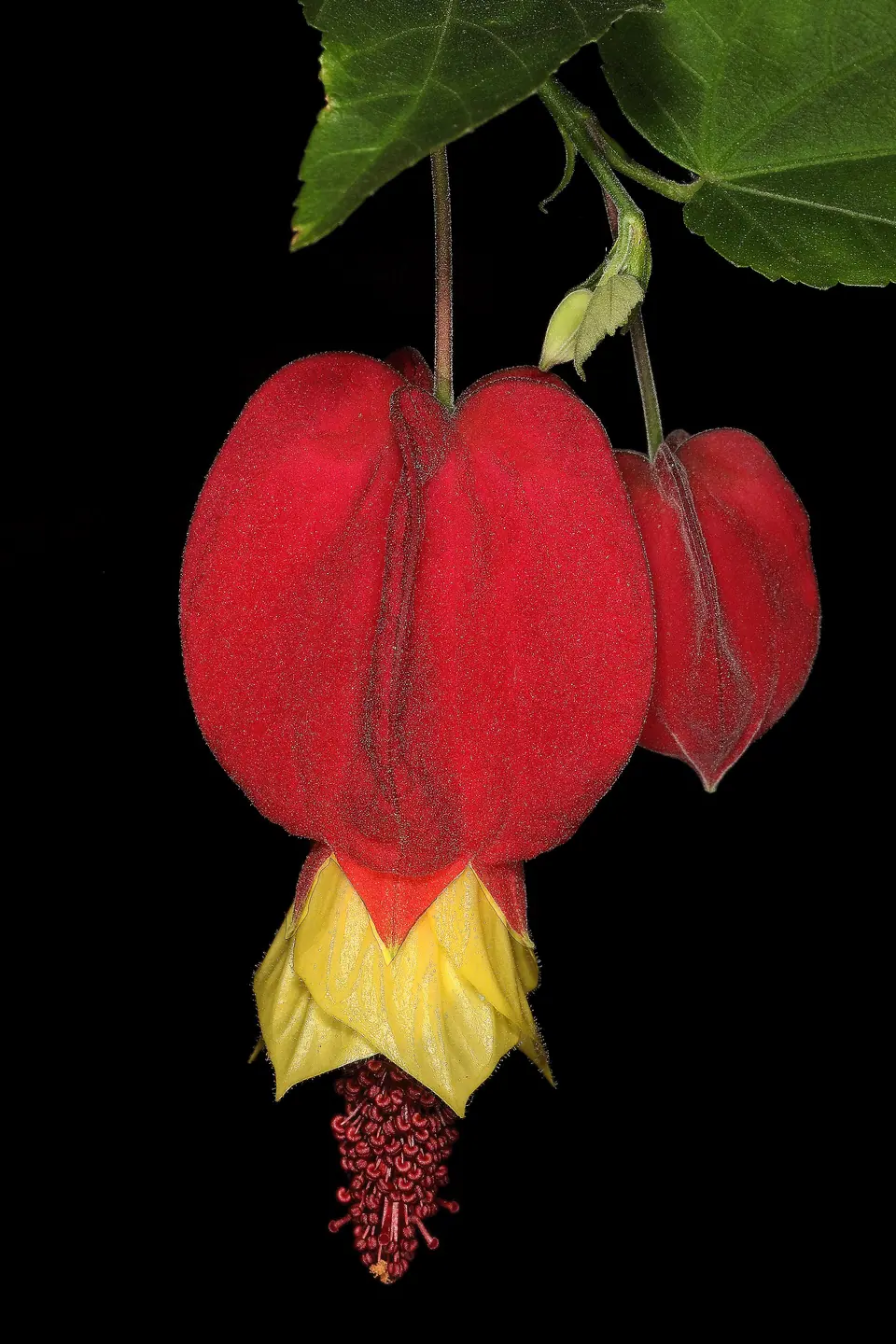


How to Grow and Care for Brazilian Bellflower
Callianthe megapotamica
Written by Emilio Marruso · last checked
At a glance
This abutilon is a perennial that grows happily in full sun or partial shade, reaching 5–8 ft tall and just as wide. Keep its soil moist but well-drained and trim it in late winter or early spring, and it will thrive in a container or even indoors. You can also start new plants yourself from stem cuttings.
- Sun
Full sun to partial shade
What the sources say (1)
Light: Full sun to partial shade
Light: Full sun (6 or more hours of direct sunlight a day) Partial Shade (Direct sunlight only part of the day, 2-6 hours)
— Callianthe megapotamica (Brazilian Bellflower, Brazilian Bell Flower, Brazilian Bell-Flower, Chinese Lanterns, Flowering Maple, South American Hollyhock, Trailing Abutilon) | North Carolina Extension Gardener Plant Toolbox [1] - Water
Keep the soil moist
What the sources say (1)
Watering notes: Soil should be moist and well-drained
The soil should be loamy, moist, and well-drained.
— Callianthe megapotamica (Brazilian Bellflower, Brazilian Bell Flower, Brazilian Bell-Flower, Chinese Lanterns, Flowering Maple, South American Hollyhock, Trailing Abutilon) | North Carolina Extension Gardener Plant Toolbox [1] - Cold
Survives winters down to 15 °F (−9.4 °C)
Hardy in average winters · USDA 8b · RHS H4 · Z8
What the sources say (2)
Hardiness, coldest zone: 8b [winter low −9.4 to −6.7 °C (15 to 20 °F)]
USDA Plant Hardiness Zone: 8b, 9a, 9b, 10a, 10b, 11a, 11b
— Callianthe megapotamica (Brazilian Bellflower, Brazilian Bell Flower, Brazilian Bell-Flower, Chinese Lanterns, Flowering Maple, South American Hollyhock, Trailing Abutilon) | North Carolina Extension Gardener Plant Toolbox [1] Hardiness, warmest zone: 11b [winter low 7.2 to 10 °C (45 to 50 °F)]
USDA Plant Hardiness Zone: 8b, 9a, 9b, 10a, 10b, 11a, 11b
— Callianthe megapotamica (Brazilian Bellflower, Brazilian Bell Flower, Brazilian Bell-Flower, Chinese Lanterns, Flowering Maple, South American Hollyhock, Trailing Abutilon) | North Carolina Extension Gardener Plant Toolbox [1] - Soil
Soil that drains well
What the sources say (1)
Watering notes: Soil should be moist and well-drained
The soil should be loamy, moist, and well-drained.
— Callianthe megapotamica (Brazilian Bellflower, Brazilian Bell Flower, Brazilian Bell-Flower, Chinese Lanterns, Flowering Maple, South American Hollyhock, Trailing Abutilon) | North Carolina Extension Gardener Plant Toolbox [1] - Pruning
Prune in late winter or early spring
What the sources say (1)
Pruning: Late winter or early spring
Pruning is recommended in late winter or early spring to maintain the plant's shape and to encourage new growth.
— Callianthe megapotamica (Brazilian Bellflower, Brazilian Bell Flower, Brazilian Bell-Flower, Chinese Lanterns, Flowering Maple, South American Hollyhock, Trailing Abutilon) | North Carolina Extension Gardener Plant Toolbox [1] - Pests
Whiteflies, spider mites, mealybugs and scale; sometimes honey fungus or viruses
What the sources say (2)
Pests: whiteflies, spider mites, mealybugs, scale
Monitor for whiteflies, spider mites, mealybugs, and scale. May be susceptible to honey fungus or viruses.
— Callianthe megapotamica (Brazilian Bellflower, Brazilian Bell Flower, Brazilian Bell-Flower, Chinese Lanterns, Flowering Maple, South American Hollyhock, Trailing Abutilon) | North Carolina Extension Gardener Plant Toolbox [1] Diseases: honey fungus, viruses
Monitor for whiteflies, spider mites, mealybugs, and scale. May be susceptible to honey fungus or viruses.
— Callianthe megapotamica (Brazilian Bellflower, Brazilian Bell Flower, Brazilian Bell-Flower, Chinese Lanterns, Flowering Maple, South American Hollyhock, Trailing Abutilon) | North Carolina Extension Gardener Plant Toolbox [1] - Watch out
Stems can grow long and sparse; check it often for pests and diseases
- Size
5–8 ft tall and 5–8 ft wide
What the sources say (2)
Mature height: 152.4-243.84 cm (5-8 ft)
slender woody shrub that grows up to 5 to 8 feet tall and equally as wide, with graceful arching branches
— Callianthe megapotamica (Brazilian Bellflower, Brazilian Bell Flower, Brazilian Bell-Flower, Chinese Lanterns, Flowering Maple, South American Hollyhock, Trailing Abutilon) | North Carolina Extension Gardener Plant Toolbox [1] Mature width: 152.4-243.84 cm (5-8 ft)
slender woody shrub that grows up to 5 to 8 feet tall and equally as wide, with graceful arching branches
— Callianthe megapotamica (Brazilian Bellflower, Brazilian Bell Flower, Brazilian Bell-Flower, Chinese Lanterns, Flowering Maple, South American Hollyhock, Trailing Abutilon) | North Carolina Extension Gardener Plant Toolbox [1] - Propagation
Grow new plants from stem cuttings
What the sources say (1)
Propagation: Stem cuttings
During the growing season, it may be propagated by stem cuttings.
— Callianthe megapotamica (Brazilian Bellflower, Brazilian Bell Flower, Brazilian Bell-Flower, Chinese Lanterns, Flowering Maple, South American Hollyhock, Trailing Abutilon) | North Carolina Extension Gardener Plant Toolbox [1] - Containers
Grows in containers and indoors too
What the sources say (2)
In containers: Yes
Consider this plant for a container or hanging basket on your patio or as a bed and border planting.
— Callianthe megapotamica (Brazilian Bellflower, Brazilian Bell Flower, Brazilian Bell-Flower, Chinese Lanterns, Flowering Maple, South American Hollyhock, Trailing Abutilon) | North Carolina Extension Gardener Plant Toolbox [1] Indoors: Yes
may be grown as an indoor plant or outdoors in a sheltered location
— Callianthe megapotamica (Brazilian Bellflower, Brazilian Bell Flower, Brazilian Bell-Flower, Chinese Lanterns, Flowering Maple, South American Hollyhock, Trailing Abutilon) | North Carolina Extension Gardener Plant Toolbox [1]
Overview
Brazilian bellflower is a perennial shrub native to Brazil that reaches 5 to 8 feet [1.5–2.4 m] tall and wide. [1] It can be grown indoors or outdoors in a sheltered location and suits containers or hanging baskets. [1] Pruning is recommended in late winter or early spring, and stem cuttings are used for propagation. [1]
This record is incomplete: the sources we read do not cover every field yet.
Not yet covered by our sources: Watering
Brazilian Bellflower care
Measurements in square brackets are our conversion into the other unit system; the quoted text is unchanged.
How to water Brazilian Bellflower
Watering
Not stated in the sources we read.
Watering notes
Soil should be moist and well-drained
What the sources say (1)
The soil should be loamy, moist, and well-drained.How much light Brazilian Bellflower needs
Full sun to partial shade
What the sources say (1)
Light:
Full sun (6 or more hours of direct sunlight a day)
Partial Shade (Direct sunlight only part of the day, 2-6 hours)How much cold Brazilian Bellflower can take
Hardiness, coldest zone
8b [winter low −9.4 to −6.7 °C (15 to 20 °F)]
What the sources say (1)
USDA Plant Hardiness Zone:
8b, 9a, 9b, 10a, 10b, 11a, 11bHardiness, warmest zone
11b [winter low 7.2 to 10 °C (45 to 50 °F)]
What the sources say (1)
USDA Plant Hardiness Zone:
8b, 9a, 9b, 10a, 10b, 11a, 11bWhere to grow Brazilian Bellflower
Indoors
Yes
What the sources say (1)
may be grown as an indoor plant or outdoors in a sheltered locationIn containers
Yes
What the sources say (1)
Consider this plant for a container or hanging basket on your patio or as a bed and border planting.How to propagate Brazilian Bellflower
Stem cuttings
What the sources say (1)
During the growing season, it may be propagated by stem cuttings.How to grow Brazilian Bellflower
The plant
Life cycle
perennial
What the sources say (1)
perennial shrub in the mallow family (Malvaceae), native to BrazilFamily
Malvaceae
What the sources say (1)
perennial shrub in the mallow family (Malvaceae), native to BrazilMature height
152.4-243.84 cm (5-8 ft)
What the sources say (1)
slender woody shrub that grows up to 5 to 8 feet tall and equally as wide, with graceful arching branchesMature width
152.4-243.84 cm (5-8 ft)
What the sources say (1)
slender woody shrub that grows up to 5 to 8 feet tall and equally as wide, with graceful arching branchesPests and diseases
Pests
whiteflies, spider mites, mealybugs, scale
What the sources say (1)
Monitor for whiteflies, spider mites, mealybugs, and scale. May be susceptible to honey fungus or viruses.Diseases
honey fungus, viruses
What the sources say (1)
Monitor for whiteflies, spider mites, mealybugs, and scale. May be susceptible to honey fungus or viruses.Brazilian Bellflower pests and problems
Pests, diseases and leggy growth
Symptom: Whiteflies, spider mites, mealybugs and scale; possible honey fungus or viruses; leggy growth can occur.
What to do: Monitor for pests and diseases.
What the sources say (1)
Monitor for whiteflies, spider mites, mealybugs, and scale. May be susceptible to honey fungus or viruses. Leggy growth can occur.
— Callianthe megapotamica (Brazilian Bellflower, Brazilian Bell Flower, Brazilian Bell-Flower, Chinese Lanterns, Flowering Maple, South American Hollyhock, Trailing Abutilon) | North Carolina Extension Gardener Plant Toolbox [1]
Remedies
Each remedy shows what official sources say about it; traditional remedies without an official source are marked as such. Harmful ones are listed so you know to avoid them.
Treating the plant
scale
insecticidal soap spray Works
Multiple applications will be needed because generations overlap in the home or greenhouse situation.
— portal.ct.gov [3] Consult all labels for dosage rates and safety precautions.
— portal.ct.gov [3] How: Spray to control scale crawlers; multiple applications are needed because generations overlap in the home or greenhouse.
Insecticidal soap and ultrafine horticultural oil, which are among the compounds registered for use against this pest in Connecticut, also will control scale crawlers.
— portal.ct.gov [3] What the evidence says Insecticidal soap and ultrafine horticultural oil, which are among the compounds registered for use against this pest in Connecticut, also will control scale crawlers.
— portal.ct.gov [3]
Calendar
Pruning
Late winter or early spring
What the sources say (1)
Pruning is recommended in late winter or early spring to maintain the plant's shape and to encourage new growth.Months as given by the sources, which are mostly from the United States (northern hemisphere). In the southern hemisphere they shift by about six months.
Similar plants
- African Baobab Adansonia digitata
- Bastardcedar Guazuma ulmifolia
- Bigleaf Linden Tilia platyphyllos
- Cape Mallow Anisodontea capensis
- Chinese Hibiscus Hibiscus × rosa-sinensis
- Common mallow Malva sylvestris
- Cranberry Hibiscus Hibiscus acetosella
- Flower of an hour Hibiscus trionum
Sources
Every value above is quoted from these documents. Links lead to the original publisher.
- Callianthe megapotamica (Brazilian Bellflower, Brazilian Bell Flower, Brazilian Bell-Flower, Chinese Lanterns, Flowering Maple, South American Hollyhock, Trailing Abutilon) | North Carolina Extension Gardener Plant Toolbox · plants.ces.ncsu.edu, consulted
- Brazilian Bell Flower - Callianthe megapotamica | North Carolina Extension Gardener Plant Toolbox · plants.ces.ncsu.edu, consulted
- portal.ct.gov · portal.ct.gov
Written by Emilio Marruso · last checked