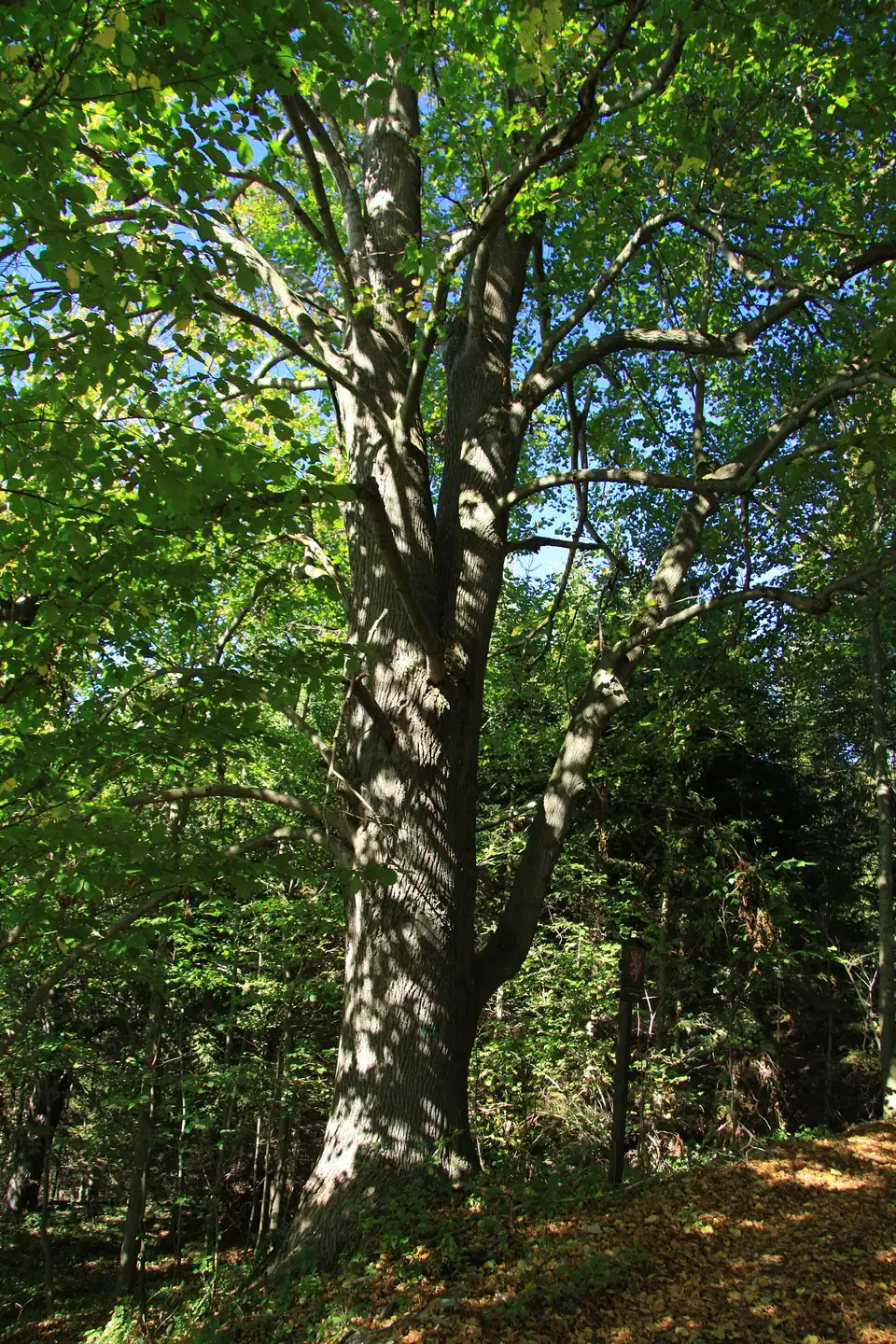


How to Grow and Care for Bigleaf Linden
Tilia platyphyllos
Written by Emilio Marruso · last checked
At a glance
The large-leaved linden is a grand shade tree that grows 60 to 80 feet tall and 30 to 50 feet wide, happy in full sun or partial shade. It shrugs off drought and even salty sea spray. In Europe its flowers are brewed into a tea said to be calming, and the young leaves can be eaten in a salad.
- Sun
Full sun to partial shade
What the sources say (1)
Light: Full sun to partial shade
Plant in full sun to partial shade in alkaline, loamy, well-drained soils.
— Tilia platyphyllos (Bigleaf Linden, Broad-leaved Lime, Largeleaf Linden, Large Leaved Lime, Large Leaved Linden) | North Carolina Extension Gardener Plant Toolbox [1] - Water
Handles drought and salty sea spray well
What the sources say (1)
Watering notes: Good drought and salt spray tolerance
It has a good drought and salt spray tolerance. It is also very tolerant of heavy pruning
— Tilia platyphyllos (Bigleaf Linden, Broad-leaved Lime, Largeleaf Linden, Large Leaved Lime, Large Leaved Linden) | North Carolina Extension Gardener Plant Toolbox [1] - Cold
Survives winters down to −40 °F (−40 °C)
Very hardy · USDA 3a · RHS H7 · Z3
What the sources say (2)
Hardiness, coldest zone: 3a [winter low −40 to −37.2 °C (−40 to −35 °F)]
USDA Plant Hardiness Zone: 3a, 3b, 4a, 4b, 5a, 5b, 6a, 6b, 7a, 7b
— Tilia platyphyllos (Bigleaf Linden, Broad-leaved Lime, Largeleaf Linden, Large Leaved Lime, Large Leaved Linden) | North Carolina Extension Gardener Plant Toolbox [1] Hardiness, warmest zone: 7b [winter low −15 to −12.2 °C (5 to 10 °F)]
USDA Plant Hardiness Zone: 3a, 3b, 4a, 4b, 5a, 5b, 6a, 6b, 7a, 7b
— Tilia platyphyllos (Bigleaf Linden, Broad-leaved Lime, Largeleaf Linden, Large Leaved Lime, Large Leaved Linden) | North Carolina Extension Gardener Plant Toolbox [1] - Harvest
Flowers make a tea said to be calming; young leaves can go in salads
- Pests
Aphids, scale, Japanese beetles and spider mites; powdery mildew and leaf spots
What the sources say (2)
Pests: borers, scale, leafminer, lace bugs, caterpillars, aphids, Japanese beetles, spider mites
Insects, Diseases, and Other Plant Problems: Borers, scale, leafminer, lace bugs, caterpillars, aphids, and Japanese beetles may be seen. Spider mites may occur in extremely hot and dry periods. Diseases such as powdery mildew, leaf spots, sooty mold, and canker can occur. Verticillium wilt does not occur frequently but can be fatal.
— Tilia platyphyllos (Bigleaf Linden, Broad-leaved Lime, Largeleaf Linden, Large Leaved Lime, Large Leaved Linden) | North Carolina Extension Gardener Plant Toolbox [1] Diseases: powdery mildew, leaf spots, sooty mold, canker, verticillium wilt
Insects, Diseases, and Other Plant Problems: Borers, scale, leafminer, lace bugs, caterpillars, aphids, and Japanese beetles may be seen. Spider mites may occur in extremely hot and dry periods. Diseases such as powdery mildew, leaf spots, sooty mold, and canker can occur. Verticillium wilt does not occur frequently but can be fatal.
— Tilia platyphyllos (Bigleaf Linden, Broad-leaved Lime, Largeleaf Linden, Large Leaved Lime, Large Leaved Linden) | North Carolina Extension Gardener Plant Toolbox [1] - Watch out
Verticillium wilt is rare but can kill the tree
What the sources say (1)
Diseases: powdery mildew, leaf spots, sooty mold, canker, verticillium wilt
Insects, Diseases, and Other Plant Problems: Borers, scale, leafminer, lace bugs, caterpillars, aphids, and Japanese beetles may be seen. Spider mites may occur in extremely hot and dry periods. Diseases such as powdery mildew, leaf spots, sooty mold, and canker can occur. Verticillium wilt does not occur frequently but can be fatal.
— Tilia platyphyllos (Bigleaf Linden, Broad-leaved Lime, Largeleaf Linden, Large Leaved Lime, Large Leaved Linden) | North Carolina Extension Gardener Plant Toolbox [1] - Size
60–80 ft tall and 30–50 ft wide
What the sources say (2)
Mature height: 1829-2438 cm (60 to 80 feet)
The tree typically grows 60 to 80 feet tall and 30-50 feet wide with a dense pyramidal form.
— Tilia platyphyllos (Bigleaf Linden, Broad-leaved Lime, Largeleaf Linden, Large Leaved Lime, Large Leaved Linden) | North Carolina Extension Gardener Plant Toolbox [1] Mature width: 914-1524 cm (30 to 50 feet)
The tree typically grows 60 to 80 feet tall and 30-50 feet wide with a dense pyramidal form.
— Tilia platyphyllos (Bigleaf Linden, Broad-leaved Lime, Largeleaf Linden, Large Leaved Lime, Large Leaved Linden) | North Carolina Extension Gardener Plant Toolbox [1] - Propagation
From seed or stem cuttings
What the sources say (1)
Propagation: Seed, stem cutting
Recommended Propagation Strategy: Seed Stem Cutting Country Or Region Of Origin:
— Tilia platyphyllos (Bigleaf Linden, Broad-leaved Lime, Largeleaf Linden, Large Leaved Lime, Large Leaved Linden) | North Carolina Extension Gardener Plant Toolbox [1]
Overview
Bigleaf linden is a large ornamental deciduous broadleaf tree native to central and southern Europe and southwestern Asia. [1] It is planted in full sun to partial shade in alkaline, loamy, well-drained soils. [1] It tolerates heavy pruning and may be grown as a hedge. [1]
This record is incomplete: the sources we read do not cover every field yet.
Not yet covered by our sources: Watering, Pruning
Bigleaf Linden care
How to water Bigleaf Linden
Watering
Not stated in the sources we read.
Watering notes
Good drought and salt spray tolerance
What the sources say (1)
It has a good drought and salt spray tolerance. It is also very tolerant of heavy pruningHow much light Bigleaf Linden needs
Full sun to partial shade
What the sources say (1)
Plant in full sun to partial shade in alkaline, loamy, well-drained soils.How much cold Bigleaf Linden can take
Hardiness, coldest zone
3a [winter low −40 to −37.2 °C (−40 to −35 °F)]
What the sources say (1)
USDA Plant Hardiness Zone:
3a, 3b, 4a, 4b, 5a, 5b, 6a, 6b, 7a, 7bHardiness, warmest zone
7b [winter low −15 to −12.2 °C (5 to 10 °F)]
What the sources say (1)
USDA Plant Hardiness Zone:
3a, 3b, 4a, 4b, 5a, 5b, 6a, 6b, 7a, 7bHow to propagate Bigleaf Linden
Seed, stem cutting
What the sources say (1)
Recommended Propagation Strategy:
Seed
Stem Cutting
Country Or Region Of Origin:How to grow Bigleaf Linden
The plant
Family
Malvaceae
What the sources say (1)
Bigleaf linden is a large ornamental deciduous broadleaf tree that is a member of the Malvaceae (mallow) family. It is known for its big hairy stems and leaves.Mature height
1829-2438 cm (60 to 80 feet)
What the sources say (1)
The tree typically grows 60 to 80 feet tall and 30-50 feet wide with a dense pyramidal form.Mature width
914-1524 cm (30 to 50 feet)
What the sources say (1)
The tree typically grows 60 to 80 feet tall and 30-50 feet wide with a dense pyramidal form.Pests and diseases
Pests
borers, scale, leafminer, lace bugs, caterpillars, aphids, Japanese beetles, spider mites
What the sources say (1)
Insects, Diseases, and Other Plant Problems: Borers, scale, leafminer, lace bugs, caterpillars, aphids, and Japanese beetles may be seen. Spider mites may occur in extremely hot and dry periods. Diseases such as powdery mildew, leaf spots, sooty mold, and canker can occur. Verticillium wilt does not occur frequently but can be fatal.Diseases
powdery mildew, leaf spots, sooty mold, canker, verticillium wilt
What the sources say (1)
Insects, Diseases, and Other Plant Problems: Borers, scale, leafminer, lace bugs, caterpillars, aphids, and Japanese beetles may be seen. Spider mites may occur in extremely hot and dry periods. Diseases such as powdery mildew, leaf spots, sooty mold, and canker can occur. Verticillium wilt does not occur frequently but can be fatal.Bigleaf Linden pests and problems
Insects and diseases
Symptom: Borers, scale, leafminer, lace bugs, caterpillars, aphids and Japanese beetles may be seen; powdery mildew, leaf spots, sooty mold and canker can occur.
What the sources say (1)
Borers, scale, leafminer, lace bugs, caterpillars, aphids, and Japanese beetles may be seen.
— Tilia platyphyllos (Bigleaf Linden, Broad-leaved Lime, Largeleaf Linden, Large Leaved Lime, Large Leaved Linden) | North Carolina Extension Gardener Plant Toolbox [1] Verticillium wilt
Symptom: Does not occur frequently but can be fatal.
What the sources say (1)
Verticillium wilt does not occur frequently but can be fatal.
— Tilia platyphyllos (Bigleaf Linden, Broad-leaved Lime, Largeleaf Linden, Large Leaved Lime, Large Leaved Linden) | North Carolina Extension Gardener Plant Toolbox [1]
Remedies
Each remedy shows what official sources say about it; traditional remedies without an official source are marked as such. Harmful ones are listed so you know to avoid them.
Treating the plant
aphids
strong water spray Works
How: Wash trees with a strong stream of water to knock down aphids and wash away honeydew.
Wash trees with a strong stream of water to knock down aphids and wash away honeydew.
— hortsense.cahnrs.wsu.edu [4] What the evidence says Wash trees with a strong stream of water to knock down aphids and wash away honeydew.
— hortsense.cahnrs.wsu.edu [4] hand-wiping or pruning Partly works
How: Only for small, localized infestations.
Hand-wipe or prune to control small, localized infestations (when practical).
— hortsense.cahnrs.wsu.edu [4] What the evidence says Hand-wipe or prune to control small, localized infestations (when practical).
— hortsense.cahnrs.wsu.edu [4] encourage natural enemies Official source, not independently tested
Avoid use of broad-spectrum insecticides which may kill these beneficial insects.
— hortsense.cahnrs.wsu.edu [4] How: Encourage ladybird beetles, lacewings and parasitic wasps and avoid broad-spectrum insecticides.
Encourage aphid predators and parasites , including ladybird beetles, lacewings, and parasitic wasps.
— hortsense.cahnrs.wsu.edu [4] low-nitrogen fertilizer Official source, not independently tested
How: Use a slow-release or low-nitrogen formula if fertilizer is needed.
High levels of nitrogen in the foliage encourage aphid reproduction. Use a slow-release or low-nitrogen formula if fertilizer is needed.
— hortsense.cahnrs.wsu.edu [4]
Calendar
Pruning
Not stated in the sources we read.
Months as given by the sources, which are mostly from the United States (northern hemisphere). In the southern hemisphere they shift by about six months.
Edibility
Reported by the source, quoted verbatim. Do not eat a plant on the basis of this page alone: identification mistakes can be dangerous.
Indicative values
Values from a secondary source, not checked word for word like the rest of this page. Use them as a starting point.
- Life cycle
- PerennialIndicative value, adapt it to your climate · Secondary source
- Watering
- AverageIndicative value, adapt it to your climate · Secondary source
- Drought tolerant
- yesIndicative value, adapt it to your climate · Secondary source
- Soil pH
- 5.5-7.5Indicative value, adapt it to your climate · Secondary source
- Care level
- MediumIndicative value, adapt it to your climate · Secondary source
- Growth rate
- HighIndicative value, adapt it to your climate · Secondary source
- Pruning
- February, March, April, March, AprilIndicative value, adapt it to your climate · Secondary source
Similar plants
- Linden Tilia americana
- Littleleaf Linden Tilia cordata
- Mongolian Linden Tilia mongolica
- Silver Linden Tilia tomentosa
- Tilia amurensis Tilia amurensis
- Japanese lime Tilia japonica
- African Baobab Adansonia digitata
- Bastardcedar Guazuma ulmifolia
Sources
Every value above is quoted from these documents. Links lead to the original publisher.
- Tilia platyphyllos (Bigleaf Linden, Broad-leaved Lime, Largeleaf Linden, Large Leaved Lime, Large Leaved Linden) | North Carolina Extension Gardener Plant Toolbox · plants.ces.ncsu.edu, consulted
- Broad-leaved Lime - Tilia platyphyllos | North Carolina Extension Gardener Plant Toolbox · plants.ces.ncsu.edu, consulted
- Large Leaved Linden - Tilia platyphyllos | North Carolina Extension Gardener Plant Toolbox · plants.ces.ncsu.edu, consulted
- hortsense.cahnrs.wsu.edu · hortsense.cahnrs.wsu.edu
Written by Emilio Marruso · last checked