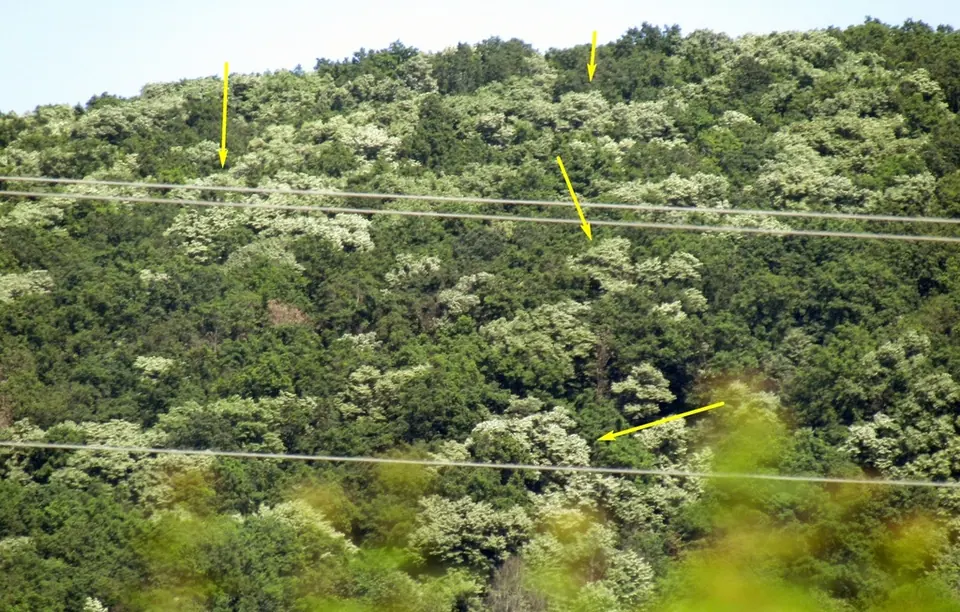
How to Grow and Care for Silver Linden
Tilia tomentosa
Written by Emilio Marruso · last checked
At a glance
Silver linden grows into a grand tree, 50–70 feet tall and 30–50 feet wide, and is happy in full sun or partial shade. Give it moist, well-drained soil and water it regularly after planting; once settled, it handles some drought. Choose a cultivar if you want better resistance to aphids and Japanese beetles.
- Sun
Full sun to partial shade
What the sources say (2)
Light: Full sun to partial shade
This tree prefers moist, well-drained, loamy soils, and full to partial sun. They tend to be moderately drought, salt, pollution, urban, and heat tolerant.
— Tilia tomentosa (European White Lime, Silver Linden, White Lime) | North Carolina Extension Gardener Plant Toolbox [1] Full sun; moist, well drained soils; tolerant of alkaline soils.
— Silver Linden (Tilia tomentosa)-Hort Answers - University of Illinois Extension [2] - Water
Water regularly after planting; later it handles some drought
What the sources say (2)
Watering notes: Water regularly after planting
Propagation of the silver linden is by seeding, layering, grafting, or chip-budding on proper rootstock. Water regularly after planting.
— Tilia tomentosa (European White Lime, Silver Linden, White Lime) | North Carolina Extension Gardener Plant Toolbox [1] Watering: Prefers moist, well-drained soil; moderately drought tolerant
This tree prefers moist, well-drained, loamy soils, and full to partial sun. They tend to be moderately drought, salt, pollution, urban, and heat tolerant.
— Tilia tomentosa (European White Lime, Silver Linden, White Lime) | North Carolina Extension Gardener Plant Toolbox [1] - Soil
Moist, well-drained soil
What the sources say (1)
Watering: Prefers moist, well-drained soil; moderately drought tolerant
This tree prefers moist, well-drained, loamy soils, and full to partial sun. They tend to be moderately drought, salt, pollution, urban, and heat tolerant.
— Tilia tomentosa (European White Lime, Silver Linden, White Lime) | North Carolina Extension Gardener Plant Toolbox [1] - Pests
Aphids (leave a dark soot), borers, scale and mites; leaf spots and powdery mildew
What the sources say (4)
Pests: aphids, borers, walnut lace bugs, caterpillars, leaf miners, scale, mites, Japanese beetle
Aphids, borer, walnut lace bugs, caterpillars, leaf miners, scale, and mites are potential problems.
— Tilia tomentosa (European White Lime, Silver Linden, White Lime) | North Carolina Extension Gardener Plant Toolbox [1] Insect Damage - Japanese Beetle ( Popilla japonica )
— Silver Linden (Tilia tomentosa)-Hort Answers - University of Illinois Extension [2] Diseases: anthracnose, leaf blight, canker, leaf spots, powdery mildew, verticillium wilt, wood rots and decays
Diseases such as anthracnose, leaf blight, canker, leaf spots, powdery mildew, and verticillium wilt may be occasional problems.
— Tilia tomentosa (European White Lime, Silver Linden, White Lime) | North Carolina Extension Gardener Plant Toolbox [1] Fungal Disease - Wood Rots and Decays ( Many genus and species involved )
— Silver Linden (Tilia tomentosa)-Hort Answers - University of Illinois Extension [2] - Size
50–70 ft tall and 30–50 ft wide
What the sources say (2)
Mature height: 1524-2134 cm (50-70 ft)
The silver linden grows from 50-70 feet tall and 30-50 feet wide.
— Tilia tomentosa (European White Lime, Silver Linden, White Lime) | North Carolina Extension Gardener Plant Toolbox [1] Mature width: 914-1524 cm (30-50 ft)
The silver linden grows from 50-70 feet tall and 30-50 feet wide.
— Tilia tomentosa (European White Lime, Silver Linden, White Lime) | North Carolina Extension Gardener Plant Toolbox [1] - Propagation
By seed, layering or grafting
What the sources say (1)
Propagation: Seed, layering, grafting, chip-budding on proper rootstock
Propagation of the silver linden is by seeding, layering, grafting, or chip-budding on proper rootstock.
— Tilia tomentosa (European White Lime, Silver Linden, White Lime) | North Carolina Extension Gardener Plant Toolbox [1]
Overview
Silver linden is a large ornamental deciduous tree native to southeastern Europe and western Asia. [1] It grows 50-70 feet [15.2–21.3 m] tall and prefers moist, well-drained soils in full sun to partial shade. [1]
This record is incomplete: the sources we read do not cover every field yet.
Not yet covered by our sources: Pruning
Silver Linden care
Measurements in square brackets are our conversion into the other unit system; the quoted text is unchanged.
How to water Silver Linden
Watering
Prefers moist, well-drained soil; moderately drought tolerant
What the sources say (1)
This tree prefers moist, well-drained, loamy soils, and full to partial sun. They tend to be moderately drought, salt, pollution, urban, and heat tolerant.Watering notes
Water regularly after planting
What the sources say (1)
Propagation of the silver linden is by seeding, layering, grafting, or chip-budding on proper rootstock. Water regularly after planting.How much light Silver Linden needs
Full sun to partial shade
What the sources say (2)
This tree prefers moist, well-drained, loamy soils, and full to partial sun. They tend to be moderately drought, salt, pollution, urban, and heat tolerant.Full sun; moist, well drained soils; tolerant of alkaline soils.How much cold Silver Linden can take
Hardiness, coldest zone
The sources give different values depending on region, zone or growing conditions.
What each source says
According to NC State Extension: 4a [winter low −34.4 to −31.7 °C (−30 to −25 °F)]
According to University of Illinois Extension: 5 [winter low −28.9 to −23.3 °C (−20 to −10 °F)]
What the sources say (3)
According to NC State Extension: USDA Plant Hardiness Zone:
4a, 4b, 5a, 5b, 6a, 6b, 7a, 7bAccording to University of Illinois Extension: Native To:
Europe and Asia
USDA Hardiness Zone
5 - 7USDA Plant Hardiness Zone:
4a, 4b, 5a, 5b, 6a, 6b, 7a, 7bHardiness, warmest zone
7b [winter low −15 to −12.2 °C (5 to 10 °F)]
What the sources say (1)
USDA Plant Hardiness Zone:
4a, 4b, 5a, 5b, 6a, 6b, 7a, 7bHow to propagate Silver Linden
Seed, layering, grafting, chip-budding on proper rootstock
What the sources say (1)
Propagation of the silver linden is by seeding, layering, grafting, or chip-budding on proper rootstock.How to grow Silver Linden
The plant
Family
Malvaceae
What the sources say (1)
The silver linden is a large ornamental deciduous tree that is a member of the Malvaceae family.Mature height
1524-2134 cm (50-70 ft)
What the sources say (1)
The silver linden grows from 50-70 feet tall and 30-50 feet wide.Mature width
914-1524 cm (30-50 ft)
What the sources say (1)
The silver linden grows from 50-70 feet tall and 30-50 feet wide.Pests and diseases
Pests
aphids, borers, walnut lace bugs, caterpillars, leaf miners, scale, mites, Japanese beetle
What the sources say (2)
Aphids, borer, walnut lace bugs, caterpillars, leaf miners, scale, and mites are potential problems.Insect Damage
- Japanese Beetle ( Popilla japonica )Diseases
anthracnose, leaf blight, canker, leaf spots, powdery mildew, verticillium wilt, wood rots and decays
What the sources say (2)
Diseases such as anthracnose, leaf blight, canker, leaf spots, powdery mildew, and verticillium wilt may be occasional problems.Fungal Disease
- Wood Rots and Decays ( Many genus and species involved )Silver Linden pests and problems
Insect pests
Symptom: Aphids secrete a substance that causes dark soot; borer, walnut lace bugs, caterpillars, leaf miners, scale and mites are potential problems
What to do: Cultivars are more insect resistant to aphids and Japanese Beetles
What the sources say (2)
Aphids, borer, walnut lace bugs, caterpillars, leaf miners, scale, and mites are potential problems. The aphids secrete a substance that causes dark soot.
— Tilia tomentosa (European White Lime, Silver Linden, White Lime) | North Carolina Extension Gardener Plant Toolbox [1] Several cultivars are more insect resistant to aphids and Japanese Beetles.
— Tilia tomentosa (European White Lime, Silver Linden, White Lime) | North Carolina Extension Gardener Plant Toolbox [1] Fungal diseases
Symptom: Anthracnose, leaf blight, canker, leaf spots, powdery mildew and verticillium wilt may occur occasionally
What the sources say (1)
Diseases such as anthracnose, leaf blight, canker, leaf spots, powdery mildew, and verticillium wilt may be occasional problems.
— Tilia tomentosa (European White Lime, Silver Linden, White Lime) | North Carolina Extension Gardener Plant Toolbox [1]
Remedies
Each remedy shows what official sources say about it; traditional remedies without an official source are marked as such. Harmful ones are listed so you know to avoid them.
Treating the plant
aphids
strong stream of water Works
How: Wash trees with a strong stream of water to knock down aphids and wash away honeydew.
Wash trees with a strong stream of water to knock down aphids and wash away honeydew.
— hortsense.cahnrs.wsu.edu [5] What the evidence says Wash trees with a strong stream of water to knock down aphids and wash away honeydew.
— hortsense.cahnrs.wsu.edu [5] hand-wipe or prune infested shoots Works
How: Hand-wipe or prune to control small, localized infestations (when practical).
Hand-wipe or prune to control small, localized infestations (when practical).
— hortsense.cahnrs.wsu.edu [5] What the evidence says Hand-wipe or prune to control small, localized infestations (when practical).
— hortsense.cahnrs.wsu.edu [5]
honeydew
rinsing honeydew with water Not verified
Traditional remedy, not verified by an official source.
How: Since it is water based, the honeydew can be rinsed off regularly until the problem diminishes.
japanese beetle
hand-picking Works
How: Wear gloves and collect beetles in a bucket of soapy water.
While time-consuming, handpicking beetles can effectively reduce their numbers. Wear gloves and collect beetles in a bucket of soapy water.
— treefluent.com [6] What the evidence says Many insect and disease issues can be solved in the home garden by hand-picking insects or clipping and disposing of diseased plant parts.
— extension.unh.edu [7] insecticidal soap spray Works
Do not make applications to blooming trees, as linden is very attractive to bees.
— hortsense.cahnrs.wsu.edu [5] Do not use soaps on trees stressed by drought or heat.
— hortsense.cahnrs.wsu.edu [5] How: Mix 2 tablespoons of insecticidal soap in a gallon of water and spray directly on the beetles. Repeat every 7-10 days.
Insecticidal soap is a safe choice for treating beetles. Mix 2 tablespoons of insecticidal soap in a gallon of water and spray directly on the beetles.
— treefluent.com [6] What the evidence says insecticidal soap is a safe, effective organic insecticide with minimal environmental impact.
— extension.psu.edu [8] neem oil spray Partly works
Do not make applications to blooming trees, as linden is very attractive to bees.
— hortsense.cahnrs.wsu.edu [5] Despite these being biological pesticides, it is important to read the directions on the label and wear safety equipment.
— extension.illinois.edu [9] How: Mix 1-2 tablespoons of neem oil with a gallon of water and spray on infested trees, in the early morning or late afternoon.
Neem oil disrupts the life cycle of Japanese beetles. Mix 1-2 tablespoons of neem oil with a gallon of water and spray on infested trees.
— treefluent.com [6] What the evidence says Neem oil is found in the seeds of the neem tree. The active component found in this biological pesticide reduces insect feeding, interferes with hormones -- making it hard to grow or lay eggs -- and acts as a repellent.
— extension.illinois.edu [9] companion planting with garlic, rue or marigolds Not verified
Traditional remedy, not verified by an official source.
How: Plant garlic, rue, or marigolds near linden trees.
Calendar
Pruning
Not stated in the sources we read.
Months as given by the sources, which are mostly from the United States (northern hemisphere). In the southern hemisphere they shift by about six months.
Indicative values
Values from a secondary source, not checked word for word like the rest of this page. Use them as a starting point.
- Life cycle
- PerennialIndicative value, adapt it to your climate · Secondary source
- Hours of sun
- 4-6 hoursIndicative value, adapt it to your climate · Secondary source
- Drought tolerant
- yesIndicative value, adapt it to your climate · Secondary source
- Soil
- Well-drainedIndicative value, adapt it to your climate · Secondary source
- Soil pH
- 5.5-7.5Indicative value, adapt it to your climate · Secondary source
- Care level
- MediumIndicative value, adapt it to your climate · Secondary source
- Growth rate
- HighIndicative value, adapt it to your climate · Secondary source
- Pruning
- March, April, AugustIndicative value, adapt it to your climate · Secondary source
Similar plants
- Bigleaf Linden Tilia platyphyllos
- Linden Tilia americana
- Littleleaf Linden Tilia cordata
- Mongolian Linden Tilia mongolica
- Tilia amurensis Tilia amurensis
- Japanese lime Tilia japonica
- African Baobab Adansonia digitata
- Bastardcedar Guazuma ulmifolia
Sources
Every value above is quoted from these documents. Links lead to the original publisher.
- Tilia tomentosa (European White Lime, Silver Linden, White Lime) | North Carolina Extension Gardener Plant Toolbox · plants.ces.ncsu.edu, consulted
- Silver Linden (Tilia tomentosa)-Hort Answers - University of Illinois Extension · web.extension.illinois.edu, consulted
- Silver Linden - Tilia tomentosa | North Carolina Extension Gardener Plant Toolbox · plants.ces.ncsu.edu, consulted
- European White Lime - Tilia tomentosa | North Carolina Extension Gardener Plant Toolbox · plants.ces.ncsu.edu, consulted
- hortsense.cahnrs.wsu.edu · hortsense.cahnrs.wsu.edu
- treefluent.com · treefluent.com
- extension.unh.edu · extension.unh.edu
- extension.psu.edu · extension.psu.edu
- extension.illinois.edu · extension.illinois.edu
Written by Emilio Marruso · last checked