
How to Grow and Care for Cranberry Hibiscus
Hibiscus acetosella
Written by Emilio Marruso · last checked
Toxic to: People · Why
At a glance
This hibiscus is quick to get going: kept warm and moist, its seeds sprout in just 3–4 days. Give it full sun and evenly moist soil for the best growth and color, whether in the garden, in a pot or even indoors. Its leaves are edible too, cooked like spinach or tossed into mixed salads, and stem cuttings root right in water.
- Sun
Full sun: at least 6 hours a day
What the sources say (2)
Light: Full sun (at least 6 hours of direct sunlight)
Because it is a tropical hibiscus, it should have at least six hours of direct sunlight, and the soil should be warm before planting.
— Red-Leafed Hibiscus [6] Plant in full sun in well-drained, moist soil for best growth and color.
— Hibiscus acetosella – Wisconsin Horticulture [2] - Water
Keep evenly moist while growing; once settled in, it handles dry spells well
What the sources say (1)
Watering: Good drought tolerance once established; uniform moisture during the growing season gives the most attractive plants
Plants have good drought tolerance once established, but for more luxurious growth and more attractive foliage, providing uniform moisture during the growing season produces the most attractive plants.
— Red-Leafed Hibiscus [6] - Cold
Frost kills it: take cuttings in the fall to keep it for next year
- Soil
Moist, well-drained soil, never soggy
What the sources say (2)
Watering notes: Average to moist but not wet soil; well-drained, moist soil for best growth and color
requires full sun and will perform best in average to moist but not wet soil.
— Hibiscus acetosella (African Rosemallow, Cranberry Hibiscus, False Roselle, Maroon Mallow, Red Hibiscus, Red-leaved Hibiscus) | North Carolina Extension Gardener Plant Toolbox [1] Plant in full sun in well-drained, moist soil for best growth and color.
— Hibiscus acetosella – Wisconsin Horticulture [2] - Planting
Plant outside once the danger of frost has passed
What the sources say (1)
Planting: Outside after the danger of frost has passed
Sow seed indoors 6 to 8 weeks before last frost and plant outside after the danger of frost has passed.
— Hibiscus acetosella – Wisconsin Horticulture [2] - Pruning
Trim anytime to shape it; cut it back to the ground before winter
What the sources say (2)
Pruning: Cut back to the ground before winter; can be cut back at any time to shape the plants
Cut it back to the ground before winter.
— Hibiscus acetosella (African Rosemallow, Cranberry Hibiscus, False Roselle, Maroon Mallow, Red Hibiscus, Red-leaved Hibiscus) | North Carolina Extension Gardener Plant Toolbox [1] If plants grow too much, they can be cut back at any time to shape the plants.
— Hibiscus acetosella – Wisconsin Horticulture [2] - Harvest
The leaves are edible: cook them like spinach or add them to mixed salads
- Size
1–2.5 ft wide
What the sources say (1)
Mature width: 30-76 cm (1-2.5 ft)
The plants grow 3 to 5 feet tall and up to 1 to 2½ feet wide in one season.
— Hibiscus acetosella – Wisconsin Horticulture [2] - Propagation
From seed or from stem cuttings rooted in water or soil
What the sources say (2)
Propagation: Seed; stem cuttings rooted in water or soil
It grows easily from seed or can be propagated from stem cuttings taken in the fall and rooted in water or soil.
— Hibiscus acetosella (African Rosemallow, Cranberry Hibiscus, False Roselle, Maroon Mallow, Red Hibiscus, Red-leaved Hibiscus) | North Carolina Extension Gardener Plant Toolbox [1] Cuttings can be taken in the fall to save plants for the next growing season . Cuttings will root in soil or water.
— Hibiscus acetosella – Wisconsin Horticulture [2] - Sowing
Sow indoors 6–8 weeks before last frost; sprouts in 3–4 days at 70–75 °F (21–24 °C)
What the sources say (2)
Sowing: Indoors 6 to 8 weeks before last frost
Sow seed indoors 6 to 8 weeks before last frost and plant outside after the danger of frost has passed.
— Hibiscus acetosella – Wisconsin Horticulture [2] Days to germination: 3-4 days (seeds kept uniformly moist, soil at 70-75 F)
Seed germination occurs in 3 to 4 days if seeds are kept uniformly moist and the soil temperature is in the 70- to 75-degree range. Light is not required for germination.
— Red-Leafed Hibiscus [6] - Containers
Grows in containers and indoors too
What the sources say (2)
In containers: Yes
can be grown in large containers (but may require pinching or cutting back to maintain an appropriate size)
— Hibiscus acetosella – Wisconsin Horticulture [2] Indoors: Yes
It does well as an indoor potted plant during the winter.
— Hibiscus acetosella – Wisconsin Horticulture [2] - Safety
The seeds have tiny prickly hairs that can irritate some people
Overview
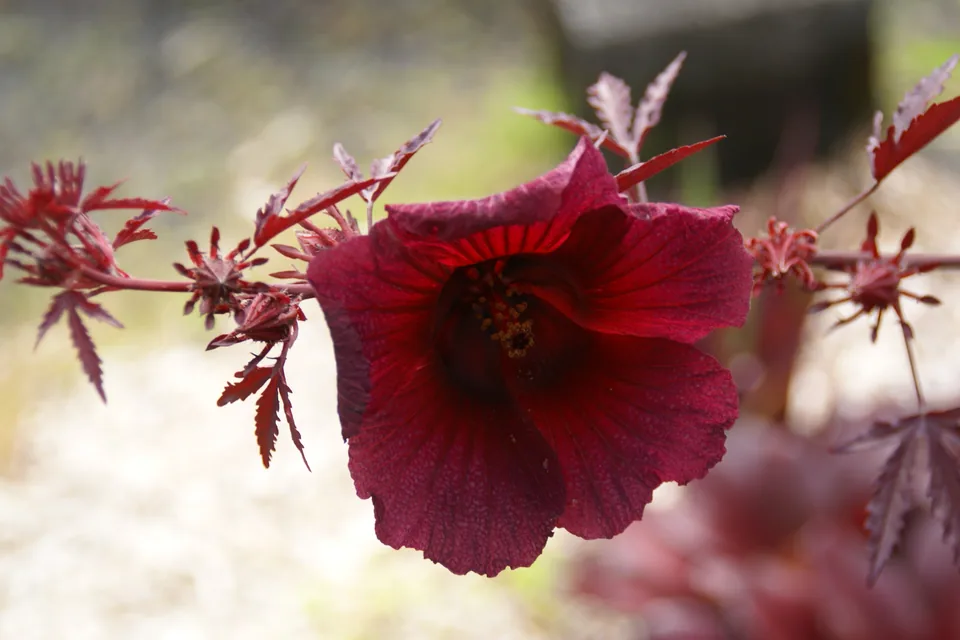
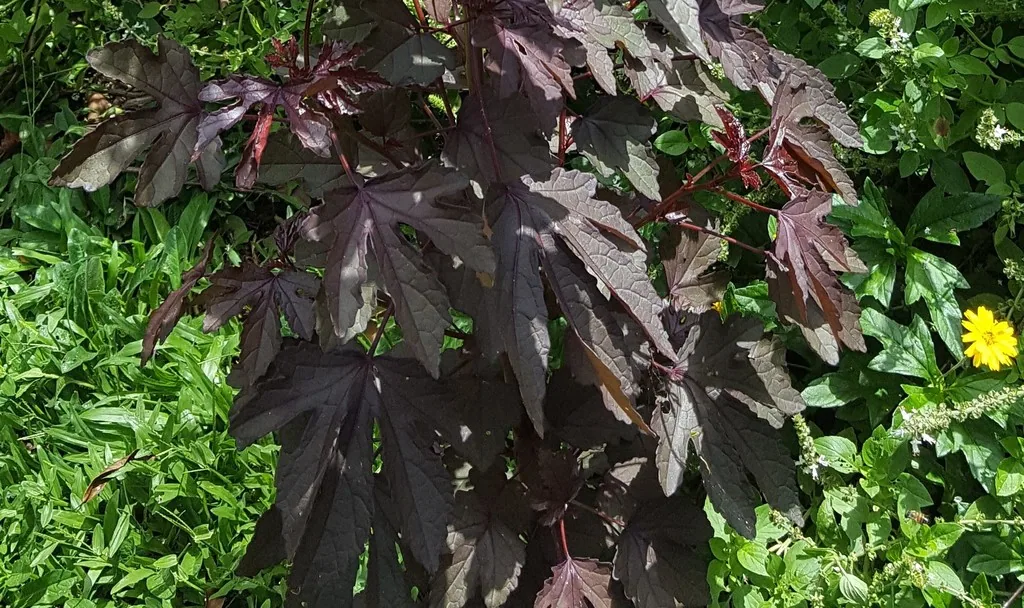
Hibiscus acetosella is a tender perennial sub-shrub native to tropical eastern Africa, grown mainly for its deep purple-red foliage. [1] It grows 3 to 5 feet [0.9–1.5 m] tall in one season and is commonly grown as an annual in cold climates. [2] It is easy to grow from seed and can be grown in large containers. [2]
Cranberry Hibiscus care
Measurements in square brackets are our conversion into the other unit system; the quoted text is unchanged.
How to water Cranberry Hibiscus
Watering
Good drought tolerance once established; uniform moisture during the growing season gives the most attractive plants
What the sources say (1)
Plants have good drought tolerance once
established, but for more luxurious growth and more attractive foliage, providing
uniform moisture during the growing season produces the most attractive plants.Watering notes
Average to moist but not wet soil; well-drained, moist soil for best growth and color
What the sources say (2)
requires full sun and will perform best in average to moist but not wet soil.Plant in full sun in well-drained, moist soil for best growth and color.How much light Cranberry Hibiscus needs
Full sun (at least 6 hours of direct sunlight)
What the sources say (2)
Because it is a tropical hibiscus, it should have at least six hours of direct sunlight,
and the soil should be warm before planting.Plant in full sun in well-drained, moist soil for best growth and color.How much cold Cranberry Hibiscus can take
Hardiness, coldest zone
The sources give different values depending on region, zone or growing conditions.
What each source says
According to NC State Extension: 9a [winter low −6.7 to −3.9 °C (20 to 25 °F)]
According to Wisconsin Horticulture: 8a [winter low −12.2 to −9.4 °C (10 to 15 °F)] or 9a [winter low −6.7 to −3.9 °C (20 to 25 °F)]
According to Clemson HGIC: 9 [winter low −6.7 to −1.1 °C (20 to 30 °F)]
What the sources say (4)
According to NC State Extension: USDA Plant Hardiness Zone:
9a, 9b, 10a, 10b, 11a, 11bAccording to Wisconsin Horticulture: though hardy only to zone 8a or 9aAccording to Clemson HGIC: Like Chinese hibiscus, plants are only hardy in USDA Zone 9.USDA Plant Hardiness Zone:
9a, 9b, 10a, 10b, 11a, 11bHardiness, warmest zone
11b [winter low 7.2 to 10 °C (45 to 50 °F)]
What the sources say (1)
USDA Plant Hardiness Zone:
9a, 9b, 10a, 10b, 11a, 11bWhere to grow Cranberry Hibiscus
Indoors
Yes
What the sources say (1)
It does well as an indoor potted plant during the winter.In containers
Yes
What the sources say (1)
can be grown in large containers (but may require pinching or cutting back to maintain an appropriate size)How to propagate Cranberry Hibiscus
Seed; stem cuttings rooted in water or soil
What the sources say (2)
It grows easily from seed or can be propagated from stem cuttings taken in the fall and rooted in water or soil.Cuttings can be taken in the fall to save plants for the next growing season . Cuttings will root in soil or water.How to grow Cranberry Hibiscus
The plant
Life cycle
perennial (tender; commonly grown as an annual in cold climates)
What the sources say (2)
Cranberry hibiscus is a tender perennial sub-shrub in the Malvaceae (mallow) family native to tropical eastern Africa.This tender perennial subshrub is native to tropical East Africa, and though hardy only to zone 8a or 9a, it grows rapidly and is commonly grown as an annual in cold climatesFamily
Malvaceae
What the sources say (1)
Cranberry hibiscus is a tender perennial sub-shrub in the Malvaceae (mallow) family native to tropical eastern Africa.Mature height
The sources disagree:
What each source says
cultivar 'Mahogany Splendor': 91-152 cm (3-5 ft):
What the sources say (1)
cultivar 'Mahogany Splendor': 91-152 cm (3-5 ft): ‘Mahogany Splendor’ is a seed propagated variety with dark burgundy foliage and deeply serrated, maple shaped leaves. It grows 3 to 5 feet tall and 2 to 2½ feet wide.Mature width
30-76 cm (1-2.5 ft)
What the sources say (1)
The plants grow 3 to 5 feet tall and up to 1 to 2½ feet wide in one season.Sowing and growth
Days to germination
3-4 days (seeds kept uniformly moist, soil at 70-75 F)
What the sources say (1)
Seed germination occurs in 3 to 4 days if seeds are kept uniformly
moist and the soil temperature is in the 70- to 75-degree range. Light is not required
for germination.Cranberry Hibiscus pests and problems
Frost
Symptom: Plants are typically killed by frost before flowers appear in the Midwest.
What to do: Cuttings can be taken in the fall to save plants for the next growing season.
Remedies
Each remedy shows what official sources say about it; traditional remedies without an official source are marked as such. Harmful ones are listed so you know to avoid them.
Treating the plant
aphids
pruning infested parts Official source, not independently tested
How: Mechanical pest control methods like pruning the infested parts are the best methods for managing these pests in the short term
Mechanical pest control methods like pruning the infested parts are the best methods for managing these pests in the short term
— gardeningsg.nparks.gov.sg [8] garlic spray Not verified
Traditional remedy, not verified by an official source.
How: Roughly chop 200 g garlic and soak in half a cup of mineral oil for 24 hours. Mix 20 g of pure soap into a litre of water, add to the garlic mixture and mix well.
onion spray Not verified
Traditional remedy, not verified by an official source.
How: Pour half a litre of boiling water over 1 kg roughly chopped onions, strain, then use one part onion mixture to 20 parts water.
neem oil Partly works
How: Systemic chemical insecticides such as Malathion or Maldison can cause defoliation, so milder, non-toxic systemics, such as Neem Oil, are better.
Systemic chemical insecticides such as Malathion or Maldison can cause defoliation, so milder, non-toxic systemics, such as Neem Oil, are better.
— rnzih.org.nz [9] What the evidence says However, neem oil is not effective against every insect and disease, and often must be frequently reapplied to reach the desired outcome.
— extension.unh.edu [10]
heat stress wilting
mulch at the base Official source, not independently tested
How: Increase the number of times the plant is watered daily, and apply mulch at the base to prevent water loss.
Increase the number of times the plant is watered daily, and apply mulch at the base to prevent water loss.
— gardeningsg.nparks.gov.sg [8]
caterpillars
hand picking Not verified
Traditional remedy, not verified by an official source.
How: Caterpillars, for example, will eat the leaves of the hibiscus plant, but their damage is mostly aesthetic. Simply pick them off and destroy them.
Is Cranberry Hibiscus poisonous?
Reported by the source, quoted verbatim. This is not medical or veterinary advice: if a person or an animal may have eaten this plant, contact a poison control centre or a veterinarian.
Calendar
Sowing
Indoors 6 to 8 weeks before last frost
What the sources say (1)
Sow seed indoors 6 to 8 weeks before last frost and plant outside after the danger of frost has passed.Planting
Outside after the danger of frost has passed
What the sources say (1)
Sow seed indoors 6 to 8 weeks before last frost and plant outside after the danger of frost has passed.Pruning
Cut back to the ground before winter; can be cut back at any time to shape the plants
What the sources say (2)
Cut it back to the ground before winter.If plants grow too much, they can be cut back at any time to shape the plants.Months as given by the sources, which are mostly from the United States (northern hemisphere). In the southern hemisphere they shift by about six months.
Relative to frost
Less precise estimate: there is no weather station within 300 km.
Find frost dates by ZIP code or city
Sow indoors: 6 to 8 weeks before the last frost
Sow seed indoors 6 to 8 weeks before last frost and plant outside after the danger of frost has passed.
— Hibiscus acetosella – Wisconsin Horticulture [2] Transplant: around the last frost
Sow seed indoors 6 to 8 weeks before last frost and plant outside after the danger of frost has passed.
— Hibiscus acetosella – Wisconsin Horticulture [2]
Count from the average frost dates where you live.
Edibility
Reported by the source, quoted verbatim. Do not eat a plant on the basis of this page alone: identification mistakes can be dangerous.
It was found growing around African villages, where it was cultivated and eaten as a spinach-like green. It can also be eaten in mixed salads.
[6]
Similar plants
- Chinese Hibiscus Hibiscus × rosa-sinensis
- Flower of an hour Hibiscus trionum
- Halberdleaf Rosemallow Hibiscus laevis
- Hamabo Hibiscus Hibiscus hamabo
- Heart-leaf Hibiscus Hibiscus martianus
- Rose of Sharon Hibiscus syriacus
- Scarlet Rose Mallow Hibiscus coccineus
- Sea hibiscus Hibiscus tiliaceus
Sources
Every value above is quoted from these documents. Links lead to the original publisher.
- Hibiscus acetosella (African Rosemallow, Cranberry Hibiscus, False Roselle, Maroon Mallow, Red Hibiscus, Red-leaved Hibiscus) | North Carolina Extension Gardener Plant Toolbox · plants.ces.ncsu.edu, consulted
- Hibiscus acetosella – Wisconsin Horticulture · hort.extension.wisc.edu, consulted
- African Rosemallow - Hibiscus acetosella | North Carolina Extension Gardener Plant Toolbox · plants.ces.ncsu.edu, consulted
- Red-leaved Hibiscus - Hibiscus acetosella | North Carolina Extension Gardener Plant Toolbox · plants.ces.ncsu.edu, consulted
- False Roselle - Hibiscus acetosella | North Carolina Extension Gardener Plant Toolbox · plants.ces.ncsu.edu, consulted
- Red-Leafed Hibiscus · uaex.uada.edu, consulted
- Hibiscus | Home & Garden Information Center · hgic.clemson.edu, consulted
- gardeningsg.nparks.gov.sg · gardeningsg.nparks.gov.sg
- rnzih.org.nz · rnzih.org.nz
- extension.unh.edu · extension.unh.edu
Written by Emilio Marruso · last checked