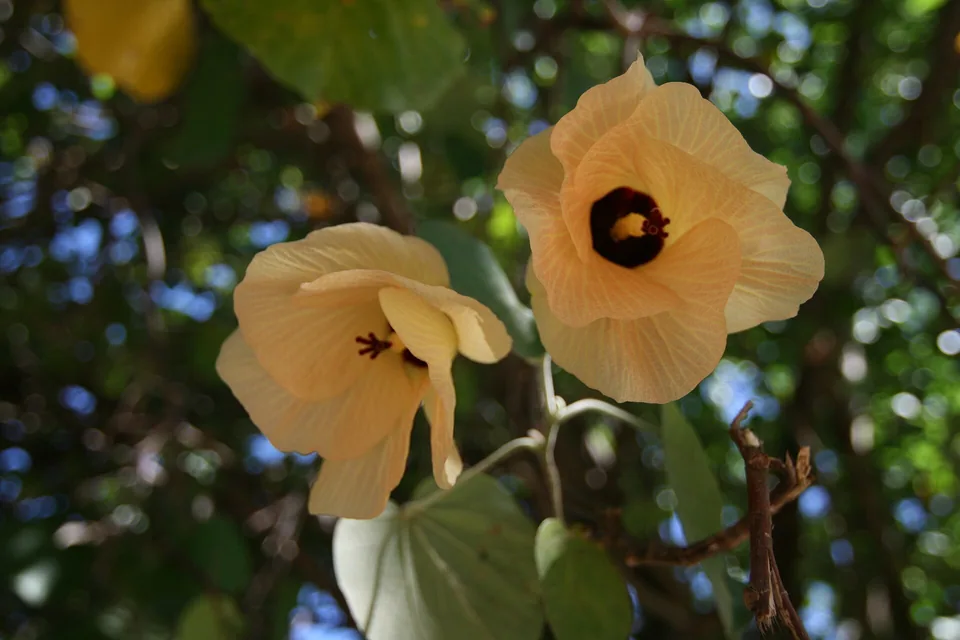
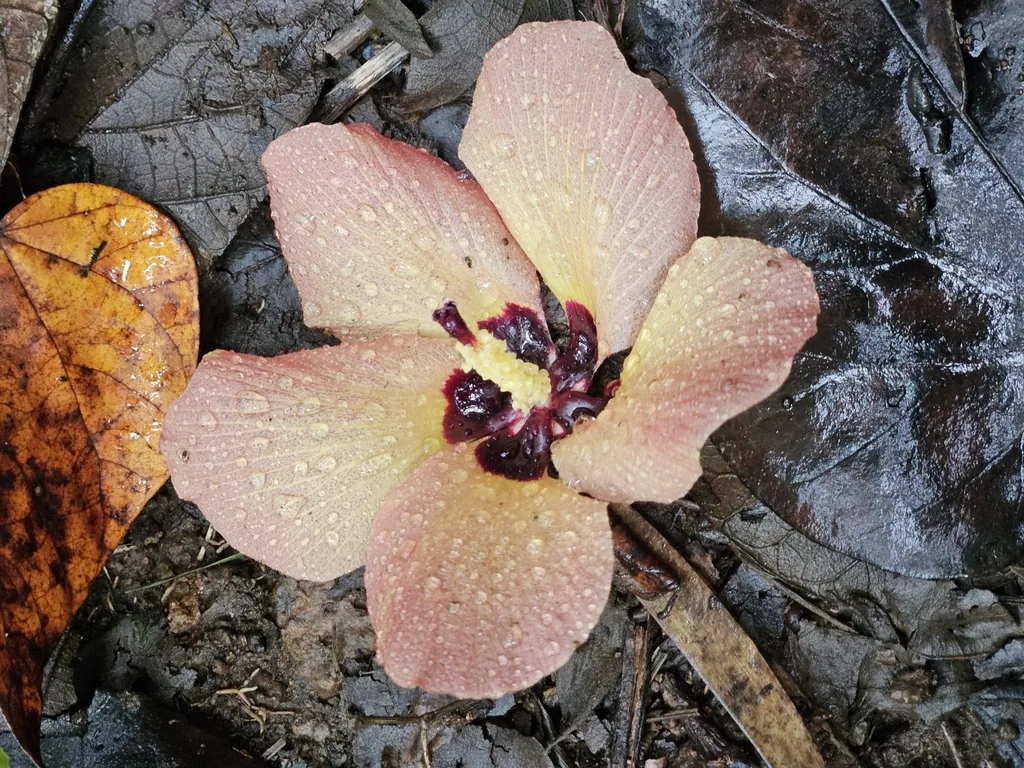

How to Grow and Care for Sea hibiscus
Hibiscus tiliaceus
Written by Emilio Marruso · last checked
At a glance
This hibiscus asks for very little: give it full sun and moderate water, and once settled it shrugs off dry spells. It is happy in almost any soil, from acidic to alkaline, and its young leaves can even be eaten as a vegetable. Plant it in the rainy season, then make more plants from seed, cuttings or suckers.
- Sun
Full sun
What the sources say (1)
Light: Full sun
| Light Preference | Full Sun
— NParks | Hibiscus tiliaceus [1] - Water
Moderate water; once settled it handles dry spells well
- Soil
Almost any soil, from acidic to alkaline: pH 5.0–8.5
- Planting
Plant in the rainy season
What the sources say (1)
Planting: Rainy season
into the field after 5–6 months when they are about 25 cm tall and 1 cm in diameter. This should be done in the rainy season.
— Hibiscus tiliaceus (PROTA) - Pl@ntUse [4] - Harvest
Young leaves are eaten as a vegetable
- Propagation
New plants from seed, stem cuttings, suckers or air layering
Overview
Sea hibiscus is a coastal tree that tolerates saline soils, salt spray and waterlogged soils. [1] It grows easily from stem cuttings, suckers and seed. [1] UF/IFAS assesses it as invasive in central and south Florida. [5]
This record is incomplete: the sources we read do not cover every field yet.
Not yet covered by our sources: Hardiness, coldest zone, Hardiness, warmest zone, Pruning
Sea hibiscus care
How to water Sea hibiscus
How much light Sea hibiscus needs
Full sun
What the sources say (1)
| Light Preference
| Full SunHow much cold Sea hibiscus can take
Hardiness, coldest zone
Not stated in the sources we read.
Hardiness, warmest zone
Not stated in the sources we read.
Best soil for Sea hibiscus
Soil pH, minimum
5.0
What the sources say (1)
acidic to alkaline (pH 5–8.5; optimum: 6–7)Soil pH, maximum
8.5
What the sources say (1)
acidic to alkaline (pH 5–8.5; optimum: 6–7)How to propagate Sea hibiscus
How to grow Sea hibiscus
The plant
Family
Malvaceae
What the sources say (1)
Pariti tiliaceum, Pariti tiliifolium
- Family
Malvaceae
- Conclusions by ZoneRemedies
Each remedy shows what official sources say about it; traditional remedies without an official source are marked as such. Harmful ones are listed so you know to avoid them.
Getting rid of it
sea hibiscus seedlings
hand pulling seedlings Not verified
Traditional remedy, not verified by an official source.
How: Hand pull seedlings.
Calendar
Planting
Rainy season
What the sources say (1)
into the field after 5–6 months when they are about 25 cm tall and 1 cm in diameter. This should be done in the rainy season.Pruning
Not stated in the sources we read.
Months as given by the sources, which are mostly from the United States (northern hemisphere). In the southern hemisphere they shift by about six months.
Edibility
Reported by the source, quoted verbatim. Do not eat a plant on the basis of this page alone: identification mistakes can be dangerous.
Indicative values
Values from a secondary source, not checked word for word like the rest of this page. Use them as a starting point.
- Life cycle
- PerennialIndicative value, adapt it to your climate · Secondary source
- Mature height
- 365.8-762 cm (12-25 ft)Indicative value, adapt it to your climate · Secondary source
- Hours of sun
- 4-6 hoursIndicative value, adapt it to your climate · Secondary source
- USDA hardiness zones
- 10-12 [winter low −1.1 to 15.6 °C (30 to 60 °F)]Indicative value, adapt it to your climate · Secondary source
- Growth rate
- LowIndicative value, adapt it to your climate · Secondary source
- Pruning
- March, April, May, AugustIndicative value, adapt it to your climate · Secondary source
Similar plants
- Chinese Hibiscus Hibiscus × rosa-sinensis
- Cranberry Hibiscus Hibiscus acetosella
- Flower of an hour Hibiscus trionum
- Halberdleaf Rosemallow Hibiscus laevis
- Hamabo Hibiscus Hibiscus hamabo
- Heart-leaf Hibiscus Hibiscus martianus
- Rose of Sharon Hibiscus syriacus
- Scarlet Rose Mallow Hibiscus coccineus
Sources
Every value above is quoted from these documents. Links lead to the original publisher.
- NParks | Hibiscus tiliaceus · nparks.gov.sg, consulted
- Hibiscus tiliaceus - Leon Levy Native Plant Preserve · levypreserve.org, consulted
- Talipariti tiliaceum - Useful Tropical Plants · tropical.theferns.info, consulted
- Hibiscus tiliaceus (PROTA) - Pl@ntUse · uses.plantnet-project.org, consulted
- Hibiscus tiliaceus - UF/IFAS Assessment - University of Florida, Institute of Food and Agricultural Sciences · assessment.ifas.ufl.edu, consulted
- Hibiscus tiliaceus | Purdue University Famine Foods · purdue.edu, consulted
Written by Emilio Marruso · last checked