
How to Grow and Care for Olive
Olea europaea
Written by Emilio Marruso · last checked
At a glance
The olive loves hot, dry summers and mild, wet winters, and once settled it shrugs off drought thanks to its small, tough leaves. Give it full sun and well-drained soil, plant two different varieties close together, and you can pick olives green or purplish-black. They're too bitter straight off the tree, so preserve them or press them for oil.
- Sun
Full sun: 6 or more hours a day
What the sources say (1)
Light: Full sun (6 or more hours of direct sunlight a day)
Full sun (6 or more hours of direct sunlight a day)
— Olea europaea (Common Olive, European Olive, Olive) | North Carolina Extension Gardener Plant Toolbox [1] - Water
Average watering, drought tolerant once settled; too much water rots roots and drops flowers
What the sources say (5)
Watering: Average moisture; drought tolerant once established
Olive prefers fertile, well-drained soils with average moisture in full sun. They are drought tolerant once established.
— Olea europaea (Common Olive, European Olive, Olive) | North Carolina Extension Gardener Plant Toolbox [1] Watering notes: Too much water from irrigation or rain makes trees susceptible to root rot and causes flowers to drop before fruit forms; excessive moisture may reduce fruit set
Too much water from irrigation or rain will make trees susceptible to root-rot disease and damage production by causing flowers to drop before they form fruits.
— Olives – Gardening Solutions [4] Excessive moisture may cause flowers to drop and reduce fruit set.
— Growing Olive Tree in Florida - UF/IFAS Extension St. Lucie County [5] Drought: Drought tolerant once established: the small leaves have a protective cuticle that slows water loss, allowing the trees to survive extended dry periods.
They are drought tolerant once established. It can be grown outdoors in zones 8 to 10
— Olea europaea (Common Olive, European Olive, Olive) | North Carolina Extension Gardener Plant Toolbox [1] Olive leaves are relatively small and have a protective cuticle which slows water loss, allowing olives to survive extended dry periods.
— [7] - Cold
Survives winters down to 10 °F (−12.2 °C)
Hardy in cold winters · USDA 8a · RHS H5 · Z8
What the sources say (7)
Hardiness, coldest zone: 8a [winter low −12.2 to −9.4 °C (10 to 15 °F)]
According to NC State Extension (species): USDA Plant Hardiness Zone: 8a, 8b, 9a, 9b, 10a, 10b
— Olea europaea (Common Olive, European Olive, Olive) | North Carolina Extension Gardener Plant Toolbox [1] Cultivars available (fonte: NC State Extension): There are cultivars available that may be grown in plant hardiness zones 7a and 7b.
— Olea europaea (Common Olive, European Olive, Olive) | North Carolina Extension Gardener Plant Toolbox [1] USDA Plant Hardiness Zone: 8a, 8b, 9a, 9b, 10a, 10b
— Olea europaea (Common Olive, European Olive, Olive) | North Carolina Extension Gardener Plant Toolbox [1] It can be grown outdoors in zones 8 to 10 or brought indoors or into a greenhouse in colder areas.
— Olea europaea (Common Olive, European Olive, Olive) | North Carolina Extension Gardener Plant Toolbox [1] Hardiness, warmest zone: 10b [winter low 1.7 to 4.4 °C (35 to 40 °F)]
Cultivars available (fonte: NC State Extension): There are cultivars available that may be grown in plant hardiness zones 7a and 7b.
— Olea europaea (Common Olive, European Olive, Olive) | North Carolina Extension Gardener Plant Toolbox [1] USDA Plant Hardiness Zone: 8a, 8b, 9a, 9b, 10a, 10b
— Olea europaea (Common Olive, European Olive, Olive) | North Carolina Extension Gardener Plant Toolbox [1] It can be grown outdoors in zones 8 to 10 or brought indoors or into a greenhouse in colder areas.
— Olea europaea (Common Olive, European Olive, Olive) | North Carolina Extension Gardener Plant Toolbox [1] - Soil
Well-drained soil, so the roots don't rot
- Feeding
Go easy on nitrogen: too much gives lots of shoots and fewer, later olives
What the sources say (4)
Avoid: Excess nitrogen: it drives shoot growth at the expense of fruit, delays fruiting and lowers oil quality.
The trees actually thrive in poor soil; excessive nitrogen fertilization can cause too much shoot growth at the expense of fruit production.
— Olives – Gardening Solutions [4] Too much N will cause excessive vegetative growth and delay reproductive growth (fruiting). Also, excessive N will negatively affect oil quality.
— Growing Olive Tree in Florida - UF/IFAS Extension St. Lucie County [5] Signs of excess: Excessive shoot and leaf growth with less fruit and delayed fruiting; poorer oil quality.
The trees actually thrive in poor soil; excessive nitrogen fertilization can cause too much shoot growth at the expense of fruit production.
— Olives – Gardening Solutions [4] Too much N will cause excessive vegetative growth and delay reproductive growth (fruiting). Also, excessive N will negatively affect oil quality.
— Growing Olive Tree in Florida - UF/IFAS Extension St. Lucie County [5] - Pruning
Prune in early spring; it flowers on last year's growth
What the sources say (3)
When to prune: In early spring; in off years, removing non-flowering branches during flowering can increase fruit yield.
Prune olives in early spring to keep an attractive shape and to remove any dead, diseased or dying branches.
— [8] In off years, pruning during flowering to remove non-flowering branches can increase fruit yield for home gardeners.
— [7] Flowering wood: Flowers on old wood (last year's growth)
Flowers are produced on small inflorescences that emerge in the axil of the leaf from portions of the stem that grew the previous season
— [7] - Harvest
Pick olives green or purplish-black; too bitter raw, so preserve them or press for oil
What the sources say (1)
Harvest: Fruits can be harvested at either the green stage or the ripe purplish-black stage
The fruit is a green drupe that ripens to a purplish-black. The fruits can be harvested at either stage
— Olea europaea (Common Olive, European Olive, Olive) | North Carolina Extension Gardener Plant Toolbox [1] - Pollination
For fruit, plant two different varieties close together; the wind carries the pollen
What the sources say (4)
What it needs: For fruit production, plant at least two distinct cultivars close to each other so the wind-borne pollen can pass between them; some cultivars cannot pollinate each other.
if fruit production is a primary objective of olive culture, at least two distinct cultivars should be planted in close proximity to each other to facilitate transfer of the wind-borne pollen.
— [7] Cross- pollination from two distinctly different olive cultivars can result in successful fertilization and fruit production, but some varieties are not capable of serving as pollinators
— [7] Carried by: Wind
Several varieties of olive are self-fertile and may fertilize their own flowers with their wind-blown pollen.
— [7] Cross-pollination from two distinctly different olive cultivars can result in successful fertilization and fruit production. They are fertilized by the wind.
— Growing Olive Tree in Florida - UF/IFAS Extension St. Lucie County [5] - Pests
Scale insects, caterpillars and stink bugs; watch for olive knot, root rot and sooty mold
What the sources say (4)
Pests: scale insects, caterpillars, grasshoppers, hornworms, stink bugs
Monitor the tree for olive knot, verticillium wilt, and root rot. Scale insects may be a problem.
— Olea europaea (Common Olive, European Olive, Olive) | North Carolina Extension Gardener Plant Toolbox [1] The common pests of olive trees in Florida are scale, caterpillar, grasshopper, hornworms, and stink bug.
— Growing Olive Tree in Florida - UF/IFAS Extension St. Lucie County [5] Diseases: olive knot, verticillium wilt, root rot, sooty mold
Monitor the tree for olive knot, verticillium wilt, and root rot. Scale insects may be a problem.
— Olea europaea (Common Olive, European Olive, Olive) | North Carolina Extension Gardener Plant Toolbox [1] One of the common fungal problems of olive trees is sooty mold.
— Growing Olive Tree in Florida - UF/IFAS Extension St. Lucie County [5] - Size
20–30 ft tall and 15–25 ft wide
What the sources say (2)
Mature height: 610-914 cm (20-30 ft)
It grows 20 to 30 feet tall and 15 to 25 feet wide.
— Olea europaea (Common Olive, European Olive, Olive) | North Carolina Extension Gardener Plant Toolbox [1] Mature width: 457-762 cm (15-25 ft)
It grows 20 to 30 feet tall and 15 to 25 feet wide.
— Olea europaea (Common Olive, European Olive, Olive) | North Carolina Extension Gardener Plant Toolbox [1] - Propagation
Semi-ripe cuttings, grafting or seed; trees from cuttings or grafts bear fruit in four years
What the sources say (4)
Propagation: Seed, semi-ripe cuttings, grafting
They are propagated by seed or semi-ripe cutting.
— Olea europaea (Common Olive, European Olive, Olive) | North Carolina Extension Gardener Plant Toolbox [1] Olive trees can be propagated from cuttings or are grafted.
— Growing Olive Tree in Florida - UF/IFAS Extension St. Lucie County [5] Cuttings: Semi-ripe cuttings; many cultivars are grown from cuttings or grafted and reach bearing age in four years.
for cross-pollination to increase your crop yields. They are propagated by seed or semi-ripe cutting.
— Olea europaea (Common Olive, European Olive, Olive) | North Carolina Extension Gardener Plant Toolbox [1] Many olive cultivars are grown from cuttings or are grafted and will reach bearing age in about four years.
— [7] - Containers
Grows in containers too
What the sources say (1)
In containers: Yes
The olive may be grown as an ornamental, fruit tree, container plant, or used in bonsai.
— Olea europaea (Common Olive, European Olive, Olive) | North Carolina Extension Gardener Plant Toolbox [1]
Overview
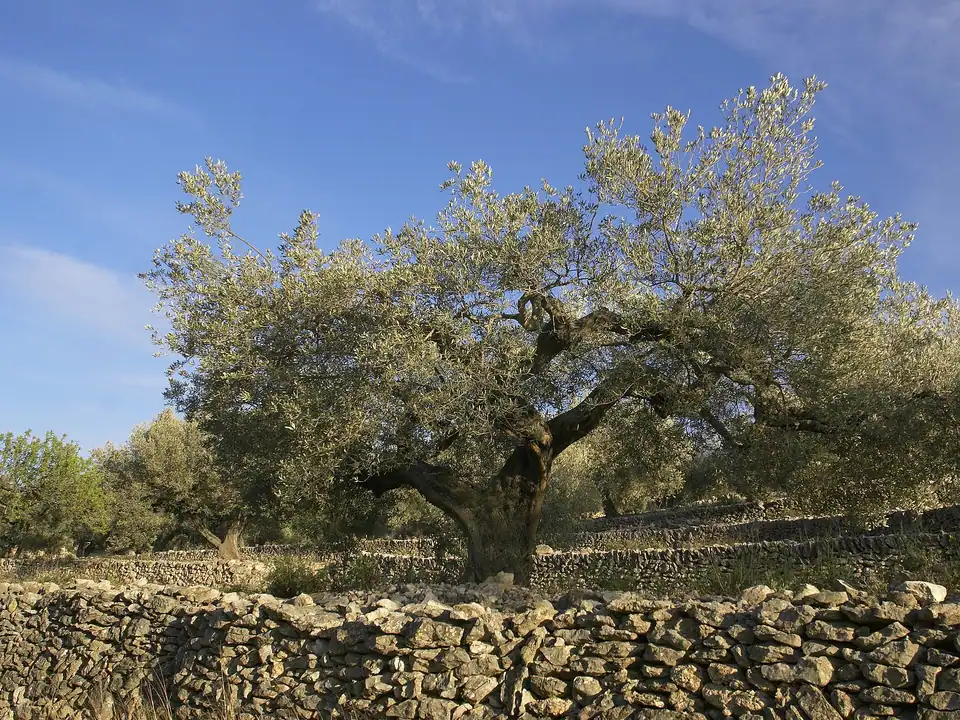
Olive is a slow-growing broadleaf evergreen tree or shrub that prefers fertile, well-drained soil in full sun and is drought tolerant once established. [1] Excess water from irrigation or rain makes olive trees susceptible to root rot and can cause flowers to drop before fruit forms. [4] The fruit is a green drupe that ripens to purplish-black, but olives are usually too bitter to eat straight off the tree. [1][4] The olive may be grown as an ornamental, fruit tree, container plant, or used in bonsai. [1]
This record is incomplete: the sources we read do not cover every field yet.
Not yet covered by our sources: Planting, Spacing
Olive care
How to water Olive
Watering
Average moisture; drought tolerant once established
What the sources say (1)
Olive prefers fertile, well-drained soils with average moisture in full sun. They are drought tolerant once established.Watering notes
Too much water from irrigation or rain makes trees susceptible to root rot and causes flowers to drop before fruit forms; excessive moisture may reduce fruit set
What the sources say (2)
Too much water from irrigation or rain will make trees susceptible to root-rot disease and damage production by causing flowers to drop before they form fruits.Excessive moisture may cause flowers to drop and reduce fruit set.How much light Olive needs
Full sun (6 or more hours of direct sunlight a day)
What the sources say (1)
Full sun (6 or more hours of direct sunlight a day)How much cold Olive can take
Hardiness, coldest zone
8a [winter low −12.2 to −9.4 °C (10 to 15 °F)]
What each source says
According to NC State Extension (species): 8a [winter low −12.2 to −9.4 °C (10 to 15 °F)]
Cultivars available (fonte: NC State Extension): 7a [winter low −17.8 to −15 °C (0 to 5 °F)]
What the sources say (4)
According to NC State Extension (species): USDA Plant Hardiness Zone:
8a, 8b, 9a, 9b, 10a, 10bCultivars available (fonte: NC State Extension): There are cultivars available that may be grown in plant hardiness zones 7a and 7b.USDA Plant Hardiness Zone:
8a, 8b, 9a, 9b, 10a, 10bIt can be grown outdoors in zones 8 to 10 or brought indoors or into a greenhouse in colder areas.Hardiness, warmest zone
10b [winter low 1.7 to 4.4 °C (35 to 40 °F)]
What each source says
Cultivars available (fonte: NC State Extension): 7b [winter low −15 to −12.2 °C (5 to 10 °F)]
What the sources say (3)
Cultivars available (fonte: NC State Extension): There are cultivars available that may be grown in plant hardiness zones 7a and 7b.USDA Plant Hardiness Zone:
8a, 8b, 9a, 9b, 10a, 10bIt can be grown outdoors in zones 8 to 10 or brought indoors or into a greenhouse in colder areas.Where to grow Olive
Indoors
The sources give different values depending on region, zone or growing conditions.
What each source says
Dwarf olive · Indoors: place the container in a south-facing window but away from any heat vents or drafts.
What the sources say (1)
Dwarf olive · Indoors: place the container in a south-facing window but away from any heat vents or drafts.In containers
Yes
What the sources say (1)
The olive may be grown as an ornamental, fruit tree, container plant, or used in bonsai.Spacing
Not stated in the sources we read.
How to propagate Olive
Seed, semi-ripe cuttings, grafting
What the sources say (2)
They are propagated by seed or semi-ripe cutting.Olive trees can be propagated from cuttings or are grafted.How to grow Olive
The plant
Life cycle
perennial
What the sources say (1)
Plant Type: Perennial Tree Woody Plant Leaf Characteristics: Broadleaf EvergreenFamily
Oleaceae
What the sources say (2)
Genus: Olea Species: europaea Family: OleaceaeCommon Names: Olive Origin: Mediterranean Basin (Italy, Spain, Morocco, Greece, France, and Portugal) Family: OleaceaeMature height
610-914 cm (20-30 ft)
What the sources say (1)
It grows 20 to 30 feet tall and 15 to 25 feet wide.Mature width
457-762 cm (15-25 ft)
What the sources say (1)
It grows 20 to 30 feet tall and 15 to 25 feet wide.Harvest and storage
How to harvest
Fruits can be harvested at either stage: green, or ripened to purplish-black.
What the sources say (1)
The fruit is a green drupe that ripens to a purplish-black. The fruits can be harvested at either stage and are important commercially as edible fruit, for making olive oil, and fuel.Pests and diseases
Pests
scale insects, caterpillars, grasshoppers, hornworms, stink bugs
What the sources say (2)
Monitor the tree for olive knot, verticillium wilt, and root rot. Scale insects may be a problem.The common pests of olive trees in Florida are scale, caterpillar, grasshopper, hornworms, and stink bug.Diseases
olive knot, verticillium wilt, root rot, sooty mold
What the sources say (2)
Monitor the tree for olive knot, verticillium wilt, and root rot. Scale insects may be a problem.One of the common fungal problems of olive trees is sooty mold.Fertilizing
Avoid
Excess nitrogen: it drives shoot growth at the expense of fruit, delays fruiting and lowers oil quality.
What the sources say (2)
The trees actually thrive in poor soil; excessive nitrogen fertilization can cause too much shoot growth at the expense of fruit production.Too much N will cause excessive vegetative growth and delay reproductive growth (fruiting). Also, excessive N will negatively affect oil quality.Signs of excess
Excessive shoot and leaf growth with less fruit and delayed fruiting; poorer oil quality.
What the sources say (2)
The trees actually thrive in poor soil; excessive nitrogen fertilization can cause too much shoot growth at the expense of fruit production.Too much N will cause excessive vegetative growth and delay reproductive growth (fruiting). Also, excessive N will negatively affect oil quality.Spacing
Between plants
The sources give different values depending on region, zone or growing conditions.
What each source says
pruned as a hedge: 2.44-3.05 m [8–10 ft] between plants in the row
commercial groves (Florida): 2.44-6.1 m [8–20 ft] in the row
in containers: Pots of 30-35 cm [12–14 in] or larger, filled with gritty, loam-based compost
What the sources say (3)
pruned as a hedge: Olives can also be maintained with appropriate pruning as hedges in various configurations with 8–10 ft between plants in a row.commercial groves (Florida): commercial spacing ranges from 8–20 ft (in row) x 16–25 ft (between rows), with an average hedgerow spacing of about 10 ft × 20 ft.in containers: plant in 30-35cm (12-14in) pots (or large enough to accommodate roots comfortably) filled with gritty, loam-based compostBetween rows
The sources give different values depending on region, zone or growing conditions.
What each source says
commercial groves (Florida): 4.88-7.62 m [16–25 ft] between rows
What the sources say (1)
commercial groves (Florida): commercial spacing ranges from 8–20 ft (in row) x 16–25 ft (between rows), with an average hedgerow spacing of about 10 ft × 20 ft.Propagation
Cuttings
Semi-ripe cuttings; many cultivars are grown from cuttings or grafted and reach bearing age in four years.
What the sources say (2)
for cross-pollination to increase your crop yields. They are propagated by seed or semi-ripe cutting.Many olive cultivars are grown from cuttings or are grafted and will reach bearing age in about four years.Heat and drought
Heat
Performs best in hot, dry summers and mild, wet winters.
What the sources say (1)
Olive performs best in hot/dry summers and mild/wet winters. Olive prefers fertile, well-drained soilsDrought
Drought tolerant once established: the small leaves have a protective cuticle that slows water loss, allowing the trees to survive extended dry periods.
What the sources say (2)
They are drought tolerant once established. It can be grown outdoors in zones 8 to 10Olive leaves are relatively small and have a protective cuticle which slows water loss, allowing olives to survive extended dry periods.Pollination
Fruit set
The sources disagree:
What each source says
cultivar 'Leccino', 'Pendolino', 'Moraiolo', 'Maurino': Self-unfruitful: needs pollen from another variety
What the sources say (1)
cultivar 'Leccino', 'Pendolino', 'Moraiolo', 'Maurino': The olive cultivars ‘Leccino’, ‘Pendolino’, ‘Moraiolo’, and ‘Maurino’ are self-sterile and require a source of pollen from another cultivar.What it needs
For fruit production, plant at least two distinct cultivars close to each other so the wind-borne pollen can pass between them; some cultivars cannot pollinate each other.
What the sources say (2)
if fruit production is a primary objective of olive culture, at least two distinct cultivars should be planted in close proximity to each other to facilitate transfer of the wind-borne pollen.Cross- pollination from two distinctly different olive cultivars can result in successful fertilization and fruit production, but some varieties are not capable of serving as pollinatorsCarried by
Wind
What the sources say (2)
Several varieties of olive are self-fertile and may fertilize their own flowers with their wind-blown pollen.Cross-pollination from two distinctly different olive cultivars can result in successful fertilization and fruit production. They are fertilized by the wind.Pruning
Flowering wood
Flowers on old wood (last year's growth)
What the sources say (1)
Flowers are produced on small inflorescences that emerge in the axil of the leaf from portions of the stem that grew the previous seasonWhen to prune
In early spring; in off years, removing non-flowering branches during flowering can increase fruit yield.
Hard pruning
Responds to radical pruning to control height or form, but the effects on flowering and fruiting must be considered.
What the sources say (1)
Olive trees will respond to radical pruning to control either height or plant form, but the impacts on flowering and fruiting should be considered.Winter chill
Chill hours
100–300 hours between 0 and 7.2 °C [32–45 °F]
What each source says
specie «Olive»: 100–200 hours
specie «olives»: 200–300 hours
What the sources say (6)
specie «Olive»: Olive Chill hours: 100 to 200 Olive trees are grown ornamentally in all three zones.specie «olives»: Olive varieties have different chill hours but in general, olives need 200-300 hours of chilling.Olive Chill hours: 100 to 200 Olive trees are grown ornamentally in all three zones.Olive varieties have different chill hours but in general, olives need 200-300 hours of chilling.Chill hours are accumulated from November through February when temperatures are between 32° and 45°F.Chill hours are a number of cold hours that a tree accumulates (usually below 45 °F, but sometimes occurs also above 45 °F to about 55°F)Olive pests and problems
Root rot
What to do: Plant in a sunny spot with well-drained soil and avoid excess water
What the sources say (2)
Plant your olive trees in a sunny spot with well-drained soil.
— Olives – Gardening Solutions [4] Monitor the tree for olive knot, verticillium wilt, and root rot. Scale insects may be a problem.
— Olea europaea (Common Olive, European Olive, Olive) | North Carolina Extension Gardener Plant Toolbox [1] Scale and leaf-feeding insects
What to do: Keep an eye on the tree and address issues early
What the sources say (1)
Additionally, leaves can be damaged by caterpillars and grasshoppers.
— Olives – Gardening Solutions [4] Sooty mold
What to do: Manage the insects that are excreting the honeydew
What the sources say (1)
The best approach to control sooty mold is to manage the insects that are excreting the honeydew.
— Growing Olive Tree in Florida - UF/IFAS Extension St. Lucie County [5] Root rot after excess watering
Symptom: Too much water from irrigation or rain will make trees susceptible to root-rot disease
What the sources say (1)
Too much water from irrigation or rain will make trees susceptible to root-rot disease
— Olives – Gardening Solutions [4]
Remedies
Each remedy shows what official sources say about it; traditional remedies without an official source are marked as such. Harmful ones are listed so you know to avoid them.
Treating the plant
scale insects
neem oil spray Works
Despite these being biological pesticides, it is important to read the directions on the label and wear safety equipment.
— extension.illinois.edu [11] How: organic controls like neem oil for minor infestations
Inspect your tree regularly and use organic controls like neem oil or insecticidal soap for minor infestations.
— treecarezone.com [10] What the evidence says Neem oil is found in the seeds of the neem tree. The active component found in this biological pesticide reduces insect feeding, interferes with hormones
— extension.illinois.edu [11]
spider mites
neem oil spray Works
Despite these being biological pesticides, it is important to read the directions on the label and wear safety equipment.
— extension.illinois.edu [11] How: check under leaves and treat with neem oil
Check for scale or spider mites under leaves. Treat with neem oil.
— treecarezone.com [10] What the evidence says Neem oil is found in the seeds of the neem tree. The active component found in this biological pesticide reduces insect feeding, interferes with hormones
— extension.illinois.edu [11]
verticillium wilt
removing affected branches Not verified
Traditional remedy, not verified by an official source.
How: remove affected branches immediately to prevent spread; ensure proper drainage and avoid overwatering
Calendar
Planting
Not stated in the sources we read.
Harvest
Fruits can be harvested at either the green stage or the ripe purplish-black stage
What the sources say (1)
The fruit is a green drupe that ripens to a purplish-black. The fruits can be harvested at either stagePruning
Prune non-flowering branches during the flowering season, taking advantage of lower-producing years
What the sources say (1)
Take advantage of the lower-producing years by pruning non-flowering branches during the flowering season.Months as given by the sources, which are mostly from the United States (northern hemisphere). In the southern hemisphere they shift by about six months.
Edibility
Reported by the source, quoted verbatim. Do not eat a plant on the basis of this page alone: identification mistakes can be dangerous.
Indicative values
Values from a secondary source, not checked word for word like the rest of this page. Use them as a starting point.
- Hours of sun
- 6-8 hoursIndicative value, adapt it to your climate · Secondary source · Data for the variety Olea europaea 'Arbequina'
- Drought tolerant
- yesIndicative value, adapt it to your climate · Secondary source · Data for the variety Olea europaea 'Arbequina'
- Soil
- Well-drainedIndicative value, adapt it to your climate · Secondary source · Data for the variety Olea europaea 'Arbequina'
- Soil pH
- 6-8.5Indicative value, adapt it to your climate · Secondary source · Data for the variety Olea europaea 'Arbequina'
- Care level
- ModerateIndicative value, adapt it to your climate · Secondary source · Data for the variety Olea europaea 'Arbequina'
- Growth rate
- ModerateIndicative value, adapt it to your climate · Secondary source · Data for the variety Olea europaea 'Arbequina'
Similar plants
- Amur privet Ligustrum amurense
- Black ash Fraxinus nigra
- Blue Ash Fraxinus quadrangulata
- Chinese Fringetree Chionanthus retusus
- Chinese Privet Ligustrum sinense
- Common Jasmine Jasminum officinale
- Common Yellow Jasmine Chrysojasminum fruticans
- Delavay Tea Olive Osmanthus delavayi
Sources
Every value above is quoted from these documents. Links lead to the original publisher.
- Olea europaea (Common Olive, European Olive, Olive) | North Carolina Extension Gardener Plant Toolbox · plants.ces.ncsu.edu, consulted
- Common Olive - Olea europaea | North Carolina Extension Gardener Plant Toolbox · plants.ces.ncsu.edu, consulted
- Olive - Olea europaea | North Carolina Extension Gardener Plant Toolbox · plants.ces.ncsu.edu, consulted
- Olives – Gardening Solutions · gardeningsolutions.ifas.ufl.edu, consulted
- Growing Olive Tree in Florida - UF/IFAS Extension St. Lucie County · blogs.ifas.ufl.edu, consulted
- University of Illinois Extension — Houseplants to grow on your kitchen counter · extension.illinois.edu, consulted
- edis.ifas.ufl.edu · edis.ifas.ufl.edu
- rhs.org.uk · rhs.org.uk
- escholarship.org · escholarship.org
- treecarezone.com · treecarezone.com
- extension.illinois.edu · extension.illinois.edu
Written by Emilio Marruso · last checked