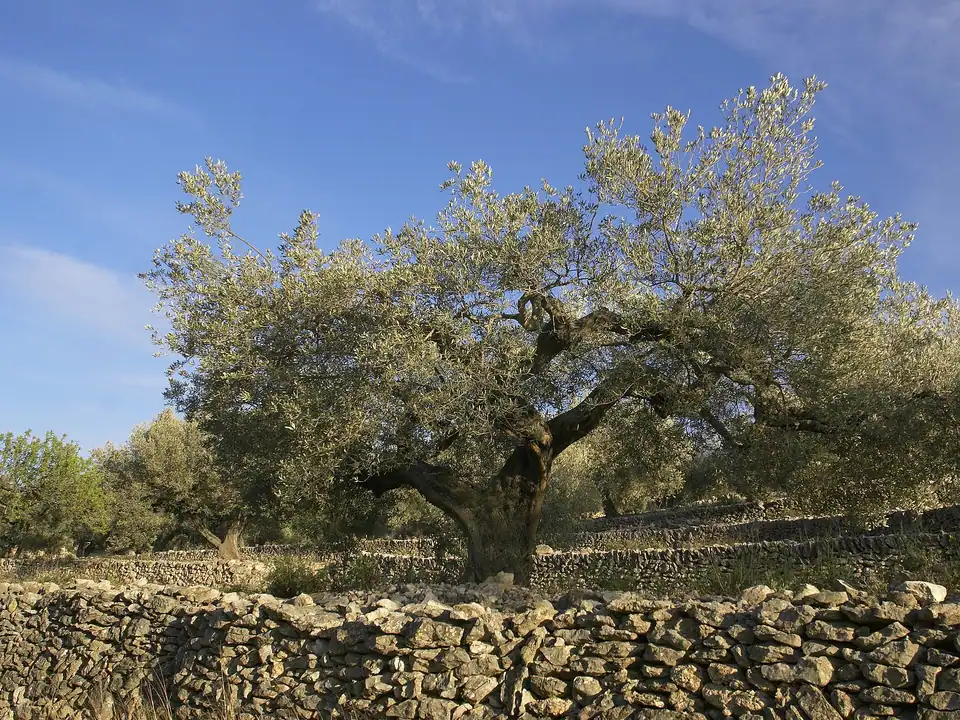
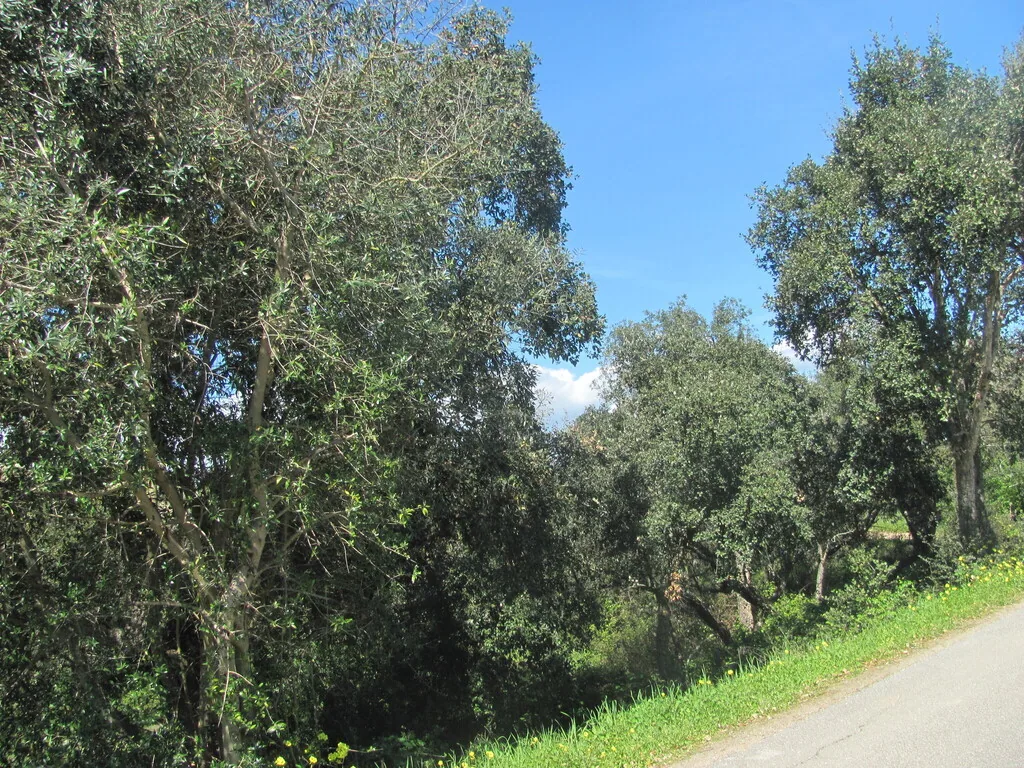

Cómo cultivar y cuidar Olivo y olivera
Olea europaea
Escrito por Emilio Marruso · última revisión
De un vistazo
El olivo adora los veranos cálidos y secos y los inviernos suaves y lluviosos, y una vez arraigado aguanta la sequía gracias a sus hojas pequeñas y protegidas. Dale sol pleno y suelo bien drenado, planta dos variedades distintas juntas y podrás recoger aceitunas verdes o de color negro violáceo. Recién cogidas amargan demasiado: prepáralas en conserva o prénsalas para hacer aceite.
- Sol
Sol pleno: 6 horas o más al día
Qué dicen las fuentes (1)
Luz: Pleno sol (6 o más horas de luz solar directa al día)
Full sun (6 or more hours of direct sunlight a day)
— Olea europaea (Common Olive, European Olive, Olive) | North Carolina Extension Gardener Plant Toolbox [1] - Riego
Riego moderado, aguanta la sequía una vez arraigado; el exceso de agua pudre raíces y tira las flores
Qué dicen las fuentes (5)
Riego: Humedad media; tolerante a la sequía una vez establecida
Olive prefers fertile, well-drained soils with average moisture in full sun. They are drought tolerant once established.
— Olea europaea (Common Olive, European Olive, Olive) | North Carolina Extension Gardener Plant Toolbox [1] Notas sobre el riego: El exceso de agua por riego o lluvia hace que los árboles sean susceptibles a la pudrición de la raíz y provoca que las flores se caigan antes de que se forme el fruto; la humedad excesiva puede reducir el cuaje de frutos
Too much water from irrigation or rain will make trees susceptible to root-rot disease and damage production by causing flowers to drop before they form fruits.
— Olives – Gardening Solutions [4] Excessive moisture may cause flowers to drop and reduce fruit set.
— Growing Olive Tree in Florida - UF/IFAS Extension St. Lucie County [5] Sequía: Tolerante a la sequía una vez establecido: las hojas pequeñas tienen una cutícula protectora que retarda la pérdida de agua, lo que permite que los árboles sobrevivan a períodos secos prolongados.
They are drought tolerant once established. It can be grown outdoors in zones 8 to 10
— Olea europaea (Common Olive, European Olive, Olive) | North Carolina Extension Gardener Plant Toolbox [1] Olive leaves are relatively small and have a protective cuticle which slows water loss, allowing olives to survive extended dry periods.
— [7] - Frío
Aguanta inviernos de hasta −12,2 °C (10 °F)
Rústica en inviernos fríos · USDA 8a · RHS H5 · Z8
Qué dicen las fuentes (7)
Rusticidad, zona más fría: 8a [mínima invernal de −12,2 a −9,4 °C (de 10 a 15 °F)]
Según NC State Extension (species): USDA Plant Hardiness Zone: 8a, 8b, 9a, 9b, 10a, 10b
— Olea europaea (Common Olive, European Olive, Olive) | North Carolina Extension Gardener Plant Toolbox [1] Cultivares disponibles (fuente: NC State Extension): There are cultivars available that may be grown in plant hardiness zones 7a and 7b.
— Olea europaea (Common Olive, European Olive, Olive) | North Carolina Extension Gardener Plant Toolbox [1] USDA Plant Hardiness Zone: 8a, 8b, 9a, 9b, 10a, 10b
— Olea europaea (Common Olive, European Olive, Olive) | North Carolina Extension Gardener Plant Toolbox [1] It can be grown outdoors in zones 8 to 10 or brought indoors or into a greenhouse in colder areas.
— Olea europaea (Common Olive, European Olive, Olive) | North Carolina Extension Gardener Plant Toolbox [1] Rusticidad, zona más cálida: 10b [mínima invernal de 1,7 a 4,4 °C (de 35 a 40 °F)]
Cultivares disponibles (fuente: NC State Extension): There are cultivars available that may be grown in plant hardiness zones 7a and 7b.
— Olea europaea (Common Olive, European Olive, Olive) | North Carolina Extension Gardener Plant Toolbox [1] USDA Plant Hardiness Zone: 8a, 8b, 9a, 9b, 10a, 10b
— Olea europaea (Common Olive, European Olive, Olive) | North Carolina Extension Gardener Plant Toolbox [1] It can be grown outdoors in zones 8 to 10 or brought indoors or into a greenhouse in colder areas.
— Olea europaea (Common Olive, European Olive, Olive) | North Carolina Extension Gardener Plant Toolbox [1] - Suelo
Suelo bien drenado, para que no se pudran las raíces
- Abonado
Poco nitrógeno: con demasiado da muchos brotes y menos aceitunas, y más tarde
Qué dicen las fuentes (4)
Evitar: Exceso de nitrógeno: impulsa el crecimiento de los brotes a costa de los frutos, retrasa la fructificación y baja la calidad del aceite.
The trees actually thrive in poor soil; excessive nitrogen fertilization can cause too much shoot growth at the expense of fruit production.
— Olives – Gardening Solutions [4] Too much N will cause excessive vegetative growth and delay reproductive growth (fruiting). Also, excessive N will negatively affect oil quality.
— Growing Olive Tree in Florida - UF/IFAS Extension St. Lucie County [5] Signos de exceso: Crecimiento excesivo de brotes y hojas con menos frutos y fructificación retrasada; calidad del aceite más pobre.
The trees actually thrive in poor soil; excessive nitrogen fertilization can cause too much shoot growth at the expense of fruit production.
— Olives – Gardening Solutions [4] Too much N will cause excessive vegetative growth and delay reproductive growth (fruiting). Also, excessive N will negatively affect oil quality.
— Growing Olive Tree in Florida - UF/IFAS Extension St. Lucie County [5] - Poda
Poda a principios de primavera; florece en los brotes del año anterior
Qué dicen las fuentes (3)
Cuándo podar: A principios de primavera; en años alternos, si eliminas las ramas sin flor durante la floración, puedes aumentar el rendimiento de la fruta.
Prune olives in early spring to keep an attractive shape and to remove any dead, diseased or dying branches.
— [8] In off years, pruning during flowering to remove non-flowering branches can increase fruit yield for home gardeners.
— [7] Madera que florece: Florece en madera vieja (el crecimiento del año anterior)
Flowers are produced on small inflorescences that emerge in the axil of the leaf from portions of the stem that grew the previous season
— [7] - Cosecha
Recoge las aceitunas verdes o negro violáceo; crudas amargan, consérvalas o haz aceite
Qué dicen las fuentes (1)
Cosecha: Los frutos se pueden cosechar en la etapa verde o en la etapa madura de color negro púrpura
The fruit is a green drupe that ripens to a purplish-black. The fruits can be harvested at either stage
— Olea europaea (Common Olive, European Olive, Olive) | North Carolina Extension Gardener Plant Toolbox [1] - Polinización
Para tener fruto, planta dos variedades distintas juntas; el viento lleva el polen
Qué dicen las fuentes (4)
Qué necesita: Para la producción de fruta, planta al menos dos variedades distintas cerca una de la otra para que el polen transportado por el viento pueda pasar entre ellas; algunas variedades no pueden polinizarse entre sí.
if fruit production is a primary objective of olive culture, at least two distinct cultivars should be planted in close proximity to each other to facilitate transfer of the wind-borne pollen.
— [7] Cross- pollination from two distinctly different olive cultivars can result in successful fertilization and fruit production, but some varieties are not capable of serving as pollinators
— [7] Lo transportan: Viento
Several varieties of olive are self-fertile and may fertilize their own flowers with their wind-blown pollen.
— [7] Cross-pollination from two distinctly different olive cultivars can result in successful fertilization and fruit production. They are fertilized by the wind.
— Growing Olive Tree in Florida - UF/IFAS Extension St. Lucie County [5] - Plagas
Cochinillas, orugas y chinches; vigila la tuberculosis del olivo, la podredumbre de raíz y la negrilla
Qué dicen las fuentes (4)
Plagas: cochinillas, orugas, saltamontes, gusanos cornudos, chinches apestosas
Monitor the tree for olive knot, verticillium wilt, and root rot. Scale insects may be a problem.
— Olea europaea (Common Olive, European Olive, Olive) | North Carolina Extension Gardener Plant Toolbox [1] The common pests of olive trees in Florida are scale, caterpillar, grasshopper, hornworms, and stink bug.
— Growing Olive Tree in Florida - UF/IFAS Extension St. Lucie County [5] Enfermedades: nudo del olivo, marchitez por verticillium, pudrición de raíces, fumagina
Monitor the tree for olive knot, verticillium wilt, and root rot. Scale insects may be a problem.
— Olea europaea (Common Olive, European Olive, Olive) | North Carolina Extension Gardener Plant Toolbox [1] One of the common fungal problems of olive trees is sooty mold.
— Growing Olive Tree in Florida - UF/IFAS Extension St. Lucie County [5] - Tamaño
De 6 a 9 m de alto y de 4,6 a 7,6 m de ancho
Qué dicen las fuentes (2)
Altura adulta: 610-914 cm (20-30 pies)
It grows 20 to 30 feet tall and 15 to 25 feet wide.
— Olea europaea (Common Olive, European Olive, Olive) | North Carolina Extension Gardener Plant Toolbox [1] Anchura adulta: 457-762 cm (15-25 pies)
It grows 20 to 30 feet tall and 15 to 25 feet wide.
— Olea europaea (Common Olive, European Olive, Olive) | North Carolina Extension Gardener Plant Toolbox [1] - Multiplicación
Esquejes semileñosos, injerto o semilla; los olivos de esqueje o injerto dan fruto a los cuatro años
Qué dicen las fuentes (4)
Propagación: Semilla, esquejes semimaduros, injerto
They are propagated by seed or semi-ripe cutting.
— Olea europaea (Common Olive, European Olive, Olive) | North Carolina Extension Gardener Plant Toolbox [1] Olive trees can be propagated from cuttings or are grafted.
— Growing Olive Tree in Florida - UF/IFAS Extension St. Lucie County [5] Esquejes: Esquejes semimaduros; muchas variedades se cultivan a partir de esquejes o injertos y alcanzan la edad de producción en cuatro años.
for cross-pollination to increase your crop yields. They are propagated by seed or semi-ripe cutting.
— Olea europaea (Common Olive, European Olive, Olive) | North Carolina Extension Gardener Plant Toolbox [1] Many olive cultivars are grown from cuttings or are grafted and will reach bearing age in about four years.
— [7] - Maceta
Crece también en maceta
Qué dicen las fuentes (1)
En maceta: Sí
The olive may be grown as an ornamental, fruit tree, container plant, or used in bonsai.
— Olea europaea (Common Olive, European Olive, Olive) | North Carolina Extension Gardener Plant Toolbox [1]
Resumen
El olivo es un árbol o arbusto de hoja ancha, de hoja perenne y crecimiento lento, que prefiere suelo fértil y bien drenado a pleno sol y es tolerante a la sequía una vez establecido. [1] El exceso de agua por riego o lluvia hace que los olivos sean susceptibles a la pudrición de raíces y puede causar que las flores se caigan antes de que se forme el fruto. [4] El fruto es una drupa verde que madura a negro púrpura, pero las aceitunas suelen ser demasiado amargas para comerlas directamente del árbol. [1][4] Puedes cultivar el olivo como ornamental, frutal, en maceta o como bonsái. [1]
Citado en inglés, como en la fuente.
Esta ficha está incompleta: las fuentes consultadas aún no cubren todos los campos.
Aún no cubierto por nuestras fuentes: Plantación, Distancia de plantación
Cuidados
Riego
Riego
Humedad media; tolerante a la sequía una vez establecida
Qué dicen las fuentes (1)
Olive prefers fertile, well-drained soils with average moisture in full sun. They are drought tolerant once established.Notas sobre el riego
El exceso de agua por riego o lluvia hace que los árboles sean susceptibles a la pudrición de la raíz y provoca que las flores se caigan antes de que se forme el fruto; la humedad excesiva puede reducir el cuaje de frutos
Qué dicen las fuentes (2)
Too much water from irrigation or rain will make trees susceptible to root-rot disease and damage production by causing flowers to drop before they form fruits.Excessive moisture may cause flowers to drop and reduce fruit set.Luz
Pleno sol (6 o más horas de luz solar directa al día)
Qué dicen las fuentes (1)
Full sun (6 or more hours of direct sunlight a day)Clima y frío
Rusticidad, zona más fría
8a [mínima invernal de −12,2 a −9,4 °C (de 10 a 15 °F)]
Lo que dice cada fuente
Según NC State Extension (species): 8a [mínima invernal de −12,2 a −9,4 °C (de 10 a 15 °F)]
Cultivares disponibles (fuente: NC State Extension): 7a [mínima invernal de −17,8 a −15 °C (de 0 a 5 °F)]
Qué dicen las fuentes (4)
Según NC State Extension (species): USDA Plant Hardiness Zone:
8a, 8b, 9a, 9b, 10a, 10bCultivares disponibles (fuente: NC State Extension): There are cultivars available that may be grown in plant hardiness zones 7a and 7b.USDA Plant Hardiness Zone:
8a, 8b, 9a, 9b, 10a, 10bIt can be grown outdoors in zones 8 to 10 or brought indoors or into a greenhouse in colder areas.Rusticidad, zona más cálida
10b [mínima invernal de 1,7 a 4,4 °C (de 35 a 40 °F)]
Lo que dice cada fuente
Cultivares disponibles (fuente: NC State Extension): 7b [mínima invernal de −15 a −12,2 °C (de 5 a 10 °F)]
Qué dicen las fuentes (3)
Cultivares disponibles (fuente: NC State Extension): There are cultivars available that may be grown in plant hardiness zones 7a and 7b.USDA Plant Hardiness Zone:
8a, 8b, 9a, 9b, 10a, 10bIt can be grown outdoors in zones 8 to 10 or brought indoors or into a greenhouse in colder areas.Dónde cultivarla
En interior
Las fuentes dan valores distintos según la región, la zona o las condiciones de cultivo.
Lo que dice cada fuente
Olivo enano · Interior: Coloca la maceta en una ventana orientada al sur, lejos de rejillas de calefacción y corrientes de aire.
Qué dicen las fuentes (1)
Olivo enano · Interior: place the container in a south-facing window but away from any heat vents or drafts.En maceta
Sí
Qué dicen las fuentes (1)
The olive may be grown as an ornamental, fruit tree, container plant, or used in bonsai.Distancia de plantación
No figura en las fuentes consultadas.
Propagación
Semilla, esquejes semimaduros, injerto
Qué dicen las fuentes (2)
They are propagated by seed or semi-ripe cutting.Olive trees can be propagated from cuttings or are grafted.Cultivo
La planta
Ciclo de vida
perenne
Qué dicen las fuentes (1)
Plant Type: Perennial Tree Woody Plant Leaf Characteristics: Broadleaf EvergreenFamilia
Oleaceae
Qué dicen las fuentes (2)
Genus: Olea Species: europaea Family: OleaceaeCommon Names: Olive Origin: Mediterranean Basin (Italy, Spain, Morocco, Greece, France, and Portugal) Family: OleaceaeAltura adulta
610-914 cm (20-30 pies)
Qué dicen las fuentes (1)
It grows 20 to 30 feet tall and 15 to 25 feet wide.Anchura adulta
457-762 cm (15-25 pies)
Qué dicen las fuentes (1)
It grows 20 to 30 feet tall and 15 to 25 feet wide.Cosecha y conservación
Cómo cosechar
Los frutos se pueden cosechar en cualquiera de las dos etapas: verdes, o madurados hasta un tono negro púrpura.
Qué dicen las fuentes (1)
The fruit is a green drupe that ripens to a purplish-black. The fruits can be harvested at either stage and are important commercially as edible fruit, for making olive oil, and fuel.Plagas y enfermedades
Plagas
cochinillas, orugas, saltamontes, gusanos cornudos, chinches apestosas
Qué dicen las fuentes (2)
Monitor the tree for olive knot, verticillium wilt, and root rot. Scale insects may be a problem.The common pests of olive trees in Florida are scale, caterpillar, grasshopper, hornworms, and stink bug.Enfermedades
nudo del olivo, marchitez por verticillium, pudrición de raíces, fumagina
Qué dicen las fuentes (2)
Monitor the tree for olive knot, verticillium wilt, and root rot. Scale insects may be a problem.One of the common fungal problems of olive trees is sooty mold.Abonado
Evitar
Exceso de nitrógeno: impulsa el crecimiento de los brotes a costa de los frutos, retrasa la fructificación y baja la calidad del aceite.
Qué dicen las fuentes (2)
The trees actually thrive in poor soil; excessive nitrogen fertilization can cause too much shoot growth at the expense of fruit production.Too much N will cause excessive vegetative growth and delay reproductive growth (fruiting). Also, excessive N will negatively affect oil quality.Signos de exceso
Crecimiento excesivo de brotes y hojas con menos frutos y fructificación retrasada; calidad del aceite más pobre.
Qué dicen las fuentes (2)
The trees actually thrive in poor soil; excessive nitrogen fertilization can cause too much shoot growth at the expense of fruit production.Too much N will cause excessive vegetative growth and delay reproductive growth (fruiting). Also, excessive N will negatively affect oil quality.Distancias
Entre plantas
Las fuentes dan valores distintos según la región, la zona o las condiciones de cultivo.
Lo que dice cada fuente
podado como seto: 2.44-3.05 m [8–10 ft] entre plantas en la hilera
huertos comerciales (Florida): 2.44-6.1 m [8–20 ft] en la hilera
en contenedores: Macetas de 30-35 cm [12–14 in] o más grandes, llenas de compost arenoso a base de marga
Qué dicen las fuentes (3)
podado como seto: Olives can also be maintained with appropriate pruning as hedges in various configurations with 8–10 ft between plants in a row.huertos comerciales (Florida): commercial spacing ranges from 8–20 ft (in row) x 16–25 ft (between rows), with an average hedgerow spacing of about 10 ft × 20 ft.en contenedores: plant in 30-35cm (12-14in) pots (or large enough to accommodate roots comfortably) filled with gritty, loam-based compostEntre hileras
Las fuentes dan valores distintos según la región, la zona o las condiciones de cultivo.
Lo que dice cada fuente
huertos comerciales (Florida): 4.88-7.62 m [16–25 ft] entre hileras
Qué dicen las fuentes (1)
huertos comerciales (Florida): commercial spacing ranges from 8–20 ft (in row) x 16–25 ft (between rows), with an average hedgerow spacing of about 10 ft × 20 ft.Propagación
Esquejes
Esquejes semimaduros; muchas variedades se cultivan a partir de esquejes o injertos y alcanzan la edad de producción en cuatro años.
Qué dicen las fuentes (2)
for cross-pollination to increase your crop yields. They are propagated by seed or semi-ripe cutting.Many olive cultivars are grown from cuttings or are grafted and will reach bearing age in about four years.Calor y sequía
Calor
Rinde mejor en veranos calurosos y secos e inviernos suaves y húmedos.
Qué dicen las fuentes (1)
Olive performs best in hot/dry summers and mild/wet winters. Olive prefers fertile, well-drained soilsSequía
Tolerante a la sequía una vez establecido: las hojas pequeñas tienen una cutícula protectora que retarda la pérdida de agua, lo que permite que los árboles sobrevivan a períodos secos prolongados.
Qué dicen las fuentes (2)
They are drought tolerant once established. It can be grown outdoors in zones 8 to 10Olive leaves are relatively small and have a protective cuticle which slows water loss, allowing olives to survive extended dry periods.Polinización
Cuajado
Las fuentes no coinciden:
Lo que dice cada fuente
cultivar 'Leccino', 'Pendolino', 'Moraiolo', 'Maurino': No autofértil: necesita polen de otra variedad
Qué dicen las fuentes (1)
cultivar 'Leccino', 'Pendolino', 'Moraiolo', 'Maurino': The olive cultivars ‘Leccino’, ‘Pendolino’, ‘Moraiolo’, and ‘Maurino’ are self-sterile and require a source of pollen from another cultivar.Qué necesita
Para la producción de fruta, planta al menos dos variedades distintas cerca una de la otra para que el polen transportado por el viento pueda pasar entre ellas; algunas variedades no pueden polinizarse entre sí.
Qué dicen las fuentes (2)
if fruit production is a primary objective of olive culture, at least two distinct cultivars should be planted in close proximity to each other to facilitate transfer of the wind-borne pollen.Cross- pollination from two distinctly different olive cultivars can result in successful fertilization and fruit production, but some varieties are not capable of serving as pollinatorsLo transportan
Viento
Qué dicen las fuentes (2)
Several varieties of olive are self-fertile and may fertilize their own flowers with their wind-blown pollen.Cross-pollination from two distinctly different olive cultivars can result in successful fertilization and fruit production. They are fertilized by the wind.Poda
Madera que florece
Florece en madera vieja (el crecimiento del año anterior)
Qué dicen las fuentes (1)
Flowers are produced on small inflorescences that emerge in the axil of the leaf from portions of the stem that grew the previous seasonCuándo podar
A principios de primavera; en años alternos, si eliminas las ramas sin flor durante la floración, puedes aumentar el rendimiento de la fruta.
Poda drástica
Responde a la poda radical para controlar la altura o la forma, pero deben considerarse los efectos sobre la floración y la fructificación.
Qué dicen las fuentes (1)
Olive trees will respond to radical pruning to control either height or plant form, but the impacts on flowering and fruiting should be considered.Frío invernal
Horas de frío
100–300 horas entre 0 y 7.2 °C [32–45 °F]
Lo que dice cada fuente
especie «Olive»: 100–200 horas
especie «olives»: 200–300 horas
Qué dicen las fuentes (6)
especie «Olive»: Olive Chill hours: 100 to 200 Olive trees are grown ornamentally in all three zones.especie «olives»: Olive varieties have different chill hours but in general, olives need 200-300 hours of chilling.Olive Chill hours: 100 to 200 Olive trees are grown ornamentally in all three zones.Olive varieties have different chill hours but in general, olives need 200-300 hours of chilling.Chill hours are accumulated from November through February when temperatures are between 32° and 45°F.Chill hours are a number of cold hours that a tree accumulates (usually below 45 °F, but sometimes occurs also above 45 °F to about 55°F)Problemas
Podredumbre de la raíz
Qué hacer: Planta en un lugar soleado con suelo bien drenado y evita el exceso de agua
Qué dicen las fuentes (2)
Plant your olive trees in a sunny spot with well-drained soil.
— Olives – Gardening Solutions [4] Monitor the tree for olive knot, verticillium wilt, and root rot. Scale insects may be a problem.
— Olea europaea (Common Olive, European Olive, Olive) | North Carolina Extension Gardener Plant Toolbox [1] Insectos escama y que se alimentan de las hojas
Qué hacer: Vigila el árbol y aborda los problemas temprano
Qué dicen las fuentes (1)
Additionally, leaves can be damaged by caterpillars and grasshoppers.
— Olives – Gardening Solutions [4] Moho fuliginoso
Qué hacer: Controla los insectos que están excretando la melaza
Qué dicen las fuentes (1)
The best approach to control sooty mold is to manage the insects that are excreting the honeydew.
— Growing Olive Tree in Florida - UF/IFAS Extension St. Lucie County [5] Pudrición de raíces tras un exceso de agua
Síntoma: El exceso de riego o lluvia hace que los olivos sean susceptibles a la pudrición de raíces.
Qué dicen las fuentes (1)
Too much water from irrigation or rain will make trees susceptible to root-rot disease
— Olives – Gardening Solutions [4]
Remedios
Cada remedio indica qué dicen las fuentes oficiales; los remedios tradicionales sin fuente oficial aparecen marcados. Los perjudiciales están para que sepas evitarlos.
Cuidar la planta
cochinillas
spray de aceite de neem Funciona
Despite these being biological pesticides, it is important to read the directions on the label and wear safety equipment.
— extension.illinois.edu [11] Cómo: controles orgánicos como el aceite de neem para infestaciones menores
Inspect your tree regularly and use organic controls like neem oil or insecticidal soap for minor infestations.
— treecarezone.com [10] Qué dicen las pruebas Neem oil is found in the seeds of the neem tree. The active component found in this biological pesticide reduces insect feeding, interferes with hormones
— extension.illinois.edu [11]
ácaros araña
spray de aceite de neem Funciona
Despite these being biological pesticides, it is important to read the directions on the label and wear safety equipment.
— extension.illinois.edu [11] Cómo: revisa debajo de las hojas y trata con aceite de neem
Check for scale or spider mites under leaves. Treat with neem oil.
— treecarezone.com [10] Qué dicen las pruebas Neem oil is found in the seeds of the neem tree. The active component found in this biological pesticide reduces insect feeding, interferes with hormones
— extension.illinois.edu [11]
marchitez por verticillium
Elimina las ramas afectadas No verificado
Remedio tradicional, no verificado por una fuente oficial.
Cómo: Retira las ramas afectadas de inmediato para evitar la propagación; asegura un buen drenaje y evita el riego excesivo.
Calendario
Plantación
No figura en las fuentes consultadas.
Cosecha
Los frutos se pueden cosechar en la etapa verde o en la etapa madura de color negro púrpura
Qué dicen las fuentes (1)
The fruit is a green drupe that ripens to a purplish-black. The fruits can be harvested at either stagePoda
Poda las ramas sin flor durante la temporada de floración, aprovechando los años de menor producción
Qué dicen las fuentes (1)
Take advantage of the lower-producing years by pruning non-flowering branches during the flowering season.Meses tal como los dan las fuentes, en su mayoría de Estados Unidos (hemisferio norte). En el hemisferio sur se desplazan unos seis meses.
Comestibilidad
Según la fuente, citada textualmente. No comas una planta basándote solo en esta página: los errores de identificación pueden ser peligrosos.
Valores orientativos
Valores de una fuente secundaria, no comprobados palabra por palabra como el resto de esta página. Úselos como punto de partida.
- Horas de sol
- 6-8 horasValor orientativo, adáptalo a tu clima · Fuente secundaria · Dato de la variedad Olea europaea 'Arbequina'
- Resiste la sequía
- SíValor orientativo, adáptalo a tu clima · Fuente secundaria · Dato de la variedad Olea europaea 'Arbequina'
- Suelo
- Bien drenadoValor orientativo, adáptalo a tu clima · Fuente secundaria · Dato de la variedad Olea europaea 'Arbequina'
- pH del suelo
- 6-8.5Valor orientativo, adáptalo a tu clima · Fuente secundaria · Dato de la variedad Olea europaea 'Arbequina'
- Nivel de cuidado
- ModeradoValor orientativo, adáptalo a tu clima · Fuente secundaria · Dato de la variedad Olea europaea 'Arbequina'
- Crecimiento
- ModeradoValor orientativo, adáptalo a tu clima · Fuente secundaria · Dato de la variedad Olea europaea 'Arbequina'
Plantas similares
- Amur privet Ligustrum amurense
- Fresno negro Fraxinus nigra
- Fresno azul Fraxinus quadrangulata
- Chinese Fringetree Chionanthus retusus
- Aligustrina Ligustrum sinense
- Jazmín morisco Jasminum officinale
- Common Yellow Jasmine Chrysojasminum fruticans
- Delavay Tea Olive Osmanthus delavayi
Fuentes
Cada valor anterior se cita de estos documentos. Los enlaces llevan al editor original.
- Olea europaea (Common Olive, European Olive, Olive) | North Carolina Extension Gardener Plant Toolbox · plants.ces.ncsu.edu, consultado
- Common Olive - Olea europaea | North Carolina Extension Gardener Plant Toolbox · plants.ces.ncsu.edu, consultado
- Olive - Olea europaea | North Carolina Extension Gardener Plant Toolbox · plants.ces.ncsu.edu, consultado
- Olives – Gardening Solutions · gardeningsolutions.ifas.ufl.edu, consultado
- Growing Olive Tree in Florida - UF/IFAS Extension St. Lucie County · blogs.ifas.ufl.edu, consultado
- University of Illinois Extension — Houseplants to grow on your kitchen counter · extension.illinois.edu, consultado
- edis.ifas.ufl.edu · edis.ifas.ufl.edu
- rhs.org.uk · rhs.org.uk
- escholarship.org · escholarship.org
- treecarezone.com · treecarezone.com
- extension.illinois.edu · extension.illinois.edu
Escrito por Emilio Marruso · última revisión