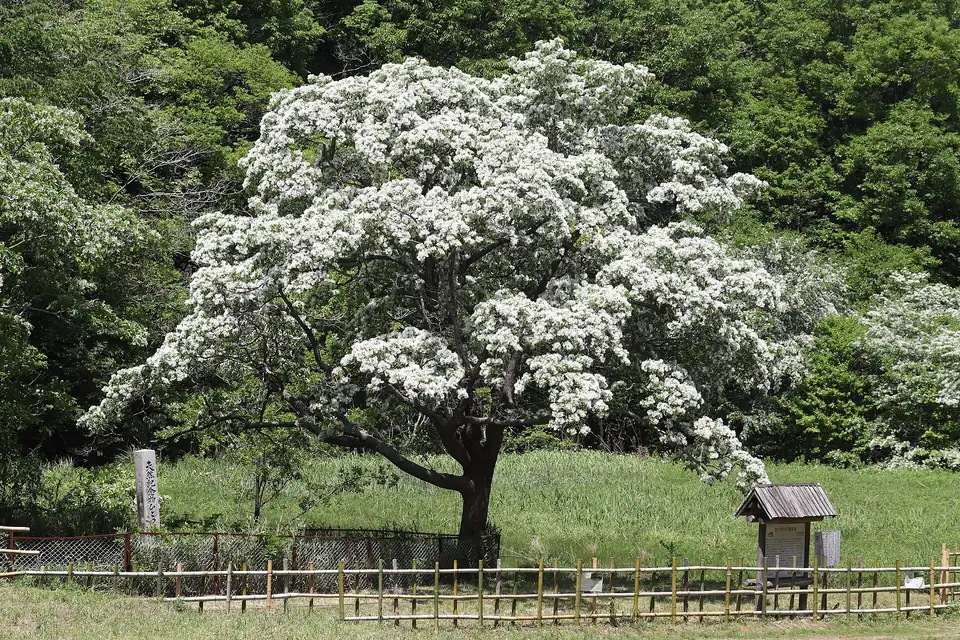


Cómo cultivar y cuidar Chinese Fringetree
Chionanthus retusus
Escrito por Emilio Marruso · última revisión
De un vistazo
Este árbol alcanza de 3 a 9 m de alto y otro tanto de ancho. Florece con más abundancia a pleno sol, aunque sus hojas lucen mejor con algo de sombra suave. Dale un suelo húmedo, profundo y con buen drenaje y se sentirá como en casa. Eso sí, no dejes que se seque, porque no tolera la sequía.
- Sol
Sol pleno a semisombra; florece más a pleno sol
Qué dicen las fuentes (2)
Luz: Pleno sol a semisombra; la floración es más abundante a pleno sol, el follaje se ve mejor con algo de sombra ligera
Grow the Chinese fringetree in a location with full sun or partial shade.
— Chionanthus retusus (Chinese Fringetree, Chinese Fringe Tree) | North Carolina Extension Gardener Plant Toolbox [1] The lustrous, leathery foliage looks best when grown in some light shade (dappled sunlight), while the flowering is heaviest when planted in full sun.
— Chionanthus retusus (Chinese Fringetree, Chinese Fringe Tree) | North Carolina Extension Gardener Plant Toolbox [1] - Riego
Mantén la tierra húmeda: no tolera la sequía, y el encharcamiento pudre las raíces
Qué dicen las fuentes (3)
Riego: Prefiere suelos húmedos, profundos y bien drenados; intolerante a la sequía y a los suelos secos
they prefer moist, deep, well-drained, acidic soils.
— Fringetree | Home & Garden Information Center [3] #flowering tree #dry soils intolerant #air pollution tolerant #deer browsing plant #urban conditions tolerant #drought intolerant
— Chionanthus retusus (Chinese Fringetree, Chinese Fringe Tree) | North Carolina Extension Gardener Plant Toolbox [1] Notas sobre el riego: El mal drenaje puede provocar pudrición de raíces por Phytophthora; el estrés, especialmente la sequía, puede causar muerte regresiva por Botryosphaeria
Phytophthora root rot can occur on plants in soil with poor drainage. Botryosphaeria dieback may occur on plants that are stressed, particularly by drought.
— Fringetree | Home & Garden Information Center [3] - Frío
Aguanta inviernos de hasta −28,9 °C (−20 °F)
Muy rústica · USDA 5a · RHS H7 · Z5
Qué dicen las fuentes (2)
Rusticidad, zona más fría: 5a [mínima invernal de −28,9 a −26,1 °C (de −20 a −15 °F)]
USDA Plant Hardiness Zone: 5a, 5b, 6a, 6b, 7a, 7b, 8a, 8b, 9a, 9b
— Chionanthus retusus (Chinese Fringetree, Chinese Fringe Tree) | North Carolina Extension Gardener Plant Toolbox [1] Rusticidad, zona más cálida: 9b [mínima invernal de −3,9 a −1,1 °C (de 25 a 30 °F)]
USDA Plant Hardiness Zone: 5a, 5b, 6a, 6b, 7a, 7b, 8a, 8b, 9a, 9b
— Chionanthus retusus (Chinese Fringetree, Chinese Fringe Tree) | North Carolina Extension Gardener Plant Toolbox [1] - Suelo
Suelo húmedo, profundo y con buen drenaje, con pH de 6,0 o menos
Qué dicen las fuentes (3)
Riego: Prefiere suelos húmedos, profundos y bien drenados; intolerante a la sequía y a los suelos secos
they prefer moist, deep, well-drained, acidic soils.
— Fringetree | Home & Garden Information Center [3] #flowering tree #dry soils intolerant #air pollution tolerant #deer browsing plant #urban conditions tolerant #drought intolerant
— Chionanthus retusus (Chinese Fringetree, Chinese Fringe Tree) | North Carolina Extension Gardener Plant Toolbox [1] pH del suelo, máximo: 6.0
Soil pH: Acid (<6.0) Soil Drainage: Good Drainage Moist
— Chionanthus retusus (Chinese Fringetree, Chinese Fringe Tree) | North Carolina Extension Gardener Plant Toolbox [1] - Plagas
Barrenadores, ácaros y cochinillas; manchas en las hojas, chancro y oídio
Qué dicen las fuentes (3)
Plagas: barrenadores, ácaros, escamas
Scale can be controlled with horticultural oil sprays. Mites are pests in full sun locations. A borer is the most serious insect pest. Borers are more likely to attack trees that are already stressed or have wounds.
— Fringetree | Home & Garden Information Center [3] Enfermedades: mancha foliar, cancro, mildiu polvoriento, pudrición de raíz por Phytophthora, muerte regresiva por Botryosphaeria
Leaf spot, canker and powdery mildew are an occasional issue. Borers, mites and scale are a minor issue.
— Chionanthus retusus (Chinese Fringetree, Chinese Fringe Tree) | North Carolina Extension Gardener Plant Toolbox [1] Phytophthora root rot can occur on plants in soil with poor drainage. Botryosphaeria dieback may occur on plants that are stressed, particularly by drought. Powdery mildew and leaf spots can occasionally be problems.
— Fringetree | Home & Garden Information Center [3] - Atención
Los ciervos lo dañan con frecuencia
- Tamaño
De 3 a 9 m de alto y de ancho
Qué dicen las fuentes (2)
Altura adulta: 305-914 cm (10-30 pies)
Dimensions: Height: 10 ft. 0 in. - 30 ft. 0 in. Width: 10 ft. 0 in. - 30 ft. 0 in.
— Chionanthus retusus (Chinese Fringetree, Chinese Fringe Tree) | North Carolina Extension Gardener Plant Toolbox [1] Anchura adulta: 305-914 cm (10-30 pies)
Dimensions: Height: 10 ft. 0 in. - 30 ft. 0 in. Width: 10 ft. 0 in. - 30 ft. 0 in.
— Chionanthus retusus (Chinese Fringetree, Chinese Fringe Tree) | North Carolina Extension Gardener Plant Toolbox [1] - Multiplicación
Se multiplica sobre todo por semilla
Qué dicen las fuentes (2)
Propagación: Generalmente por semilla; algunos árboles se injertan sobre portainjertos de fresno
Propagation of fringetrees is usually by seed. Seeds are planted in fall with young trees sprouting the second spring after planting.
— Fringetree | Home & Garden Information Center [3] Some trees are grafted onto ash understocks.
— Fringetree | Home & Garden Information Center [3] - Siembra
Siembra las semillas en otoño
Qué dicen las fuentes (1)
Siembra: Otoño
Propagation of fringetrees is usually by seed. Seeds are planted in fall with young trees sprouting the second spring after planting.
— Fringetree | Home & Garden Information Center [3]
Resumen
El árbol de las barbas chino es un árbol caducifolio o arbusto grande originario de Corea, China, Taiwán y Japón que produce vistosos racimos de flores blancas cada primavera. [1] Crece a pleno sol o semisombra y se adapta a diversos tipos de suelo. [1] Los ciervos lo dañan con frecuencia, pero no tiene problemas graves de insectos ni enfermedades. [1]
Citado en inglés, como en la fuente.
Esta ficha está incompleta: las fuentes consultadas aún no cubren todos los campos.
Aún no cubierto por nuestras fuentes: Poda
Cuidados
Riego
Riego
Prefiere suelos húmedos, profundos y bien drenados; intolerante a la sequía y a los suelos secos
Qué dicen las fuentes (2)
they prefer moist, deep, well-drained, acidic soils.#flowering tree #dry soils intolerant #air pollution tolerant #deer browsing plant #urban conditions tolerant #drought intolerantNotas sobre el riego
El mal drenaje puede provocar pudrición de raíces por Phytophthora; el estrés, especialmente la sequía, puede causar muerte regresiva por Botryosphaeria
Qué dicen las fuentes (1)
Phytophthora root rot can occur on plants in soil with poor drainage. Botryosphaeria dieback may occur on plants that are stressed, particularly by drought.Luz
Pleno sol a semisombra; la floración es más abundante a pleno sol, el follaje se ve mejor con algo de sombra ligera
Qué dicen las fuentes (2)
Grow the Chinese fringetree in a location with full sun or partial shade.The lustrous, leathery foliage looks best when grown in some light shade (dappled sunlight), while the flowering is heaviest when planted in full sun.Clima y frío
Rusticidad, zona más fría
5a [mínima invernal de −28,9 a −26,1 °C (de −20 a −15 °F)]
Qué dicen las fuentes (1)
USDA Plant Hardiness Zone:
5a, 5b, 6a, 6b, 7a, 7b, 8a, 8b, 9a, 9bRusticidad, zona más cálida
9b [mínima invernal de −3,9 a −1,1 °C (de 25 a 30 °F)]
Qué dicen las fuentes (1)
USDA Plant Hardiness Zone:
5a, 5b, 6a, 6b, 7a, 7b, 8a, 8b, 9a, 9bSuelo
6.0
Qué dicen las fuentes (1)
Soil pH:
Acid (<6.0)
Soil Drainage:
Good Drainage
MoistPropagación
Generalmente por semilla; algunos árboles se injertan sobre portainjertos de fresno
Qué dicen las fuentes (2)
Propagation of fringetrees is usually by seed. Seeds are planted in fall with young trees sprouting the second spring after planting.Some trees are grafted onto ash understocks.Cultivo
La planta
Ciclo de vida
perenne
Qué dicen las fuentes (1)
Whole Plant Traits:
Plant Type:
Perennial
Shrub
Tree
Woody Plant Leaf Characteristics:Familia
Oleaceae
Qué dicen las fuentes (1)
Genus:
Chionanthus
Species:
retusus
Family:
Oleaceae
Uses (Ethnobotany):
Ideal for a rain garden and for fall color.
Life Cycle:
WoodyAltura adulta
305-914 cm (10-30 pies)
Qué dicen las fuentes (1)
Dimensions:
Height: 10 ft. 0 in. - 30 ft. 0 in.
Width: 10 ft. 0 in. - 30 ft. 0 in.Anchura adulta
305-914 cm (10-30 pies)
Qué dicen las fuentes (1)
Dimensions:
Height: 10 ft. 0 in. - 30 ft. 0 in.
Width: 10 ft. 0 in. - 30 ft. 0 in.Plagas y enfermedades
Plagas
barrenadores, ácaros, escamas
Qué dicen las fuentes (1)
Scale can be controlled with horticultural oil sprays. Mites are pests in full sun locations. A borer is the most serious insect pest. Borers are more likely to attack trees that are already stressed or have wounds.Enfermedades
mancha foliar, cancro, mildiu polvoriento, pudrición de raíz por Phytophthora, muerte regresiva por Botryosphaeria
Qué dicen las fuentes (2)
Leaf spot, canker and powdery mildew are an occasional issue. Borers, mites and scale are a minor issue.Phytophthora root rot can occur on plants in soil with poor drainage. Botryosphaeria dieback may occur on plants that are stressed, particularly by drought. Powdery mildew and leaf spots can occasionally be problems.Problemas
Daño por ciervos
Síntoma: Los ciervos lo dañan con frecuencia
Qué dicen las fuentes (1)
Insect Disease and other Pest Problems: Frequently damaged by deer. No serious insect pests or diseases.
— Chionanthus retusus (Chinese Fringetree, Chinese Fringe Tree) | North Carolina Extension Gardener Plant Toolbox [1] Enfermedades ocasionales y plagas menores
Síntoma: Mancha foliar, cancro y oídio ocasionalmente; barrenadores, arañitas rojas y cochinillas son menores
Qué dicen las fuentes (1)
Leaf spot, canker and powdery mildew are an occasional issue. Borers, mites and scale are a minor issue.
— Chionanthus retusus (Chinese Fringetree, Chinese Fringe Tree) | North Carolina Extension Gardener Plant Toolbox [1] Cochinillas y arañitas rojas
Síntoma: Cochinillas; arañitas rojas en lugares a pleno sol
Qué hacer: Las cochinillas se pueden controlar con aspersiones de aceite hortícola
Qué dicen las fuentes (1)
Scale can be controlled with horticultural oil sprays. Mites are pests in full sun locations.
— Fringetree | Home & Garden Information Center [3]
Remedios
Cada remedio indica qué dicen las fuentes oficiales; los remedios tradicionales sin fuente oficial aparecen marcados. Los perjudiciales están para que sepas evitarlos.
Cuidar la planta
cochinilla
jabón insecticida Funciona en parte
Cómo: Rociado de contacto sobre los rastreadores; la mayoría de los jardineros nunca los nota y pierde la oportunidad.
Crawlers can be controlled with contact insecticides such as insecticidal soap or malathion, but most gardeners never notice them and miss the opportunity.
— lsuagcenter.com [4] Qué dicen las pruebas Crawlers can be controlled with contact insecticides such as insecticidal soap or malathion, but most gardeners never notice them and miss the opportunity.
— lsuagcenter.com [4] spray de aceite hortícola Funciona
Oil sprays are best used when the temperature is between 45 and 85 degrees, and they should only be applied to plants that are not in stress.
— lsuagcenter.com [4] Cómo: Aplica el rociado de aceite sobre toda la superficie de la planta, con una o dos aplicaciones de seguimiento.
The safest effective way to control scale is with a horticultural oil spray.
— lsuagcenter.com [4] Qué dicen las pruebas The safest effective way to control scale is with a horticultural oil spray.
— lsuagcenter.com [4]
mildiu polvoriento
rociado con bicarbonato de sodio No verificado
Remedio tradicional, no verificado por una fuente oficial.
Always test a spray on a few leaves before spraying the full plant or plants.
— farmersalmanac.com [5] Cómo: Una cucharada de bicarbonato de sodio con 1/2 cucharadita de jabón líquido para lavar platos en un galón de agua.
rociado con leche No verificado
Remedio tradicional, no verificado por una fuente oficial.
Always test a spray on a few leaves before spraying the full plant or plants.
— farmersalmanac.com [5] Cómo: Una parte de leche por dos partes de agua, mejor aplicado cada semana.
Rocía con vinagre No verificado
Remedio tradicional, no verificado por una fuente oficial.
Always test a spray on a few leaves before spraying the full plant or plants.
— farmersalmanac.com [5] Cómo: Dos o tres cucharadas de vinagre de sidra de manzana en un galón de agua.
aceite de neem Funciona en parte
Always test a spray on a few leaves before spraying the full plant or plants.
— farmersalmanac.com [5] Cómo: Sigue las instrucciones de la etiqueta.
Neem oil: Follow the instructions on the label for application.
— farmersalmanac.com [5] Qué dicen las pruebas However, neem oil is not effective against every insect and disease, and often must be frequently reapplied to reach the desired outcome.
— extension.unh.edu [6] poda de invierno para la circulación del aire Fuente oficial, sin prueba independiente
Cómo: Poda durante el invierno para aumentar la penetración de luz y mejorar la circulación del aire.
Prune the tree or shrub during winter months to increase light penetration and improve air circulation throughout the canopy.
— extension.umn.edu [7]
daño por ciervos
Rociado con huevo Fuente oficial, sin prueba independiente
Cómo: Mezcla 2 huevos con agua fría, añade a un galón de agua, deja reposar 24 horas y luego rocía sobre el follaje.
Blend 2 eggs and a cup or two or cold water at high speed. Add this mixture to a gallon of water and let it stand for 24 hours. After 24 hours, spray on foliage.
— ask.extension.org [8]
Calendario
Siembra
Otoño
Qué dicen las fuentes (1)
Propagation of fringetrees is usually by seed. Seeds are planted in fall with young trees sprouting the second spring after planting.Poda
No figura en las fuentes consultadas.
Meses tal como los dan las fuentes, en su mayoría de Estados Unidos (hemisferio norte). En el hemisferio sur se desplazan unos seis meses.
Valores orientativos
Valores de una fuente secundaria, no comprobados palabra por palabra como el resto de esta página. Úselos como punto de partida.
- Nivel de cuidado
- MedioValor orientativo, adáptalo a tu clima · Fuente secundaria
- Crecimiento
- BajoValor orientativo, adáptalo a tu clima · Fuente secundaria
- Poda
- Febrero, marzo, abril, mayoValor orientativo, adáptalo a tu clima · Fuente secundaria
Plantas similares
- Fringetree Chionanthus virginicus
- Amur privet Ligustrum amurense
- Fresno negro Fraxinus nigra
- Fresno azul Fraxinus quadrangulata
- Aligustrina Ligustrum sinense
- Jazmín morisco Jasminum officinale
- Common Yellow Jasmine Chrysojasminum fruticans
- Delavay Tea Olive Osmanthus delavayi
Fuentes
Cada valor anterior se cita de estos documentos. Los enlaces llevan al editor original.
- Chionanthus retusus (Chinese Fringetree, Chinese Fringe Tree) | North Carolina Extension Gardener Plant Toolbox · plants.ces.ncsu.edu, consultado
- Chinese Fringe Tree - Chionanthus retusus | North Carolina Extension Gardener Plant Toolbox · plants.ces.ncsu.edu, consultado
- Fringetree | Home & Garden Information Center · hgic.clemson.edu, consultado
- lsuagcenter.com · lsuagcenter.com
- farmersalmanac.com · farmersalmanac.com
- extension.unh.edu · extension.unh.edu
- extension.umn.edu · extension.umn.edu
- ask.extension.org · ask.extension.org
Escrito por Emilio Marruso · última revisión