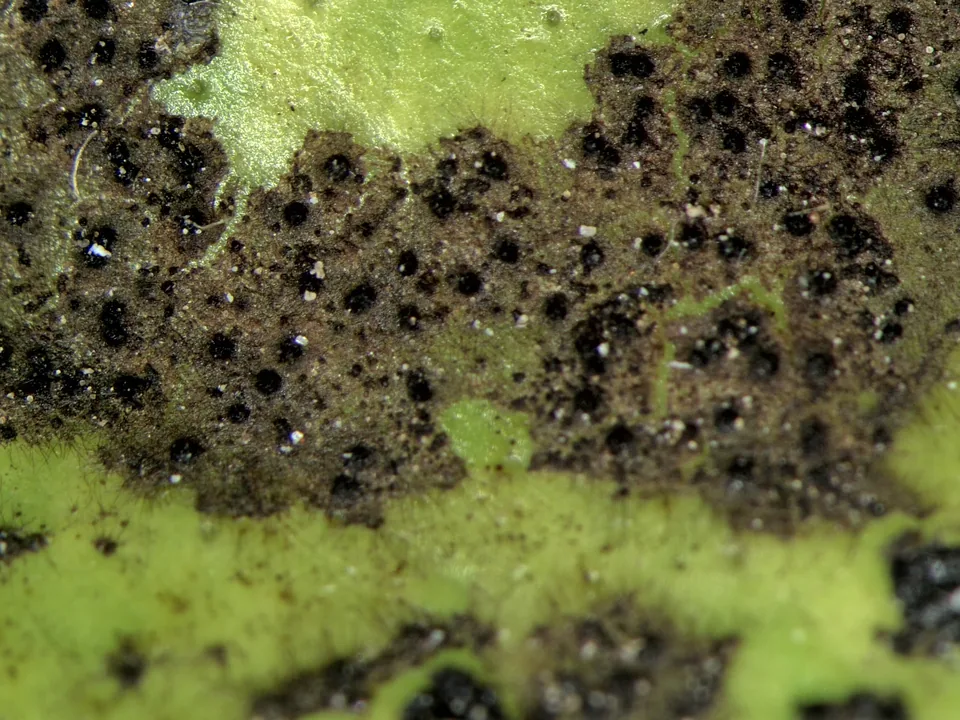
Fungus
Sooty mold
Capnodiaceae
Written by Emilio Marruso
Classification: Ascomycota › Pezizomycotina › Dothideomycetes › Dothideomycetidae › Capnodiales
Plants it attacks
Plants in our guide where this problem is reported. Open a plant to see the sources.
- Norfolk Island Pine
Symptom: Susceptible to scale, sooty mold and leaf spot
- Tropical Milkweed
Symptom: Aphids colonize the plant, which can lead to sooty mold on the leaves.
- Hedge Bamboo
Symptom: Potential diseases listed for this plant
- Deodar Cedar
Symptom: Susceptible to armillaria and phytophthora root rot, sooty mold, beetle borers, pine needle scale and red-headed pine sawfly.
- Lantana
Symptom: Sooty mold causes a blackish discoloration on the leaves and is usually caused by whitefly infestation; powdery mildew occurs if grown in shade
Also reported on: Aloe vera, Apple, Asiatic Jasmine, Beautyberry, Camellia, Crape Myrtle, Curry tree, Cycad, False Holly, Gardenia, Hackberry, Inkberry, Japanese Blueberry Tree, Japanese Ternstroemia, Lemon, Morinda citrifolia, Olive, Sasanqua Camellia, Star Jasmine, Star Magnolia, Sweet orange, Sweet Pitcher Plant, Tea-oil Camellia, To-tsubaki
Remedies
What our plant sheets report, with the outcome checked against official sources. Traditional remedies without an official source are flagged.
Treat
clipping out affected leaves and branches Works
How: Prune affected leaves and branches to improve air circulation and cut out the worst sooty leaves.
Reported for 1 plant: Star Jasmine
mild soap solution wash Works
How: Prevent insect feeding, then use a mild soap solution to wash away the sooty mold.
Reported for 1 plant: Sweet orange
neem oil spray Works
How: An application of neem oil on the tops and undersides of foliage can help control honeydew-producing pests; repeat in 10-14 days depending on the extent of the infestation.
Reported for 1 plant: Lemon
strong stream of water Partly works
How: wash the mold off plants and surfaces with a strong stream of water or soap and water, after reducing the honeydew-producing insects
Reported for 2 plants: To-tsubaki, Japanese Ternstroemia
horticultural oil against the honeydew-producing insects Partly works
How: First suppress the aphids, scales, or other pests excreting the honeydew; horticultural oil also helps loosen sooty molds from the plant surface.
Reported for 1 plant: Beautyberry
horticultural oil spray Partly works
How: Suppress the aphids or scales producing the honeydew first; horticultural oil also helps loosen sooty molds from the plant surface.
Reported for 1 plant: False Holly
pruning Partly works
How: Prune once a year in spring.
Reported for 1 plant: Asiatic Jasmine
soap and water wash Partly works
How: Wipe the coating off with a damp cloth or a mild soap-and-water rinse, and treat the insect producing the honeydew.
Reported for 1 plant: Curry tree
wash off with soapy water Partly works
How: Sooty mold may in some cases be washed off noni leaves with a strong spray of soapy water.
Reported for 1 plant: Morinda citrifolia
control sap-feeding insects and ants Official source, not independently tested
How: To control sooty mold, one must control the sap-feeding insects ( scales , aphids ) which infest the noni plant.
Reported for 1 plant: Morinda citrifolia
damp cloth wiping Official source, not independently tested
How: Control the insect, then gently wipe away the sooty mould with a damp cloth if required.
Reported for 1 plant: Sasanqua Camellia
dish soap solution wash Official source, not independently tested
How: Spray foliage with a dish soap solution (4 ounces per gallon of water), wait three to four minutes, then rinse the foliage with a strong stream of water.
Reported for 1 plant: Crape Myrtle
wiping leaves with a damp cloth Official source, not independently tested
How: control the insect, then gently wipe away the sooty mould with a damp cloth
Reported for 1 plant: Camellia
wiping with a damp cloth Official source, not independently tested
How: Control the insect, then gently wipe the sooty mould away.
Reported for 1 plant: Tea-oil Camellia
dish soap solution and hose rinse Not verified
How: Apply the solution to affected leaves, let it sit about 15 minutes, rinse with a strong jet of water, repeat weekly.
Reported for 1 plant: Inkberry
gentle scrubbing with water Not verified
How: Clean the mold off the leaves with water and a bit of gentle scrubbing.
Reported for 1 plant: Sweet Pitcher Plant
horticultural oil or insecticidal soap Not verified
How: Apply a horticultural oil or insecticidal soap, which smothers the insects.
Reported for 1 plant: Asiatic Jasmine
hose water blast Not verified
How: Spraying the tree with a strong blast of water from a garden hose often removes the mold growth, after the scale insects have been dealt with.
Reported for 1 plant: Japanese Blueberry Tree
mild dish soap solution wipe Not verified
How: If the mold will not rinse off, wipe it with a soft cloth or brush dipped in 1 teaspoon of mild dish soap per 1 gallon of water, testing first on a small hidden section of leaves.
Reported for 1 plant: Japanese Blueberry Tree
soap wash Not verified
How: In severe cases, gently wash the leaves with soapy water to help remove the mold.
Reported for 1 plant: Apple
7 more remedies are reported in single plant sheets.
Where it is found
No distribution data.