

How to Grow and Care for Apple
Malus sylvestris
Written by Emilio Marruso · last checked
Toxic to: Cats, Dogs, Horses, People · Why
At a glance
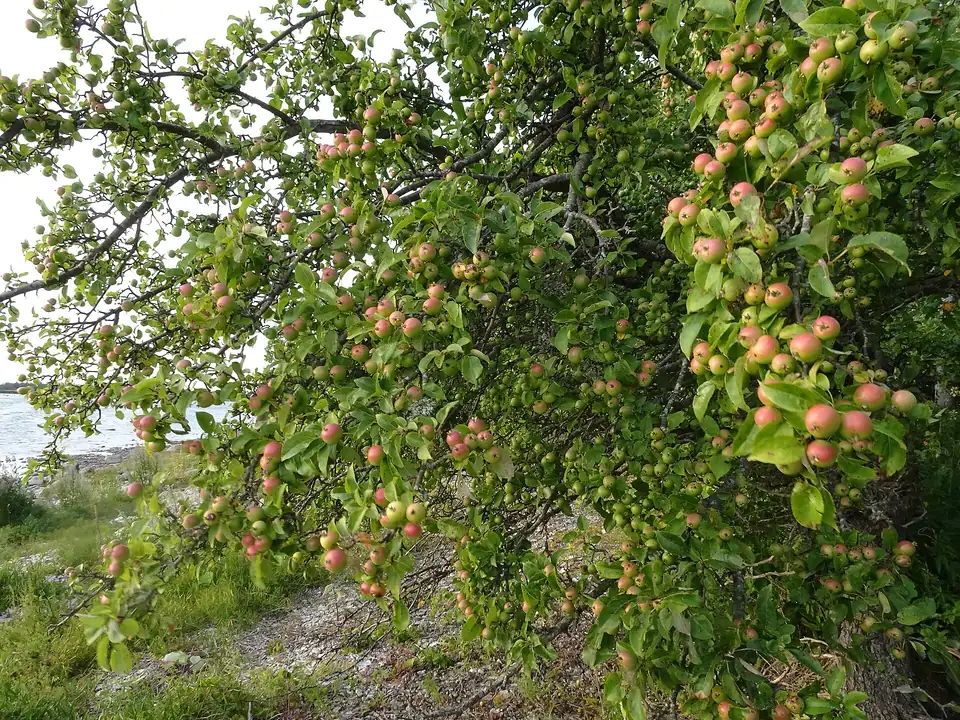
The wild crab apple grows into a tree up to 32 ft tall that loves full sun but will also grow in partial shade. Keep the soil moist for the best flowers and fruit, then pick the apples in fall. Eat only the fruit, throw away the seeds, and gather apples only where you know no pesticides were used.
- Sun
Full sun is best; it also grows in partial shade
What the sources say (1)
Light: Full sun; will grow in partial shade
The Common Crabapple prefers a sunny location, but will grow in partial shade.
— Malus sylvestris (Apple, Common Crabapple, Crabapple, European Crab Apple) | North Carolina Extension Gardener Plant Toolbox [1] - Water
Keep the soil moist for the best flowers and fruit
What the sources say (3)
Watering: Moist soil gives the best flowering and fruiting
According to NC State Extension (species page): However, a sunny location with moist soil provides the best environment for producing flowers and fruits.
— Malus sylvestris (Apple, Common Crabapple, Crabapple, European Crab Apple) | North Carolina Extension Gardener Plant Toolbox [1] genus Malus, fonte: NC State Extension: Once established they are drought tolerant.
— Malus (Apple, Crabapple, Culinary Apple, Eating Apples, Wild Apples) | North Carolina Extension Gardener Plant Toolbox [2] However, a sunny location with moist soil provides the best environment for producing flowers and fruits.
— Malus sylvestris (Apple, Common Crabapple, Crabapple, European Crab Apple) | North Carolina Extension Gardener Plant Toolbox [1] - Cold
Survives winters down to −30 °F (−34.4 °C)
Very hardy · USDA 4a · RHS H7 · Z4
What the sources say (6)
Hardiness, coldest zone: 4a [winter low −34.4 to −31.7 °C (−30 to −25 °F)]
According to NC State Extension (species page): USDA Plant Hardiness Zone: 4a, 4b, 5a, 5b, 6a, 6b, 7a, 7b, 8a, 8b
— Malus sylvestris (Apple, Common Crabapple, Crabapple, European Crab Apple) | North Carolina Extension Gardener Plant Toolbox [1] genus Malus, fonte: NC State Extension: USDA Plant Hardiness Zone: 3a, 3b, 4a, 4b, 5a, 5b, 6a, 6b, 7a, 7b, 8a, 8b, 9a, 9b
— Malus (Apple, Crabapple, Culinary Apple, Eating Apples, Wild Apples) | North Carolina Extension Gardener Plant Toolbox [2] USDA Plant Hardiness Zone: 4a, 4b, 5a, 5b, 6a, 6b, 7a, 7b, 8a, 8b
— Malus sylvestris (Apple, Common Crabapple, Crabapple, European Crab Apple) | North Carolina Extension Gardener Plant Toolbox [1] Hardiness, warmest zone: 8b [winter low −9.4 to −6.7 °C (15 to 20 °F)]
According to NC State Extension (species page): USDA Plant Hardiness Zone: 4a, 4b, 5a, 5b, 6a, 6b, 7a, 7b, 8a, 8b
— Malus sylvestris (Apple, Common Crabapple, Crabapple, European Crab Apple) | North Carolina Extension Gardener Plant Toolbox [1] genus Malus, fonte: NC State Extension: USDA Plant Hardiness Zone: 3a, 3b, 4a, 4b, 5a, 5b, 6a, 6b, 7a, 7b, 8a, 8b, 9a, 9b
— Malus (Apple, Crabapple, Culinary Apple, Eating Apples, Wild Apples) | North Carolina Extension Gardener Plant Toolbox [2] USDA Plant Hardiness Zone: 4a, 4b, 5a, 5b, 6a, 6b, 7a, 7b, 8a, 8b
— Malus sylvestris (Apple, Common Crabapple, Crabapple, European Crab Apple) | North Carolina Extension Gardener Plant Toolbox [1] - Harvest
Pick the apples in fall and eat them without the seeds
What the sources say (1)
Harvest: Fall
Display/Harvest Time: Fall Fruit Type: Pome Fruit Length:
— Malus sylvestris (Apple, Common Crabapple, Crabapple, European Crab Apple) | North Carolina Extension Gardener Plant Toolbox [1] - Pests
Can be attacked by honey fungus, a root rot
What the sources say (1)
Diseases: honey fungus
Susceptible to honey fungus.
— Malus sylvestris (Apple, Common Crabapple, Crabapple, European Crab Apple) | North Carolina Extension Gardener Plant Toolbox [1] - Size
Grows up to 32 ft tall
What the sources say (1)
Mature height: 975 cm (32 ft)
At maturity, it can reach a height of 32 feet.
— Malus sylvestris (Apple, Common Crabapple, Crabapple, European Crab Apple) | North Carolina Extension Gardener Plant Toolbox [1] - Propagation
Grows from seed or from root and stem cuttings
What the sources say (1)
Propagation: Root cutting; seed; stem cutting
Recommended Propagation Strategy: Root Cutting Seed Stem Cutting
— Malus sylvestris (Apple, Common Crabapple, Crabapple, European Crab Apple) | North Carolina Extension Gardener Plant Toolbox [1] - Safety
Throw away the seeds: toxic if eaten in large amounts; also a problem for cats, dogs and horses
Overview
Common crabapple is a deciduous tree native to Europe and Turkey that can reach a height of 32 feet [9.8 m]. [1] It prefers a sunny location and well-drained soil, and it tolerates most soil types. [1] The fruit is rich in pectin and used for jellies, preserves and juices, while the seeds are poisonous. [1]
This record is incomplete: the sources we read do not cover every field yet.
Not yet covered by our sources: Planting, Spacing
Apple care
Measurements in square brackets are our conversion into the other unit system; the quoted text is unchanged.
How to water Apple
Moist soil gives the best flowering and fruiting
What each source says
According to NC State Extension (species page): Moist soil gives the best flowering and fruiting
genus Malus, fonte: NC State Extension: Moist but well-drained soil; drought tolerant once established
What the sources say (3)
According to NC State Extension (species page): However, a sunny location with moist soil provides the best environment for producing flowers and fruits.genus Malus, fonte: NC State Extension: Once established they are drought tolerant.However, a sunny location with moist soil provides the best environment for producing flowers and fruits.How much light Apple needs
Full sun; will grow in partial shade
What the sources say (1)
The Common Crabapple prefers a sunny location, but will grow in partial shade.How much cold Apple can take
Hardiness, coldest zone
4a [winter low −34.4 to −31.7 °C (−30 to −25 °F)]
What each source says
According to NC State Extension (species page): 4a [winter low −34.4 to −31.7 °C (−30 to −25 °F)]
genus Malus, fonte: NC State Extension: 3a [winter low −40 to −37.2 °C (−40 to −35 °F)]
What the sources say (3)
According to NC State Extension (species page): USDA Plant Hardiness Zone:
4a, 4b, 5a, 5b, 6a, 6b, 7a, 7b, 8a, 8bgenus Malus, fonte: NC State Extension: USDA Plant Hardiness Zone:
3a, 3b, 4a, 4b, 5a, 5b, 6a, 6b, 7a, 7b, 8a, 8b, 9a, 9bUSDA Plant Hardiness Zone:
4a, 4b, 5a, 5b, 6a, 6b, 7a, 7b, 8a, 8bHardiness, warmest zone
8b [winter low −9.4 to −6.7 °C (15 to 20 °F)]
What each source says
According to NC State Extension (species page): 8b [winter low −9.4 to −6.7 °C (15 to 20 °F)]
genus Malus, fonte: NC State Extension: 9b [winter low −3.9 to −1.1 °C (25 to 30 °F)]
What the sources say (3)
According to NC State Extension (species page): USDA Plant Hardiness Zone:
4a, 4b, 5a, 5b, 6a, 6b, 7a, 7b, 8a, 8bgenus Malus, fonte: NC State Extension: USDA Plant Hardiness Zone:
3a, 3b, 4a, 4b, 5a, 5b, 6a, 6b, 7a, 7b, 8a, 8b, 9a, 9bUSDA Plant Hardiness Zone:
4a, 4b, 5a, 5b, 6a, 6b, 7a, 7b, 8a, 8bWhere to grow Apple
Not stated in the sources we read.
How to propagate Apple
Root cutting; seed; stem cutting
What the sources say (1)
Recommended Propagation Strategy:
Root Cutting
Seed
Stem CuttingHow to grow Apple
The plant
Family
Rosaceae
What the sources say (1)
Genus: Malus Species: sylvestris Family: RosaceaeMature height
975 cm (32 ft)
What the sources say (1)
At maturity, it can reach a height of 32 feet.Pests and diseases
Diseases
honey fungus
What the sources say (1)
Susceptible to honey fungus.Apple pests and problems
Honey fungus
Symptom: Not described in the source; the plant is listed as susceptible.
What to do: Not specified in the source.
What the sources say (1)
Susceptible to honey fungus. The toxin hydrogen cyanide is contained in the seeds and possibly the leaves of this tree.
— Malus sylvestris (Apple, Common Crabapple, Crabapple, European Crab Apple) | North Carolina Extension Gardener Plant Toolbox [1]
Remedies
Each remedy shows what official sources say about it; traditional remedies without an official source are marked as such. Harmful ones are listed so you know to avoid them.
Treating the plant
aphids
insecticidal soap spray Works
How: Use an insecticidal soap or a strong spray of water to dislodge the aphids.
If your crabapple tree has a heavy infestation of aphids, you can use an insecticidal soap
— whyfarmit.com [3] What the evidence says Insecticidal soap or 1% horticultural oil sprays will help manage aphids with little impact on beneficial insects.
— hgic.clemson.edu [4] strong water spray Not verified
Traditional remedy, not verified by an official source.
How: Blast aphids off with a strong water spray.
scale
horticultural oil spray Works
However, do not spray captan or sulfur within 14 days before or after a horticultural oil spray, as the combination may burn leaves or developing fruit.
— hgic.clemson.edu [4] How: Horticultural oil can be used to smother scale insects.
If your crabapple tree has a scale insect infestation, horticultural oil can be used to smother the insects.
— whyfarmit.com [3] What the evidence says The best control for scale insects is a thorough spray application of 2% horticultural oil on the trunk and limbs in the late winter or early spring.
— hgic.clemson.edu [4]
sawflies
hand-picking larvae Works
How: Monitor the tree regularly for signs of sawfly larvae and hand-pick them if found.
Monitor your tree regularly for signs of sawfly larvae, and hand-pick them if found.
— whyfarmit.com [3] What the evidence says Many insect and disease issues can be solved in the home garden by hand-picking insects or clipping and disposing of diseased plant parts.
— extension.unh.edu [5]
beetles
hand-picking beetles Works
How: Hand-picking beetles can be effective for small infestations.
Hand-picking beetles can be effective for small infestations.
— whyfarmit.com [3] What the evidence says Many insect and disease issues can be solved in the home garden by hand-picking insects or clipping and disposing of diseased plant parts.
— extension.unh.edu [5]
cedar-apple rust
removing juniper galls Partly works
How: If cedars or junipers are present, remove the galls in early spring to help reduce the disease.
If cedars or junipers are present, removing the galls in early spring can also help reduce the disease.
— whyfarmit.com [3] What the evidence says Both diseases are airborne, so sanitation is helpful (removing the CAR galls and raking up fallen AS infected leaves), but since both are spread by spores in the wind, treatments are likely to still be needed.
— extension.illinois.edu [6]
sooty mold
soap wash Not verified
Traditional remedy, not verified by an official source.
For example, spraying home remedies that contain dish detergent on plants on a sunny day can injure the plant, essentially burning it.
— extension.psu.edu [7] How: In severe cases, gently wash the leaves with soapy water to help remove the mold.
Is Apple toxic to pets?
Reported by the source, quoted verbatim. This is not medical or veterinary advice: if a person or an animal may have eaten this plant, contact a poison control centre or a veterinarian.
Animals
#problem for cats #problem for dogs #problem for horses
[1]
People
TOXIC ONLY IF LARGE QUANTITIES EATEN. Ingesting seeds can cause difficult breathing, trembling, spasms, and coma of short duration.
[1]- Poisonous parts
Poison Part: Leaves Seeds
[1]- Toxic principle
Poison Toxic Principle: Cyanogenic glycoside, amygdalin
[1]- Symptoms
TOXIC ONLY IF LARGE QUANTITIES EATEN. Ingesting seeds can cause difficult breathing, trembling, spasms, and coma of short duration.
[1]- Symptoms
Stems, leaves, seeds contain cyanide, particularly toxic in the process of wilting: brick red mucous membranes, dilated pupils, panting, shock.
[1]- Severity
Poison Severity: Low
[1]
Calendar
Planting
Not stated in the sources we read.
Harvest
Fall
What the sources say (1)
Display/Harvest Time:
Fall
Fruit Type:
Pome
Fruit Length:Months as given by the sources, which are mostly from the United States (northern hemisphere). In the southern hemisphere they shift by about six months.
Edibility
Reported by the source, quoted verbatim. Do not eat a plant on the basis of this page alone: identification mistakes can be dangerous.
EDIBLE PARTS: Apples, but discard the seeds. HARVEST TIME: Only collect fruit from areas you know have NOT been treated with pesticides.
[1]
Indicative values
Values from a secondary source, not checked word for word like the rest of this page. Use them as a starting point.
- Life cycle
- PerennialIndicative value, adapt it to your climate · Secondary source
- Drought tolerant
- yesIndicative value, adapt it to your climate · Secondary source
- Soil
- Acidic, Well-drainedIndicative value, adapt it to your climate · Secondary source
- Soil pH
- 5.5-7.5Indicative value, adapt it to your climate · Secondary source
- Care level
- MediumIndicative value, adapt it to your climate · Secondary source
- Growth rate
- ModerateIndicative value, adapt it to your climate · Secondary source
- Pruning
- February, March, April, MayIndicative value, adapt it to your climate · Secondary source
- Pests
- Blight, needle cast, Canker, sap rot, Caterpillar, cutworm, Fungal leaf spot, Mistletoe, Mites, Rodents, Rust, Scale insectsIndicative value, adapt it to your climate · Secondary source
Similar plants
- Flowering crabapple Malus baccata
- Hall Crabapple Malus halliana
- Malus floribunda Malus floribunda
- Paradise apple Malus domestica
- Southern Crabapple Malus angustifolia
- Sweet Crabapple Malus coronaria
- Tea Crabapple Malus hupehensis
- Yunnan Crabapple Malus yunnanensis
Sources
Every value above is quoted from these documents. Links lead to the original publisher.
- Malus sylvestris (Apple, Common Crabapple, Crabapple, European Crab Apple) | North Carolina Extension Gardener Plant Toolbox · plants.ces.ncsu.edu, consulted
- Malus (Apple, Crabapple, Culinary Apple, Eating Apples, Wild Apples) | North Carolina Extension Gardener Plant Toolbox · plants.ces.ncsu.edu, consulted
- whyfarmit.com · whyfarmit.com
- hgic.clemson.edu · hgic.clemson.edu
- extension.unh.edu · extension.unh.edu
- extension.illinois.edu · extension.illinois.edu
- extension.psu.edu · extension.psu.edu
Written by Emilio Marruso · last checked