
How to Grow and Care for Malus floribunda
Malus floribunda
Written by Emilio Marruso · last checked
Toxic to: People · Why
At a glance
This crabapple is easygoing about light, happy in full sun or partial shade, and it can even grow in a container. Plant it after the autumn rains and give young trees a thorough watering in dry spells for their first two or three years. In return you get fruit you can eat raw or cooked, on a tree that spreads 15–25 ft wide.
- Sun
Full sun to partial shade
- Water
Dislikes drought: water young plants thoroughly in dry spells for their first 2–3 years
What the sources say (2)
Watering notes: Drought intolerant; young plants need thorough watering during dry periods over the first two or three years
Drought intolerant
— Japanese Crab (Malus floribunda) — Practical Plants [5] Young plants require thorough watering during dry periods over the first two or three years
— Malus floribunda [7] - Planting
Plant after the autumn rains
- Pruning
Prune before early June
What the sources say (1)
Pruning: Before early June
Pruning, if it is needed, should be done before early June.
— Species Records | Boone County Arboretum [4] - Harvest
The fruit is edible, raw or cooked
- Pests
Watch for apple scab, powdery mildew and fire blight
What the sources say (1)
Diseases: apple scab, powdery mildew, fireblight
Malus floribunda is an excellent species that has high resistance to Japanese beetles, slight susceptibility to apple scab and powdery mildew, and moderate susceptibility to fireblight.
— Malus floribunda (Japanese Flowering Crabapple) – Purdue Arboretum Explorer [1] - Size
Spreads 15–25 ft wide
What the sources say (1)
Mature width: 457.2-762 cm (15-25 ft)
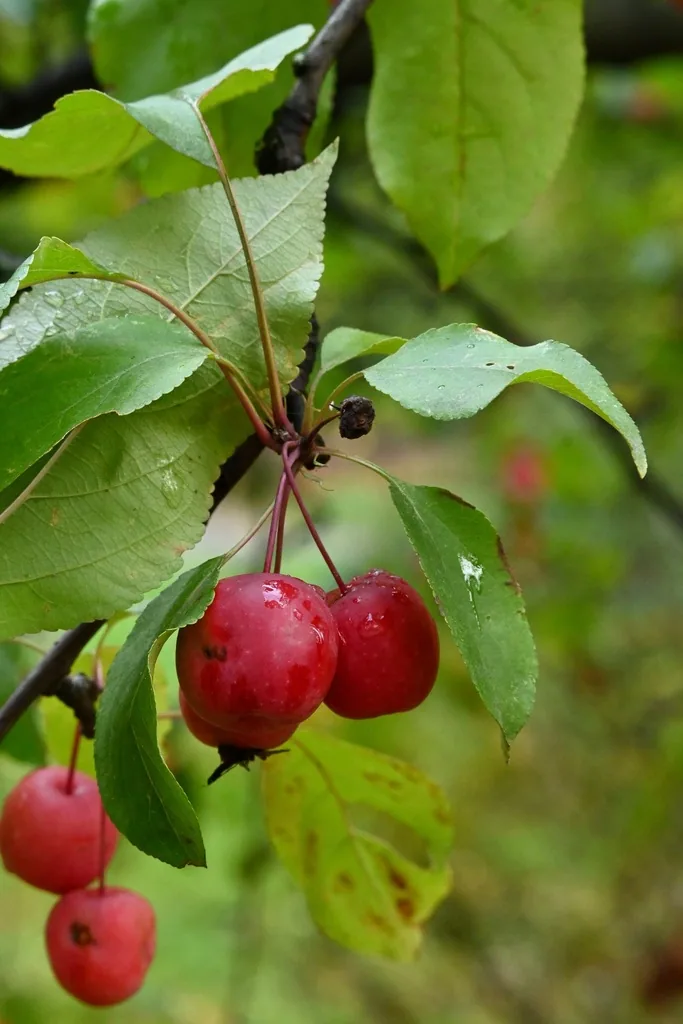
Fruit Notes: Yellow;red (3/8" dia. yellow crabapples (pomes) with a red blush; not persistent) Ultimate Height: 15-25 feet Ultimate Spread: 15-25 feet
— Malus floribunda (Japanese Flowering Crabapple) – Purdue Arboretum Explorer [1] - Propagation
From seed or from cuttings of mature wood
- Sowing
Sow seeds as soon as they ripen in autumn, in a cold frame
What the sources say (1)
Sowing: As soon as ripe in autumn (cold frame)
Seed - best sown as soon as it is ripe in the autumn in a cold frame.
— Japanese Crab (Malus floribunda) — Practical Plants [5] - Containers
Grows in containers too
What the sources say (1)
In containers: Yes
Great used as a small specimen tree or in a container.
— Malus floribunda [7] - Safety
The fruit is safe, but the seeds, and maybe the leaves, contain a poison (cyanide)
Overview
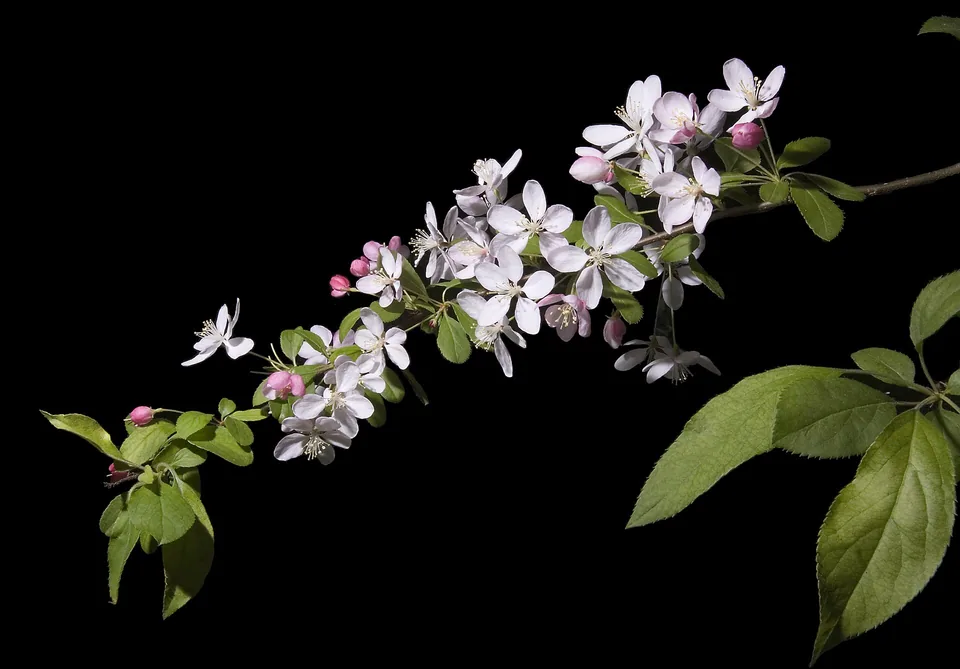
Malus floribunda is a small deciduous tree from Japan, grown for its showy spring flowers. [1][7] It is grown in full sun and moist, well-drained soil, and needs little pruning. [3][4] The fruit can be eaten raw or cooked, while the seeds contain hydrogen cyanide. [5]
This record is incomplete: the sources we read do not cover every field yet.
Not yet covered by our sources: Watering, Hardiness, coldest zone
Malus floribunda care
How to water Malus floribunda
Watering
Not stated in the sources we read.
Watering notes
Drought intolerant; young plants need thorough watering during dry periods over the first two or three years
How much light Malus floribunda needs
How much cold Malus floribunda can take
Hardiness, coldest zone
Not stated in the sources we read.
Hardiness, warmest zone
8 [winter low −12.2 to −6.7 °C (10 to 20 °F)]
What the sources say (1)
USDA Hardiness Zone  4-8Where to grow Malus floribunda
Yes
What the sources say (1)
Great used as a small specimen tree or in a container.How to propagate Malus floribunda
How to grow Malus floribunda
The plant
Family
Rosaceae
What the sources say (1)
Common name:
Japanese Flowering Crabapple
Pronunciation:
MA-lus flo-ri-BUN-da
Family:
Rosaceae
Genus:
MalusMature height
Mature width
457.2-762 cm (15-25 ft)
What the sources say (1)
Fruit Notes:
Yellow;red (3/8" dia. yellow crabapples (pomes) with a red blush; not persistent)
Ultimate Height:
15-25 feet
Ultimate Spread:
15-25 feetPests and diseases
Diseases
apple scab, powdery mildew, fireblight
What the sources say (1)
Malus floribunda is an excellent species that has high resistance to Japanese beetles, slight susceptibility to apple scab and powdery mildew, and moderate susceptibility to fireblight.Remedies
Each remedy shows what official sources say about it; traditional remedies without an official source are marked as such. Harmful ones are listed so you know to avoid them.
Treating the plant
powdery mildew
pruning out infected twigs and branches Official source, not independently tested
How: Prune and destroy severely infected twigs and branches to reduce spread of disease.
Prune and destroy severely infected twigs and branches to reduce spread of disease.
— hortsense.cahnrs.wsu.edu [8] clearing fallen leaves Official source, not independently tested
How: Clean up and destroy fallen leaves from beneath infected trees.
Clean up and destroy fallen leaves from beneath infected trees. Powdery mildew can overwinter in infected leaf debris.
— hortsense.cahnrs.wsu.edu [8]
aphids
strong stream of water Official source, not independently tested
How: Wash aphids from foliage with a strong stream of water.
Wash aphids from foliage with a strong stream of water.
— hortsense.cahnrs.wsu.edu [9] hand-wiping or pruning Official source, not independently tested
How: Hand-wipe or prune to control small, localized infestations when practical.
Hand-wipe or prune to control small, localized infestations when practical.
— hortsense.cahnrs.wsu.edu [9]
fire blight
dormant-season pruning of infected tissue Official source, not independently tested
During the growing season, do not prune infected tissues. Pruning during the growing season has been shown to result in the spread of disease
— extension.psu.edu [10] How: Prune when the weather is dry, cutting at least 4 inches below the canker, and disinfest pruning tools between cuts.
prune out infected tissues. Look for blackened twigs, branches, and flower parts. Find the sunken, darkened cankers on the wood. Prune when the weather is dry, cutting at least 4 inches below the canker.
— extension.psu.edu [10]
Is Malus floribunda poisonous?
Reported by the source, quoted verbatim. This is not medical or veterinary advice: if a person or an animal may have eaten this plant, contact a poison control centre or a veterinarian.
All members of this genus contain the toxin hydrogen cyanide in their seeds and possibly also in their leaves, but not in their fruits.
[5]- Poisonous parts
All members of this genus contain the toxin hydrogen cyanide in their seeds and possibly also in their leaves, but not in their fruits.
[5]- Toxic principle
Hydrogen cyanide is the substance that gives almonds their characteristic taste
[5]- Symptoms
In excess, however, it can cause respiratory failure and even death.
[5]
Calendar
As soon as ripe in autumn (cold frame)
What the sources say (1)
Seed - best sown as soon as it is ripe in the autumn in a cold frame.After autumn rains
What each source says
According to Auckland Botanic Gardens: After autumn rains
Before early June
What the sources say (1)
Pruning, if it is needed, should be done before early June.Months as given by the sources, which are mostly from the United States (northern hemisphere). In the southern hemisphere they shift by about six months.
Edibility
Reported by the source, quoted verbatim. Do not eat a plant on the basis of this page alone: identification mistakes can be dangerous.
Fruit - raw or cooked
[5]
Indicative values
Values from a secondary source, not checked word for word like the rest of this page. Use them as a starting point.
- Life cycle
- PerennialIndicative value, adapt it to your climate · Secondary source
- Hours of sun
- 6-8 hoursIndicative value, adapt it to your climate · Secondary source
- Watering
- AverageIndicative value, adapt it to your climate · Secondary source
- Drought tolerant
- yesIndicative value, adapt it to your climate · Secondary source
- Soil
- Acidic, Well-drainedIndicative value, adapt it to your climate · Secondary source
- Soil pH
- 5.5-7Indicative value, adapt it to your climate · Secondary source
- Care level
- MediumIndicative value, adapt it to your climate · Secondary source
- Growth rate
- ModerateIndicative value, adapt it to your climate · Secondary source
- Pests
- Fungal leaf spot, Mites, Rust, Scale insectsIndicative value, adapt it to your climate · Secondary source
Similar plants
- Apple Malus sylvestris
- Flowering crabapple Malus baccata
- Hall Crabapple Malus halliana
- Paradise apple Malus domestica
- Southern Crabapple Malus angustifolia
- Sweet Crabapple Malus coronaria
- Tea Crabapple Malus hupehensis
- Yunnan Crabapple Malus yunnanensis
Sources
Every value above is quoted from these documents. Links lead to the original publisher.
- Malus floribunda (Japanese Flowering Crabapple) – Purdue Arboretum Explorer · arboretum.purdue.edu, consulted
- Malus floribunda | Landscape Plants | Oregon State University · landscapeplants.oregonstate.edu, consulted
- Malus floribunda habit: UIPLANTS · woodyplants.nres.uiuc.edu, consulted
- Species Records | Boone County Arboretum · bcarboretum.org, consulted
- Japanese Crab (Malus floribunda) — Practical Plants · practicalplants.org, consulted
- Malus × floribunda - Trees and Shrubs Online · treesandshrubsonline.org, consulted
- Malus floribunda · aucklandbotanicgardens.co.nz, consulted
- hortsense.cahnrs.wsu.edu · hortsense.cahnrs.wsu.edu
- hortsense.cahnrs.wsu.edu · hortsense.cahnrs.wsu.edu
- extension.psu.edu · extension.psu.edu
Written by Emilio Marruso · last checked