

How to Grow and Care for Paradise apple
Malus domestica
Written by Emilio Marruso · last checked
At a glance
Apple trees are a long-term friend: they come back year after year, grow in full sun to partial shade, and need another apple variety nearby to bear fruit. Some ripen in late summer, others in fall, and you can eat the fruit raw or cooked. Late varieties can keep for months when you store them cold and humid.
- Sun
Full sun to partial shade
What the sources say (1)
Light: Full sun to partial shade
Grow in full sun to partial shade. They will need a regular spraying program to prevent disease and pest damage.
— Malus domestica (Apple, Apples) | North Carolina Extension Gardener Plant Toolbox [1] - Cold
Survives winters down to −30 °F (−34.4 °C)
Very hardy · USDA 4a · RHS H7 · Z4
What the sources say (2)
Hardiness, coldest zone: 4a [winter low −34.4 to −31.7 °C (−30 to −25 °F)]
USDA Plant Hardiness Zone: 4a, 4b, 5a, 5b, 6a, 6b, 7a, 7b, 8a, 8b, 9a, 9b
— Malus domestica (Apple, Apples) | North Carolina Extension Gardener Plant Toolbox [1] Hardiness, warmest zone: 9b [winter low −3.9 to −1.1 °C (25 to 30 °F)]
USDA Plant Hardiness Zone: 4a, 4b, 5a, 5b, 6a, 6b, 7a, 7b, 8a, 8b, 9a, 9b
— Malus domestica (Apple, Apples) | North Carolina Extension Gardener Plant Toolbox [1] - Spacing
8–12 ft on dwarf, 10–16 ft on semi-dwarf, 18–24 ft on standard rootstock
What the sources say (6)
Between plants: Depends on the rootstock: 2.44-3.66 m [8–12 ft] on dwarf, 3.05-4.88 m [10–16 ft] on semi-dwarf, 5.49-7.32 m [18–24 ft] on standard (seedling) rootstock.
dwarf rootstock: Apple trees on a dwarf rootstock can be spaced 8 to 12 feet apart, those on a semi-dwarf rootstock can be spaced 10 to 16 feet apart,
— [3] semi-dwarf rootstock: Apple trees on a dwarf rootstock can be spaced 8 to 12 feet apart, those on a semi-dwarf rootstock can be spaced 10 to 16 feet apart,
— [3] standard (seedling) rootstock: while those on a standard (non-dwarfing or seedling) rootstock will need to be spaced 18 to 24 feet apart.
— [3] trained form (cordon, espalier, fan) against a wall or fence: If planting a trained form (such as a cordon , espalier or fan) against a wall or fence, attach horizontal wires before planting, and plant the tree about 30cm (1ft) away from the base.
— [4] Apple trees on a dwarf rootstock can be spaced 8 to 12 feet apart, those on a semi-dwarf rootstock can be spaced 10 to 16 feet apart,
— [3] while those on a standard (non-dwarfing or seedling) rootstock will need to be spaced 18 to 24 feet apart.
— [3] - Harvest
Late summer to fall, depending on variety
What the sources say (6)
Harvest: Some varieties ripen in late summer and some in the fall
According to NC State Extension: Some varieties ripen late summer and some in the fall.
— Malus domestica (Apple, Apples) | North Carolina Extension Gardener Plant Toolbox [1] 'Ginger Gold', North Carolina: Semi-dwarf, 12 to 15 feet; early ripening (mid-July in North Carolina)
— Malus domestica (Apple, Apples) | North Carolina Extension Gardener Plant Toolbox [1] 'Golden Delicious', North Carolina: Heavily producing; apples ripen in September in North Carolina
— Malus domestica (Apple, Apples) | North Carolina Extension Gardener Plant Toolbox [1] 'Hazen', North Dakota: When fruit turns dark red in late August, pick and immediately refrigerate.
— Apples – Malus domestica — Carrington REC [2] 'Honeycrisp', North Dakota: May need to ripen until the first week of October
— Apples – Malus domestica — Carrington REC [2] Large, round, firm fruits that often have a waxy coating. Some varieties ripen late summer and some in the fall.
— Malus domestica (Apple, Apples) | North Carolina Extension Gardener Plant Toolbox [1] - Feeding
Don't fertilize the tree or let lawn fertilizer reach it
What the sources say (1)
Avoid: Fertilizing the tree, and lawn fertilizer reaching it.
Don’t fertilize the tree and keep lawn fertilizer away from it, too.
— Apples – Malus domestica — Carrington REC [2] - Pruning
Prune free-standing trees in late winter, trained forms in late summer; renovate old trees over 2–3 years
What the sources say (6)
When to prune: Free-standing trees in late winter while dormant; trained forms in late summer.
Free-standing apple trees (bush and standard trees) should be pruned in winter , to keep them healthy, in good shape and to promote fruiting
— [4] Trained apple trees should be pruned in late summer , to restrict their growth and improve fruiting
— [4] Regular pruning is essential for maintaining tree structure, fruit quality, and productivity. Prune annually during late winter while trees are dormant.
— [3] Hard pruning: Old, overgrown trees can be renovated; stagger drastic renovation pruning over 2-3 years. Severe pruning produces many vigorous water sprouts and reduces flowering.
If you have an old, overgrown apple tree, you can get it back into shape and improve fruiting by renovation pruning.
— [4] Stagger drastic renovation pruning over a 2- to 3-year period to reduce stress on the tree.
— [7] Severe pruning will lead to the growth of many vigorous water sprouts, which should be removed.
— [7] - Pollination
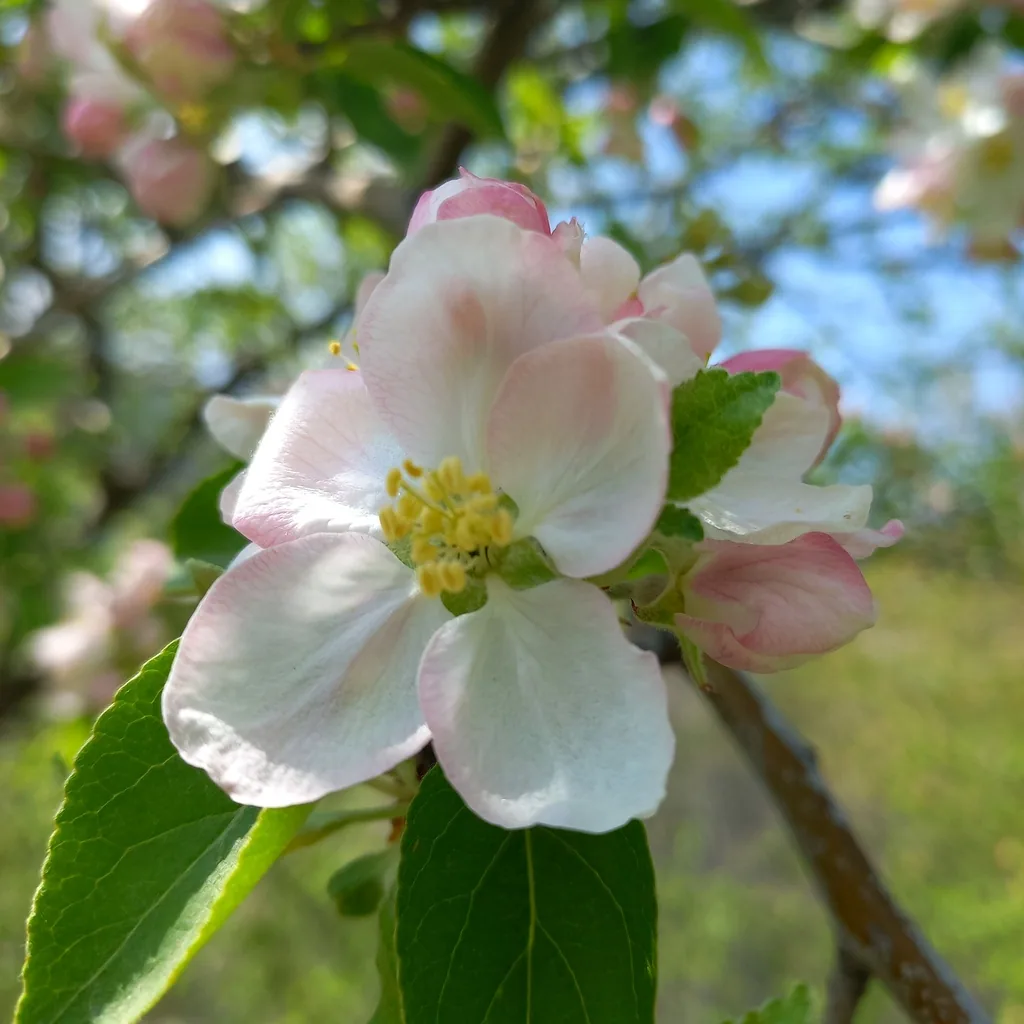
Needs another apple variety nearby that blooms at the same time; bees carry the pollen
What the sources say (7)
Fruit set: Self-unfruitful: needs pollen from another variety
Since most apple varieties are self-unfruitful (require pollen from another variety to set fruit), plant two or more varieties that have the same letter so fruit set will occur.
— [6] This means they will not set fruit with pollen from the same plant and require pollen from another cultivar of the same species
— [3] What it needs: Another apple variety nearby that flowers at the same time; alternatively a self-fertile variety, which sets fruit on its own. Flowering crabapples blooming at the same time can also pollinate.
Flowering time is also important, as you need another tree of a different variety nearby, which flowers at the same time, to ensure successful pollination and a good crop.
— [4] Alternatively, choose a self-fertile variety that will set fruit on its own.
— [4] Most flowering crabapples will pollinate nearby apple trees if they bloom at the same time.
— [3] Carried by: Insects
Pollinizers are the sources of pollen that the pollinators (insects in this case, especially bees) move from one flower to another.
— [7] Pollinators: bees
Pollinizers are the sources of pollen that the pollinators (insects in this case, especially bees) move from one flower to another.
— [7] - Pests
Aphids, codling moths, apple maggots; mildew, scab, fire blight
What the sources say (4)
Pests: aphids, codling moths, apple maggots
Three of the more common diseases or pests are mildew, aphids, and apple scab.
— Malus domestica (Apple, Apples) | North Carolina Extension Gardener Plant Toolbox [1] Other diseases are fire blight and black spot. Other pests are codling moths and apple maggots.
— Malus domestica (Apple, Apples) | North Carolina Extension Gardener Plant Toolbox [1] Diseases: mildew, apple scab, fire blight, black spot
Three of the more common diseases or pests are mildew, aphids, and apple scab.
— Malus domestica (Apple, Apples) | North Carolina Extension Gardener Plant Toolbox [1] Other diseases are fire blight and black spot. Other pests are codling moths and apple maggots.
— Malus domestica (Apple, Apples) | North Carolina Extension Gardener Plant Toolbox [1] - Size
15–30 ft tall and wide; dwarf rootstocks keep it much smaller
What the sources say (4)
Mature height: 457-914 cm (15-30 ft); dwarfing rootstocks keep the tree much smaller
cultivar 'Gala': dwarf 244-305 cm (8-10 ft), semi-dwarf 366-457 cm (12-15 ft): Dwarf at 8 to 10 feet or semi-dwarf at 12 to 15 feet with a mild, sweet, and sometimes slightly tart flavor
— Malus domestica (Apple, Apples) | North Carolina Extension Gardener Plant Toolbox [1] Dimensions: Height: 15 ft. 0 in. - 30 ft. 0 in. Width: 15 ft. 0 in. - 30 ft. 0 in.
— Malus domestica (Apple, Apples) | North Carolina Extension Gardener Plant Toolbox [1] Although they grow up to 30 feet tall and wide from seed, many apple trees you can buy are grafted with dwarfing rootstocks, so they maintain a much smaller size.
— Malus domestica (Apple, Apples) | North Carolina Extension Gardener Plant Toolbox [1] Mature width: 457-914 cm (15-30 ft); dwarfing rootstocks keep the tree much smaller
Dimensions: Height: 15 ft. 0 in. - 30 ft. 0 in. Width: 15 ft. 0 in. - 30 ft. 0 in.
— Malus domestica (Apple, Apples) | North Carolina Extension Gardener Plant Toolbox [1] - Propagation
Grafting or seed
What the sources say (2)
Propagation: Grafting; seed
Life Cycle: Woody Recommended Propagation Strategy: Grafting Seed
— Malus domestica (Apple, Apples) | North Carolina Extension Gardener Plant Toolbox [1] many apple trees you can buy are grafted with dwarfing rootstocks, so they maintain a much smaller size.
— Malus domestica (Apple, Apples) | North Carolina Extension Gardener Plant Toolbox [1]
Overview
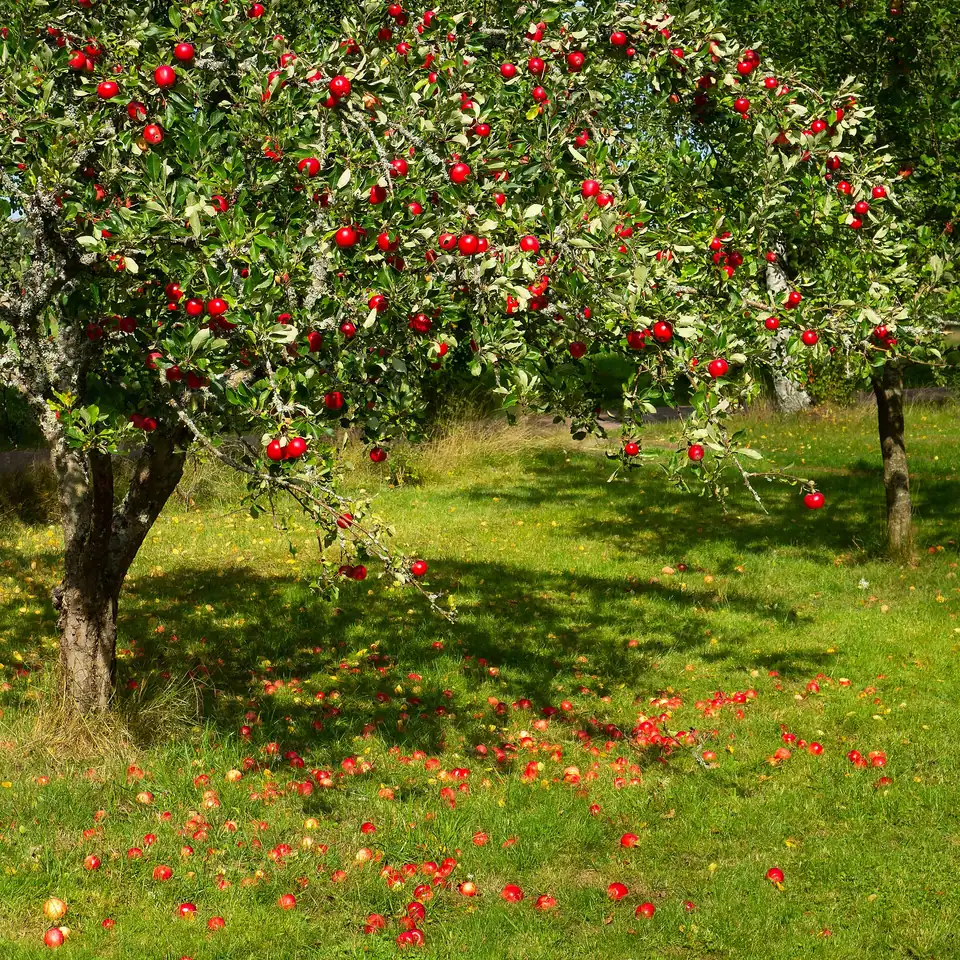
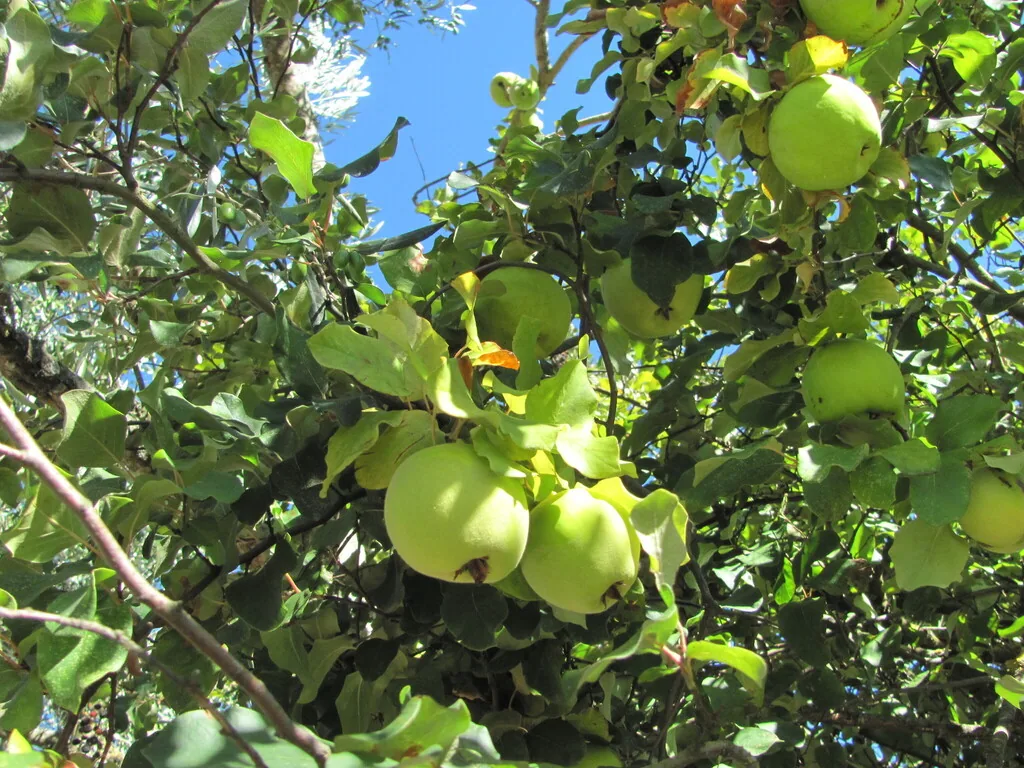
The common apple is a deciduous tree grown for its edible fruit, which can be eaten raw or cooked. [1] It grows in full sun to partial shade, and most cultivars produce better with a pollinizer planted nearby. [1] Many apple trees are grafted on dwarfing rootstocks and should be pruned starting from planting. [1][2]
This record is incomplete: the sources we read do not cover every field yet.
Not yet covered by our sources: Watering, Planting, Spacing
Paradise apple care
How to water Paradise apple
Not stated in the sources we read.
How much light Paradise apple needs
Full sun to partial shade
What the sources say (1)
Grow in full sun to partial shade. They will need a regular spraying program to prevent disease and pest damage.How much cold Paradise apple can take
Hardiness, coldest zone
4a [winter low −34.4 to −31.7 °C (−30 to −25 °F)]
What the sources say (1)
USDA Plant Hardiness Zone:
4a, 4b, 5a, 5b, 6a, 6b, 7a, 7b, 8a, 8b, 9a, 9bHardiness, warmest zone
9b [winter low −3.9 to −1.1 °C (25 to 30 °F)]
What the sources say (1)
USDA Plant Hardiness Zone:
4a, 4b, 5a, 5b, 6a, 6b, 7a, 7b, 8a, 8b, 9a, 9bWhere to grow Paradise apple
Not stated in the sources we read.
How to propagate Paradise apple
Grafting; seed
What the sources say (2)
Life Cycle:
Woody
Recommended Propagation Strategy:
Grafting
Seedmany apple trees you can buy are grafted with dwarfing rootstocks, so they maintain a much smaller size.How to grow Paradise apple
The plant
Life cycle
perennial
What the sources say (1)
Plant Type: Edible Perennial Tree Woody Plant Leaf Characteristics: DeciduousFamily
Rosaceae
What the sources say (1)
The common apple is a deciduous tree with edible fruit in the rose family (Rosaceae).Mature height
457-914 cm (15-30 ft); dwarfing rootstocks keep the tree much smaller
What each source says
cultivar 'Gala': dwarf 244-305 cm (8-10 ft), semi-dwarf 366-457 cm (12-15 ft):
What the sources say (3)
cultivar 'Gala': dwarf 244-305 cm (8-10 ft), semi-dwarf 366-457 cm (12-15 ft): Dwarf at 8 to 10 feet or semi-dwarf at 12 to 15 feet with a mild, sweet, and sometimes slightly tart flavorDimensions: Height: 15 ft. 0 in. - 30 ft. 0 in. Width: 15 ft. 0 in. - 30 ft. 0 in.Although they grow up to 30 feet tall and wide from seed, many apple trees you can buy are grafted with dwarfing rootstocks, so they maintain a much smaller size.Mature width
457-914 cm (15-30 ft); dwarfing rootstocks keep the tree much smaller
What the sources say (1)
Dimensions: Height: 15 ft. 0 in. - 30 ft. 0 in. Width: 15 ft. 0 in. - 30 ft. 0 in.Pests and diseases
Pests
aphids, codling moths, apple maggots
What the sources say (2)
Three of the more common diseases or pests are mildew, aphids, and apple scab.Other diseases are fire blight and black spot. Other pests are codling moths and apple maggots.Diseases
mildew, apple scab, fire blight, black spot
What the sources say (2)
Three of the more common diseases or pests are mildew, aphids, and apple scab.Other diseases are fire blight and black spot. Other pests are codling moths and apple maggots.Fertilizing
Avoid
Fertilizing the tree, and lawn fertilizer reaching it.
What the sources say (1)
Don’t fertilize the tree and keep lawn fertilizer away from it, too.Spacing
Between plants
Depends on the rootstock: 2.44-3.66 m [8–12 ft] on dwarf, 3.05-4.88 m [10–16 ft] on semi-dwarf, 5.49-7.32 m [18–24 ft] on standard (seedling) rootstock.
What each source says
dwarf rootstock: 2.44-3.66 m [8–12 ft]
semi-dwarf rootstock: 3.05-4.88 m [10–16 ft]
standard (seedling) rootstock: 5.49-7.32 m [18–24 ft]
trained form (cordon, espalier, fan) against a wall or fence: 30 cm [12 in] from the base of the wall
What the sources say (6)
dwarf rootstock: Apple trees on a dwarf rootstock can be spaced 8 to 12 feet apart, those on a semi-dwarf rootstock can be spaced 10 to 16 feet apart,semi-dwarf rootstock: Apple trees on a dwarf rootstock can be spaced 8 to 12 feet apart, those on a semi-dwarf rootstock can be spaced 10 to 16 feet apart,standard (seedling) rootstock: while those on a standard (non-dwarfing or seedling) rootstock will need to be spaced 18 to 24 feet apart.trained form (cordon, espalier, fan) against a wall or fence: If planting a trained form (such as a cordon , espalier or fan) against a wall or fence, attach horizontal wires before planting, and plant the tree about 30cm (1ft) away from the base.Apple trees on a dwarf rootstock can be spaced 8 to 12 feet apart, those on a semi-dwarf rootstock can be spaced 10 to 16 feet apart,while those on a standard (non-dwarfing or seedling) rootstock will need to be spaced 18 to 24 feet apart.After harvest
Storage
0-4.4 °C [32–40 °F] with 90-95% relative humidity; under these conditions cultivars such as 'Red Delicious' keep up to 3-5 months. At 10 °C [50 °F] apples spoil two to three times faster than at 0 °C [32 °F]; low humidity makes them shrivel. Small quantities keep in perforated plastic bags in the refrigerator.
What each source says
early apples ripening in late summer: To be eaten within a few days of picking
later-maturing varieties: Keep for several months in the right conditions
What the sources say (7)
early apples ripening in late summer: Early apples, which ripen in late summer, usually need to be eaten within a few days of picking.later-maturing varieties: Later-maturing varieties are usually more suitable for storing, keeping for several months in the right conditions.Optimum storage conditions for apples are between 32 adn 40°F and relative humidity between 90 and 95 percent.Apple cultivars, such as Red Delicious, stored under optimum conditions, may be stored for up to 3 to 5 months.Apples stored at a temperature of 50°F will spoil two to three times faster than those stored at 32°F.If the humidity during storage is low, apples will dehydrate and shrivel. Sort outSmall quantities of apples may be placed in perforated plastic bags and stored in the refrigerator.Heat and drought
Drought
Established trees rely more on rainfall but still need water during extended dry periods; newly planted trees need regular watering in dry spells for the first couple of years.
What each source says
in containers: Need a steady supply of moisture through the growing season; water regularly in dry spells
What the sources say (3)
in containers: Trees in containers need a steady supply of moisture throughout the growing season , so water regularly in dry spellsEstablished apple trees rely more on rainfall but still need water during extended dry periods.Newly planted apple trees should be watered regularly during dry spells for the first couple of years after plantingPollination
Fruit set
Self-unfruitful: needs pollen from another variety
What the sources say (2)
Since most apple varieties are self-unfruitful (require pollen from another variety to set fruit), plant two or more varieties that have the same letter so fruit set will occur.This means they will not set fruit with pollen from the same plant and require pollen from another cultivar of the same speciesWhat it needs
Another apple variety nearby that flowers at the same time; alternatively a self-fertile variety, which sets fruit on its own. Flowering crabapples blooming at the same time can also pollinate.
What the sources say (3)
Flowering time is also important, as you need another tree of a different variety nearby, which flowers at the same time, to ensure successful pollination and a good crop.Alternatively, choose a self-fertile variety that will set fruit on its own.Most flowering crabapples will pollinate nearby apple trees if they bloom at the same time.Carried by
Insects
What the sources say (1)
Pollinizers are the sources of pollen that the pollinators (insects in this case, especially bees) move from one flower to another.Pollinators
bees
What the sources say (1)
Pollinizers are the sources of pollen that the pollinators (insects in this case, especially bees) move from one flower to another.Pruning
Flowering wood
Flowers on old wood (last year's growth)
What the sources say (2)
Pear and apple produce flowers and fruit from mixed buds formed at the of spurs (short stubby branches).These trees bear apples on short, compact shoots called spurs that form along the branches on two-year-old or older growthWhen to prune
Free-standing trees in late winter while dormant; trained forms in late summer.
What the sources say (3)
Free-standing apple trees (bush and standard trees) should be pruned in winter , to keep them healthy, in good shape and to promote fruitingTrained apple trees should be pruned in late summer , to restrict their growth and improve fruitingRegular pruning is essential for maintaining tree structure, fruit quality, and productivity. Prune annually during late winter while trees are dormant.Hard pruning
Old, overgrown trees can be renovated; stagger drastic renovation pruning over 2-3 years. Severe pruning produces many vigorous water sprouts and reduces flowering.
What the sources say (3)
If you have an old, overgrown apple tree, you can get it back into shape and improve fruiting by renovation pruning.Stagger drastic renovation pruning over a 2- to 3-year period to reduce stress on the tree.Severe pruning will lead to the growth of many vigorous water sprouts, which should be removed.Winter chill
Chill hours
100–1800 hours between 0 and 7.2 °C [32–45 °F]
What each source says
specie «Apple»: 100–1800 hours
specie «Apples»: 200–1000 hours
specie «Apple»: 800–1750 hours
specie «Apples»: 1200–1500 hours
cultivar 'Golden Delicious': 50 hours
What the sources say (13)
specie «Apple»: Apple Chill hours: 100 to 1,800 There are hundreds of apple varieties to choose from.specie «Apples»: Fruit Crop Chilling Hours Required Apples 200–1,000 Blackberry 200–600 Blueberry 150–700specie «Apple»: Chill Hours Required to Break Dormancy Using the 45oF Model Apple 800 to 1750 Pear and sour cherry 600 to 1500 Plum (Japanese) 600 to 1600 Cherry (sweet) 500 to 1450 Peach 375 to 1200 Apricot 300 to 1000specie «Apples»: Apples are best adapted to areas with adequate chilling hours for most varieties--1,200 to 1,500 hours below 45° F to fully satisfy the chilling requirement.cultivar 'Golden Delicious': Ferragnes 1 32 * - Central Valley, Chile Apple Golden Delicious 2 50 † - - Apricot Currot 3 34.3 6.1 Murcia, SpainApple Chill hours: 100 to 1,800 There are hundreds of apple varieties to choose from.Fruit Crop Chilling Hours Required Apples 200–1,000 Blackberry 200–600 Blueberry 150–700Chill Hours Required to Break Dormancy Using the 45oF Model Apple 800 to 1750 Pear and sour cherry 600 to 1500 Plum (Japanese) 600 to 1600 Cherry (sweet) 500 to 1450 Peach 375 to 1200 Apricot 300 to 1000Apples are best adapted to areas with adequate chilling hours for most varieties--1,200 to 1,500 hours below 45° F to fully satisfy the chilling requirement.Chill hours are accumulated from November through February when temperatures are between 32° and 45°F.Different models exist to estimate chilling. One model defines a chill hour as each hour below 45°F starting on October 1.Chill Hours Required to Break Dormancy Using the 45oF Model Apple 800 to 1750Chilling hours are defined as the number of hours that the temperature is below 45° F.Paradise apple pests and problems
Apple scab, mildew and aphids
Symptom: Among the more common diseases and pests of apple
What to do: A regular spraying program to prevent disease and pest damage
What the sources say (2)
Three of the more common diseases or pests are mildew, aphids, and apple scab.
— Malus domestica (Apple, Apples) | North Carolina Extension Gardener Plant Toolbox [1] Grow in full sun to partial shade. They will need a regular spraying program to prevent disease and pest damage.
— Malus domestica (Apple, Apples) | North Carolina Extension Gardener Plant Toolbox [1] Fire blight
Symptom: Disease that can affect young trees such as Hazen
What to do: Not given in the sources
What the sources say (2)
Other diseases are fire blight and black spot. Other pests are codling moths and apple maggots.
— Malus domestica (Apple, Apples) | North Carolina Extension Gardener Plant Toolbox [1] In its early years, it grows fast and may get a bit of fireblight.
— Apples – Malus domestica — Carrington REC [2] Overcropping
Symptom: Biennial bearing and possible branch breakage
What to do: Remove all fruit for several years after planting; later thin clusters to a single, well-formed fruit
Remedies
Each remedy shows what official sources say about it; traditional remedies without an official source are marked as such. Harmful ones are listed so you know to avoid them.
Treating the plant
aphids
soapy water spray Not verified
Traditional remedy, not verified by an official source.
Avoid applying soaps or oils during the hot part of the day as some leaf burn may result.
— extension.usu.edu [14] Be aware that the products suggested to be combined in these home remedies may include additives that could harm the environment.
— extension.psu.edu [15] How: Mix 1 tablespoon of liquid soap with 1 gallon of water, pour it into a spray bottle and spray on plants' leaves and stems; reapply after it rains.
spider mites
stiff water spray Works
How: Wash down trees or plants with a stiff spray of water.
Options to reduce spider mite problems include washing down trees or plants with a stiff spray of water or applying insecticidal soap or 1% horticultural oil every 5-7 days.
— extension.usu.edu [14] What the evidence says Options to reduce spider mite problems include washing down trees or plants with a stiff spray of water or applying insecticidal soap or 1% horticultural oil every 5-7 days.
— extension.usu.edu [14]
codling moth
removing infested fruit and bagging fruit Official source, not independently tested
How: Cultural practices include fruit thinning, removing infested fruits, and bagging fruit.
Cultural practices include fruit thinning, removing infested fruits, and bagging fruit.
— extension.usu.edu [14]
apple maggot
sticky red sphere traps Works
How: Use red spherical sticky traps to trap adults; place one trap for every 100 apple fruits.
Use red spherical sticky traps to trap adults, place one trap for every 100 apple fruits
— plantvillage.psu.edu [16] What the evidence says You can reduce apple maggot damage by hanging sticky traps at one trap per bushel of apples (i.e. one trap per tree for small trees, up to four or five traps per tree for larger trees).
— extension.umaine.edu [17] bagging fruit with polythene bags Official source, not independently tested
How: Bag apples by tying or stapling polythene bags around fruit to prevent adults laying eggs; cut corners from bags to ensure air supply to fruit.
bag apples by tying or stapling polythene bags around fruit to prevent adults laying eggs - cut corners from bags to ensure air supply to fruit
— plantvillage.psu.edu [16]
apple scab
removing fallen leaves and fruit Works
How: Remove leaves soon after they have fallen to reduce the carryover of disease from one season to the next; never allow fruit to remain on the ground from one season to the next; prune annually to improve air circulation.
If susceptible varieties are being grown, remove leaves soon after they have fallen to reduce the carryover of disease from one season to the next.
— extension.psu.edu [18] What the evidence says If susceptible varieties are being grown, remove leaves soon after they have fallen to reduce the carryover of disease from one season to the next.
— extension.psu.edu [18]
Calendar
Planting
Not stated in the sources we read.
Harvest
Some varieties ripen in late summer and some in the fall
What each source says
According to NC State Extension: Some varieties ripen in late summer and some in the fall
'Ginger Gold', North Carolina: Mid-July
'Golden Delicious', North Carolina: September
'Hazen', North Dakota: Late August
'Honeycrisp', North Dakota: First week of October
What the sources say (6)
According to NC State Extension: Some varieties ripen late summer and some in the fall.'Ginger Gold', North Carolina: Semi-dwarf, 12 to 15 feet; early ripening (mid-July in North Carolina)'Golden Delicious', North Carolina: Heavily producing; apples ripen in September in North Carolina'Hazen', North Dakota: When fruit turns dark red in late August, pick and immediately refrigerate.'Honeycrisp', North Dakota: May need to ripen until the first week of OctoberLarge, round, firm fruits that often have a waxy coating. Some varieties ripen late summer and some in the fall.Pruning
Under review: our second check questioned this value.
Months as given by the sources, which are mostly from the United States (northern hemisphere). In the southern hemisphere they shift by about six months.
Edibility
Reported by the source, quoted verbatim. Do not eat a plant on the basis of this page alone: identification mistakes can be dangerous.
Fruits can be eaten raw and cooked in a variety of dishes.
[1]
Indicative values
Values from a secondary source, not checked word for word like the rest of this page. Use them as a starting point.
- Hours of sun
- 6-8 hoursIndicative value, adapt it to your climate · Secondary source · Data for the variety Malus domestica 'Co-op 38' GOLDRUSH
- Watering
- FrequentIndicative value, adapt it to your climate · Secondary source · Data for the variety Malus domestica 'Co-op 38' GOLDRUSH
- Care level
- MediumIndicative value, adapt it to your climate · Secondary source · Data for the variety Malus domestica 'Co-op 38' GOLDRUSH
- Growth rate
- HighIndicative value, adapt it to your climate · Secondary source · Data for the variety Malus domestica 'Co-op 38' GOLDRUSH
Similar plants
- Apple Malus sylvestris
- Flowering crabapple Malus baccata
- Hall Crabapple Malus halliana
- Malus floribunda Malus floribunda
- Southern Crabapple Malus angustifolia
- Sweet Crabapple Malus coronaria
- Tea Crabapple Malus hupehensis
- Yunnan Crabapple Malus yunnanensis
Sources
Every value above is quoted from these documents. Links lead to the original publisher.
- Malus domestica (Apple, Apples) | North Carolina Extension Gardener Plant Toolbox · plants.ces.ncsu.edu, consulted
- Apples – Malus domestica — Carrington REC · ag.ndsu.edu, consulted
- yardandgarden.extension.iastate.edu · yardandgarden.extension.iastate.edu
- rhs.org.uk · rhs.org.uk
- yardandgarden.extension.iastate.edu · yardandgarden.extension.iastate.edu
- hgic.clemson.edu · hgic.clemson.edu
- extension.umd.edu · extension.umd.edu
- web.extension.illinois.edu · web.extension.illinois.edu
- escholarship.org · escholarship.org
- extension.msstate.edu · extension.msstate.edu
- extension.illinois.edu · extension.illinois.edu
- ipm.ucanr.edu · ipm.ucanr.edu
- treephenology.ucdavis.edu · treephenology.ucdavis.edu
- extension.usu.edu · extension.usu.edu
- extension.psu.edu · extension.psu.edu
- plantvillage.psu.edu · plantvillage.psu.edu
- extension.umaine.edu · extension.umaine.edu
- extension.psu.edu · extension.psu.edu
Written by Emilio Marruso · last checked