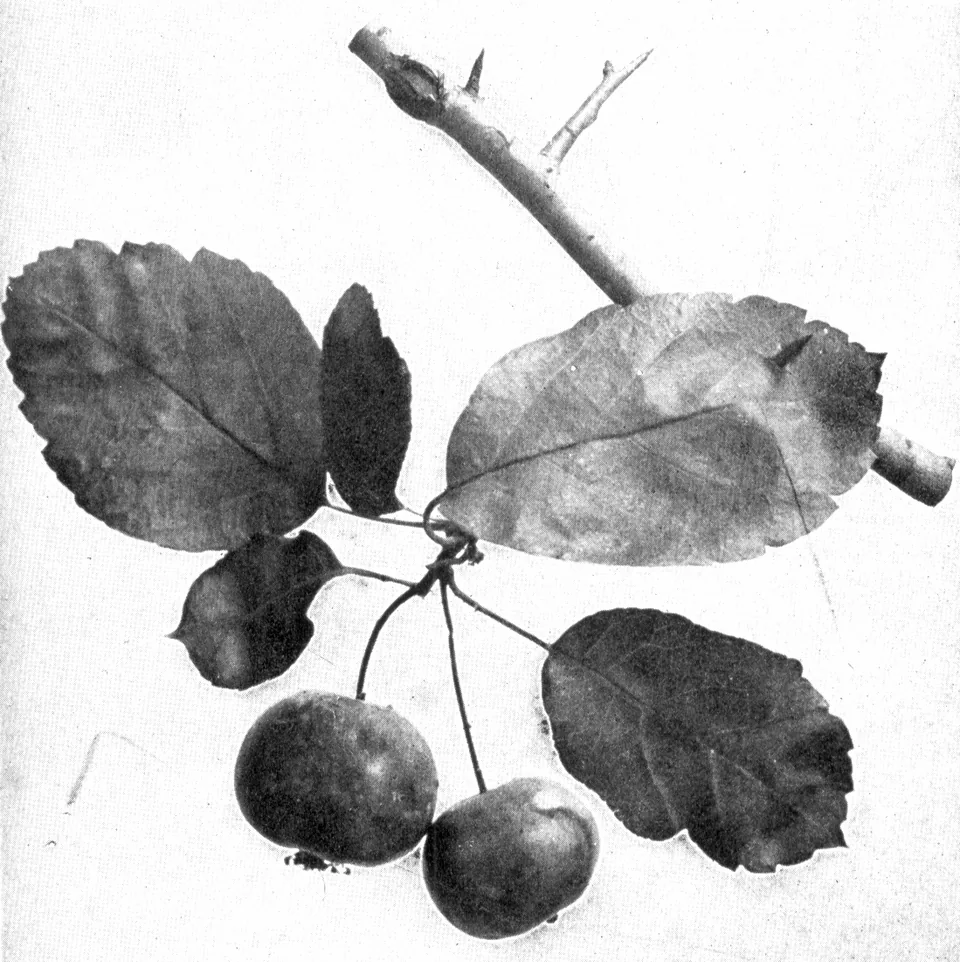


How to Grow and Care for Sweet Crabapple
Malus coronaria
Written by Emilio Marruso · last checked
Toxic to: Cats, Dogs, Horses · Why
At a glance
This crabapple grows into a tree 15 to 30 feet tall that's happy in full sun or partial shade and in many kinds of soil, as long as the soil stays moist and drains well. In fall it gives fruit you can turn into homemade crab apple jelly or cider. A quick pruning in late winter keeps it in shape.
- Sun
Full sun to partial shade
What the sources say (1)
Light: Full sun to partial shade
Prefers full sun to partial shade and moist, well-drained soils of various types.
— Malus coronaria (American Crabapple, American Crab Apple, Fragrant Crabapple, Garland Crab, Garland Tree, Sweet Crabapple, Sweet Crab Apple, Wild Crabapple) | North Carolina Extension Gardener Plant Toolbox [1] - Water
Likes soil that stays moist
What the sources say (1)
Watering notes: Prefers moist, well-drained soils of various types
Prefers full sun to partial shade and moist, well-drained soils of various types.
— Malus coronaria (American Crabapple, American Crab Apple, Fragrant Crabapple, Garland Crab, Garland Tree, Sweet Crabapple, Sweet Crab Apple, Wild Crabapple) | North Carolina Extension Gardener Plant Toolbox [1] - Cold
Survives winters down to −30 °F (−34.4 °C)
Very hardy · USDA 4a · RHS H7 · Z4
What the sources say (2)
Hardiness, coldest zone: 4a [winter low −34.4 to −31.7 °C (−30 to −25 °F)]
USDA Plant Hardiness Zone: 4a, 4b, 5a, 5b, 6a, 6b, 7a, 7b, 8a, 8b
— Malus coronaria (American Crabapple, American Crab Apple, Fragrant Crabapple, Garland Crab, Garland Tree, Sweet Crabapple, Sweet Crab Apple, Wild Crabapple) | North Carolina Extension Gardener Plant Toolbox [1] Hardiness, warmest zone: 8b [winter low −9.4 to −6.7 °C (15 to 20 °F)]
USDA Plant Hardiness Zone: 4a, 4b, 5a, 5b, 6a, 6b, 7a, 7b, 8a, 8b
— Malus coronaria (American Crabapple, American Crab Apple, Fragrant Crabapple, Garland Crab, Garland Tree, Sweet Crabapple, Sweet Crab Apple, Wild Crabapple) | North Carolina Extension Gardener Plant Toolbox [1] - Soil
Many kinds of soil, as long as they drain well
What the sources say (1)
Watering notes: Prefers moist, well-drained soils of various types
Prefers full sun to partial shade and moist, well-drained soils of various types.
— Malus coronaria (American Crabapple, American Crab Apple, Fragrant Crabapple, Garland Crab, Garland Tree, Sweet Crabapple, Sweet Crab Apple, Wild Crabapple) | North Carolina Extension Gardener Plant Toolbox [1] - Pruning
Prune in late winter
What the sources say (1)
Pruning: Late winter
Prune in late winter to remove dead or diseased branches.
— Malus coronaria (American Crabapple, American Crab Apple, Fragrant Crabapple, Garland Crab, Garland Tree, Sweet Crabapple, Sweet Crab Apple, Wild Crabapple) | North Carolina Extension Gardener Plant Toolbox [1] - Harvest
Pick the fruit in fall for crab apple jelly or cider
What the sources say (1)
Harvest: Fall
Fruit Value To Gardener: Edible Display/Harvest Time: Fall Fruit Type:
— Malus coronaria (American Crabapple, American Crab Apple, Fragrant Crabapple, Garland Crab, Garland Tree, Sweet Crabapple, Sweet Crab Apple, Wild Crabapple) | North Carolina Extension Gardener Plant Toolbox [1] - Pests
Aphids, scale, borers and Japanese beetles; apple scab, fire blight and rust
What the sources say (3)
Pests: scale, borers, aphids, Japanese beetles
This tree is susceptible to scale, borers, aphids, and Japanese beetles, and is also at risk for fire blight, apple scab, and canker.
— Malus coronaria (American Crabapple, American Crab Apple, Fragrant Crabapple, Garland Crab, Garland Tree, Sweet Crabapple, Sweet Crab Apple, Wild Crabapple) | North Carolina Extension Gardener Plant Toolbox [1] Diseases: cedar-apple rust, fire blight, apple scab, canker
Rust is particularly problematic when the sweet crabapple is planted near a juniper, which is prone to cedar-apple rust.
— Malus coronaria (American Crabapple, American Crab Apple, Fragrant Crabapple, Garland Crab, Garland Tree, Sweet Crabapple, Sweet Crab Apple, Wild Crabapple) | North Carolina Extension Gardener Plant Toolbox [1] This tree is susceptible to scale, borers, aphids, and Japanese beetles, and is also at risk for fire blight, apple scab, and canker.
— Malus coronaria (American Crabapple, American Crab Apple, Fragrant Crabapple, Garland Crab, Garland Tree, Sweet Crabapple, Sweet Crab Apple, Wild Crabapple) | North Carolina Extension Gardener Plant Toolbox [1] - Watch out
Don't plant it near junipers: they spread rust
- Size
15 to 30 ft tall
What the sources say (1)
Mature height: 457-914 cm (15 to 30 feet)
The sweet crabapple is a small, deciduous, flowering native tree that grows 15 to 30 feet tall, is densely branched
— Malus coronaria (American Crabapple, American Crab Apple, Fragrant Crabapple, Garland Crab, Garland Tree, Sweet Crabapple, Sweet Crab Apple, Wild Crabapple) | North Carolina Extension Gardener Plant Toolbox [1] - Propagation
Propagated by grafting
What the sources say (1)
Propagation: Grafting
Recommended Propagation Strategy: Grafting Stem Cutting Country Or Region Of Origin:
— Malus coronaria (American Crabapple, American Crab Apple, Fragrant Crabapple, Garland Crab, Garland Tree, Sweet Crabapple, Sweet Crab Apple, Wild Crabapple) | North Carolina Extension Gardener Plant Toolbox [1] - Safety
Stems, leaves and seeds are toxic to dogs, cats and horses
Overview
Sweet crabapple is a small, deciduous, flowering native tree that grows 15 to 30 feet [4.6–9.1 m] tall. [1] It prefers full sun to partial shade and moist, well-drained soils, and its bitter fruits are often used to make jellies and preserves. [1] The stems, leaves, and seeds are listed as toxic to dogs, cats, and horses. [1]
This record is incomplete: the sources we read do not cover every field yet.
Not yet covered by our sources: Watering
Sweet Crabapple care
Measurements in square brackets are our conversion into the other unit system; the quoted text is unchanged.
How to water Sweet Crabapple
Watering
Not stated in the sources we read.
Watering notes
Prefers moist, well-drained soils of various types
What the sources say (1)
Prefers full sun to partial shade and moist, well-drained soils of various types.How much light Sweet Crabapple needs
Full sun to partial shade
What the sources say (1)
Prefers full sun to partial shade and moist, well-drained soils of various types.How much cold Sweet Crabapple can take
Hardiness, coldest zone
4a [winter low −34.4 to −31.7 °C (−30 to −25 °F)]
What the sources say (1)
USDA Plant Hardiness Zone:
4a, 4b, 5a, 5b, 6a, 6b, 7a, 7b, 8a, 8bHardiness, warmest zone
8b [winter low −9.4 to −6.7 °C (15 to 20 °F)]
What the sources say (1)
USDA Plant Hardiness Zone:
4a, 4b, 5a, 5b, 6a, 6b, 7a, 7b, 8a, 8bHow to propagate Sweet Crabapple
Grafting
What the sources say (1)
Recommended Propagation Strategy:
Grafting
Stem Cutting
Country Or Region Of Origin:How to grow Sweet Crabapple
The plant
Family
Rosaceae
What the sources say (1)
This ornamental and fragrant tree belongs to the rose family (Rosaceae).Mature height
457-914 cm (15 to 30 feet)
What the sources say (1)
The sweet crabapple is a small, deciduous, flowering native tree that grows 15 to 30 feet tall, is densely branchedPests and diseases
Pests
scale, borers, aphids, Japanese beetles
What the sources say (1)
This tree is susceptible to scale, borers, aphids, and Japanese beetles, and is also at risk for fire blight, apple scab, and canker.Diseases
cedar-apple rust, fire blight, apple scab, canker
What the sources say (2)
Rust is particularly problematic when the sweet crabapple is planted near a juniper, which is prone to cedar-apple rust.This tree is susceptible to scale, borers, aphids, and Japanese beetles, and is also at risk for fire blight, apple scab, and canker.Sweet Crabapple pests and problems
Cedar-apple rust
Symptom: Rust is particularly problematic when planted near a juniper
What to do: Provide good air circulation, and avoid planting near members of the juniper family
What the sources say (1)
Provide good air circulation, and avoid planting near members of the juniper family due to the risk of cedar-apple rust.
— Malus coronaria (American Crabapple, American Crab Apple, Fragrant Crabapple, Garland Crab, Garland Tree, Sweet Crabapple, Sweet Crab Apple, Wild Crabapple) | North Carolina Extension Gardener Plant Toolbox [1] Insect pests
Symptom: Susceptible to scale, borers, aphids, and Japanese beetles
What the sources say (1)
This tree is susceptible to scale, borers, aphids, and Japanese beetles, and is also at risk for fire blight, apple scab, and canker.
— Malus coronaria (American Crabapple, American Crab Apple, Fragrant Crabapple, Garland Crab, Garland Tree, Sweet Crabapple, Sweet Crab Apple, Wild Crabapple) | North Carolina Extension Gardener Plant Toolbox [1] Fire blight, apple scab and canker
Symptom: At risk for fire blight, apple scab, and canker
What to do: Planting an insect- or disease-resistant cultivar may be a better option
What the sources say (2)
Planting an insect- or disease-resistant cultivar may be a better option, plus they usually lack thorns.
— Malus coronaria (American Crabapple, American Crab Apple, Fragrant Crabapple, Garland Crab, Garland Tree, Sweet Crabapple, Sweet Crab Apple, Wild Crabapple) | North Carolina Extension Gardener Plant Toolbox [1] and is also at risk for fire blight, apple scab, and canker.
— Malus coronaria (American Crabapple, American Crab Apple, Fragrant Crabapple, Garland Crab, Garland Tree, Sweet Crabapple, Sweet Crab Apple, Wild Crabapple) | North Carolina Extension Gardener Plant Toolbox [1]
Remedies
Each remedy shows what official sources say about it; traditional remedies without an official source are marked as such. Harmful ones are listed so you know to avoid them.
Treating the plant
aphids
insecticidal soap or horticultural oil spray Works
How: Spray insecticidal soap or 1% horticultural oil.
Insecticidal soap or 1% horticultural oil sprays will help manage aphids with little impact on beneficial insects.
— hgic.clemson.edu [5] What the evidence says Insecticidal soap or 1% horticultural oil sprays will help manage aphids with little impact on beneficial insects.
— hgic.clemson.edu [5] strong stream of water Official source, not independently tested
How: Wash aphids from foliage with a strong stream of water.
Wash aphids from foliage with a strong stream of water.
— hortsense.cahnrs.wsu.edu [6]
tent caterpillars
removing the tents by hand Works
Do not attempt to burn the tents and caterpillars. This is a dangerous procedure that may injure the tree.
— yardandgarden.extension.iastate.edu [7] How: Remove tents and caterpillars with a broomstick, forked branch or by hand, in early morning, late evening or on cool rainy days.
The tents and caterpillars can be removed with a broomstick, forked branch, or by hand.
— yardandgarden.extension.iastate.edu [7] What the evidence says Damage to trees can be minimized by removing and destroying the tents and caterpillars as soon as they are noticed.
— yardandgarden.extension.iastate.edu [7] burning the tents Harmful
How: The source advises against it: a dangerous procedure that may injure the tree.
Do not attempt to burn the tents and caterpillars. This is a dangerous procedure that may injure the tree.
— yardandgarden.extension.iastate.edu [7] What the evidence says Do not attempt to burn the tents and caterpillars. This is a dangerous procedure that may injure the tree.
— yardandgarden.extension.iastate.edu [7]
scale insects
dormant 2% horticultural oil spray Works
How: Spray 2% horticultural oil thoroughly on the trunk and limbs in late winter or early spring, before the leaf buds open.
The best control for scale insects is a thorough spray application of 2% horticultural oil on the trunk and limbs in the late winter or early spring.
— hgic.clemson.edu [5] What the evidence says The best control for scale insects is a thorough spray application of 2% horticultural oil on the trunk and limbs in the late winter or early spring.
— hgic.clemson.edu [5]
cedar-apple rust
removing nearby junipers and their galls Official source, not independently tested
How: Remove unwanted junipers growing near crabapples, do not plant junipers close, and remove the galls from juniper branches during dormancy.
Remove unwanted junipers growing near crabapples. Do not plant junipers close to crabapples. Remove the galls from juniper branches during dormancy.
— extension.psu.edu [8]
fire blight
pruning infected branches Official source, not independently tested
How: During dormancy in dry weather, prune infected branches at least 4 inches below the base of the canker and disinfect the tools frequently.
During dormancy when the weather is dry, prune infected branches, cutting at least 4 inches below the base of the canker. Disinfect pruning tools frequently.
— extension.psu.edu [8]
apple scab
raking and destroying fallen leaves and fruit Official source, not independently tested
How: Rake and destroy fallen leaves and fruit.
Grow resistant cultivars (see list below). Rake and destroy fallen leaves and fruit.
— extension.psu.edu [8]
japanese beetles
beetle traps Partly works
If the trap is too close to the apple tree, the beetles may stop and feed for a while before entering the trap.
— hgic.clemson.edu [5] How: Traps may be used to suppress Japanese beetles, placed at least 50 feet away from the plants to be protected.
Traps may be used to suppress Japanese beetles, but the traps must be placed at least 50 feet away from the plants to be protected.
— hgic.clemson.edu [5] What the evidence says Traps may be used to suppress Japanese beetles, but the traps must be placed at least 50 feet away from the plants to be protected.
— hgic.clemson.edu [5]
Is Sweet Crabapple toxic to pets?
Reported by the source, quoted verbatim. This is not medical or veterinary advice: if a person or an animal may have eaten this plant, contact a poison control centre or a veterinarian.
Toxic to dogs, cats, and horses: The stems, leaves, and seeds contain cyanide
[1]
Calendar
Harvest
Fall
What the sources say (1)
Fruit Value To Gardener:
Edible
Display/Harvest Time:
Fall
Fruit Type:Pruning
Late winter
What the sources say (1)
Prune in late winter to remove dead or diseased branches.Months as given by the sources, which are mostly from the United States (northern hemisphere). In the southern hemisphere they shift by about six months.
Edibility
Reported by the source, quoted verbatim. Do not eat a plant on the basis of this page alone: identification mistakes can be dangerous.
Fruits are used to make preserves (crab apple jelly) or cider.
[1]
Similar plants
- Apple Malus sylvestris
- Flowering crabapple Malus baccata
- Hall Crabapple Malus halliana
- Malus floribunda Malus floribunda
- Paradise apple Malus domestica
- Southern Crabapple Malus angustifolia
- Tea Crabapple Malus hupehensis
- Yunnan Crabapple Malus yunnanensis
Sources
Every value above is quoted from these documents. Links lead to the original publisher.
- Malus coronaria (American Crabapple, American Crab Apple, Fragrant Crabapple, Garland Crab, Garland Tree, Sweet Crabapple, Sweet Crab Apple, Wild Crabapple) | North Carolina Extension Gardener Plant Toolbox · plants.ces.ncsu.edu, consulted
- American Crabapple - Malus coronaria | North Carolina Extension Gardener Plant Toolbox · plants.ces.ncsu.edu, consulted
- Garland Crab - Malus coronaria | North Carolina Extension Gardener Plant Toolbox · plants.ces.ncsu.edu, consulted
- Malus (Apple, Crabapple, Culinary Apple, Eating Apples, Wild Apples) | North Carolina Extension Gardener Plant Toolbox · plants.ces.ncsu.edu, consulted
- hgic.clemson.edu · hgic.clemson.edu
- hortsense.cahnrs.wsu.edu · hortsense.cahnrs.wsu.edu
- yardandgarden.extension.iastate.edu · yardandgarden.extension.iastate.edu
- extension.psu.edu · extension.psu.edu
Written by Emilio Marruso · last checked