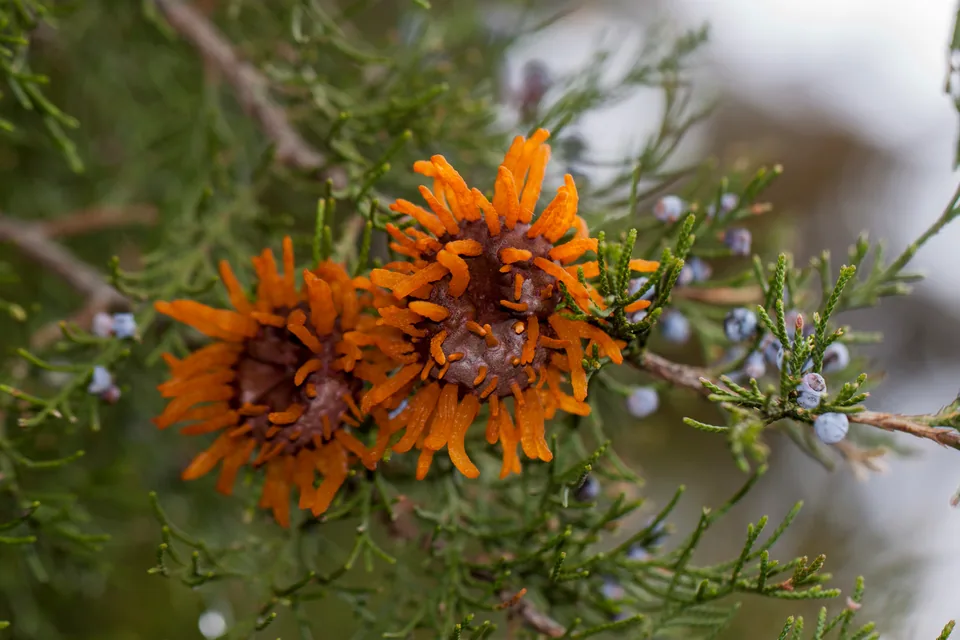
Fungus
Rust of American cedar
Gymnosporangium juniperi-virginianae
Written by Emilio Marruso
Classification: Basidiomycota › Pucciniomycotina › Pucciniomycetes › Pucciniales › Gymnosporangiaceae › Gymnosporangium
Plants it attacks
Plants in our guide where this problem is reported. Open a plant to see the sources.
- Hawthorn
Symptom: Discolors and weakens the foliage
- Chinese Juniper
Symptom: Round orange galls on infected branches and needles in spring, up to 2 inches
- Shore Juniper
Symptom: Cedar-apple rust and root rot can occur in poorly drained soils.
- Creeping Juniper
Symptom: Cercospora needle blight, Phomopsis and other blights; the rust fungus Gymnosporangium juniperi-virginianae causes "cedar apples" on juniper twigs.
- Rocky Mountain Juniper
Symptom: Dieback of stem tips in rainy or wet springs
- Eastern Redcedar
Symptom: Tree is an alternate host; fungal disease harmful to apple trees, minor effect on the redcedar
- Sweet Crabapple
Symptom: Rust is particularly problematic when planted near a juniper
Also reported on: Apple, Hall Crabapple, Hawthorn, Japanese Garden Juniper, One-seed Juniper, Paradise apple, Southern Crabapple, Tea Crabapple
Remedies
What our plant sheets report, with the outcome checked against official sources. Traditional remedies without an official source are flagged.
Treat
prune and destroy rust galls Works
How: Prune and destroy the galls before they produce spores.
Reported for 1 plant: Shore Juniper
prune galls Works
How: Prune and destroy cedar-apple rust galls before they produce spores.
Reported for 1 plant: Eastern Redcedar
pruning and destroying galls Works
How: Prune and destroy galls before the spore horns develop.
Reported for 1 plant: One-seed Juniper
pruning galls Works
How: prune and destroy the galls before the spore horns develop
Reported for 1 plant: Creeping Juniper
remove nearby junipers and galls Works
How: remove unwanted junipers near crabapples, do not plant junipers close, and remove galls from juniper branches during dormancy
Reported for 1 plant: Hall Crabapple
removing alternate hosts Partly works
How: remove or do not grow alternate hosts next to crabapples; remove galls from juniper
Reported for 1 plant: Southern Crabapple
removing juniper galls Partly works
How: If cedars or junipers are present, remove the galls in early spring to help reduce the disease.
Reported for 1 plant: Apple
pruning and destroying galls Official source, not independently tested
How: Prune and destroy cedar-apple rust galls before they produce spores.
Reported for 2 plants: Japanese Garden Juniper, Rocky Mountain Juniper
removing nearby cedars or pruning out galls Official source, not independently tested
How: If possible, remove Eastern red cedars from the area or prune out galls on nearby cedars.
Reported for 1 plant: Tea Crabapple
removing nearby junipers and their galls Official source, not independently tested
How: Remove unwanted junipers growing near crabapples, do not plant junipers close, and remove the galls from juniper branches during dormancy.
Reported for 1 plant: Sweet Crabapple
Where it is found
Present in 2 countries.
Regulated as a quarantine pest in: Bahrain, China, Egypt, Iran, Jordan, Mexico, Morocco, New Zealand, Norway, Paraguay, Tunisia, Ukraine, Uruguay.