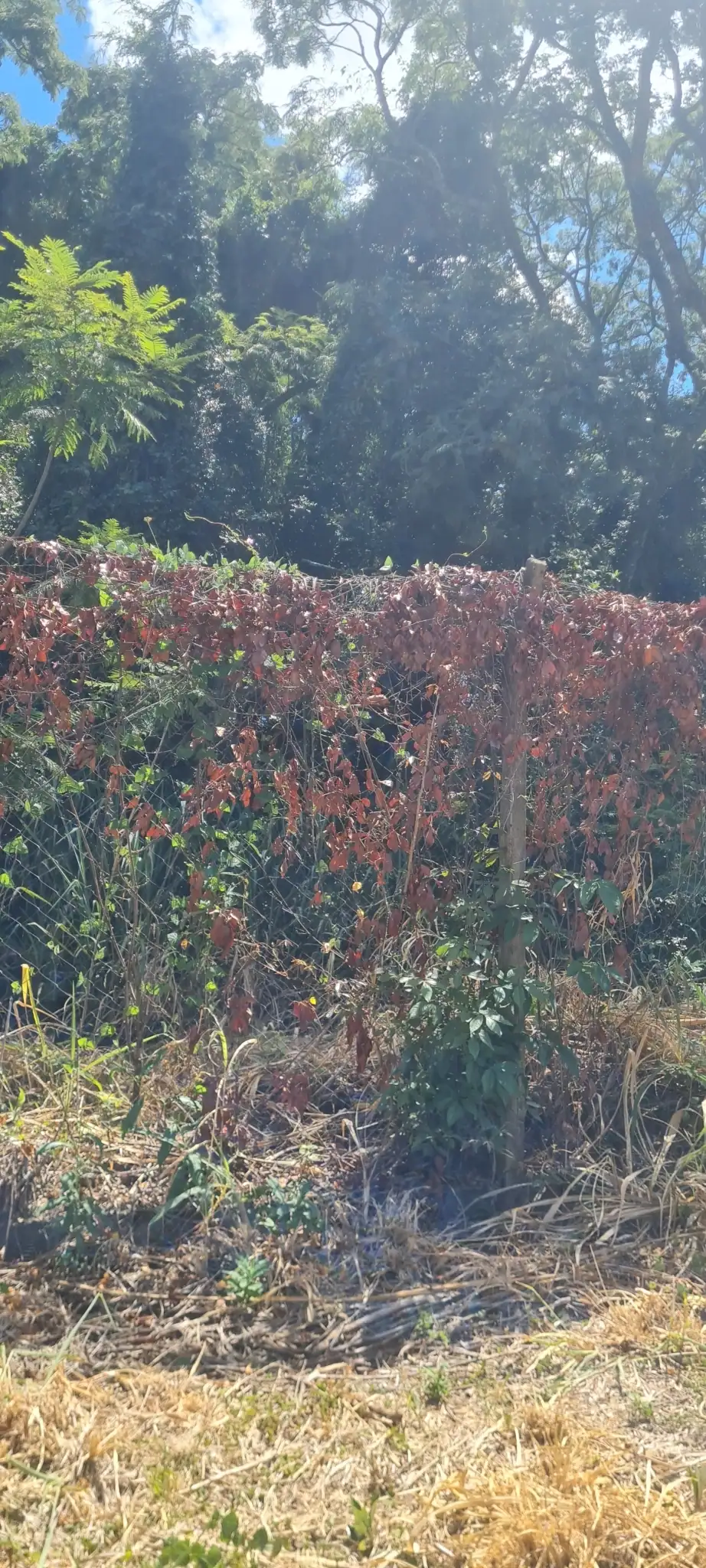
Bacterium
Fireblight
Erwinia amylovora
Written by Emilio Marruso
Classification: Proteobacteria › Gammaproteobacteria › Enterobacterales › Erwiniaceae › Erwinia
Plants it attacks
Plants in our guide where this problem is reported. Open a plant to see the sources.
- Flowering Quince
Symptom: Aphids on stressed plants; susceptible to fire blight and scab
- Creeping Cotton Easter
Symptom: Sometimes affect the plant
- Cotoneaster
Symptom: The most common problem; can spread quickly through a mass planting.
- Bearberry Cotoneaster
Symptom: Prone to attack by lace bugs; spider mites can occur in dry conditions; scale and fireblight can also affect the plant
- Willowleaf Cotoneaster
Symptom: Susceptible to fire blight, scale insects and spider mites.
- Hawthorn
Symptom: Occasional problems
- Hawthorn
Symptom: Flower clusters turn dark brown or black and die.
- Hawthorn
Symptom: Hawthorn species are susceptible to fire blight, cedar-hawthorn rust, cedar-quince rust, leaf blight, and leaf spot.
- Green Hawthorn
Symptom: Some susceptibility to cedar hawthorn rust (where eastern red cedars are present) and fireblight; fungal leaf spots, powdery mildew, cankers and apple scab occur occasionally.
- Quince
Symptom: Can be a problem, particularly if trees are excessively vigorous.
- Loquat
Symptom: Bacterial disease that infects flowers in the fall or young succulent shoots in the spring
- Sweet Crabapple
Symptom: At risk for fire blight, apple scab, and canker
Also reported on: Allegheny Serviceberry, American Mountain Ash, Apricot, Asian Pear, Black Chokeberry, Breath of Spring Spiraea, Bridal wreath, Callery Pear, Cherry Plum, Chinese Hawthorn, Chinese Photinia, Chinese Quince, Christmas Berry, Coastal Serviceberry, European Mountain Ash, Firethorn, Flowering quince, Formosa Pyracantha, Hall Crabapple, Hawthorn, Hawthorn, Hawthorn, Hawthorn, Hawthorn, Hawthorn, Hawthorn, Hawthorn, Hawthorn, Japanese Plum, Japanese Spiraea, Littleleaf Cotoneaster, Mayhaw, Meadowsweet, Mespilus germanica, Mountain Ash, Ninebark, Paradise apple, Parney Cotoneaster, Pear, Plum, Raspberry, Rockspray, Rugosa Rose, Sargent Crabapple, Saskatoon Serviceberry, Serviceberry, Serviceberry, Southern Crabapple, Spreading Cotoneaster, Tea Crabapple, Wintergreen Cotoneaster
Remedies
What our plant sheets report, with the outcome checked against official sources. Traditional remedies without an official source are flagged.
Treat
pruning out infected branches Works
How: Prune infected branches 18 inches below the affected area and burn or bury all diseased material; remove blighted limbs in the dormant season, when bacteria are less active.
Reported for 3 plants: Asian Pear, American Mountain Ash, European Mountain Ash
breaking out blighted shoots by hand Works
How: break out blighted shoots by hand rather than cutting, since pruning tools can spread the bacteria
Reported for 1 plant: Southern Crabapple
prune infected branches Works
How: during dormancy, in dry weather, prune infected branches cutting at least 4 inches below the base of the canker and disinfect tools frequently
Reported for 1 plant: Hall Crabapple
pruning and destroying damaged wood Works
How: Wood damaged by fire blight should be pruned and destroyed.
Reported for 1 plant: Willowleaf Cotoneaster
pruning infected branches Works
How: During dormancy when the weather is dry, prune infected branches, cutting at least 4 inches below the base of the canker, and disinfect pruning tools frequently.
Reported for 1 plant: Sargent Crabapple
pruning infected branches and disinfecting tools Works
How: Prune out infected branches cutting well below visible symptoms when the bark is dry, and disinfect tools between cuts.
Reported for 1 plant: Firethorn
pruning of affected branches Partly works
How: Prune affected branches if the infection is not extensive and disinfect the pruning tools between cuts.
Reported for 3 plants: Spreading Cotoneaster, Wintergreen Cotoneaster, Littleleaf Cotoneaster
avoiding excessive nitrogen fertilization Partly works
How: Severity of disease may be reduced by avoiding excessive nitrogen fertilization.
Reported for 1 plant: Willowleaf Cotoneaster
pruning affected branches Partly works
How: If the infection is not extensive over the plant, some control may be obtained by pruning affected branches.
Reported for 1 plant: Parney Cotoneaster
pruning and sanitation Partly works
How: Prune out and destroy infected growth during the dormant season.
Reported for 1 plant: Chinese Quince
pruning blighted branches Partly works
How: prune the affected branches; if infection is not extensive some control may be obtained
Reported for 1 plant: Rockspray
pruning infected branches Partly works
How: Prune and remove the infected branches, cutting at least 12 inches below visible symptoms when the bark is dry, disinfesting tools between cuts.
Reported for 1 plant: Formosa Pyracantha
pruning out infected branches Official source, not independently tested
How: During dormancy in dry weather prune infected branches, cutting at least 4 inches below the base of the canker, and disinfest pruning tools frequently
Reported for 4 plants: Allegheny Serviceberry, Coastal Serviceberry, Mountain Ash, Meadowsweet
pruning out infected wood Official source, not independently tested
How: cut out infected wood well below the damaged part, at least 10-12 inches below the visible symptoms, and remove or burn it
Reported for 4 plants: Hawthorn, Hawthorn, Hawthorn, Hawthorn
moderate nitrogen fertilizer Official source, not independently tested
How: Use moderate amounts of nitrogen fertilizer to minimize susceptible shoot growth.
Reported for 3 plants: Hawthorn, Hawthorn, American Mountain Ash
pruning infected branches Official source, not independently tested
How: Prune infected branches during dormancy in dry weather, cutting at least 4 inches below the base of the canker, and disinfest pruning tools frequently.
Reported for 2 plants: Hawthorn, Sweet Crabapple
pruning out infected tissue Official source, not independently tested
How: Prune and remove all symptomatic tissues as soon as they appear, cutting at least 8-10 inches below external symptoms.
Reported for 2 plants: Serviceberry, Hawthorn
avoiding excessive nitrogen fertilization Official source, not independently tested
How: Avoid excessive nitrogen fertilization.
Reported for 1 plant: Wintergreen Cotoneaster
cutting out infected material and raking debris Not verified
How: Cut out the infected material and rake up all fallen debris to prevent reinfection.
Reported for 1 plant: Quince
horsetail decoction spray Not verified
How: Spray horsetail decoction as a preventive habit.
Reported for 1 plant: Serviceberry
pruning and alcohol on tools Not verified
How: Cut affected branches at least eight inches below symptoms and dispose of them. Treat wounds and tools with alcohol.
Reported for 1 plant: Saskatoon Serviceberry
pruning out infected branches Not verified
How: Prune out infected branches, cutting at healthy tissue well below blighted areas.
Reported for 1 plant: Breath of Spring Spiraea
18 more remedies are reported in single plant sheets.
Where it is found
Present in 58 countries.
Found but not established in 1 countries.
Regulated as a quarantine pest in: Argentina, Armenia, Azerbaijan, Bahrain, Belarus, Brazil, Chile, China, Egypt, Georgia, Iran, Jordan, Kazakhstan, Moldova, Morocco, Norway, Paraguay, Russia, Serbia, South Korea, Switzerland, Tunisia, Türkiye, Ukraine, United Kingdom, Uruguay, Uzbekistan.