
How to Grow and Care for Loquat
Eriobotrya japonica
Written by Emilio Marruso · last checked
Toxic to: People · Why
At a glance
Loquat is an evergreen small tree that rewards you with fruit in spring, four to five months after it flowers. It grows in full sun to partial shade, tolerates drought and needs no winter chill. Even a single tree bears fruit, and you can eat it fresh or turn it into jams, jellies, pies and syrups.
- Sun
Full sun to partial shade
What the sources say (2)
Light: Full sun to partial shade
Loquat prefers full sun to part shade and well-drained soil.
— Loquat (Eriobotrya japonica) Care, Cultivation & Growing Guide | Home & Garden Information Center [4] Prefers moist, well-drained, loamy soil, full sun but will tolerate partial shade.
— Eriobotrya japonica (Japanese Medlar, Japanese Plum, Loquat) | North Carolina Extension Gardener Plant Toolbox [1] - Water
Water young trees often; mature trees only in long dry spells and while fruit grows; don't overwater
What the sources say (4)
Watering: Mature trees need water during extended dry periods and when the fruit is developing; overwatering will hurt the trees
Mature trees need water during extended dry periods and when the fruit is developing.
— Growing Loquats in Coastal Mississippi | Mississippi State University Extension Service [5] Loquat trees do not need a lot of water; in fact, overwatering will hurt the trees.
— Growing Loquats in Coastal Mississippi | Mississippi State University Extension Service [5] Watering notes: Young trees should be watered more frequently to ensure survival; water when drought stress occurs and maintain a two- to three-inch [5.1–7.6 cm] layer of organic mulch
Young trees should be watered more frequently to ensure survival.
— Growing Loquats in Coastal Mississippi | Mississippi State University Extension Service [5] Maintain a two- to three-inch layer of organic mulch and water when drought stress occurs.
— Loquat (Eriobotrya japonica) Care, Cultivation & Growing Guide | Home & Garden Information Center [4] - Spacing
25–30 ft from other trees, buildings and power lines
What the sources say (4)
Spacing: 762 cm (25 ft)
It should be spaced about 25 feet apart in full sun.
— Growing Loquats in Coastal Mississippi | Mississippi State University Extension Service [5] Between plants: 7.62-9.14 m [25–30 ft] or more from other trees, structures and power lines for unpruned trees, in full sun; trees pruned to limit their size can be planted slightly closer.
It should be spaced about 25 feet apart in full sun.
— Growing Loquats in Coastal Mississippi | Mississippi State University Extension Service [5] Loquat trees left unpruned may grow moderately large and should be planted 25 to 30 ft or more away from structures, electrical lines, and other trees for best production.
— [8] Trees that are pruned to limit their size may be planted slightly closer.
— [8] - Feeding
Mature trees: balanced 6-6-6 before bloom, after harvest and in early summer; go easy on nitrogen
What the sources say (4)
When: Mature trees: just before bloom, after harvest and again in early summer
Since mature trees are in some stage of growth year-round, they should be fertilized three times per year, once just before bloom, once after harvest, and again in early summer.
— Growing Loquats in Coastal Mississippi | Mississippi State University Extension Service [5] Mineral fertilizers: Balanced 6-6-6 fertilizer; a mature tree can require 4.54 to 6.81 kg [10–15 lb] per year
A common fertilizer such as 6-6-6 will suffice. A mature tree can require 10 to 15 pounds of fertilizer per year.
— Growing Loquats in Coastal Mississippi | Mississippi State University Extension Service [5] Avoid: Excess nitrogen: it promotes succulent new growth that is susceptible to fire blight
Disinfect pruning tools between cuts to discourage the spread of the disease. Avoid excessive nitrogen fertilization that encourages succulent, fire blight-susceptible new growth.
— Loquat (Eriobotrya japonica) Care, Cultivation & Growing Guide | Home & Garden Information Center [4] Fire blight attacks fast-growing, succulent tissue, so do not apply more nitrogen than is absolutely necessary.
— Growing Loquats in Coastal Mississippi | Mississippi State University Extension Service [5] - Pruning
Takes topping well; where cold hurts it, prune once the new shoots appear
What the sources say (2)
Pruning: Where cold temperatures damage loquats, postpone pruning until new shoots emerge
In growing areas where cold temperatures damage loquats, postpone pruning until new shoots emerge.
— Loquat (Eriobotrya japonica) Care, Cultivation & Growing Guide | Home & Garden Information Center [4] Hard pruning: Tolerates topping: pruned (topped) trees stay 1.8-3.7 m [6–12 ft] tall, unpruned trees reach 6-9 m [19.7–29.5 ft].
Unpruned trees can reach heights of 20 or 30 feet, while pruned (topped) trees will stay between 6 and 12 feet tall.
— Growing Loquats in Coastal Mississippi | Mississippi State University Extension Service [5] - Harvest
Pick in spring only when ripe: it won't ripen off the tree; keeps for weeks in the fridge
What the sources say (8)
Harvest: Spring, four to five months after flowering; harvest ripe fruit as no further ripening occurs after picking
South Carolina (Clemson Extension): The ripe yellow to orange plum-like loquat fruits ripen in April and May.
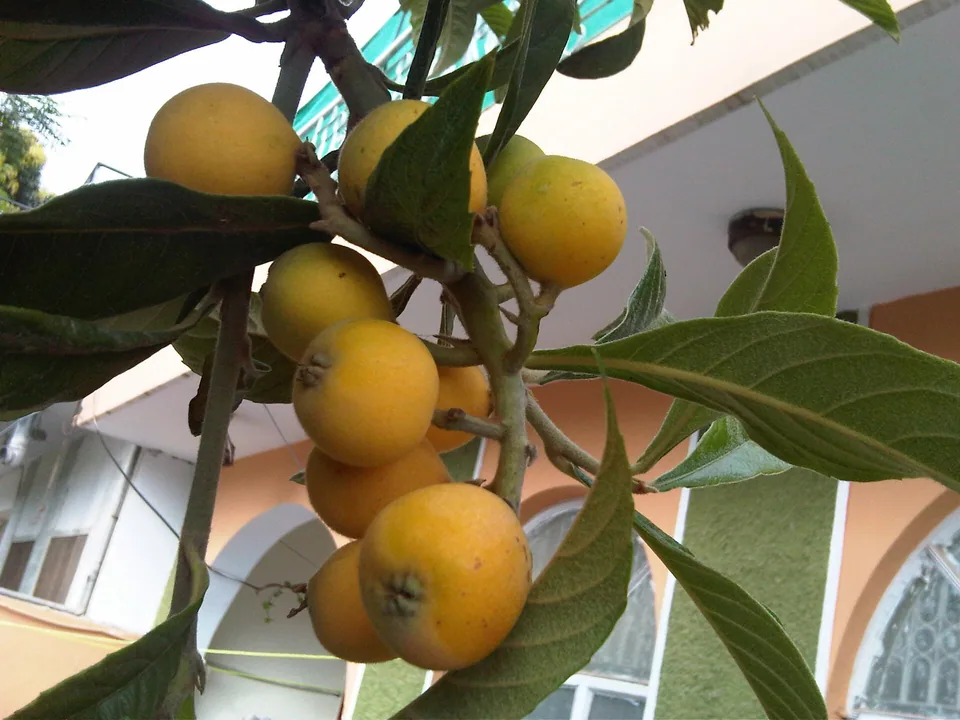
— Loquat (Eriobotrya japonica) Care, Cultivation & Growing Guide | Home & Garden Information Center [4] According to USU Extension: Fruit a pome (like an apple); yellow-orange, hairy; pear shaped to oblong, 1" to 2" in diameter; ripens between late March and June; edible.
— Loquat | TreeBrowser | USU [7] Florida, grafted cultivars (UF/IFAS Charlotte County): Superior grafted varieties that produce ripe fruit in February/March include ‘Champagne’ with yellow skinned, white-fleshed, tart fruit;
— Go subtropical! - UF/IFAS Extension Charlotte County [6] After fertilization, fruit takes four to five months before ripening in the spring.
— Loquat (Eriobotrya japonica) Care, Cultivation & Growing Guide | Home & Garden Information Center [4] Harvest ripe fruit, as no further ripening will occur after it is picked.
— Loquat (Eriobotrya japonica) Care, Cultivation & Growing Guide | Home & Garden Information Center [4] How to harvest: Harvest the fruit when ripe, left to ripen on the tree: it does not ripen further after picking
Harvest ripe fruit, as no further ripening will occur after it is picked.
— Loquat (Eriobotrya japonica) Care, Cultivation & Growing Guide | Home & Garden Information Center [4] Fruit must be tree-ripened for the best flavor.
— Go subtropical! - UF/IFAS Extension Charlotte County [6] Storage: Ripe fruit keeps for several weeks in plastic bags in the refrigerator.
Ripe loquat fruit may be stored in plastic bags in the refrigerator for several weeks.
— [8] - Pollination
One tree bears fruit; a second variety nearby gives more and bigger fruit
What the sources say (4)
Fruit set: Self-fertile: sets fruit with its own pollen
Loquats are self-compatible, meaning one single tree can produce fruit, but as with many fruiting trees, cross-pollination improves the number, size, and quality of fruit.
— Growing Loquats in Coastal Mississippi | Mississippi State University Extension Service [5] Most loquats are self-fertile and produce fruit without a pollenizer, but cross-pollination with a different cultivar will result in improved fruit quantity and quality.
— [9] What it needs: One tree can produce fruit; cross-pollination with a different cultivar improves fruit number, size and quality.
Loquats are self-compatible, meaning one single tree can produce fruit, but as with many fruiting trees, cross-pollination improves the number, size, and quality of fruit.
— Growing Loquats in Coastal Mississippi | Mississippi State University Extension Service [5] Pollinators: bees, flies
Insects, primarily bees and flies, pollinate flowers for fruit production. Loquats are self-compatible
— Growing Loquats in Coastal Mississippi | Mississippi State University Extension Service [5] - Pests
Fire blight, scab and leaf spot; also fruit flies, caterpillars, borers and aphids
What the sources say (4)
Pests: fruit flies, caterpillars, borers, aphids
Loquat fruit insect pests include fruit flies and some caterpillar species. Other insects, such as borers and aphids, may attack the tree itself.
— Growing Loquats in Coastal Mississippi | Mississippi State University Extension Service [5] Diseases: fire blight, rots, cankers, blight, scab, leaf spot, fungal diseases
Fire blight can be troublesome on this tree. The bacterium that causes fire blight, Erwinia amylovora , is spread by rain and insects
— Eriobotrya japonica (Japanese Medlar, Japanese Plum, Loquat) | North Carolina Extension Gardener Plant Toolbox [1] Diseases include rots, cankers, blight, scab, and leaf spot.
— Eriobotrya japonica (Japanese Medlar, Japanese Plum, Loquat) | North Carolina Extension Gardener Plant Toolbox [1] Fungal diseases can also attack the tree and/or fruit.
— Growing Loquats in Coastal Mississippi | Mississippi State University Extension Service [5] - Watch out
Heat over 95 °F (35 °C) with long dry spells scorches leaves; keep 2–3 in of mulch
What the sources say (4)
Heat: Temperatures above 35 °C [95 °F] can harm growth; summer heat above 35 °C [95 °F] with prolonged low rainfall can cause leaf scorch and branch dieback.
Temperatures above 95°F may negatively affect loquat tree growth.
— [8] Care Tip: Summer temperatures above 95 °F and prolonged periods of limited rainfall may cause leaf scorch, branch dieback, and other heat- and drought-induced injury.
— Loquat (Eriobotrya japonica) Care, Cultivation & Growing Guide | Home & Garden Information Center [4] Watering notes: Young trees should be watered more frequently to ensure survival; water when drought stress occurs and maintain a two- to three-inch [5.1–7.6 cm] layer of organic mulch
Young trees should be watered more frequently to ensure survival.
— Growing Loquats in Coastal Mississippi | Mississippi State University Extension Service [5] Maintain a two- to three-inch layer of organic mulch and water when drought stress occurs.
— Loquat (Eriobotrya japonica) Care, Cultivation & Growing Guide | Home & Garden Information Center [4] - Size
10–25 ft tall and wide; topped trees stay 6–12 ft
What the sources say (6)
Mature height: 305-762 cm (10-25 ft)
: Loquat is an evergreen shrub or small tree that can grow typically 10 to 20 feet tall but can grow up to 30 feet.
— Loquat (Eriobotrya japonica) Care, Cultivation & Growing Guide | Home & Garden Information Center [4] : Unpruned trees can reach heights of 20 or 30 feet, while pruned (topped) trees will stay between 6 and 12 feet tall.
— Growing Loquats in Coastal Mississippi | Mississippi State University Extension Service [5] Dimensions: Height: 10 ft. 0 in. - 25 ft. 0 in. Width: 10 ft. 0 in. - 25 ft. 0 in.
— Eriobotrya japonica (Japanese Medlar, Japanese Plum, Loquat) | North Carolina Extension Gardener Plant Toolbox [1] Mature width: 305-762 cm (10-25 ft)
: Depending on its location, it may develop a narrow, upright crown in the shade, or a round to vase-shaped canopy equal to its height in full sun.
— Loquat (Eriobotrya japonica) Care, Cultivation & Growing Guide | Home & Garden Information Center [4] Dimensions: Height: 10 ft. 0 in. - 25 ft. 0 in. Width: 10 ft. 0 in. - 25 ft. 0 in.
— Eriobotrya japonica (Japanese Medlar, Japanese Plum, Loquat) | North Carolina Extension Gardener Plant Toolbox [1] Hard pruning: Tolerates topping: pruned (topped) trees stay 1.8-3.7 m [6–12 ft] tall, unpruned trees reach 6-9 m [19.7–29.5 ft].
Unpruned trees can reach heights of 20 or 30 feet, while pruned (topped) trees will stay between 6 and 12 feet tall.
— Growing Loquats in Coastal Mississippi | Mississippi State University Extension Service [5] - Propagation
Usually grafted; cuttings root poorly, and seedlings differ from the parent and take 6–8 years to flower
What the sources say (9)
Propagation: Seed (sown immediately after harvesting the fruit; does not come true to type), semi-hardwood cuttings (difficult to root), grafting onto seed-grown rootstocks
Loquat cuttings are difficult to root. Collect semi-hardwood cuttings when the new green growth begins to harden and turn brown, typically in June and July.
— Loquat (Eriobotrya japonica) Care, Cultivation & Growing Guide | Home & Garden Information Center [4] Alternatively, graft desirable cultivars onto seed-grown loquat rootstocks.
— Loquat (Eriobotrya japonica) Care, Cultivation & Growing Guide | Home & Garden Information Center [4] The resulting seedlings will not come true to type (similar to the parents), and their landscape performance and fruit quality will be unpredictable.
— Loquat (Eriobotrya japonica) Care, Cultivation & Growing Guide | Home & Garden Information Center [4] Cuttings: Semi-hardwood cuttings, taken when new green growth begins to harden and turn brown; they are difficult to root, and grafting onto seedling rootstocks is the common method.
South Carolina: Collect semi-hardwood cuttings when the new green growth begins to harden and turn brown, typically in June and July.
— Loquat (Eriobotrya japonica) Care, Cultivation & Growing Guide | Home & Garden Information Center [4] Loquat cuttings are difficult to root. Collect semi-hardwood cuttings when the new green growth begins to harden and turn brown, typically in June and July.
— Loquat (Eriobotrya japonica) Care, Cultivation & Growing Guide | Home & Garden Information Center [4] Propagation by cuttings and marcottage is also possible but more difficult.
— [8] Germination: Sow seed immediately after harvesting the ripe fruit, or store cleaned seed for up to 6 months at 5 °C [41 °F] and high relative humidity; seedlings do not come true and take 6-8 years to flower.
Loquat can be reproduced from seed, but it must be sown immediately after harvesting the mature fruit.
— Loquat (Eriobotrya japonica) Care, Cultivation & Growing Guide | Home & Garden Information Center [4] Loquat seeds may remain viable for up to six months of storage at high RH and 41°F or cleaned and planted immediately.
— [8] Finally, it often takes seed-grown loquats six to eight years to flower.
— Loquat (Eriobotrya japonica) Care, Cultivation & Growing Guide | Home & Garden Information Center [4] - Sowing
Sow seeds right after picking the ripe fruit, or keep them up to 6 months at 41 °F (5 °C)
What the sources say (4)
Sowing: Immediately after harvesting the mature fruit
Loquat can be reproduced from seed, but it must be sown immediately after harvesting the mature fruit.
— Loquat (Eriobotrya japonica) Care, Cultivation & Growing Guide | Home & Garden Information Center [4] Germination: Sow seed immediately after harvesting the ripe fruit, or store cleaned seed for up to 6 months at 5 °C [41 °F] and high relative humidity; seedlings do not come true and take 6-8 years to flower.
Loquat can be reproduced from seed, but it must be sown immediately after harvesting the mature fruit.
— Loquat (Eriobotrya japonica) Care, Cultivation & Growing Guide | Home & Garden Information Center [4] Loquat seeds may remain viable for up to six months of storage at high RH and 41°F or cleaned and planted immediately.
— [8] Finally, it often takes seed-grown loquats six to eight years to flower.
— Loquat (Eriobotrya japonica) Care, Cultivation & Growing Guide | Home & Garden Information Center [4] - Safety
Don't eat the seeds: crushed, in large amounts, they cause vomiting; safe for cats, dogs and horses
Overview
Loquat is an evergreen shrub or small tree grown for its edible fruit. [4][1] It prefers full sun to part shade and well-drained soil, and flowers and fruit are damaged by cold. [4]
This record is incomplete: the sources we read do not cover every field yet.
Not yet covered by our sources: Planting
Loquat care
Measurements in square brackets are our conversion into the other unit system; the quoted text is unchanged.
How to water Loquat
Watering
Mature trees need water during extended dry periods and when the fruit is developing; overwatering will hurt the trees
What the sources say (2)
Mature trees need water during extended dry periods and when the fruit is developing.Loquat trees do not need a lot of water; in fact, overwatering will hurt the trees.Watering notes
Young trees should be watered more frequently to ensure survival; water when drought stress occurs and maintain a two- to three-inch [5.1–7.6 cm] layer of organic mulch
What the sources say (2)
Young trees should be watered more frequently to ensure survival.Maintain a two- to three-inch layer of organic mulch and water when drought stress occurs.How much light Loquat needs
Full sun to partial shade
What the sources say (2)
Loquat prefers full sun to part shade and well-drained soil.Prefers moist, well-drained, loamy soil, full sun but will tolerate partial shade.How much cold Loquat can take
Hardiness, coldest zone
The sources give different values depending on region, zone or growing conditions.
What each source says
According to NC State Extension: 8a [winter low −12.2 to −9.4 °C (10 to 15 °F)]
South Carolina (Clemson Extension): 8b [winter low −9.4 to −6.7 °C (15 to 20 °F)]
According to USU Extension: 8 [winter low −12.2 to −6.7 °C (10 to 20 °F)]
What the sources say (4)
According to NC State Extension: USDA Plant Hardiness Zone: 8a, 8b, 9a, 9b, 10a, 10b, 11a, 11bSouth Carolina (Clemson Extension): USDA Hardiness Zones: 8b to 10 (trees cold hardy to 12 °F; flowers damaged at 27 °F)According to USU Extension: Hardiness Zone | 8-108a, 8b, 9a, 9b, 10a, 10b, 11a, 11bHardiness, warmest zone
The sources give different values depending on region, zone or growing conditions.
What each source says
According to NC State Extension: 11b [winter low 7.2 to 10 °C (45 to 50 °F)]
South Carolina (Clemson Extension): 10 [winter low −1.1 to 4.4 °C (30 to 40 °F)]
According to USU Extension: 10 [winter low −1.1 to 4.4 °C (30 to 40 °F)]
What the sources say (4)
According to NC State Extension: USDA Plant Hardiness Zone: 8a, 8b, 9a, 9b, 10a, 10b, 11a, 11bSouth Carolina (Clemson Extension): USDA Hardiness Zones: 8b to 10 (trees cold hardy to 12 °F; flowers damaged at 27 °F)According to USU Extension: Hardiness Zone | 8-108a, 8b, 9a, 9b, 10a, 10b, 11a, 11bWhere to grow Loquat
762 cm (25 ft)
What the sources say (1)
It should be spaced about 25 feet apart in full sun.How to propagate Loquat
Seed (sown immediately after harvesting the fruit; does not come true to type), semi-hardwood cuttings (difficult to root), grafting onto seed-grown rootstocks
What the sources say (3)
Loquat cuttings are difficult to root. Collect semi-hardwood cuttings when the new green growth begins to harden and turn brown, typically in June and July.Alternatively, graft desirable cultivars onto seed-grown loquat rootstocks.The resulting seedlings will not come true to type (similar to the parents), and their landscape performance and fruit quality will be unpredictable.How to grow Loquat
The plant
Life cycle
perennial (woody, evergreen shrub or small tree)
What the sources say (2)
Plant Type: Edible Perennial Poisonous Shrub Tree Woody Plant Leaf Characteristics: Broadleaf EvergreenLoquat ( Eriobotrya japonica ), also called Chinese plum and Japanese plum, is a large subtropical evergreen shrub or small tree in the rose family (Rosaceae) that is native to China.Family
Rosaceae
What the sources say (2)
is a large subtropical evergreen shrub or small tree in the rose family (Rosaceae) that is native to China.The loquat tree is in the Rosaceae family, along with many other fruiting trees, such as apples, peaches, plums, and pears.Mature height
305-762 cm (10-25 ft)
What each source says
:
:
What the sources say (3)
: Loquat is an evergreen shrub or small tree that can grow typically 10 to 20 feet tall but can grow up to 30 feet.: Unpruned trees can reach heights of 20 or 30 feet, while pruned (topped) trees will stay between 6 and 12 feet tall.Dimensions: Height: 10 ft. 0 in. - 25 ft. 0 in. Width: 10 ft. 0 in. - 25 ft. 0 in.Mature width
305-762 cm (10-25 ft)
What each source says
:
What the sources say (2)
: Depending on its location, it may develop a narrow, upright crown in the shade, or a round to vase-shaped canopy equal to its height in full sun.Dimensions: Height: 10 ft. 0 in. - 25 ft. 0 in. Width: 10 ft. 0 in. - 25 ft. 0 in.Sowing and growth
Days to maturity
4-5 months from fertilization of the flowers to ripe fruit (ripening in spring)
What the sources say (1)
After fertilization, fruit takes four to five months before ripening in the spring.Harvest and storage
How to harvest
Harvest the fruit when ripe, left to ripen on the tree: it does not ripen further after picking
What the sources say (2)
Harvest ripe fruit, as no further ripening will occur after it is picked.Fruit must be tree-ripened for the best flavor.Saving seeds
Sow the seed immediately after harvesting the mature fruit; seedlings do not come true to type
What the sources say (1)
Loquat can be reproduced from seed, but it must be sown immediately after harvesting the mature fruit. The resulting seedlings will not come true to typePests and diseases
Pests
fruit flies, caterpillars, borers, aphids
What the sources say (1)
Loquat fruit insect pests include fruit flies and some caterpillar species. Other insects, such as borers and aphids, may attack the tree itself.Diseases
fire blight, rots, cankers, blight, scab, leaf spot, fungal diseases
What the sources say (3)
Fire blight can be troublesome on this tree. The bacterium that causes fire blight, Erwinia amylovora , is spread by rain and insectsDiseases include rots, cankers, blight, scab, and leaf spot.Fungal diseases can also attack the tree and/or fruit.Fertilizing
When
Mature trees: just before bloom, after harvest and again in early summer
What the sources say (1)
Since mature trees are in some stage of growth year-round, they should be fertilized three times per year, once just before bloom, once after harvest, and again in early summer.How often
Three times a year (mature trees)
What the sources say (1)
Since mature trees are in some stage of growth year-round, they should be fertilized three times per year, once just before bloom, once after harvest, and again in early summer.Mineral fertilizers
Balanced 6-6-6 fertilizer; a mature tree can require 4.54 to 6.81 kg [10–15 lb] per year
What the sources say (1)
A common fertilizer such as 6-6-6 will suffice. A mature tree can require 10 to 15 pounds of fertilizer per year.Avoid
Excess nitrogen: it promotes succulent new growth that is susceptible to fire blight
What the sources say (2)
Disinfect pruning tools between cuts to discourage the spread of the disease. Avoid excessive nitrogen fertilization that encourages succulent, fire blight-susceptible new growth.Fire blight attacks fast-growing, succulent tissue, so do not apply more nitrogen than is absolutely necessary.Spacing
Between plants
7.62-9.14 m [25–30 ft] or more from other trees, structures and power lines for unpruned trees, in full sun; trees pruned to limit their size can be planted slightly closer.
What the sources say (3)
It should be spaced about 25 feet apart in full sun.Loquat trees left unpruned may grow moderately large and should be planted 25 to 30 ft or more away from structures, electrical lines, and other trees for best production.Trees that are pruned to limit their size may be planted slightly closer.Propagation
Germination
Sow seed immediately after harvesting the ripe fruit, or store cleaned seed for up to 6 months at 5 °C [41 °F] and high relative humidity; seedlings do not come true and take 6-8 years to flower.
What the sources say (3)
Loquat can be reproduced from seed, but it must be sown immediately after harvesting the mature fruit.Loquat seeds may remain viable for up to six months of storage at high RH and 41°F or cleaned and planted immediately.Finally, it often takes seed-grown loquats six to eight years to flower.Cuttings
Semi-hardwood cuttings, taken when new green growth begins to harden and turn brown; they are difficult to root, and grafting onto seedling rootstocks is the common method.
What each source says
South Carolina: June and July
What the sources say (3)
South Carolina: Collect semi-hardwood cuttings when the new green growth begins to harden and turn brown, typically in June and July.Loquat cuttings are difficult to root. Collect semi-hardwood cuttings when the new green growth begins to harden and turn brown, typically in June and July.Propagation by cuttings and marcottage is also possible but more difficult.After harvest
Storage
Ripe fruit keeps for several weeks in plastic bags in the refrigerator.
What the sources say (1)
Ripe loquat fruit may be stored in plastic bags in the refrigerator for several weeks.Heat and drought
Heat
Temperatures above 35 °C [95 °F] can harm growth; summer heat above 35 °C [95 °F] with prolonged low rainfall can cause leaf scorch and branch dieback.
What the sources say (2)
Temperatures above 95°F may negatively affect loquat tree growth.Care Tip: Summer temperatures above 95 °F and prolonged periods of limited rainfall may cause leaf scorch, branch dieback, and other heat- and drought-induced injury.Drought
Tolerates drought; water only in severe, prolonged drought, though mature trees need water during extended dry periods and while fruit develops; keep a mulch layer and water when drought stress appears.
What the sources say (4)
Easy to grow, tolerates alkaline soil, drought, fireblight can be a problem.Do not water the tree unless a severe and prolonged drought occurs.Mature trees need water during extended dry periods and when the fruit is developing.Maintain a two- to three-inch layer of organic mulch and water when drought stress occurs.Pollination
Fruit set
Self-fertile: sets fruit with its own pollen
What the sources say (2)
Loquats are self-compatible, meaning one single tree can produce fruit, but as with many fruiting trees, cross-pollination improves the number, size, and quality of fruit.Most loquats are self-fertile and produce fruit without a pollenizer, but cross-pollination with a different cultivar will result in improved fruit quantity and quality.What it needs
One tree can produce fruit; cross-pollination with a different cultivar improves fruit number, size and quality.
What the sources say (1)
Loquats are self-compatible, meaning one single tree can produce fruit, but as with many fruiting trees, cross-pollination improves the number, size, and quality of fruit.Carried by
Insects
What the sources say (1)
Insects, primarily bees and flies, pollinate flowers for fruit production. Loquats are self-compatiblePollinators
bees, flies
What the sources say (1)
Insects, primarily bees and flies, pollinate flowers for fruit production. Loquats are self-compatiblePruning
When to prune
The sources give different values depending on region, zone or growing conditions.
What each source says
zone dove il freddo danneggia la pianta: Postpone pruning until new shoots emerge.
What the sources say (1)
zone dove il freddo danneggia la pianta: Cold Weather Care: In growing areas where cold temperatures damage loquats, postpone pruning until new shoots emerge.Hard pruning
Tolerates topping: pruned (topped) trees stay 1.8-3.7 m [6–12 ft] tall, unpruned trees reach 6-9 m [19.7–29.5 ft].
What the sources say (1)
Unpruned trees can reach heights of 20 or 30 feet, while pruned (topped) trees will stay between 6 and 12 feet tall.Winter chill
Chill hours
0 hours between 0 and 7.2 °C [32–45 °F]
What each source says
specie «Loquat»: 0 hours
What the sources say (3)
specie «Loquat»: Loquat Chill hours: none required Loquat trees are more commonly grown in San Mateo and San Francisco countiesLoquat Chill hours: none required Loquat trees are more commonly grown in San Mateo and San Francisco countiesChill hours are accumulated from November through February when temperatures are between 32° and 45°F.Loquat pests and problems
Fire blight
Symptom: Bacterial disease that infects flowers in the fall or young succulent shoots in the spring
What to do: Promptly remove and discard diseased parts by pruning 12 to 18 inches below any infected tissue, disinfect pruning tools, and avoid excessive nitrogen fertilization
What the sources say (1)
Manage this disease by promptly removing and discarding the diseased parts by pruning 12 to 18 inches below any infected tissue.
— Loquat (Eriobotrya japonica) Care, Cultivation & Growing Guide | Home & Garden Information Center [4] Heat and drought injury
Symptom: Leaf scorch and branch dieback
What to do: Maintain organic mulch and water when drought stress occurs
What the sources say (1)
Summer temperatures above 95 °F and prolonged periods of limited rainfall may cause leaf scorch, branch dieback, and other heat- and drought-induced injury.
— Loquat (Eriobotrya japonica) Care, Cultivation & Growing Guide | Home & Garden Information Center [4]
Remedies
Each remedy shows what official sources say about it; traditional remedies without an official source are marked as such. Harmful ones are listed so you know to avoid them.
Treating the plant
mealybugs
potassium soap and alcohol spray Works
spraying home remedies that contain dish detergent on plants on a sunny day can injure the plant, essentially burning it.
— extension.psu.edu [13] How: Homemade preparation based on potassium soap and alcohol; treat after direct observation of the pest.
as well as homemade preparations based on potassium soap and alcohol. It is recommended to treat after direct observation of the pest.
— en.jardineriaon.com [11] What the evidence says For example, insecticidal soap is a safe, effective organic insecticide with minimal environmental impact.
— extension.psu.edu [12]
aphids
potassium soap spray Works
spraying home remedies that contain dish detergent on plants on a sunny day can injure the plant, essentially burning it.
— extension.psu.edu [13] How: Natural insecticide such as potassium soap, used for control.
Control is usually carried out with natural insecticides such as potassium soap, garlic extracts, mineral oils or, in severe cases, specific chemical products.
— en.jardineriaon.com [11] What the evidence says For example, insecticidal soap is a safe, effective organic insecticide with minimal environmental impact.
— extension.psu.edu [12] garlic extract Not verified
Traditional remedy, not verified by an official source.
How: Natural insecticide such as garlic extracts, used for control.
ladybugs Not verified
Traditional remedy, not verified by an official source.
How: Release ladybugs to tackle aphid infestations.
marigold and basil companion planting Not verified
Traditional remedy, not verified by an official source.
How: Plant marigolds to repel pests and basil to help deter aphids and other harmful insects.
black-scale
neem oil Works
Despite these being biological pesticides, it is important to read the directions on the label and wear safety equipment.
— extension.illinois.edu [15] How: Use neem oil to keep black scale and fruit flies away from the tree.
You can use neem oil to keep both of these pests away from your tree.
— gardenbeast.com [14] What the evidence says Neem oil is found in the seeds of the neem tree. The active component found in this biological pesticide reduces insect feeding, interferes with hormones
— extension.illinois.edu [15]
slugs
hand removal and ash, sand or shell barriers Not verified
Traditional remedy, not verified by an official source.
How: Manually remove the slugs and snails or use physical barriers of ash, sand, or crushed shells.
fruit-flies
daily clean-up of fallen fruit Not verified
Traditional remedy, not verified by an official source.
How: Clean up any fallen fruit each day to reduce the larvae's ability to emerge as flies from the fruit.
fruit exclusion bags Not verified
Traditional remedy, not verified by an official source.
How: Wrap an exclusion bag around the fruit to keep fruit flies and caterpillars away from it.
crawling-insects
diatomaceous earth Not verified
Traditional remedy, not verified by an official source.
How: Apply diatomaceous earth to deter crawling insects.
sooty-mold
soapy water wash Not verified
Traditional remedy, not verified by an official source.
spraying home remedies that contain dish detergent on plants on a sunny day can injure the plant, essentially burning it.
— extension.psu.edu [13] How: Combat the pests that cause the honeydew and wash the affected areas with soapy water.
loquat-scab
baking soda Not verified
Traditional remedy, not verified by an official source.
How: Organic farming: baking soda can be used as a preventative measure, but does not replace copper-based treatments for advanced infections.
horsetail extract Not verified
Traditional remedy, not verified by an official source.
How: Organic farming: horsetail extracts can be used as a preventative measure, but do not replace copper-based treatments for advanced infections.
garlic infusion Not verified
Traditional remedy, not verified by an official source.
How: Organic farming: garlic infusions can be used as a preventative measure, but do not replace copper-based treatments for advanced infections.
fire-blight
pruning out infected branches Works
How: Promptly remove and discard the diseased parts by pruning 12 to 18 inches below any infected tissue.
Manage this disease by promptly removing and discarding the diseased parts by pruning 12 to 18 inches below any infected tissue.
— Loquat (Eriobotrya japonica) Care, Cultivation & Growing Guide | Home & Garden Information Center [4] What the evidence says Selective pruning of the infected branches can be an effective control measure along with proper nutrient management.
— Growing Loquats in Coastal Mississippi | Mississippi State University Extension Service [5]
honey-fungus
excavating infected roots Not verified
Traditional remedy, not verified by an official source.
How: Excavate and destroy all infected root and stump material; there are no chemical control options.
frost-damage
burlap cover Not verified
Traditional remedy, not verified by an official source.
How: In fall, cover the tree with a burlap net to keep it warm, and cover the ground around the base with burlap or mulch to keep the roots warm.
Is Loquat poisonous?
Reported by the source, quoted verbatim. This is not medical or veterinary advice: if a person or an animal may have eaten this plant, contact a poison control centre or a veterinarian.
Animals
#fast growing #fantz #non-toxic for cats #non-toxic for horses #non-toxic for dogs #bee friendly
[1]The source flags the risk for this animal but does not explain why.
People
Calendar
Sowing
Immediately after harvesting the mature fruit
What the sources say (1)
Loquat can be reproduced from seed, but it must be sown immediately after harvesting the mature fruit.Planting
Not stated in the sources we read.
Harvest
Spring, four to five months after flowering; harvest ripe fruit as no further ripening occurs after picking
What each source says
South Carolina (Clemson Extension): Fruit ripens in April and May, four to five months after fertilization
According to USU Extension: Ripens between late March and June
Florida, grafted cultivars (UF/IFAS Charlotte County): Ripe fruit in February/March
What the sources say (5)
South Carolina (Clemson Extension): The ripe yellow to orange plum-like loquat fruits ripen in April and May.According to USU Extension: Fruit a pome (like an apple); yellow-orange, hairy; pear shaped to oblong, 1" to 2" in diameter; ripens between late March and June; edible.Florida, grafted cultivars (UF/IFAS Charlotte County): Superior grafted varieties that produce ripe fruit in February/March include ‘Champagne’ with yellow skinned, white-fleshed, tart fruit;After fertilization, fruit takes four to five months before ripening in the spring.Harvest ripe fruit, as no further ripening will occur after it is picked.Pruning
Where cold temperatures damage loquats, postpone pruning until new shoots emerge
What the sources say (1)
In growing areas where cold temperatures damage loquats, postpone pruning until new shoots emerge.Months as given by the sources, which are mostly from the United States (northern hemisphere). In the southern hemisphere they shift by about six months.
Edibility
Reported by the source, quoted verbatim. Do not eat a plant on the basis of this page alone: identification mistakes can be dangerous.
Indicative values
Values from a secondary source, not checked word for word like the rest of this page. Use them as a starting point.
- Hours of sun
- 4-6 hoursIndicative value, adapt it to your climate · Secondary source
- Soil pH
- 6-6.5Indicative value, adapt it to your climate · Secondary source
- Care level
- MediumIndicative value, adapt it to your climate · Secondary source
- Growth rate
- HighIndicative value, adapt it to your climate · Secondary source
Similar plants
- Afghan Cherry Prunus jacquemontii
- Alabama Snow Wreath Neviusia alabamensis
- American Plum Prunus americana
- Amur chokecherry Prunus maackii
- Apple Malus sylvestris
- Apple Rose Rosa villosa
- Apricot Prunus armeniaca
- Aria edulis Aria edulis
Sources
Every value above is quoted from these documents. Links lead to the original publisher.
- Eriobotrya japonica (Japanese Medlar, Japanese Plum, Loquat) | North Carolina Extension Gardener Plant Toolbox · plants.ces.ncsu.edu, consulted
- Japanese Medlar - Eriobotrya japonica | North Carolina Extension Gardener Plant Toolbox · plants.ces.ncsu.edu, consulted
- Japanese Plum - Eriobotrya japonica | North Carolina Extension Gardener Plant Toolbox · plants.ces.ncsu.edu, consulted
- Loquat (Eriobotrya japonica) Care, Cultivation & Growing Guide | Home & Garden Information Center · hgic.clemson.edu, consulted
- Growing Loquats in Coastal Mississippi | Mississippi State University Extension Service · extension.msstate.edu, consulted
- Go subtropical! - UF/IFAS Extension Charlotte County · blogs.ifas.ufl.edu, consulted
- Loquat | TreeBrowser | USU · extension.usu.edu, consulted
- ask.ifas.ufl.edu · ask.ifas.ufl.edu
- hgic.clemson.edu · hgic.clemson.edu
- escholarship.org · escholarship.org
- en.jardineriaon.com · en.jardineriaon.com
- extension.psu.edu · extension.psu.edu
- extension.psu.edu · extension.psu.edu
- gardenbeast.com · gardenbeast.com
- extension.illinois.edu · extension.illinois.edu
Written by Emilio Marruso · last checked