
How to Grow and Care for American Plum
Prunus americana
Written by Emilio Marruso · last checked
Toxic to: Cats, Dogs, Horses, People · Why
At a glance
American plum is an easygoing fruit tree that grows in full sun or partial shade and handles dry spells fairly well. Give it full sun and regular water for faster growth and bigger harvests. In July and August its plums ripen, perfect for jams, jellies and preserves, or dried into prunes.
- Sun
Full sun to partial shade; full sun gives the best harvests
What the sources say (3)
Light: Full sun to partial shade
The American plum is easily grown in average, dry to medium, well-drained soils in full sun to part shade.
— Prunus americana (American Plum, American Wild Plum, Wild Plum) | North Carolina Extension Gardener Plant Toolbox [1] Light : Full sun to partial shade. Water : Fair to good drought tolerance.
— American Plum | NDSU Agriculture [2] Watering notes: Better yields and faster growth are achieved in full sun with regular access to water
However, better yields and faster growth will be achieved in full sun environments with regular access to water.
— Native Fruits: Wild Plums - Alabama Cooperative Extension System [4] - Water
Handles dry spells fairly well, but regular water means faster growth and more fruit
What the sources say (3)
Watering: Fair to good drought tolerance
Light : Full sun to partial shade. Water : Fair to good drought tolerance.
— American Plum | NDSU Agriculture [2] Particularly Resistant To (Insects/Diseases/Other Problems): fire in the landscape. Heat and drought tolerant.
— Prunus americana (American Plum, American Wild Plum, Wild Plum) | North Carolina Extension Gardener Plant Toolbox [1] Watering notes: Better yields and faster growth are achieved in full sun with regular access to water
However, better yields and faster growth will be achieved in full sun environments with regular access to water.
— Native Fruits: Wild Plums - Alabama Cooperative Extension System [4] - Cold
Survives winters down to −40 °F (−40 °C)
Very hardy · USDA 3a · RHS H7 · Z3
What the sources say (3)
Hardiness, coldest zone: 3a [winter low −40 to −37.2 °C (−40 to −35 °F)]
USDA Plant Hardiness Zone: 3a, 3b, 4a, 4b, 5a, 5b, 6a, 6b, 7a, 7b, 8a, 8b, 9a, 9b
— Prunus americana (American Plum, American Wild Plum, Wild Plum) | North Carolina Extension Gardener Plant Toolbox [1] Hardiness, warmest zone:
According to NC State Extension: USDA Plant Hardiness Zone: 3a, 3b, 4a, 4b, 5a, 5b, 6a, 6b, 7a, 7b, 8a, 8b, 9a, 9b
— Prunus americana (American Plum, American Wild Plum, Wild Plum) | North Carolina Extension Gardener Plant Toolbox [1] Iowa: Hardiness: Zones 3 through 10 Growth Rate: Moderate to Fast
— Wild Plum | Natural Resources [3] - Feeding
Compost or balanced fertilizer in early spring; too much nitrogen means leaves, not fruit
What the sources say (5)
When: Early spring
Soil test: Conduct a soil test to determine nutrient deficiencies. Based on the results, apply a balanced fertilizer (10-10-10) in early spring.
— [5] Fertilizing: Apply compost or a balanced fertilizer in early spring.
— [5] Natural fertilizers: Compost, in early spring
Fertilizing: Apply compost or a balanced fertilizer in early spring.
— [5] Mineral fertilizers: Balanced fertilizer (10-10-10), based on a soil test
Soil test: Conduct a soil test to determine nutrient deficiencies. Based on the results, apply a balanced fertilizer (10-10-10) in early spring.
— [5] Avoid: Excessive nitrogen
Avoid excessive nitrogen: Too much nitrogen can lead to excessive vegetative growth at the expense of fruit production.
— [5] - Pruning
Prune in winter
What the sources say (2)
Pruning: Winter
Alabama: Prune in winter and follow Alabama Extension’s pruning guides for best practices.
— Native Fruits: Wild Plums - Alabama Cooperative Extension System [4] Prune the trees to a shorter height for better access and to maintain good growth form if fruit for human consumption is the primary goal. Prune in winter
— Native Fruits: Wild Plums - Alabama Cooperative Extension System [4] - Harvest
Plums ripen in July and August; best for jams, jellies or drying
What the sources say (5)
Harvest: Ripens in July and August
According to NC State Extension: with bright yellow pulp which ripen in July and August.
— Prunus americana (American Plum, American Wild Plum, Wild Plum) | North Carolina Extension Gardener Plant Toolbox [1] Iowa: It is red to yellowish red when mature in late August.
— Wild Plum | Natural Resources [3] Alabama: The fruits range from yellow to red or deep purple at ripeness and are ready by mid to late summer.
— Native Fruits: Wild Plums - Alabama Cooperative Extension System [4] Flowers are followed by 1 inch, thick-skin, edible, round, red-purple plums (1 inch in diameter) with bright yellow pulp which ripen in July and August.
— Prunus americana (American Plum, American Wild Plum, Wild Plum) | North Carolina Extension Gardener Plant Toolbox [1] Years to first fruit: 4 (seed bearing age)
Seed Bearing Age: 4 years Seed Bearing Frequency: Every 1 to 2 years Seed Stratification: Prechill for 3 to 5 months
— Wild Plum | Natural Resources [3] - Pests
Plum curculio, aphids, scale and borers; brown rot and black knot; deer eat it too
What the sources say (4)
Pests: plum curculio, aphids, scale, borers, tent caterpillars, pear sawfly, peachtree borer, lesser peachtree borer
Plum curculio and brown rot can affect the fruit.
— Prunus americana (American Plum, American Wild Plum, Wild Plum) | North Carolina Extension Gardener Plant Toolbox [1] Other potential insect problems include aphids, scale, borers and tent caterpillars.
— Prunus americana (American Plum, American Wild Plum, Wild Plum) | North Carolina Extension Gardener Plant Toolbox [1] Insects that Can Affect Wild Plum - Pear Sawfly or Pearslug - Eastern Tent Caterpillar - Peachtree Borer - Lesser Peachtree Borer
— Wild Plum | Natural Resources [3] Diseases: brown rot, leaf spot, canker, black knot
Plum curculio and brown rot can affect the fruit. Other potential disease problems include leaf spot, canker and black knot.
— Prunus americana (American Plum, American Wild Plum, Wild Plum) | North Carolina Extension Gardener Plant Toolbox [1] - Watch out
Sends up many suckers and can form thickets: remove them to keep it a small tree
- Size
15 to 25 ft wide
What the sources say (2)
Mature width: 457-762 cm (15-25 ft)
Height: 15 ft. 0 in. - 25 ft. 0 in. Width: 15 ft. 0 in. - 25 ft. 0 in.
— Prunus americana (American Plum, American Wild Plum, Wild Plum) | North Carolina Extension Gardener Plant Toolbox [1] Height: 20-30 feet Width: 15-25 feet Site Requirements: Adaptable but prefers moist, well-drained soils.
— Wild Plum | Natural Resources [3] - Propagation
From seed, stem cuttings or root cuttings
What the sources say (2)
Propagation: Root cutting, seed, stem cutting
Recommended Propagation Strategy: Root Cutting Seed Stem Cutting
— Prunus americana (American Plum, American Wild Plum, Wild Plum) | North Carolina Extension Gardener Plant Toolbox [1] Wild plums grow readily from seed. Planting the pits from local patches is a good way to further establish locally adapted plums.
— Native Fruits: Wild Plums - Alabama Cooperative Extension System [4] - Safety
Pits are poisonous; harmful to cats, dogs and horses
Overview
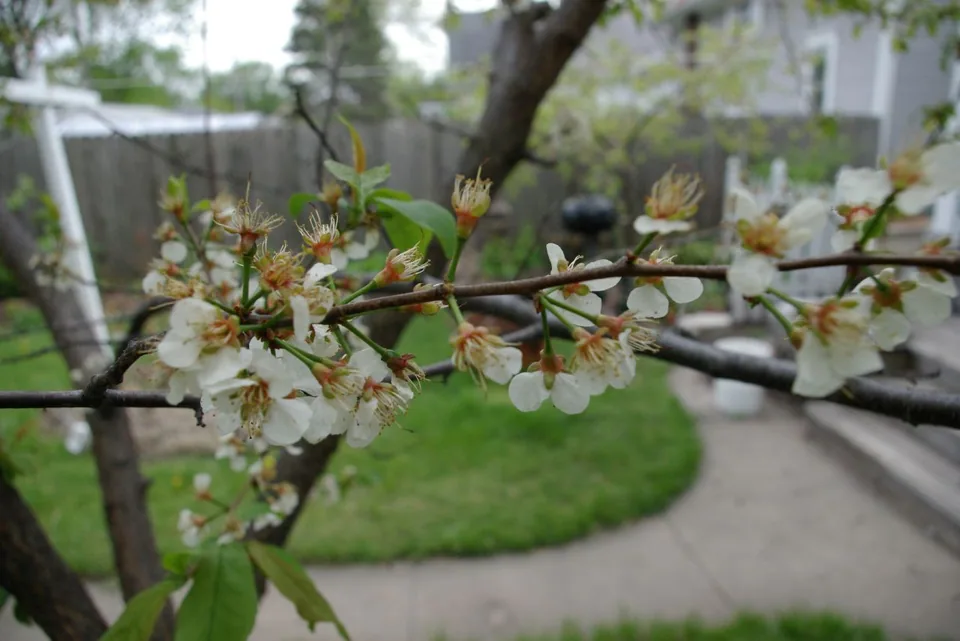
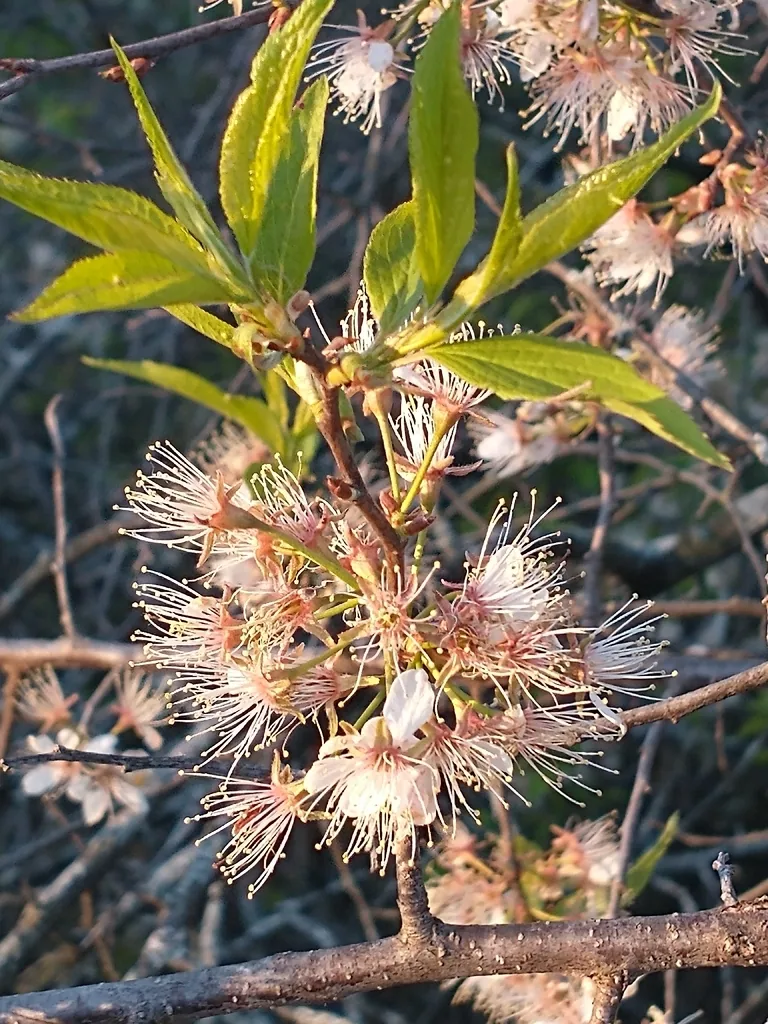
American plum is a small deciduous flowering tree or shrub that suckers freely and can form large colonies or thickets. [1] It grows in average, dry to medium, well-drained soils in full sun to part shade. [1] Its fruit is edible but of somewhat poor raw quality and is better used for preserves, jellies or drying. [1]
American Plum care
How to water American Plum
Watering
Fair to good drought tolerance
What the sources say (2)
Light : Full sun to partial shade.
Water : Fair to good drought tolerance.Particularly Resistant To (Insects/Diseases/Other Problems):
fire in the landscape. Heat and drought tolerant.Watering notes
Better yields and faster growth are achieved in full sun with regular access to water
What the sources say (1)
However, better yields and faster growth will be achieved in full sun environments with regular access to water.How much light American Plum needs
Full sun to partial shade
What the sources say (2)
The American plum is easily grown in average, dry to medium, well-drained soils in full sun to part shade.Light : Full sun to partial shade.
Water : Fair to good drought tolerance.How much cold American Plum can take
Hardiness, coldest zone
3a [winter low −40 to −37.2 °C (−40 to −35 °F)]
What the sources say (1)
USDA Plant Hardiness Zone:
3a, 3b, 4a, 4b, 5a, 5b, 6a, 6b, 7a, 7b, 8a, 8b, 9a, 9bHardiness, warmest zone
The sources give different values depending on region, zone or growing conditions.
What each source says
According to NC State Extension: 9b [winter low −3.9 to −1.1 °C (25 to 30 °F)]
Iowa: 10 [winter low −1.1 to 4.4 °C (30 to 40 °F)]
What the sources say (2)
According to NC State Extension: USDA Plant Hardiness Zone:
3a, 3b, 4a, 4b, 5a, 5b, 6a, 6b, 7a, 7b, 8a, 8b, 9a, 9bIowa: Hardiness: Zones 3 through 10
Growth Rate: Moderate to FastHow to propagate American Plum
Root cutting, seed, stem cutting
What the sources say (2)
Recommended Propagation Strategy:
Root Cutting
Seed
Stem CuttingWild plums grow readily from seed. Planting the pits from local patches is a good way to further establish locally adapted plums.How to grow American Plum
The plant
Life cycle
perennial
What the sources say (1)
The American plum is a small, deciduous, flowering tree or shrub with a short, stout trunk and ascending branches in the rose family.Family
Rosaceae
What the sources say (1)
Scientific Name: Prunus americana
Family: Rosaceae (Rose)
Hardiness: Zone 3
Leaves: Deciduous
Plant Type: ShrubMature height
Mature width
457-762 cm (15-25 ft)
What the sources say (2)
Height: 15 ft. 0 in. - 25 ft. 0 in.
Width: 15 ft. 0 in. - 25 ft. 0 in.Height: 20-30 feet
Width: 15-25 feet
Site Requirements: Adaptable but prefers moist, well-drained soils.Years to first fruit
4 (seed bearing age)
What the sources say (1)
Seed Bearing Age: 4 years
Seed Bearing Frequency: Every 1 to 2 years
Seed Stratification: Prechill for 3 to 5 monthsPests and diseases
Pests
plum curculio, aphids, scale, borers, tent caterpillars, pear sawfly, peachtree borer, lesser peachtree borer
What the sources say (3)
Plum curculio and brown rot can affect the fruit.Other potential insect problems include aphids, scale, borers and tent caterpillars.Insects that Can Affect Wild Plum
- Pear Sawfly or Pearslug
- Eastern Tent Caterpillar
- Peachtree Borer
- Lesser Peachtree BorerDiseases
brown rot, leaf spot, canker, black knot
What the sources say (1)
Plum curculio and brown rot can affect the fruit. Other potential disease problems include leaf spot, canker and black knot.Fertilizing
When
Early spring
Natural fertilizers
Compost, in early spring
What the sources say (1)
Fertilizing: Apply compost or a balanced fertilizer in early spring.Mineral fertilizers
Balanced fertilizer (10-10-10), based on a soil test
What the sources say (1)
Soil test: Conduct a soil test to determine nutrient deficiencies. Based on the results, apply a balanced fertilizer (10-10-10) in early spring.Avoid
Excessive nitrogen
What the sources say (1)
Avoid excessive nitrogen: Too much nitrogen can lead to excessive vegetative growth at the expense of fruit production.Signs of excess
Excessive vegetative growth at the expense of fruit production
What the sources say (1)
Avoid excessive nitrogen: Too much nitrogen can lead to excessive vegetative growth at the expense of fruit production.American Plum pests and problems
Suckering and thicket formation
Symptom: Suckers freely and can form large colonies or thickets.
What to do: Remove suckers to prevent unwanted spread or to train the plant into a small tree.
What the sources say (2)
As a shrub, it suckers freely and can form large colonies or thickets.
— Prunus americana (American Plum, American Wild Plum, Wild Plum) | North Carolina Extension Gardener Plant Toolbox [1] You can remove suckers to prevent unwanted spread or to train the plant into a small tree.
— Prunus americana (American Plum, American Wild Plum, Wild Plum) | North Carolina Extension Gardener Plant Toolbox [1] Plum curculio and brown rot
Symptom: Leaves and fruits are occasionally disfigured by insects and disease; plum curculio and brown rot can affect the fruit.
What to do: Not stated in the sources.
What the sources say (1)
Plum curculio and brown rot can affect the fruit. Other potential disease problems include leaf spot, canker and black knot.
— Prunus americana (American Plum, American Wild Plum, Wild Plum) | North Carolina Extension Gardener Plant Toolbox [1] Deer damage
Symptom: This plant is susceptible to damage from deer.
What to do: Not stated in the sources.
What the sources say (1)
Other potential insect problems include aphids, scale, borers and tent caterpillars. This plant is susceptible to damage from deer.
— Prunus americana (American Plum, American Wild Plum, Wild Plum) | North Carolina Extension Gardener Plant Toolbox [1]
Remedies
Each remedy shows what official sources say about it; traditional remedies without an official source are marked as such. Harmful ones are listed so you know to avoid them.
First aid
First aid: not a substitute for a doctor
swallowed pit
whole pit swallowed: no action needed Official source, not independently tested
If the seed is chewed or if someone ingests several seeds and/or the person is symptomatic, contact the poison center or a health care professional.
— poison.org [6] How: If a whole seed is swallowed accidentally you do not need to do anything; it should traverse the digestive tract.
If someone accidentally swallows an apricot seed/pit while eating the apricot, you do not need to do anything. The whole seed should traverse the digestive tract and be eliminated in the stool.
— poison.org [6]
Treating the plant
aphids
homemade oil and castile soap spray Not verified
Traditional remedy, not verified by an official source.
Some plants are sensitive to soap sprays and in full sun, this can cause the leaves to wither and brown.
— joybileefarm.com [7] Do not substitute dish soap or laundry soap for the liquid castile soap. These are not the same chemically and could damage your plants.
— joybileefarm.com [7] How: Apply liberally to all sides of leaves and branches wherever you see insect damage; respray 4 or 5 days after the first application. Recipe in the source: canola or grapeseed oil, kefir, yogurt or whey, liquid castile soap, essential oils, water.
black knot
pruning out infected wood Official source, not independently tested
How: Prune out and burn or bury all infected wood in late winter or early spring, cutting four to eight inches behind the swellings.
prune out and burn (or bury) all infected wood in late winter or early spring before growth starts and as soon as new knots appear. Make cuts four to eight inches behind any obvious, black-knot swellings.
— purduelandscapereport.org [8]
Getting rid of it
suckering thickets
digging out and hand removal Not verified
Traditional remedy, not verified by an official source.
How: Dig and remove by hand, making sure the root system is removed; wear protective clothing against thorns.
Is American Plum toxic to pets?
Reported by the source, quoted verbatim. This is not medical or veterinary advice: if a person or an animal may have eaten this plant, contact a poison control centre or a veterinarian.
Animals
Problems: Problem for Cats Problem for Dogs Problem for Horses
[1]The source flags the risk for this animal but does not explain why.
People
The pits contain cyanide compounds, which are poisonous. If a couple of pits are accidentally swallowed, it will not cause poisoning.
[1]- Poisonous parts
Causes Contact Dermatitis: No Poison Part: Leaves Seeds Stems Download Print-Friendly
[1]- Toxic principle
Poison Toxic Principle: Cyanogenic glycosides Causes Contact Dermatitis: No
[1]- Symptoms
Symptoms include Gasping, weakness, excitement, pupil dilation, spasms, convulsions, coma, respiratory failure.
[1]- Severity
Poisonous to Humans: Poison Severity: Medium Poison Symptoms: The pits contain cyanide compounds
[1]
Calendar
Ripens in July and August
What each source says
According to NC State Extension: Ripens in July and August
Iowa: Mature in late August
Alabama: Ready by mid to late summer
What the sources say (4)
According to NC State Extension: with bright yellow pulp which ripen in July and August.Iowa: It is red to yellowish red when mature in late August.Alabama: The fruits range from yellow to red or deep purple at ripeness and are ready by mid to late summer.Flowers are followed by 1 inch, thick-skin, edible, round, red-purple plums (1 inch in diameter) with bright yellow pulp which ripen in July and August.Winter
What each source says
Alabama: Winter
What the sources say (2)
Alabama: Prune in winter and follow Alabama Extension’s pruning guides for best practices.Prune the trees to a shorter height for better access and to maintain good growth form if fruit for human consumption is the primary goal. Prune in winterMonths as given by the sources, which are mostly from the United States (northern hemisphere). In the southern hemisphere they shift by about six months.
Edibility
Reported by the source, quoted verbatim. Do not eat a plant on the basis of this page alone: identification mistakes can be dangerous.
Indicative values
Values from a secondary source, not checked word for word like the rest of this page. Use them as a starting point.
- Hours of sun
- 4-6 hoursIndicative value, adapt it to your climate · Secondary source
- Soil
- LoamyIndicative value, adapt it to your climate · Secondary source
- Soil pH
- 5.5-6.5Indicative value, adapt it to your climate · Secondary source
- Care level
- MediumIndicative value, adapt it to your climate · Secondary source
- Growth rate
- ModerateIndicative value, adapt it to your climate · Secondary source
Similar plants
- Afghan Cherry Prunus jacquemontii
- Amur chokecherry Prunus maackii
- Apricot Prunus armeniaca
- Black Cherry Prunus serotina
- Carolina Cherry Laurel Prunus caroliniana
- Cherry Laurel Prunus laurocerasus
- Chickasaw Plum Prunus angustifolia
- Chinese Plum Prunus glandulosa
Sources
Every value above is quoted from these documents. Links lead to the original publisher.
- Prunus americana (American Plum, American Wild Plum, Wild Plum) | North Carolina Extension Gardener Plant Toolbox · plants.ces.ncsu.edu, consulted
- American Plum | NDSU Agriculture · ndsu.edu, consulted
- Wild Plum | Natural Resources · naturalresources.extension.iastate.edu, consulted
- Native Fruits: Wild Plums - Alabama Cooperative Extension System · aces.edu, consulted
- ask.extension.org · ask.extension.org
- poison.org · poison.org
- joybileefarm.com · joybileefarm.com
- purduelandscapereport.org · purduelandscapereport.org
Written by Emilio Marruso · last checked