

How to Grow and Care for Apricot
Prunus armeniaca
Written by Emilio Marruso · last checked
Toxic to: Cats, Dogs, Horses, People · Why
At a glance
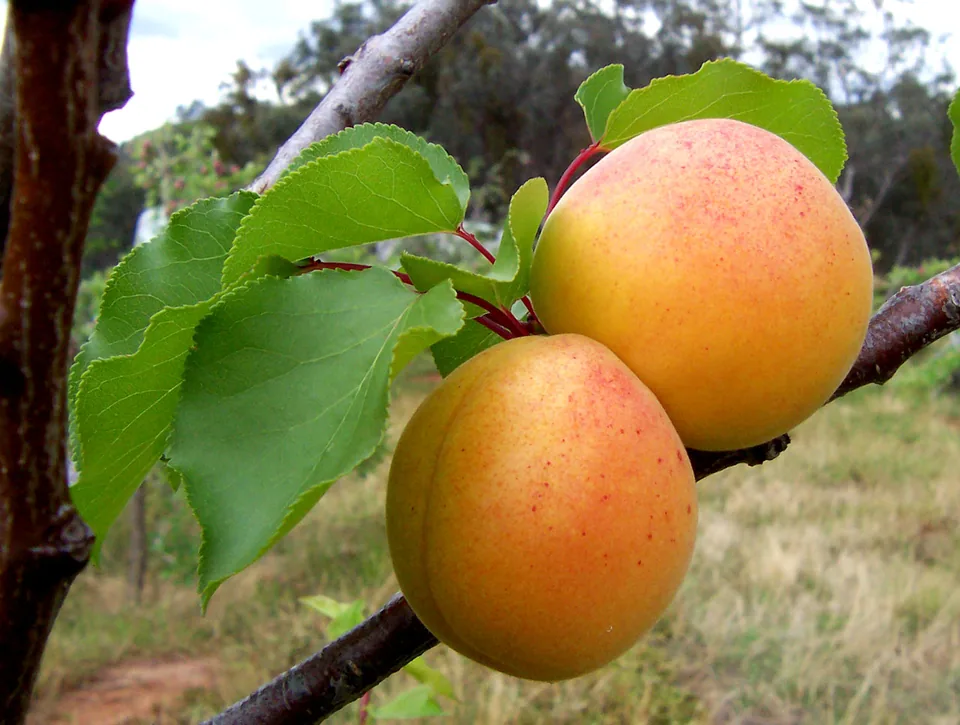
An apricot tree in full sun gives you fruit to eat fresh, dried, cooked or made into jam. One tree is enough, because it sets fruit with its own pollen, and mature trees need little pruning. Pick from late June to August, when the skin turns yellow or orange and the fruit feels slightly soft.
- Sun
Full sun
What the sources say (1)
Light: Full sun
They prefer moist, well-drained soil in full sun.
— Prunus armeniaca (Ansu Apricot, Apricot, Armenean Plum, Siberian Apricot, Tibetan Apricot) | North Carolina Extension Gardener Plant Toolbox [1] - Water
Twice a week the first season; then every two weeks, less if it rains a lot
What the sources say (5)
Watering: Biweekly watering program that applies around 30 inches [76 cm] of water over the season, reduced if there is significant rainfall
According to Utah State University Extension: For the next few years, maintain a biweekly watering program that will apply around 30 inches of water over the season. This can be reduced if there is significant rainfall accumulation.
— How to Grow Apricots in Your Home Garden | USU [4] Manchurian apricot (Prunus armeniaca var. mandshurica), fonte: NDSU: Water: Will not withstand ponding, moderately drought tolerant.
— Manchurian Apricot | NDSU Agriculture [3] For the next few years, maintain a biweekly watering program that will apply around 30 inches of water over the season. This can be reduced if there is significant rainfall accumulation.
— How to Grow Apricots in Your Home Garden | USU [4] Watering notes: In the first season, keep the soil moist but not soggy, irrigating about two times per week to ensure establishment; overwatering increases the risk of chlorosis and tree decline
During the first season, irrigate at an interval that will keep the soil moist but not soggy. Depending on rainfall and temperature, irrigate about two times per week to ensure establishment.
— How to Grow Apricots in Your Home Garden | USU [4] Overwatering will significantly increase the risk of chlorosis and general tree decline as a result.
— How to Grow Apricots in Your Home Garden | USU [4] - Cold
It blooms early and frost hurts the flowers: plant in a sheltered spot, not in a low area
- Soil
Avoid wet, heavy soil: the roots rot easily
- Spacing
18–22 ft between trees
What the sources say (1)
Spacing: 548.6-670.6 cm (18 to 22 ft)
Space trees 18 to 22 feet apart. For potted trees, prepare a hole for planting twice the width and the same depth as the container.
— How to Grow Apricots in Your Home Garden | USU [4] - Planting
Early spring, as soon as the ground can be worked
What the sources say (1)
Planting: Early spring, as soon as the ground can be worked
Plant the tree in early spring as soon as the ground can be worked. Dig a whole twice the diameter of the root system and 2-ft deep.
— Apricots (Prunus armeniaca L.)-Hort Answers - University of Illinois Extension [2] - Feeding
Early spring, before new growth, with little nitrogen; skip the first year after planting
What the sources say (7)
When: Early spring, before new growth begins
It requires regular pruning to remain healthy and to develop high-quality fruit. Fertilization should be done in early spring before new growth appears.
— Prunus armeniaca (Ansu Apricot, Apricot, Armenean Plum, Siberian Apricot, Tibetan Apricot) | North Carolina Extension Gardener Plant Toolbox [1] Apricots need to be fertilized in early spring before growth begins. Apricots need less nitrogen fertilizer compared to peaches.
— Apricots (Prunus armeniaca L.)-Hort Answers - University of Illinois Extension [2] Mineral fertilizers: Less nitrogen than peaches, applied along the drip line
trees younger than 5 years: When nitrogen is needed, apply ½ to 1 cup 20-0-0 around the dripline of trees younger than 5 years old.
— How to Grow Apricots in Your Home Garden | USU [4] older trees: If phosphorus and potassium are also deficient, apply a similar quantity of 16-16-16, or an equivalent balanced fertilizer. For older trees apply 1 to 2 cups.
— How to Grow Apricots in Your Home Garden | USU [4] Apricots need less nitrogen fertilizer compared to peaches. The fertilizer isapplied along the drip line of the tree.
— Apricots (Prunus armeniaca L.)-Hort Answers - University of Illinois Extension [2] Avoid: Fertilizing in the first year after transplanting, or when growth is already adequate
Newly planted apricots should not be fertilized in the first year they are transplanted.
— How to Grow Apricots in Your Home Garden | USU [4] For older trees, growth slows to 8 to 10 inches of new growth per year. Fertilization is not needed if growth rates are adequate.
— How to Grow Apricots in Your Home Garden | USU [4] - Pruning
Prune lightly in late winter: fruit grows on spurs up to 5 years old
What the sources say (2)
Pruning: Late winter
Annual pruning on new and established trees is needed and should be done in late winter.
— How to Grow Apricots in Your Home Garden | USU [4] Hard pruning: Do not remove too much fruit-bearing wood: fruit forms on spurs up to 5 years old. Mature trees need minimal pruning.
Remember apricots produce fruit on spurs (short side shoots) up to 5 years old, so do not remove too much fruit-bearing wood.
— How to Grow Apricots in Your Home Garden | USU [4] - Harvest
Late June to August, when slightly soft and yellow or orange; twist gently as you pull
What the sources say (7)
Harvest: Fruit ripens in late June to July; harvested July through August depending on cultivar, when it turns yellow or develops a red blush and begins to soften
According to NC State Extension: fruit is yellow to reddish in color which ripens in late June to July.
— Prunus armeniaca (Ansu Apricot, Apricot, Armenean Plum, Siberian Apricot, Tibetan Apricot) | North Carolina Extension Gardener Plant Toolbox [1] According to University of Illinois Extension: Harvest Time June to August
— Apricots (Prunus armeniaca L.)-Hort Answers - University of Illinois Extension [2] According to Utah State University Extension: Fruit is typically harvested July through August (cultivar dependent), when they turn yellow or develop a red blush and begin to soften.
— How to Grow Apricots in Your Home Garden | USU [4] fruit is yellow to reddish in color which ripens in late June to July.
— Prunus armeniaca (Ansu Apricot, Apricot, Armenean Plum, Siberian Apricot, Tibetan Apricot) | North Carolina Extension Gardener Plant Toolbox [1] Fruit is typically harvested July through August (cultivar dependent), when they turn yellow or develop a red blush and begin to soften.
— How to Grow Apricots in Your Home Garden | USU [4] How to harvest: Harvest when the fruit is slightly soft and the skin changes from green to yellow, red or orange (depending on cultivar); twist the fruit slightly when pulling to avoid spur injury.
When ripe, fruit should be slightly soft and skin will change from green to yellow, red, orange, or combinations of these depending on cultivar.
— How to Grow Apricots in Your Home Garden | USU [4] When harvesting, twist fruit slightly when pulling to avoid spur injury.
— How to Grow Apricots in Your Home Garden | USU [4] - Pollination
One tree is enough; another variety blooming nearby gives more fruit
What the sources say (7)
Fruit set: Self-fertile: sets fruit with its own pollen
All apricot varieties are self-fertile, so you only need one tree for a good crop
— [5] Apricots are generally self-fruitful, but most will produce better when another cultivar with similar bloom time is nearby for pollinizing.
— How to Grow Apricots in Your Home Garden | USU [4] What it needs: One tree is enough, but yield improves with another cultivar blooming at the same time nearby. Flowering is early, when few pollinating insects are active: hand-pollination helps; trees in a greenhouse must always be hand-pollinated.
cultivar 'Sungold': Sungold – Very winter hardy, orange flesh, grows more upright, must plant with Moongold for proper pollination.
— Apricots (Prunus armeniaca L.)-Hort Answers - University of Illinois Extension [2] All apricot varieties are self-fertile, so you only need one tree for a good crop
— [5] Most apricots are self-fruitful , but yield improves with a nearby cultivar that blooms concurrently.
— How to Grow Apricots in Your Home Garden | USU [4] Apricots are self-fertile, but they flower early in spring when few pollinating insects are around, so it is a good idea to hand-pollinate them to ensure a good crop.
— [5] Trees grown in a greenhouse should always be hand- pollinated
— [5] - Pests
Leaf rollers, peach tree borers and aphids; brown rot is a major disease
What the sources say (5)
Pests: fruit tree leaf rollers, peach tree borers, aphids, squirrels, Japanese beetle, plum curculio, mites, San Jose scale
Pests include fruit tree leaf rollers, peach tree borers, aphids, squirrels, Japanese beetle, plum curculio, and mites.
— Prunus armeniaca (Ansu Apricot, Apricot, Armenean Plum, Siberian Apricot, Tibetan Apricot) | North Carolina Extension Gardener Plant Toolbox [1] | San Jose Scale | Small insect with hard protective covering that infests branches and fruit.
— How to Grow Apricots in Your Home Garden | USU [4] Diseases: brown rot, bacterial canker, bacterial leaf spot, powdery mildew, coryneum blight (shot hole), cytospora canker
Brown rot is one of the major diseases. Other diseases include bacterial canker, bacterial leaf spot, and powdery mildew.
— Prunus armeniaca (Ansu Apricot, Apricot, Armenean Plum, Siberian Apricot, Tibetan Apricot) | North Carolina Extension Gardener Plant Toolbox [1] | Coryneum Blight (Shot Hole) | Round, purple-tinted lesions on leaves turn black and centers fall out leaving many small holes in leaves.
— How to Grow Apricots in Your Home Garden | USU [4] | Cytospora/Pseudomonas Canker | Wounds/cankers that ooze or produce amber-colored gummy sap.
— How to Grow Apricots in Your Home Garden | USU [4] - Watch out
Too much water is the main danger for young trees: yellow leaves and dying branches
What the sources say (2)
Watering notes: In the first season, keep the soil moist but not soggy, irrigating about two times per week to ensure establishment; overwatering increases the risk of chlorosis and tree decline
During the first season, irrigate at an interval that will keep the soil moist but not soggy. Depending on rainfall and temperature, irrigate about two times per week to ensure establishment.
— How to Grow Apricots in Your Home Garden | USU [4] Overwatering will significantly increase the risk of chlorosis and general tree decline as a result.
— How to Grow Apricots in Your Home Garden | USU [4] - Size
20 to 40 ft wide
What the sources say (1)
Mature width: 610-1219 cm (20 to 40 feet)
Dimensions: Height: 20 ft. 0 in. - 40 ft. 0 in. Width: 20 ft. 0 in. - 40 ft. 0 in.
— Prunus armeniaca (Ansu Apricot, Apricot, Armenean Plum, Siberian Apricot, Tibetan Apricot) | North Carolina Extension Gardener Plant Toolbox [1] - Propagation
By cuttings or grafting onto rootstocks
What the sources say (1)
Propagation: Cuttings, grafting onto rootstocks
You can propagate cuttings or grafting onto rootstocks.
— Prunus armeniaca (Ansu Apricot, Apricot, Armenean Plum, Siberian Apricot, Tibetan Apricot) | North Carolina Extension Gardener Plant Toolbox [1] - Safety
The pits are poisonous; keep them away from cats, dogs and horses
Overview
Apricot is a deciduous fruit tree in the rose family that prefers moist, well-drained soil in full sun. [1] It blooms in late winter or early spring and is extremely susceptible to frost damage. [1] The pits contain cyanide compounds, which are poisonous. [1]
Apricot care
Measurements in square brackets are our conversion into the other unit system; the quoted text is unchanged.
How to water Apricot
Watering
Biweekly watering program that applies around 30 inches [76 cm] of water over the season, reduced if there is significant rainfall
What each source says
According to Utah State University Extension: Biweekly watering program that applies around 30 inches [76 cm] of water over the season
Manchurian apricot (Prunus armeniaca var. mandshurica), fonte: NDSU: Moderately drought tolerant; will not withstand ponding
What the sources say (3)
According to Utah State University Extension: For the next few years, maintain a biweekly watering program that will apply around 30 inches of water over the season. This can be reduced if there is significant rainfall accumulation.Manchurian apricot (Prunus armeniaca var. mandshurica), fonte: NDSU: Water: Will not withstand ponding, moderately drought tolerant.For the next few years, maintain a biweekly watering program that will apply around 30 inches of water over the season. This can be reduced if there is significant rainfall accumulation.Watering notes
In the first season, keep the soil moist but not soggy, irrigating about two times per week to ensure establishment; overwatering increases the risk of chlorosis and tree decline
What the sources say (2)
During the first season, irrigate at an interval that will keep the soil moist but not soggy. Depending on rainfall and temperature, irrigate about two times per week to ensure establishment.Overwatering will significantly increase the risk of chlorosis and general tree decline as a result.How much light Apricot needs
Full sun
What the sources say (1)
They prefer moist, well-drained soil in full sun.How much cold Apricot can take
Hardiness, coldest zone
The sources give different values depending on region, zone or growing conditions.
What each source says
According to NC State Extension: 5a [winter low −28.9 to −26.1 °C (−20 to −15 °F)]
According to University of Illinois Extension: 5 [winter low −28.9 to −23.3 °C (−20 to −10 °F)]
According to Utah State University Extension: 5 [winter low −28.9 to −23.3 °C (−20 to −10 °F)]
According to Utah State University Extension (cultivar comuni, fruttificazione sporadica): 4 [winter low −34.4 to −28.9 °C (−30 to −20 °F)]
Manchurian apricot (Prunus armeniaca var. mandshurica), fonte: NDSU: 3 [winter low −40 to −34.4 °C (−40 to −30 °F)]
What the sources say (6)
According to NC State Extension: USDA Plant Hardiness Zone:
5a, 5b, 6a, 6b, 7a, 7bAccording to University of Illinois Extension: USDA Hardiness Zone
5 - 7According to Utah State University Extension: Apricots are commonly grown in USDA Hardiness Zones 5 to 8. Many common cultivars can survive Zone 4, but produce fruit sporadically because of frost damage to blossoms.According to Utah State University Extension (cultivar comuni, fruttificazione sporadica): Apricots are commonly grown in USDA Hardiness Zones 5 to 8. Many common cultivars can survive Zone 4, but produce fruit sporadically because of frost damage to blossoms.Manchurian apricot (Prunus armeniaca var. mandshurica), fonte: NDSU: Hardiness: Zone 3USDA Plant Hardiness Zone:
5a, 5b, 6a, 6b, 7a, 7bHardiness, warmest zone
The sources give different values depending on region, zone or growing conditions.
What each source says
According to NC State Extension: 7b [winter low −15 to −12.2 °C (5 to 10 °F)]
According to University of Illinois Extension: 7 [winter low −17.8 to −12.2 °C (0 to 10 °F)]
According to Utah State University Extension: 8 [winter low −12.2 to −6.7 °C (10 to 20 °F)]
What the sources say (4)
According to NC State Extension: USDA Plant Hardiness Zone:
5a, 5b, 6a, 6b, 7a, 7bAccording to University of Illinois Extension: USDA Hardiness Zone
5 - 7According to Utah State University Extension: Apricots are commonly grown in USDA Hardiness Zones 5 to 8. Many common cultivars can survive Zone 4, but produce fruit sporadically because of frost damage to blossoms.USDA Plant Hardiness Zone:
5a, 5b, 6a, 6b, 7a, 7bBest soil for Apricot
Soil pH, minimum
The sources give different values depending on region, zone or growing conditions.
What each source says
Manchurian apricot (Prunus armeniaca var. mandshurica), fonte: NDSU: 6.0
What the sources say (1)
Manchurian apricot (Prunus armeniaca var. mandshurica), fonte: NDSU: Soil: Grows best in loam soils with a pH of 6-7.5.Soil pH, maximum
The sources give different values depending on region, zone or growing conditions.
What each source says
Manchurian apricot (Prunus armeniaca var. mandshurica), fonte: NDSU: 7.5
What the sources say (1)
Manchurian apricot (Prunus armeniaca var. mandshurica), fonte: NDSU: Soil: Grows best in loam soils with a pH of 6-7.5.Where to grow Apricot
548.6-670.6 cm (18 to 22 ft)
What the sources say (1)
Space trees 18 to 22 feet apart. For potted trees, prepare a hole for planting twice the width and the same depth as the container.How to propagate Apricot
Cuttings, grafting onto rootstocks
What the sources say (1)
You can propagate cuttings or grafting onto rootstocks.How to grow Apricot
The plant
Life cycle
woody (deciduous tree)
What the sources say (1)
Family: Rosaceae Life Cycle: Woody Country Or Region Of Origin: Central Asia to Northern & Central ChinaFamily
Rosaceae
What the sources say (1)
The apricot is a deciduous tree in the rose (Rosaceae) family.Mature height
The sources disagree:
What each source says
cultivar 'Manchurian apricot (var. mandshurica)': 305-457 cm (10 to 15 feet)
What the sources say (1)
cultivar 'Manchurian apricot (var. mandshurica)': Scientific Name: Prunus armeniaca var. mandshurica Family: Rosaceae (Rose) Hardiness: Zone 3 Leaves: Deciduous Plant Type: Tree Growth Rate: Medium Mature Height: 10’-15’Mature width
610-1219 cm (20 to 40 feet)
What the sources say (1)
Dimensions: Height: 20 ft. 0 in. - 40 ft. 0 in. Width: 20 ft. 0 in. - 40 ft. 0 in.Harvest and storage
How to harvest
Harvest when the fruit is slightly soft and the skin changes from green to yellow, red or orange (depending on cultivar); twist the fruit slightly when pulling to avoid spur injury.
What the sources say (2)
When ripe, fruit should be slightly soft and skin will change from green to yellow, red, orange, or combinations of these depending on cultivar.When harvesting, twist fruit slightly when pulling to avoid spur injury.Pests and diseases
Pests
fruit tree leaf rollers, peach tree borers, aphids, squirrels, Japanese beetle, plum curculio, mites, San Jose scale
What the sources say (2)
Pests include fruit tree leaf rollers, peach tree borers, aphids, squirrels, Japanese beetle, plum curculio, and mites.| San Jose Scale | Small insect with hard protective covering that infests branches and fruit.Diseases
brown rot, bacterial canker, bacterial leaf spot, powdery mildew, coryneum blight (shot hole), cytospora canker
What the sources say (3)
Brown rot is one of the major diseases. Other diseases include bacterial canker, bacterial leaf spot, and powdery mildew.| Coryneum Blight (Shot Hole) | Round, purple-tinted lesions on leaves turn black and centers fall out leaving many small holes in leaves.| Cytospora/Pseudomonas Canker | Wounds/cankers that ooze or produce amber-colored gummy sap.Fertilizing
When
Early spring, before new growth begins
What the sources say (2)
It requires regular pruning to remain healthy and to develop high-quality fruit. Fertilization should be done in early spring before new growth appears.Apricots need to be fertilized in early spring before growth begins. Apricots need less nitrogen fertilizer compared to peaches.Natural fertilizers
Well-rotted manure and compost, based on soil test results
What the sources say (1)
one year before planting, and send to soil testing laboratories (list of soil testing labs are available at local Extension office). Add well rotted manure and compost based on soil test results.Mineral fertilizers
Less nitrogen than peaches, applied along the drip line
What each source says
trees younger than 5 years: 20-0-0, 118–237 mL spread at the dripline when nitrogen is needed
older trees: 237–474 mL; 16-16-16 or an equivalent balanced fertilizer if phosphorus and potassium are also deficient
What the sources say (3)
trees younger than 5 years: When nitrogen is needed, apply ½ to 1 cup 20-0-0 around the dripline of trees younger than 5 years old.older trees: If phosphorus and potassium are also deficient, apply a similar quantity of 16-16-16, or an equivalent balanced fertilizer. For older trees apply 1 to 2 cups.Apricots need less nitrogen fertilizer compared to peaches. The fertilizer isapplied along the drip line of the tree.Micronutrients
Chelated iron (EDDHA) against iron chlorosis in alkaline soils
What the sources say (1)
Deep, infrequent irrigation and use of EDDHA chelated iron may help considerably. For more information on iron chlorosis management see the USU Iron Chlorosis in Berries fact sheet.Avoid
Fertilizing in the first year after transplanting, or when growth is already adequate
What the sources say (2)
Newly planted apricots should not be fertilized in the first year they are transplanted.For older trees, growth slows to 8 to 10 inches of new growth per year. Fertilization is not needed if growth rates are adequate.Signs of deficiency
Too little new growth when nitrogen is short; iron chlorosis in alkaline soils
What the sources say (2)
The most common limiting nutrient is nitrogen, and when inadequate, trees will not produce sufficient new growth.Apricots are very prone to iron chlorosis in the alkaline soils of Utah.Pollination
Fruit set
Self-fertile: sets fruit with its own pollen
What the sources say (2)
All apricot varieties are self-fertile, so you only need one tree for a good cropApricots are generally self-fruitful, but most will produce better when another cultivar with similar bloom time is nearby for pollinizing.What it needs
One tree is enough, but yield improves with another cultivar blooming at the same time nearby. Flowering is early, when few pollinating insects are active: hand-pollination helps; trees in a greenhouse must always be hand-pollinated.
What each source says
cultivar 'Sungold': Plant with the cultivar Moongold for proper pollination.
What the sources say (5)
cultivar 'Sungold': Sungold – Very winter hardy, orange flesh, grows more upright, must plant with Moongold for proper pollination.All apricot varieties are self-fertile, so you only need one tree for a good cropMost apricots are self-fruitful , but yield improves with a nearby cultivar that blooms concurrently.Apricots are self-fertile, but they flower early in spring when few pollinating insects are around, so it is a good idea to hand-pollinate them to ensure a good crop.Trees grown in a greenhouse should always be hand- pollinatedCarried by
Insects
What the sources say (1)
Apricots are self-fertile, but they flower early in spring when few pollinating insects are around, so it is a good idea to hand-pollinate them to ensure a good crop.Pruning
Flowering wood
Flowers on old wood (last year's growth)
What the sources say (1)
Most fruit is borne on short spurs on 1-year-old wood that remain productive for 3 to 5 years.When to prune
The sources give different values depending on region, zone or growing conditions.
What each source says
Regno Unito: Only in spring or summer.
Stati Uniti (Utah): Late winter.
What the sources say (2)
Regno Unito: Like all stone fruits, apricots should only be pruned in spring or summer, to minimise the risk of infection by silver leaf disease and bacterial canker .Stati Uniti (Utah): Annual pruning on new and established trees is needed and should be done in late winter.Hard pruning
Do not remove too much fruit-bearing wood: fruit forms on spurs up to 5 years old. Mature trees need minimal pruning.
What the sources say (1)
Remember apricots produce fruit on spurs (short side shoots) up to 5 years old, so do not remove too much fruit-bearing wood.Winter chill
Chill hours
300–1000 hours between 0 and 7.2 °C [32–45 °F]
What each source says
specie «Apricot»: 300–1000 hours
specie «Apricot»: 300–1000 hours
specie «Apricots»: 600–900 hours
gruppo 'varietà a basso fabbisogno': 350 hours
cultivar 'Currot': 34.3 hours
cultivar 'Búlida': 53.8 hours
What the sources say (12)
specie «Apricot»: Apricot Chill hours: 300 to 1,000 Apricots bloom early and are subject to the same frostspecie «Apricot»: Chill Hours Required to Break Dormancy Using the 45oF Model Apple 800 to 1750 Pear and sour cherry 600 to 1500 Plum (Japanese) 600 to 1600 Cherry (sweet) 500 to 1450 Peach 375 to 1200 Apricot 300 to 1000specie «Apricots»: Apricots are best adapted to areas with adequate chilling, which for apricots is 600 to 900 hours below 45° F.gruppo 'varietà a basso fabbisogno': There are a few low-chill varieties that will bear with only 350 hours.cultivar 'Currot': Ferragnes 1 32 * - Central Valley, Chile Apple Golden Delicious 2 50 † - - Apricot Currot 3 34.3 6.1 Murcia, Spaincultivar 'Búlida': Rojo Pasion 3 51.2 4.7 Murcia, Spain Búlida 3 53.8 2.9 Murcia, Spain San Castrese 4 55.25 1.42Apricot Chill hours: 300 to 1,000 Apricots bloom early and are subject to the same frostChill Hours Required to Break Dormancy Using the 45oF Model Apple 800 to 1750 Pear and sour cherry 600 to 1500 Plum (Japanese) 600 to 1600 Cherry (sweet) 500 to 1450 Peach 375 to 1200 Apricot 300 to 1000Apricots are best adapted to areas with adequate chilling, which for apricots is 600 to 900 hours below 45° F.Chill hours are accumulated from November through February when temperatures are between 32° and 45°F.Chill Hours Required to Break Dormancy Using the 45oF Model Apple 800 to 1750Chilling hours are defined as the number of hours that the temperature is below 45° F.Apricot pests and problems
Frost damage to blossoms
Symptom: Extremely susceptible to frost damage because the tree blooms in late winter or early spring
What to do: Plant in a protected area and avoid low-lying areas that could be a frost pocket
What the sources say (2)
Apricot trees are extremely susceptible to frost damage because they bloom in late winter or early spring.
— Prunus armeniaca (Ansu Apricot, Apricot, Armenean Plum, Siberian Apricot, Tibetan Apricot) | North Carolina Extension Gardener Plant Toolbox [1] you should plant them in a protected area to minimize frost damage. Do not plant them in low-lying areas which could be a frost pocket.
— Prunus armeniaca (Ansu Apricot, Apricot, Armenean Plum, Siberian Apricot, Tibetan Apricot) | North Carolina Extension Gardener Plant Toolbox [1] Brown rot and other pests and diseases
Symptom: Major pests are fruit tree leaf rollers and peach tree borer; brown rot is one of the major diseases
What to do: Cut all dead or diseased wood; remove dried apricots from trees, and clear leaves and fallen debris away from trees
What the sources say (2)
The major apricot pests are fruit tree leaf rollers, and peach tree borer, and brown rot is one of the major diseases.
— Apricots (Prunus armeniaca L.)-Hort Answers - University of Illinois Extension [2] Good sanitation practices are necessary to control pest problems. Cut all dead or diseased wood; remove dried apricots from trees, and clear leaves and fallen debris away from trees.
— Apricots (Prunus armeniaca L.)-Hort Answers - University of Illinois Extension [2] Root diseases from overwatering
Symptom: Yellowing leaves, general decline and lack of vigor, branch dieback; extremely common with newly planted trees due to unintentional overwatering
What to do: Apricots have little tolerance of wet and heavy soils, so irrigation must be carefully managed
What the sources say (2)
Yellowing leaves, general decline and lack of vigor. Branch dieback. Extremely common with newly planted trees due to unintentional overwatering.
— How to Grow Apricots in Your Home Garden | USU [4] Apricots, like peaches and plums, have little tolerance of wet and heavy soils and will easily get root-rotting diseases in such conditions, especially when irrigation is not carefully managed.
— How to Grow Apricots in Your Home Garden | USU [4]
Remedies
Each remedy shows what official sources say about it; traditional remedies without an official source are marked as such. Harmful ones are listed so you know to avoid them.
First aid
First aid: not a substitute for a doctor
swallowed apricot pit
no action needed if a whole pit is swallowed Official source, not independently tested
If the seed is chewed or if someone ingests several seeds and/or the person is symptomatic, contact the poison center or a health care professional.
— poison.org [10] The pits are more poisonous if they are ground up/crushed or the seeds are chewed.
— Prunus armeniaca (Ansu Apricot, Apricot, Armenean Plum, Siberian Apricot, Tibetan Apricot) | North Carolina Extension Gardener Plant Toolbox [1] How: If someone accidentally swallows an apricot seed/pit while eating the apricot, you do not need to do anything; the whole seed should traverse the digestive tract and be eliminated in the stool.
If someone accidentally swallows an apricot seed/pit while eating the apricot, you do not need to do anything. The whole seed should traverse the digestive tract and be eliminated in the stool.
— poison.org [10]
chewed apricot seeds or poisoning symptoms
contact the poison center or a health care professional Official source, not independently tested
If the seed is chewed or if someone ingests several seeds and/or the person is symptomatic, contact the poison center or a health care professional.
— poison.org [10] Symptoms of cyanide poisoning include headache, difficulty breathing, fainting, seizures, coma, and cardiovascular collapse. Symptoms may be delayed because it takes time for the body to convert amygdalin into cyanide.
— poison.org [10] How: If the seed is chewed or if someone ingests several seeds and/or the person is symptomatic, contact the poison center or a health care professional.
If the seed is chewed or if someone ingests several seeds and/or the person is symptomatic, contact the poison center or a health care professional.
— poison.org [10]
Treating the plant
aphids
insecticidal soap Works
How: For minor to moderate infestations treat with an insecticidal soap.
Can occur throughout the growing season. | For minor to moderate infestations treat with an insecticidal soap, or summer weight horticultural oil or neem.
— How to Grow Apricots in Your Home Garden | USU [4] What the evidence says Neem oil products and potassium laureate (insecticidal soaps) applied directly to the aphids can reduce populations, and tend to be harmless to beneficial insects, as well as safe for the environment.
— pubs.extension.wsu.edu [11] neem oil Partly works
How: Organically grown trees can be sprayed with neem oil to control aphid populations.
Organically grown trees can be sprayed with neem oil to control aphid populations; chemical control of the aphid is rarely necessary.
— plantvillage.psu.edu [12] What the evidence says However, neem oil is not effective against every insect and disease, and often must be frequently reapplied to reach the desired outcome.
— extension.unh.edu [13] strong stream of water Not verified
Traditional remedy, not verified by an official source.
How: Control aphids with a strong stream of water; spray them off the tree with a blast of water from the hose.
spider mites
stiff spray of water Works
How: Wash down trees or plants with a stiff spray of water.
If needed, mites can be managed by washing down trees or plants with a stiff spray of water, and/or applying insecticidal soap or 1% horticultural oil (both are organic).
— extension.usu.edu [14] What the evidence says If needed, mites can be managed by washing down trees or plants with a stiff spray of water, and/or applying insecticidal soap or 1% horticultural oil (both are organic).
— extension.usu.edu [14] insecticidal soap Works
Avoid applying soaps or oils during the hot part of the day as some leaf burn may result.
— extension.usu.edu [14] How: Apply insecticidal soap; avoid applying during the hot part of the day.
If needed, mites can be managed by washing down trees or plants with a stiff spray of water, and/or applying insecticidal soap or 1% horticultural oil (both are organic).
— extension.usu.edu [14] What the evidence says If needed, mites can be managed by washing down trees or plants with a stiff spray of water, and/or applying insecticidal soap or 1% horticultural oil (both are organic).
— extension.usu.edu [14]
earwigs
rolled cardboard strip traps Official source, not independently tested
How: Tuck rolled cardboard strips into limb crotches to trap and remove earwigs; remove and replace the cardboard rolls.
Rolled cardboard strips tucked into limb crotches can be used to trap and remove earwigs from trees (remove and replace cardboard rolls).
— extension.usu.edu [14]
scale insects
scrubbing limbs with a dish sponge Official source, not independently tested
How: In spring before leaves emerge, scrub infested limbs with a mesh dish sponge to remove adults.
In spring before leaves emerge, scrub infested limbs with a mesh dish sponge to remove adults.
— extension.usu.edu [14]
european paper wasp
soda bottle trap with fruit juice Official source, not independently tested
How: Cut the top third off a soda bottle and invert it into the bottom portion, punch holes along the top edges and hang with wires; fill with 1 part fruit juice, 10 parts water and 1 tsp detergent; hang in the tree just before fruit starts to ripen; empty and re-fill as necessary.
Punch holes along the top edges and insert wires for hanging. Fill the bottle with 1 part fruit juice, 10 parts water, and 1 tsp detergent. Hang the trap in peach trees or nearby areas just before fruit starts to ripen
— extension.usu.edu [14]
brown rot
removing mummified fruit and fallen debris Works
How: Cut all dead or diseased wood, remove dried apricots from trees, and clear leaves and fallen debris away from trees.
Cut all dead or diseased wood; remove dried apricots from trees, and clear leaves and fallen debris away from trees.
— Apricots (Prunus armeniaca L.)-Hort Answers - University of Illinois Extension [2] What the evidence says After harvest, or in the spring before the buds open, collect and destroy all mummified fruits on or beneath the trees.
— pubs.extension.wsu.edu [11]
shot hole disease
pruning out and destroying infected tissue Official source, not independently tested
How: Prune and destroy all infected plant tissue; prevent irrigation water from wetting leaves because the water will spread spores.
Prune and destroy all infected plant tissue. Prevent irrigation water from wetting leaves because the water will spread spores.
— extension.usu.edu [14]
cytospora canker
pruning out infected wood Official source, not independently tested
How: Prune out infected wood 1 foot below where the last symptoms are seen as soon as symptoms appear.
Prune out infected wood 1 foot below where last symptoms are seen as soon as symptoms appear.
— How to Grow Apricots in Your Home Garden | USU [4]
spread of diseases by pruning tools
disinfecting pruning tools with household bleach solution Works
Warning: Risky ingredient
Some homemade pesticide ingredients like bleach, salt, and vinegar can be very toxic when applied to the environment.
— pubs.ext.vt.edu [16] Mixing products can lead to chemical reactions that produce unknown substances such as toxic fumes or materials that can burn skin or eyes.
— pubs.ext.vt.edu [16] How: Disinfect pruning tools with a 10% solution of household bleach before and after use and between trees.
Disinfect pruning tools with a 10% solution of household bleach before and after use and between trees.
— Apricots (Prunus armeniaca L.)-Hort Answers - University of Illinois Extension [2] What the evidence says Disinfect pruning tools between cuts with shellac thinner (70% ethyl alcohol) or 10% bleach.
— extension.oregonstate.edu [15]
frost damage to blossoms
covering the tree overnight Official source, not independently tested
How: If frost is forecast during flowering, cover the tree overnight.
If frost is forecast during flowering, cover the tree overnight with biodegradable
— rhs.org.uk [5]
poor fruit set after frost
hand-pollination with a small paintbrush Official source, not independently tested
How: Protect blossom from frost and cold winds, and hand-pollinate with a small paintbrush.
protect blossom from frost and cold winds, and hand-pollinate with a small paintbrush.
— rhs.org.uk [5]
Is Apricot toxic to pets?
Reported by the source, quoted verbatim. This is not medical or veterinary advice: if a person or an animal may have eaten this plant, contact a poison control centre or a veterinarian.
Animals
#fruit tree #poisonous #edible fruits #problem for cats #problem for dogs #problem for horses
[1]
People
The pits contain cyanide compounds, which are poisonous. If a couple of pits are accidentally swallowed, it will not cause poisoning.
[1]
Calendar
Planting
Early spring, as soon as the ground can be worked
What the sources say (1)
Plant the tree in early spring as soon as the ground can be worked. Dig a whole twice the diameter of the root system and 2-ft deep.Harvest
Fruit ripens in late June to July; harvested July through August depending on cultivar, when it turns yellow or develops a red blush and begins to soften
What each source says
According to NC State Extension: Late June to July
According to University of Illinois Extension: June to August
According to Utah State University Extension: July through August
What the sources say (5)
According to NC State Extension: fruit is yellow to reddish in color which ripens in late June to July.According to University of Illinois Extension: Harvest Time
June to AugustAccording to Utah State University Extension: Fruit is typically harvested July through August (cultivar dependent), when they turn yellow or develop a red blush and begin to soften.fruit is yellow to reddish in color which ripens in late June to July.Fruit is typically harvested July through August (cultivar dependent), when they turn yellow or develop a red blush and begin to soften.Pruning
Late winter
What the sources say (1)
Annual pruning on new and established trees is needed and should be done in late winter.Months as given by the sources, which are mostly from the United States (northern hemisphere). In the southern hemisphere they shift by about six months.
Edibility
Reported by the source, quoted verbatim. Do not eat a plant on the basis of this page alone: identification mistakes can be dangerous.
Indicative values
Values from a secondary source, not checked word for word like the rest of this page. Use them as a starting point.
- Drought tolerant
- yesIndicative value, adapt it to your climate · Secondary source · Data for the variety Prunus armeniaca 'Garden Annie'
- Care level
- MediumIndicative value, adapt it to your climate · Secondary source · Data for the variety Prunus armeniaca 'Garden Annie'
- Growth rate
- LowIndicative value, adapt it to your climate · Secondary source · Data for the variety Prunus armeniaca 'Garden Annie'
Similar plants
- Afghan Cherry Prunus jacquemontii
- American Plum Prunus americana
- Amur chokecherry Prunus maackii
- Black Cherry Prunus serotina
- Carolina Cherry Laurel Prunus caroliniana
- Cherry Laurel Prunus laurocerasus
- Chickasaw Plum Prunus angustifolia
- Chinese Plum Prunus glandulosa
Sources
Every value above is quoted from these documents. Links lead to the original publisher.
- Prunus armeniaca (Ansu Apricot, Apricot, Armenean Plum, Siberian Apricot, Tibetan Apricot) | North Carolina Extension Gardener Plant Toolbox · plants.ces.ncsu.edu, consulted
- Apricots (Prunus armeniaca L.)-Hort Answers - University of Illinois Extension · web.extension.illinois.edu, consulted
- Manchurian Apricot | NDSU Agriculture · ndsu.edu, consulted
- How to Grow Apricots in Your Home Garden | USU · extension.usu.edu, consulted
- rhs.org.uk · rhs.org.uk
- escholarship.org · escholarship.org
- extension.illinois.edu · extension.illinois.edu
- ipm.ucanr.edu · ipm.ucanr.edu
- treephenology.ucdavis.edu · treephenology.ucdavis.edu
- poison.org · poison.org
- pubs.extension.wsu.edu · pubs.extension.wsu.edu
- plantvillage.psu.edu · plantvillage.psu.edu
- extension.unh.edu · extension.unh.edu
- extension.usu.edu · extension.usu.edu
- extension.oregonstate.edu · extension.oregonstate.edu
- pubs.ext.vt.edu · pubs.ext.vt.edu
Written by Emilio Marruso · last checked