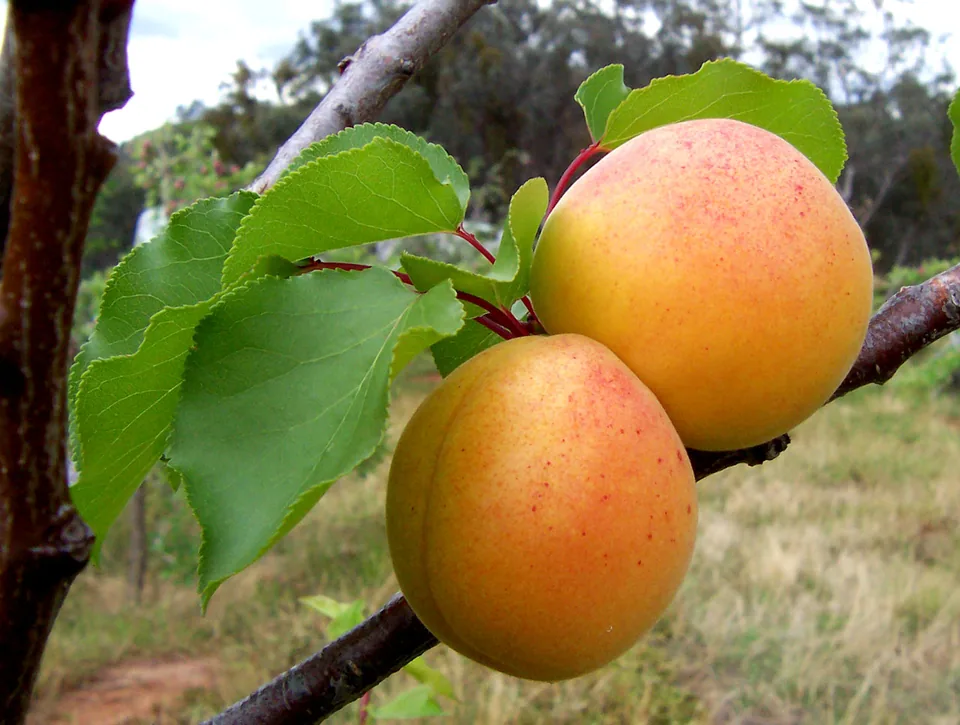


Cómo cultivar y cuidar Albaricoque
Prunus armeniaca
Escrito por Emilio Marruso · última revisión
Tóxica para: Gatos, Perros, Caballos, Personas · Por qué
De un vistazo
Un albaricoquero a pleno sol te da fruta para comer fresca, seca, cocinada o en mermelada. Basta con un solo árbol, porque da fruto con su propio polen, y de adulto necesita muy poca poda. Cosecha de finales de junio a agosto, cuando la piel se vuelve amarilla o naranja y el fruto está algo blando.
- Sol
Pleno sol
Qué dicen las fuentes (1)
Luz: Pleno sol
They prefer moist, well-drained soil in full sun.
— Prunus armeniaca (Ansu Apricot, Apricot, Armenean Plum, Siberian Apricot, Tibetan Apricot) | North Carolina Extension Gardener Plant Toolbox [1] - Riego
Dos veces por semana el primer año; después cada dos semanas, menos si llueve mucho
Qué dicen las fuentes (5)
Riego: Programa de riego quincenal que aplica alrededor de 30 pulgadas [76 cm] de agua durante la temporada, reducido si hay lluvia significativa
Según Utah State University Extension: For the next few years, maintain a biweekly watering program that will apply around 30 inches of water over the season. This can be reduced if there is significant rainfall accumulation.
— How to Grow Apricots in Your Home Garden | USU [4] Albaricoque de Manchuria (Prunus armeniaca var. mandshurica), fuente: NDSU: Water: Will not withstand ponding, moderately drought tolerant.
— Manchurian Apricot | NDSU Agriculture [3] For the next few years, maintain a biweekly watering program that will apply around 30 inches of water over the season. This can be reduced if there is significant rainfall accumulation.
— How to Grow Apricots in Your Home Garden | USU [4] Notas sobre el riego: En la primera temporada, mantén el suelo húmedo pero no empapado, regando unas dos veces por semana para asegurar el establecimiento; el riego excesivo aumenta el riesgo de clorosis y decaimiento del árbol
During the first season, irrigate at an interval that will keep the soil moist but not soggy. Depending on rainfall and temperature, irrigate about two times per week to ensure establishment.
— How to Grow Apricots in Your Home Garden | USU [4] Overwatering will significantly increase the risk of chlorosis and general tree decline as a result.
— How to Grow Apricots in Your Home Garden | USU [4] - Frío
Florece pronto y las heladas dañan las flores: plántalo en un lugar resguardado, no en una hondonada
- Suelo
Evita la tierra pesada y encharcada: las raíces se pudren con facilidad
- Distancia
5,5–6,7 m entre árboles
Qué dicen las fuentes (1)
Distancia de plantación: 548.6-670.6 cm (18 a 22 pies)
Space trees 18 to 22 feet apart. For potted trees, prepare a hole for planting twice the width and the same depth as the container.
— How to Grow Apricots in Your Home Garden | USU [4] - Plantación
A principios de primavera, en cuanto la tierra se pueda trabajar
Qué dicen las fuentes (1)
Plantación: Principios de primavera, tan pronto como el suelo pueda trabajarse
Plant the tree in early spring as soon as the ground can be worked. Dig a whole twice the diameter of the root system and 2-ft deep.
— Apricots (Prunus armeniaca L.)-Hort Answers - University of Illinois Extension [2] - Abonado
A principios de primavera, antes de brotar, con poco nitrógeno; no abones el primer año tras plantar
Qué dicen las fuentes (7)
Cuándo: Principios de primavera, antes de que comience el nuevo crecimiento
It requires regular pruning to remain healthy and to develop high-quality fruit. Fertilization should be done in early spring before new growth appears.
— Prunus armeniaca (Ansu Apricot, Apricot, Armenean Plum, Siberian Apricot, Tibetan Apricot) | North Carolina Extension Gardener Plant Toolbox [1] Apricots need to be fertilized in early spring before growth begins. Apricots need less nitrogen fertilizer compared to peaches.
— Apricots (Prunus armeniaca L.)-Hort Answers - University of Illinois Extension [2] Abonos minerales: Menos nitrógeno que los melocotones, aplicado a lo largo de la línea de goteo
árboles menores de 5 años: When nitrogen is needed, apply ½ to 1 cup 20-0-0 around the dripline of trees younger than 5 years old.
— How to Grow Apricots in Your Home Garden | USU [4] árboles más viejos: If phosphorus and potassium are also deficient, apply a similar quantity of 16-16-16, or an equivalent balanced fertilizer. For older trees apply 1 to 2 cups.
— How to Grow Apricots in Your Home Garden | USU [4] Apricots need less nitrogen fertilizer compared to peaches. The fertilizer isapplied along the drip line of the tree.
— Apricots (Prunus armeniaca L.)-Hort Answers - University of Illinois Extension [2] Evitar: Fertilizar en el primer año después del trasplante, o cuando el crecimiento ya es adecuado
Newly planted apricots should not be fertilized in the first year they are transplanted.
— How to Grow Apricots in Your Home Garden | USU [4] For older trees, growth slows to 8 to 10 inches of new growth per year. Fertilization is not needed if growth rates are adequate.
— How to Grow Apricots in Your Home Garden | USU [4] - Poda
Poda poco a finales de invierno: el fruto sale en ramitas de hasta 5 años
Qué dicen las fuentes (2)
Poda: Finales del invierno
Annual pruning on new and established trees is needed and should be done in late winter.
— How to Grow Apricots in Your Home Garden | USU [4] Poda drástica: No elimines demasiada madera que da fruto: el fruto se forma en espuelas de hasta 5 años. Los árboles maduros necesitan poda mínima.
Remember apricots produce fruit on spurs (short side shoots) up to 5 years old, so do not remove too much fruit-bearing wood.
— How to Grow Apricots in Your Home Garden | USU [4] - Cosecha
De finales de junio a agosto, algo blando y amarillo o naranja; gíralo un poco al arrancarlo
Qué dicen las fuentes (7)
Cosecha: La fruta madura a fines de junio hasta julio; se cosecha de julio a agosto según el cultivar, cuando se vuelve amarilla o desarrolla un rubor rojo y comienza a ablandarse
Según NC State Extension: fruit is yellow to reddish in color which ripens in late June to July.
— Prunus armeniaca (Ansu Apricot, Apricot, Armenean Plum, Siberian Apricot, Tibetan Apricot) | North Carolina Extension Gardener Plant Toolbox [1] Según University of Illinois Extension: Harvest Time June to August
— Apricots (Prunus armeniaca L.)-Hort Answers - University of Illinois Extension [2] Según Utah State University Extension: Fruit is typically harvested July through August (cultivar dependent), when they turn yellow or develop a red blush and begin to soften.
— How to Grow Apricots in Your Home Garden | USU [4] fruit is yellow to reddish in color which ripens in late June to July.
— Prunus armeniaca (Ansu Apricot, Apricot, Armenean Plum, Siberian Apricot, Tibetan Apricot) | North Carolina Extension Gardener Plant Toolbox [1] Fruit is typically harvested July through August (cultivar dependent), when they turn yellow or develop a red blush and begin to soften.
— How to Grow Apricots in Your Home Garden | USU [4] Cómo cosechar: Cosecha cuando el fruto esté ligeramente blando y la piel cambie de verde a amarillo, rojo o naranja (según el cultivar); gira el fruto ligeramente al tirar para evitar daños en el espolón.
When ripe, fruit should be slightly soft and skin will change from green to yellow, red, orange, or combinations of these depending on cultivar.
— How to Grow Apricots in Your Home Garden | USU [4] When harvesting, twist fruit slightly when pulling to avoid spur injury.
— How to Grow Apricots in Your Home Garden | USU [4] - Polinización
Basta un árbol; otra variedad que florezca a la vez cerca da más fruta
Qué dicen las fuentes (7)
Cuajado: Autofértil: produce fruto con su propio polen
All apricot varieties are self-fertile, so you only need one tree for a good crop
— [5] Apricots are generally self-fruitful, but most will produce better when another cultivar with similar bloom time is nearby for pollinizing.
— How to Grow Apricots in Your Home Garden | USU [4] Qué necesita: Un árbol es suficiente, pero la producción mejora si hay otra variedad que florece al mismo tiempo cerca. La floración es temprana, cuando hay pocos insectos polinizadores activos: la polinización manual ayuda; los árboles en invernadero siempre deben polinizarse a mano.
variedad 'Sungold': Sungold – Very winter hardy, orange flesh, grows more upright, must plant with Moongold for proper pollination.
— Apricots (Prunus armeniaca L.)-Hort Answers - University of Illinois Extension [2] All apricot varieties are self-fertile, so you only need one tree for a good crop
— [5] Most apricots are self-fruitful , but yield improves with a nearby cultivar that blooms concurrently.
— How to Grow Apricots in Your Home Garden | USU [4] Apricots are self-fertile, but they flower early in spring when few pollinating insects are around, so it is a good idea to hand-pollinate them to ensure a good crop.
— [5] Trees grown in a greenhouse should always be hand- pollinated
— [5] - Plagas
Orugas enrolladoras, barrenador del melocotonero y pulgón; la podredumbre parda es grave
Qué dicen las fuentes (5)
Plagas: enrolladores de hojas de árboles frutales, barrenadores del duraznero, pulgones, ardillas, escarabajo japonés, picudo del ciruelo, ácaros, cochinilla de San José
Pests include fruit tree leaf rollers, peach tree borers, aphids, squirrels, Japanese beetle, plum curculio, and mites.
— Prunus armeniaca (Ansu Apricot, Apricot, Armenean Plum, Siberian Apricot, Tibetan Apricot) | North Carolina Extension Gardener Plant Toolbox [1] | San Jose Scale | Small insect with hard protective covering that infests branches and fruit.
— How to Grow Apricots in Your Home Garden | USU [4] Enfermedades: podredumbre parda, cancro bacteriano, mancha foliar bacteriana, oídio, tiro de munición (perforación de hojas), cancro por cytospora
Brown rot is one of the major diseases. Other diseases include bacterial canker, bacterial leaf spot, and powdery mildew.
— Prunus armeniaca (Ansu Apricot, Apricot, Armenean Plum, Siberian Apricot, Tibetan Apricot) | North Carolina Extension Gardener Plant Toolbox [1] | Coryneum Blight (Shot Hole) | Round, purple-tinted lesions on leaves turn black and centers fall out leaving many small holes in leaves.
— How to Grow Apricots in Your Home Garden | USU [4] | Cytospora/Pseudomonas Canker | Wounds/cankers that ooze or produce amber-colored gummy sap.
— How to Grow Apricots in Your Home Garden | USU [4] - Atención
El exceso de riego es el gran peligro en árboles jóvenes: hojas amarillas y ramas secas
Qué dicen las fuentes (2)
Notas sobre el riego: En la primera temporada, mantén el suelo húmedo pero no empapado, regando unas dos veces por semana para asegurar el establecimiento; el riego excesivo aumenta el riesgo de clorosis y decaimiento del árbol
During the first season, irrigate at an interval that will keep the soil moist but not soggy. Depending on rainfall and temperature, irrigate about two times per week to ensure establishment.
— How to Grow Apricots in Your Home Garden | USU [4] Overwatering will significantly increase the risk of chlorosis and general tree decline as a result.
— How to Grow Apricots in Your Home Garden | USU [4] - Tamaño
De 6,1 a 12,2 m de ancho
Qué dicen las fuentes (1)
Anchura adulta: 610-1219 cm (20 a 40 pies)
Dimensions: Height: 20 ft. 0 in. - 40 ft. 0 in. Width: 20 ft. 0 in. - 40 ft. 0 in.
— Prunus armeniaca (Ansu Apricot, Apricot, Armenean Plum, Siberian Apricot, Tibetan Apricot) | North Carolina Extension Gardener Plant Toolbox [1] - Multiplicación
Por esquejes o injerto sobre patrón
Qué dicen las fuentes (1)
Propagación: Esquejes, injertos sobre portainjertos
You can propagate cuttings or grafting onto rootstocks.
— Prunus armeniaca (Ansu Apricot, Apricot, Armenean Plum, Siberian Apricot, Tibetan Apricot) | North Carolina Extension Gardener Plant Toolbox [1] - Seguridad
Los huesos son venenosos; mantenlos lejos de gatos, perros y caballos
Resumen
El albaricoque es un árbol frutal de hoja caduca de la familia de las rosáceas que prefiere suelo húmedo y bien drenado a pleno sol. [1] Florece a fines del invierno o principios de la primavera y es extremadamente susceptible al daño por heladas. [1] Los huesos contienen compuestos de cianuro, que son venenosos. [1]
Citado en inglés, como en la fuente.
Cuidados
Las medidas entre corchetes son nuestra conversión al otro sistema de unidades; el texto citado no cambia.
Riego
Riego
Programa de riego quincenal que aplica alrededor de 30 pulgadas [76 cm] de agua durante la temporada, reducido si hay lluvia significativa
Lo que dice cada fuente
Según Utah State University Extension: Programa de riego quincenal que aplica alrededor de 30 pulgadas [76 cm] de agua durante la temporada
Albaricoque de Manchuria (Prunus armeniaca var. mandshurica), fuente: NDSU: Moderadamente tolerante a la sequía; no resistirá el encharcamiento
Qué dicen las fuentes (3)
Según Utah State University Extension: For the next few years, maintain a biweekly watering program that will apply around 30 inches of water over the season. This can be reduced if there is significant rainfall accumulation.Albaricoque de Manchuria (Prunus armeniaca var. mandshurica), fuente: NDSU: Water: Will not withstand ponding, moderately drought tolerant.For the next few years, maintain a biweekly watering program that will apply around 30 inches of water over the season. This can be reduced if there is significant rainfall accumulation.Notas sobre el riego
En la primera temporada, mantén el suelo húmedo pero no empapado, regando unas dos veces por semana para asegurar el establecimiento; el riego excesivo aumenta el riesgo de clorosis y decaimiento del árbol
Qué dicen las fuentes (2)
During the first season, irrigate at an interval that will keep the soil moist but not soggy. Depending on rainfall and temperature, irrigate about two times per week to ensure establishment.Overwatering will significantly increase the risk of chlorosis and general tree decline as a result.Luz
Pleno sol
Qué dicen las fuentes (1)
They prefer moist, well-drained soil in full sun.Clima y frío
Rusticidad, zona más fría
Las fuentes dan valores distintos según la región, la zona o las condiciones de cultivo.
Lo que dice cada fuente
Según NC State Extension: 5a [mínima invernal de −28,9 a −26,1 °C (de −20 a −15 °F)]
Según University of Illinois Extension: 5 [mínima invernal de −28,9 a −23,3 °C (de −20 a −10 °F)]
Según Utah State University Extension: 5 [mínima invernal de −28,9 a −23,3 °C (de −20 a −10 °F)]
Según Utah State University Extension (cultivar comuni, fruttificazione sporadica): 4 [mínima invernal de −34,4 a −28,9 °C (de −30 a −20 °F)]
Albaricoque de Manchuria (Prunus armeniaca var. mandshurica), fuente: NDSU: 3 [mínima invernal de −40 a −34,4 °C (de −40 a −30 °F)]
Qué dicen las fuentes (6)
Según NC State Extension: USDA Plant Hardiness Zone:
5a, 5b, 6a, 6b, 7a, 7bSegún University of Illinois Extension: USDA Hardiness Zone
5 - 7Según Utah State University Extension: Apricots are commonly grown in USDA Hardiness Zones 5 to 8. Many common cultivars can survive Zone 4, but produce fruit sporadically because of frost damage to blossoms.Según Utah State University Extension (cultivar comuni, fruttificazione sporadica): Apricots are commonly grown in USDA Hardiness Zones 5 to 8. Many common cultivars can survive Zone 4, but produce fruit sporadically because of frost damage to blossoms.Albaricoque de Manchuria (Prunus armeniaca var. mandshurica), fuente: NDSU: Hardiness: Zone 3USDA Plant Hardiness Zone:
5a, 5b, 6a, 6b, 7a, 7bRusticidad, zona más cálida
Las fuentes dan valores distintos según la región, la zona o las condiciones de cultivo.
Lo que dice cada fuente
Según NC State Extension: 7b [mínima invernal de −15 a −12,2 °C (de 5 a 10 °F)]
Según University of Illinois Extension: 7 [mínima invernal de −17,8 a −12,2 °C (de 0 a 10 °F)]
Según Utah State University Extension: 8 [mínima invernal de −12,2 a −6,7 °C (de 10 a 20 °F)]
Qué dicen las fuentes (4)
Según NC State Extension: USDA Plant Hardiness Zone:
5a, 5b, 6a, 6b, 7a, 7bSegún University of Illinois Extension: USDA Hardiness Zone
5 - 7Según Utah State University Extension: Apricots are commonly grown in USDA Hardiness Zones 5 to 8. Many common cultivars can survive Zone 4, but produce fruit sporadically because of frost damage to blossoms.USDA Plant Hardiness Zone:
5a, 5b, 6a, 6b, 7a, 7bSuelo
pH del suelo, mínimo
Las fuentes dan valores distintos según la región, la zona o las condiciones de cultivo.
Lo que dice cada fuente
Albaricoque de Manchuria (Prunus armeniaca var. mandshurica), fuente: NDSU: 6.0
Qué dicen las fuentes (1)
Albaricoque de Manchuria (Prunus armeniaca var. mandshurica), fuente: NDSU: Soil: Grows best in loam soils with a pH of 6-7.5.pH del suelo, máximo
Las fuentes dan valores distintos según la región, la zona o las condiciones de cultivo.
Lo que dice cada fuente
Albaricoque de Manchuria (Prunus armeniaca var. mandshurica), fuente: NDSU: 7.5
Qué dicen las fuentes (1)
Albaricoque de Manchuria (Prunus armeniaca var. mandshurica), fuente: NDSU: Soil: Grows best in loam soils with a pH of 6-7.5.Dónde cultivarla
548.6-670.6 cm (18 a 22 pies)
Qué dicen las fuentes (1)
Space trees 18 to 22 feet apart. For potted trees, prepare a hole for planting twice the width and the same depth as the container.Propagación
Esquejes, injertos sobre portainjertos
Qué dicen las fuentes (1)
You can propagate cuttings or grafting onto rootstocks.Cultivo
La planta
Ciclo de vida
leñoso (árbol de hoja caduca)
Qué dicen las fuentes (1)
Family: Rosaceae Life Cycle: Woody Country Or Region Of Origin: Central Asia to Northern & Central ChinaFamilia
Rosáceas
Qué dicen las fuentes (1)
The apricot is a deciduous tree in the rose (Rosaceae) family.Altura adulta
Las fuentes no coinciden:
Lo que dice cada fuente
cultivar 'Manchurian apricot (var. mandshurica)': 305-457 cm (10 to 15 feet)
Qué dicen las fuentes (1)
cultivar 'Manchurian apricot (var. mandshurica)': Scientific Name: Prunus armeniaca var. mandshurica Family: Rosaceae (Rose) Hardiness: Zone 3 Leaves: Deciduous Plant Type: Tree Growth Rate: Medium Mature Height: 10’-15’Anchura adulta
610-1219 cm (20 a 40 pies)
Qué dicen las fuentes (1)
Dimensions: Height: 20 ft. 0 in. - 40 ft. 0 in. Width: 20 ft. 0 in. - 40 ft. 0 in.Cosecha y conservación
Cómo cosechar
Cosecha cuando el fruto esté ligeramente blando y la piel cambie de verde a amarillo, rojo o naranja (según el cultivar); gira el fruto ligeramente al tirar para evitar daños en el espolón.
Qué dicen las fuentes (2)
When ripe, fruit should be slightly soft and skin will change from green to yellow, red, orange, or combinations of these depending on cultivar.When harvesting, twist fruit slightly when pulling to avoid spur injury.Plagas y enfermedades
Plagas
enrolladores de hojas de árboles frutales, barrenadores del duraznero, pulgones, ardillas, escarabajo japonés, picudo del ciruelo, ácaros, cochinilla de San José
Qué dicen las fuentes (2)
Pests include fruit tree leaf rollers, peach tree borers, aphids, squirrels, Japanese beetle, plum curculio, and mites.| San Jose Scale | Small insect with hard protective covering that infests branches and fruit.Enfermedades
podredumbre parda, cancro bacteriano, mancha foliar bacteriana, oídio, tiro de munición (perforación de hojas), cancro por cytospora
Qué dicen las fuentes (3)
Brown rot is one of the major diseases. Other diseases include bacterial canker, bacterial leaf spot, and powdery mildew.| Coryneum Blight (Shot Hole) | Round, purple-tinted lesions on leaves turn black and centers fall out leaving many small holes in leaves.| Cytospora/Pseudomonas Canker | Wounds/cankers that ooze or produce amber-colored gummy sap.Abonado
Cuándo
Principios de primavera, antes de que comience el nuevo crecimiento
Qué dicen las fuentes (2)
It requires regular pruning to remain healthy and to develop high-quality fruit. Fertilization should be done in early spring before new growth appears.Apricots need to be fertilized in early spring before growth begins. Apricots need less nitrogen fertilizer compared to peaches.Abonos naturales
Estiércol bien descompuesto y compost, según los resultados del análisis del suelo
Qué dicen las fuentes (1)
one year before planting, and send to soil testing laboratories (list of soil testing labs are available at local Extension office). Add well rotted manure and compost based on soil test results.Abonos minerales
Menos nitrógeno que los melocotones, aplicado a lo largo de la línea de goteo
Lo que dice cada fuente
árboles menores de 5 años: 20-0-0, 118–237 mL esparcidos en la línea de goteo cuando se necesita nitrógeno
árboles más viejos: 237–474 mL; 16-16-16 o un fertilizante equilibrado equivalente si también faltan fósforo y potasio
Qué dicen las fuentes (3)
árboles menores de 5 años: When nitrogen is needed, apply ½ to 1 cup 20-0-0 around the dripline of trees younger than 5 years old.árboles más viejos: If phosphorus and potassium are also deficient, apply a similar quantity of 16-16-16, or an equivalent balanced fertilizer. For older trees apply 1 to 2 cups.Apricots need less nitrogen fertilizer compared to peaches. The fertilizer isapplied along the drip line of the tree.Microelementos
Hierro quelado (EDDHA) contra la clorosis férrica en suelos alcalinos
Qué dicen las fuentes (1)
Deep, infrequent irrigation and use of EDDHA chelated iron may help considerably. For more information on iron chlorosis management see the USU Iron Chlorosis in Berries fact sheet.Evitar
Fertilizar en el primer año después del trasplante, o cuando el crecimiento ya es adecuado
Qué dicen las fuentes (2)
Newly planted apricots should not be fertilized in the first year they are transplanted.For older trees, growth slows to 8 to 10 inches of new growth per year. Fertilization is not needed if growth rates are adequate.Signos de carencia
Demasiado poco crecimiento nuevo cuando falta nitrógeno; clorosis férrica en suelos alcalinos
Qué dicen las fuentes (2)
The most common limiting nutrient is nitrogen, and when inadequate, trees will not produce sufficient new growth.Apricots are very prone to iron chlorosis in the alkaline soils of Utah.Polinización
Cuajado
Autofértil: produce fruto con su propio polen
Qué dicen las fuentes (2)
All apricot varieties are self-fertile, so you only need one tree for a good cropApricots are generally self-fruitful, but most will produce better when another cultivar with similar bloom time is nearby for pollinizing.Qué necesita
Un árbol es suficiente, pero la producción mejora si hay otra variedad que florece al mismo tiempo cerca. La floración es temprana, cuando hay pocos insectos polinizadores activos: la polinización manual ayuda; los árboles en invernadero siempre deben polinizarse a mano.
Lo que dice cada fuente
variedad 'Sungold': Planta con la variedad Moongold para una polinización adecuada.
Qué dicen las fuentes (5)
variedad 'Sungold': Sungold – Very winter hardy, orange flesh, grows more upright, must plant with Moongold for proper pollination.All apricot varieties are self-fertile, so you only need one tree for a good cropMost apricots are self-fruitful , but yield improves with a nearby cultivar that blooms concurrently.Apricots are self-fertile, but they flower early in spring when few pollinating insects are around, so it is a good idea to hand-pollinate them to ensure a good crop.Trees grown in a greenhouse should always be hand- pollinatedLo transportan
Insectos
Qué dicen las fuentes (1)
Apricots are self-fertile, but they flower early in spring when few pollinating insects are around, so it is a good idea to hand-pollinate them to ensure a good crop.Poda
Madera que florece
Florece en madera vieja (el crecimiento del año anterior)
Qué dicen las fuentes (1)
Most fruit is borne on short spurs on 1-year-old wood that remain productive for 3 to 5 years.Cuándo podar
Las fuentes dan valores distintos según la región, la zona o las condiciones de cultivo.
Lo que dice cada fuente
Reino Unido: Solo en primavera o verano.
Estados Unidos (Utah): Finales del invierno.
Qué dicen las fuentes (2)
Reino Unido: Like all stone fruits, apricots should only be pruned in spring or summer, to minimise the risk of infection by silver leaf disease and bacterial canker .Estados Unidos (Utah): Annual pruning on new and established trees is needed and should be done in late winter.Poda drástica
No elimines demasiada madera que da fruto: el fruto se forma en espuelas de hasta 5 años. Los árboles maduros necesitan poda mínima.
Qué dicen las fuentes (1)
Remember apricots produce fruit on spurs (short side shoots) up to 5 years old, so do not remove too much fruit-bearing wood.Frío invernal
Horas de frío
300–1000 horas entre 0 y 7,2 °C [32–45 °F]
Lo que dice cada fuente
especie «Albaricoque»: 300–1000 horas
especie «Albaricoque»: 300–1000 horas
especie «Albaricoques»: 600–900 horas
grupo 'variedades de bajo requerimiento': 350 horas
cultivar 'Currot': 34.3 horas
cultivar 'Búlida': 53.8 horas
Qué dicen las fuentes (12)
especie «Albaricoque»: Apricot Chill hours: 300 to 1,000 Apricots bloom early and are subject to the same frostespecie «Albaricoque»: Chill Hours Required to Break Dormancy Using the 45oF Model Apple 800 to 1750 Pear and sour cherry 600 to 1500 Plum (Japanese) 600 to 1600 Cherry (sweet) 500 to 1450 Peach 375 to 1200 Apricot 300 to 1000especie «Albaricoques»: Apricots are best adapted to areas with adequate chilling, which for apricots is 600 to 900 hours below 45° F.grupo 'variedades de bajo requerimiento': There are a few low-chill varieties that will bear with only 350 hours.cultivar 'Currot': Ferragnes 1 32 * - Central Valley, Chile Apple Golden Delicious 2 50 † - - Apricot Currot 3 34.3 6.1 Murcia, Spaincultivar 'Búlida': Rojo Pasion 3 51.2 4.7 Murcia, Spain Búlida 3 53.8 2.9 Murcia, Spain San Castrese 4 55.25 1.42Apricot Chill hours: 300 to 1,000 Apricots bloom early and are subject to the same frostChill Hours Required to Break Dormancy Using the 45oF Model Apple 800 to 1750 Pear and sour cherry 600 to 1500 Plum (Japanese) 600 to 1600 Cherry (sweet) 500 to 1450 Peach 375 to 1200 Apricot 300 to 1000Apricots are best adapted to areas with adequate chilling, which for apricots is 600 to 900 hours below 45° F.Chill hours are accumulated from November through February when temperatures are between 32° and 45°F.Chill Hours Required to Break Dormancy Using the 45oF Model Apple 800 to 1750Chilling hours are defined as the number of hours that the temperature is below 45° F.Problemas
Daño por heladas a las flores
Síntoma: Extremadamente susceptible al daño por heladas porque el árbol florece a fines del invierno o principios de la primavera
Qué hacer: Planta en un área protegida y evita zonas bajas que puedan ser un bolsón de heladas
Qué dicen las fuentes (2)
Apricot trees are extremely susceptible to frost damage because they bloom in late winter or early spring.
— Prunus armeniaca (Ansu Apricot, Apricot, Armenean Plum, Siberian Apricot, Tibetan Apricot) | North Carolina Extension Gardener Plant Toolbox [1] you should plant them in a protected area to minimize frost damage. Do not plant them in low-lying areas which could be a frost pocket.
— Prunus armeniaca (Ansu Apricot, Apricot, Armenean Plum, Siberian Apricot, Tibetan Apricot) | North Carolina Extension Gardener Plant Toolbox [1] Podredumbre parda y otras plagas y enfermedades
Síntoma: Las plagas principales son los enrolladores de hojas de árboles frutales y el barrenador del melocotonero; la podredumbre parda es una de las enfermedades principales
Qué hacer: Corta toda la madera muerta o enferma; retira los albaricoques secos de los árboles y limpia las hojas y los restos caídos alrededor de los árboles.
Qué dicen las fuentes (2)
The major apricot pests are fruit tree leaf rollers, and peach tree borer, and brown rot is one of the major diseases.
— Apricots (Prunus armeniaca L.)-Hort Answers - University of Illinois Extension [2] Good sanitation practices are necessary to control pest problems. Cut all dead or diseased wood; remove dried apricots from trees, and clear leaves and fallen debris away from trees.
— Apricots (Prunus armeniaca L.)-Hort Answers - University of Illinois Extension [2] Enfermedades de las raíces por exceso de riego
Síntoma: Hojas amarillentas, decaimiento general y falta de vigor, muerte de ramas; muy común en árboles recién plantados debido al riego excesivo involuntario
Qué hacer: Los albaricoques toleran poco los suelos húmedos y pesados, por lo que el riego debe manejarse con cuidado
Qué dicen las fuentes (2)
Yellowing leaves, general decline and lack of vigor. Branch dieback. Extremely common with newly planted trees due to unintentional overwatering.
— How to Grow Apricots in Your Home Garden | USU [4] Apricots, like peaches and plums, have little tolerance of wet and heavy soils and will easily get root-rotting diseases in such conditions, especially when irrigation is not carefully managed.
— How to Grow Apricots in Your Home Garden | USU [4]
Remedios
Cada remedio indica qué dicen las fuentes oficiales; los remedios tradicionales sin fuente oficial aparecen marcados. Los perjudiciales están para que sepas evitarlos.
Primeros auxilios
Primeros auxilios: no sustituyen al médico
hueso de albaricoque tragado
no se necesita acción si se traga un hueso entero Fuente oficial, sin prueba independiente
If the seed is chewed or if someone ingests several seeds and/or the person is symptomatic, contact the poison center or a health care professional.
— poison.org [10] The pits are more poisonous if they are ground up/crushed or the seeds are chewed.
— Prunus armeniaca (Ansu Apricot, Apricot, Armenean Plum, Siberian Apricot, Tibetan Apricot) | North Carolina Extension Gardener Plant Toolbox [1] Cómo: Si alguien traga accidentalmente una semilla/hueso de albaricoque mientras come el albaricoque, no necesitas hacer nada; la semilla entera debería atravesar el tracto digestivo y eliminarse en las heces.
If someone accidentally swallows an apricot seed/pit while eating the apricot, you do not need to do anything. The whole seed should traverse the digestive tract and be eliminated in the stool.
— poison.org [10]
semillas de albaricoque masticadas o síntomas de intoxicación
contacta al centro de toxicología o a un profesional de la salud Fuente oficial, sin prueba independiente
If the seed is chewed or if someone ingests several seeds and/or the person is symptomatic, contact the poison center or a health care professional.
— poison.org [10] Symptoms of cyanide poisoning include headache, difficulty breathing, fainting, seizures, coma, and cardiovascular collapse. Symptoms may be delayed because it takes time for the body to convert amygdalin into cyanide.
— poison.org [10] Cómo: Si la semilla se mastica o si alguien ingiere varias semillas y/o la persona presenta síntomas, contacta al centro de toxicología o a un profesional de la salud.
If the seed is chewed or if someone ingests several seeds and/or the person is symptomatic, contact the poison center or a health care professional.
— poison.org [10]
Cuidar la planta
pulgones
jabón insecticida Funciona
Cómo: Para infestaciones menores o moderadas, trata con un jabón insecticida.
Can occur throughout the growing season. | For minor to moderate infestations treat with an insecticidal soap, or summer weight horticultural oil or neem.
— How to Grow Apricots in Your Home Garden | USU [4] Qué dicen las pruebas Neem oil products and potassium laureate (insecticidal soaps) applied directly to the aphids can reduce populations, and tend to be harmless to beneficial insects, as well as safe for the environment.
— pubs.extension.wsu.edu [11] aceite de neem Funciona en parte
Cómo: Los árboles cultivados orgánicamente se pueden rociar con aceite de neem para controlar las poblaciones de pulgones.
Organically grown trees can be sprayed with neem oil to control aphid populations; chemical control of the aphid is rarely necessary.
— plantvillage.psu.edu [12] Qué dicen las pruebas However, neem oil is not effective against every insect and disease, and often must be frequently reapplied to reach the desired outcome.
— extension.unh.edu [13] chorro fuerte de agua No verificado
Remedio tradicional, no verificado por una fuente oficial.
Cómo: Controla los pulgones con un chorro fuerte de agua; échalos del árbol con un chorro de agua de la manguera.
ácaros araña
chorro fuerte de agua Funciona
Cómo: Lava los árboles o plantas con un rocío fuerte de agua.
If needed, mites can be managed by washing down trees or plants with a stiff spray of water, and/or applying insecticidal soap or 1% horticultural oil (both are organic).
— extension.usu.edu [14] Qué dicen las pruebas If needed, mites can be managed by washing down trees or plants with a stiff spray of water, and/or applying insecticidal soap or 1% horticultural oil (both are organic).
— extension.usu.edu [14] jabón insecticida Funciona
Avoid applying soaps or oils during the hot part of the day as some leaf burn may result.
— extension.usu.edu [14] Cómo: Aplica jabón insecticida; evita aplicarlo durante la parte calurosa del día.
If needed, mites can be managed by washing down trees or plants with a stiff spray of water, and/or applying insecticidal soap or 1% horticultural oil (both are organic).
— extension.usu.edu [14] Qué dicen las pruebas If needed, mites can be managed by washing down trees or plants with a stiff spray of water, and/or applying insecticidal soap or 1% horticultural oil (both are organic).
— extension.usu.edu [14]
tijeretas
trampas de tiras de cartón enrolladas Fuente oficial, sin prueba independiente
Cómo: Introduce tiras de cartón enrolladas en las horquetas de las ramas para atrapar y eliminar tijeretas; retira y reemplaza los rollos de cartón.
Rolled cardboard strips tucked into limb crotches can be used to trap and remove earwigs from trees (remove and replace cardboard rolls).
— extension.usu.edu [14]
cochinillas
fregando las ramas con una esponja de platos Fuente oficial, sin prueba independiente
Cómo: En primavera, antes de que salgan las hojas, frota las ramas infestadas con una esponja de malla para platos para eliminar los adultos.
In spring before leaves emerge, scrub infested limbs with a mesh dish sponge to remove adults.
— extension.usu.edu [14]
avispa papelera europea
trampa de botella de refresco con jugo de fruta Fuente oficial, sin prueba independiente
Cómo: Corta el tercio superior de una botella de refresco e inviértelo en la parte inferior, haz agujeros a lo largo de los bordes superiores y cuélgala con alambres; llena con 1 parte de jugo de fruta, 10 partes de agua y 1 cucharadita de detergente; cuélgala en el árbol justo antes de que la fruta empiece a madurar; vacía y vuelve a llenar según sea necesario.
Punch holes along the top edges and insert wires for hanging. Fill the bottle with 1 part fruit juice, 10 parts water, and 1 tsp detergent. Hang the trap in peach trees or nearby areas just before fruit starts to ripen
— extension.usu.edu [14]
podredumbre parda
eliminando frutas momificadas y restos caídos Funciona
Cómo: Corta toda la madera muerta o enferma, retira los albaricoques secos de los árboles y limpia las hojas y los restos caídos lejos de los árboles.
Cut all dead or diseased wood; remove dried apricots from trees, and clear leaves and fallen debris away from trees.
— Apricots (Prunus armeniaca L.)-Hort Answers - University of Illinois Extension [2] Qué dicen las pruebas After harvest, or in the spring before the buds open, collect and destroy all mummified fruits on or beneath the trees.
— pubs.extension.wsu.edu [11]
enfermedad de los agujeros de perdigón
podando y destruyendo el tejido infectado Fuente oficial, sin prueba independiente
Cómo: Poda y destruye todo el tejido vegetal infectado; evita que el agua de riego moje las hojas porque el agua propagará las esporas.
Prune and destroy all infected plant tissue. Prevent irrigation water from wetting leaves because the water will spread spores.
— extension.usu.edu [14]
cancro por cytospora
poda de madera infectada Fuente oficial, sin prueba independiente
Cómo: Poda la madera infectada 1 pie por debajo de donde se vean los últimos síntomas, en cuanto aparezcan.
Prune out infected wood 1 foot below where last symptoms are seen as soon as symptoms appear.
— How to Grow Apricots in Your Home Garden | USU [4]
propagación de enfermedades por las herramientas de poda
desinfección de las herramientas de poda con solución de lejía doméstica Funciona
Atención: Ingrediente de riesgo
Some homemade pesticide ingredients like bleach, salt, and vinegar can be very toxic when applied to the environment.
— pubs.ext.vt.edu [16] Mixing products can lead to chemical reactions that produce unknown substances such as toxic fumes or materials that can burn skin or eyes.
— pubs.ext.vt.edu [16] Cómo: Desinfecta las herramientas de poda con una solución al 10% de lejía doméstica antes y después de usarlas y entre árboles.
Disinfect pruning tools with a 10% solution of household bleach before and after use and between trees.
— Apricots (Prunus armeniaca L.)-Hort Answers - University of Illinois Extension [2] Qué dicen las pruebas Disinfect pruning tools between cuts with shellac thinner (70% ethyl alcohol) or 10% bleach.
— extension.oregonstate.edu [15]
daño por heladas en las flores
Cubre el árbol durante la noche Fuente oficial, sin prueba independiente
Cómo: Si se pronostica helada durante la floración, cubre el árbol durante la noche.
If frost is forecast during flowering, cover the tree overnight with biodegradable
— rhs.org.uk [5]
mala formación de frutos después de una helada
polinización manual con un pincel pequeño Fuente oficial, sin prueba independiente
Cómo: Protege las flores de las heladas y los vientos fríos, y poliniza manualmente con un pincel pequeño.
protect blossom from frost and cold winds, and hand-pollinate with a small paintbrush.
— rhs.org.uk [5]
Venenosa para los animales
Según la fuente, citada textualmente. No es un consejo médico ni veterinario: si una persona o un animal pudo haber ingerido esta planta, contacta con un centro de toxicología o con un veterinario.
Animales
#fruit tree #poisonous #edible fruits #problem for cats #problem for dogs #problem for horses
[1]
Personas
The pits contain cyanide compounds, which are poisonous. If a couple of pits are accidentally swallowed, it will not cause poisoning.
[1]
Calendario
Plantación
Principios de primavera, tan pronto como el suelo pueda trabajarse
Qué dicen las fuentes (1)
Plant the tree in early spring as soon as the ground can be worked. Dig a whole twice the diameter of the root system and 2-ft deep.Cosecha
La fruta madura a fines de junio hasta julio; se cosecha de julio a agosto según el cultivar, cuando se vuelve amarilla o desarrolla un rubor rojo y comienza a ablandarse
Lo que dice cada fuente
Según NC State Extension: Fines de junio a julio
Según University of Illinois Extension: Junio a agosto
Según Utah State University Extension: De julio a agosto
Qué dicen las fuentes (5)
Según NC State Extension: fruit is yellow to reddish in color which ripens in late June to July.Según University of Illinois Extension: Harvest Time
June to AugustSegún Utah State University Extension: Fruit is typically harvested July through August (cultivar dependent), when they turn yellow or develop a red blush and begin to soften.fruit is yellow to reddish in color which ripens in late June to July.Fruit is typically harvested July through August (cultivar dependent), when they turn yellow or develop a red blush and begin to soften.Poda
Finales del invierno
Qué dicen las fuentes (1)
Annual pruning on new and established trees is needed and should be done in late winter.Meses tal como los dan las fuentes, en su mayoría de Estados Unidos (hemisferio norte). En el hemisferio sur se desplazan unos seis meses.
Comestibilidad
Según la fuente, citada textualmente. No comas una planta basándote solo en esta página: los errores de identificación pueden ser peligrosos.
Valores orientativos
Valores de una fuente secundaria, no comprobados palabra por palabra como el resto de esta página. Úselos como punto de partida.
- Resiste la sequía
- SíValor orientativo, adáptalo a tu clima · Fuente secundaria · Dato de la variedad Prunus armeniaca 'Garden Annie'
- Nivel de cuidado
- MedioValor orientativo, adáptalo a tu clima · Fuente secundaria · Dato de la variedad Prunus armeniaca 'Garden Annie'
- Crecimiento
- BajoValor orientativo, adáptalo a tu clima · Fuente secundaria · Dato de la variedad Prunus armeniaca 'Garden Annie'
Plantas similares
- Afghan Cherry Prunus jacquemontii
- Ciruelo Americano Prunus americana
- Amur chokecherry Prunus maackii
- Cerezo criollo Prunus serotina
- Carolina Cherry Laurel Prunus caroliniana
- Lauroceraso Prunus laurocerasus
- Chickasaw Plum Prunus angustifolia
- Chinese Plum Prunus glandulosa
Fuentes
Cada valor anterior se cita de estos documentos. Los enlaces llevan al editor original.
- Prunus armeniaca (Ansu Apricot, Apricot, Armenean Plum, Siberian Apricot, Tibetan Apricot) | North Carolina Extension Gardener Plant Toolbox · plants.ces.ncsu.edu, consultado
- Apricots (Prunus armeniaca L.)-Hort Answers - University of Illinois Extension · web.extension.illinois.edu, consultado
- Manchurian Apricot | NDSU Agriculture · ndsu.edu, consultado
- How to Grow Apricots in Your Home Garden | USU · extension.usu.edu, consultado
- rhs.org.uk · rhs.org.uk
- escholarship.org · escholarship.org
- extension.illinois.edu · extension.illinois.edu
- ipm.ucanr.edu · ipm.ucanr.edu
- treephenology.ucdavis.edu · treephenology.ucdavis.edu
- poison.org · poison.org
- pubs.extension.wsu.edu · pubs.extension.wsu.edu
- plantvillage.psu.edu · plantvillage.psu.edu
- extension.unh.edu · extension.unh.edu
- extension.usu.edu · extension.usu.edu
- extension.oregonstate.edu · extension.oregonstate.edu
- pubs.ext.vt.edu · pubs.ext.vt.edu
Escrito por Emilio Marruso · última revisión