Cómo cultivar y cuidar Cerezo criollo
Prunus serotina
Escrito por Emilio Marruso · última revisión
Tóxica para: Gatos, Perros, Caballos, Ganado vacuno, Ganado, Animales, Personas · Por qué
De un vistazo
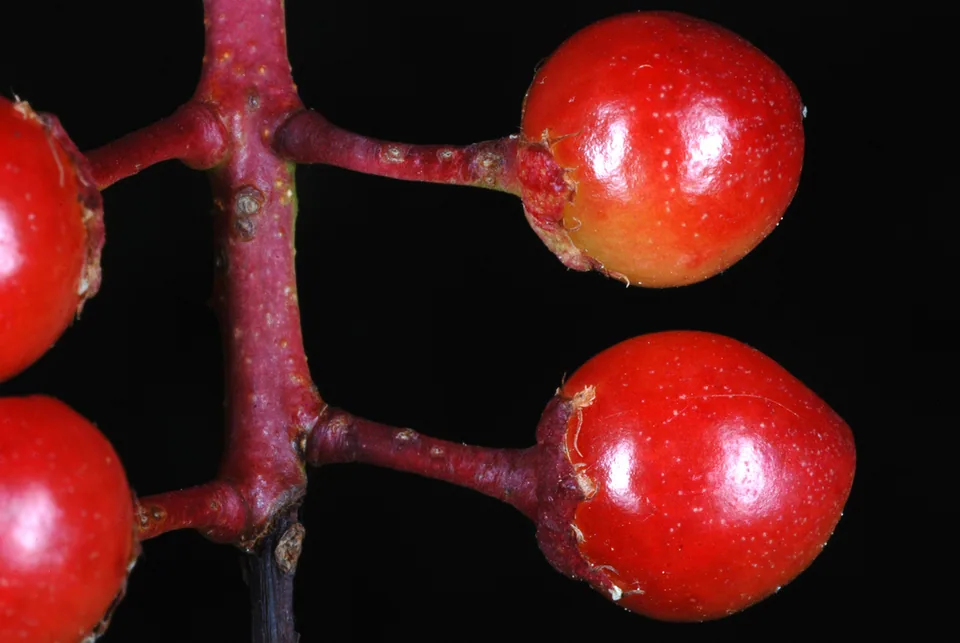
Es uno de los cerezos más grandes y se llena de racimos de frutos rojo oscuro a negros que encantan a muchos pájaros cantores. Crece a gusto a pleno sol o en semisombra y, a los 5 años, sus frutos amargos sirven para hacer mermeladas, jaleas e incluso vino. Dale 2,5 cm de agua a la semana mientras arraiga y luego disfruta de los pájaros.
- Sol
Pleno sol o semisombra
Qué dicen las fuentes (3)
Luz: Pleno sol a semisombra
Site Requirements: Adaptable but prefers moist, well-drained soils. In the right conditions, it will grow like a weed. Withstands heavy pruning and prefers full sun to partial shade.
— Black Cherry | Natural Resources [5] Black cherry requires full sun, soil high in organic matter and good drainage.
— Prunus serotina (Black Cherry, Eastern Wild Black Cherry, Wild Cherry, Wild Rum Cherry) | North Carolina Extension Gardener Plant Toolbox [1] Light: Part shade. Water: Medium to high water use. Soil: Best grown in moist, fertile loam soils.
— Black Cherry | NDSU Agriculture [6] - Riego
2,5 cm de agua a la semana mientras arraiga; después, solo en sequías fuertes
Qué dicen las fuentes (4)
Riego: Uso de agua de medio a alto; después del período de establecimiento, riego suplementario durante períodos de sequía severa
Light: Part shade. Water: Medium to high water use. Soil: Best grown in moist, fertile loam soils.
— Black Cherry | NDSU Agriculture [6] After the establishment period, provide supplemental irrigation during periods of severe drought.
— Bulletin #2575, Native Trees and Shrubs for Maine Landscapes: Black Cherry (Prunus serotina) - Cooperative Extension Publications - University of Maine Cooperative Extension [4] Notas sobre el riego: Durante el establecimiento (un año por pulgada de diámetro del tronco al plantar), riega regularmente en la temporada de crecimiento, dando a la zona de raíces 1 pulgada [2,5 cm] de agua por semana
During the establishment period, defined as one year after planting for each inch of trunk diameter at planting time, water your trees regularly during the growing season.
— Bulletin #2575, Native Trees and Shrubs for Maine Landscapes: Black Cherry (Prunus serotina) - Cooperative Extension Publications - University of Maine Cooperative Extension [4] Give the root zone of each tree 1 inch of water per week; in general, a tree’s root zone extends twice as wide as its canopy.
— Bulletin #2575, Native Trees and Shrubs for Maine Landscapes: Black Cherry (Prunus serotina) - Cooperative Extension Publications - University of Maine Cooperative Extension [4] - Abonado
Sin nitrógeno al plantar ni el primer año; abona solo si un análisis de suelo lo pide
Qué dicen las fuentes (2)
Evitar: Fertilizante de nitrógeno al plantar o durante la primera temporada de crecimiento; fertilizar sin un análisis de suelo que lo justifique
Landscape trees and shrubs should not be fertilized unless a soil test indicates a need.
— Bulletin #2575, Native Trees and Shrubs for Maine Landscapes: Black Cherry (Prunus serotina) - Cooperative Extension Publications - University of Maine Cooperative Extension [4] No nitrogen fertilizer should be added at planting or during the first growing season.
— Bulletin #2575, Native Trees and Shrubs for Maine Landscapes: Black Cherry (Prunus serotina) - Cooperative Extension Publications - University of Maine Cooperative Extension [4] - Cosecha
Frutos a partir del quinto año: amargos en crudo, pero buenos para mermeladas, jaleas y vino
Qué dicen las fuentes (1)
Años hasta el primer fruto: 5
Seed Bearing Age: 5 years
— Black Cherry | Natural Resources [5] - Plagas
Orugas de librea, escarabajo japonés, pulgón; nudo negro y oídio
Qué dicen las fuentes (11)
Plagas: oruga de tienda oriental, escarabajo japonés, enrolladores de hojas, barrenadores, tíngido del cerezo, pulgones, cochinillas, saltahojas, arañitas rojas, mosca sierra del peral (babosa del peral)
Potential insects include cherry lace bug, aphids, scale, borers, leafhoppers, caterpillars, tent caterpillars and Japanese beetles. Spider mites may also be trouble.
— Prunus serotina (Black Cherry, Eastern Wild Black Cherry, Wild Cherry, Wild Rum Cherry) | North Carolina Extension Gardener Plant Toolbox [1] Eastern Tent Caterpillar ( Malacosoma americanum )
— Black Cherry, Wild Cherry (Prunus serotina)-Hort Answers - University of Illinois Extension [3] Japanese Beetle ( Popilla japonica )
— Black Cherry, Wild Cherry (Prunus serotina)-Hort Answers - University of Illinois Extension [3] Leafrollers ( Tortricidae )
— Black Cherry, Wild Cherry (Prunus serotina)-Hort Answers - University of Illinois Extension [3] Pear Sawfly or Pearslug
— Black Cherry | Natural Resources [5] Enfermedades: mancha foliar, muerte regresiva, rizado de la hoja, mildiu polvoriento, podredumbre de la raíz, fuego bacteriano, nudo negro, moho gris, marchitez por Verticillium, podredumbres de la madera, cancro negro
Potential diseases include leaf spot, die back, leaf curl, powdery mildew, root rot and fireblight.
— Prunus serotina (Black Cherry, Eastern Wild Black Cherry, Wild Cherry, Wild Rum Cherry) | North Carolina Extension Gardener Plant Toolbox [1] Black Knot ( Apiosporina morbosa [syn. Dibotryon morbosum] )
— Black Cherry, Wild Cherry (Prunus serotina)-Hort Answers - University of Illinois Extension [3] Gray Mold [Trees and Shrubs] ( Botrytis cinerea and other species )
— Black Cherry, Wild Cherry (Prunus serotina)-Hort Answers - University of Illinois Extension [3] Verticillium Wilt [Shrubs and Trees] ( Verticillium albo-atrum and V. dahliae )
— Black Cherry, Wild Cherry (Prunus serotina)-Hort Answers - University of Illinois Extension [3] Wood Rots and Decays ( Many genus and species involved )
— Black Cherry, Wild Cherry (Prunus serotina)-Hort Answers - University of Illinois Extension [3] Potentially susceptible to black rot canker.
— Black Cherry | NDSU Agriculture [6] - Atención
Sufre a menudo plagas y enfermedades; evítalo si no toleras los nidos de orugas y los nudos negros
- Multiplicación
Por semilla o por esquejes de tallo
Qué dicen las fuentes (1)
Propagación: Semilla; esqueje de tallo
It can be pruned and kept at shrub size by cutting it to the ground every two to three years. Propagate it by seed or stem cutting.
— Prunus serotina (Black Cherry, Eastern Wild Black Cherry, Wild Cherry, Wild Rum Cherry) | North Carolina Extension Gardener Plant Toolbox [1] - Seguridad
Todas sus partes pueden ser tóxicas: peligroso para niños, perros, gatos, caballos y ganado
Resumen
El cerezo negro es un árbol caducifolio de la familia de las rosáceas que es nativo de América del Norte. [1] Prefiere pleno sol a semisombra y suelo húmedo y bien drenado. [5] Las hojas, frutas y semillas contienen compuestos de cianuro y son venenosas. [1]
Citado en inglés, como en la fuente.
Esta ficha está incompleta: las fuentes consultadas aún no cubren todos los campos.
Aún no cubierto por nuestras fuentes: Poda
Cuidados
Las medidas entre corchetes son nuestra conversión al otro sistema de unidades; el texto citado no cambia.
Riego
Riego
Uso de agua de medio a alto; después del período de establecimiento, riego suplementario durante períodos de sequía severa
Qué dicen las fuentes (2)
Light: Part shade.
Water: Medium to high water use.
Soil: Best grown in moist, fertile loam soils.After the establishment period, provide supplemental irrigation during periods of severe drought.Notas sobre el riego
Durante el establecimiento (un año por pulgada de diámetro del tronco al plantar), riega regularmente en la temporada de crecimiento, dando a la zona de raíces 1 pulgada [2,5 cm] de agua por semana
Qué dicen las fuentes (2)
During the establishment period, defined as one year after planting for each inch of trunk diameter at planting time, water your trees regularly during the growing season.Give the root zone of each tree 1 inch of water per week; in general, a tree’s root zone extends twice as wide as its canopy.Luz
Pleno sol a semisombra
Qué dicen las fuentes (3)
Site Requirements: Adaptable but prefers moist, well-drained soils. In the right conditions, it will grow like a weed. Withstands heavy pruning and prefers full sun to partial shade.Black cherry requires full sun, soil high in organic matter and good drainage.Light: Part shade.
Water: Medium to high water use.
Soil: Best grown in moist, fertile loam soils.Clima y frío
Rusticidad, zona más fría
Las fuentes dan valores distintos según la región, la zona o las condiciones de cultivo.
Lo que dice cada fuente
Según NC State Extension: 2a [mínima invernal de −45,6 a −42,8 °C (de −50 a −45 °F)]
Según University of Illinois Extension: 4 [mínima invernal de −34,4 a −28,9 °C (de −30 a −20 °F)]
Según University of Maine Cooperative Extension: 3b [mínima invernal de −37,2 a −34,4 °C (de −35 a −30 °F)]
Según Iowa State University Extension: 3 [mínima invernal de −40 a −34,4 °C (de −40 a −30 °F)]
Según NDSU Extension: 3 [mínima invernal de −40 a −34,4 °C (de −40 a −30 °F)]
Qué dicen las fuentes (5)
Según NC State Extension: USDA Plant Hardiness Zone: 2a, 2b, 3a, 3b, 4a, 4b, 5a, 5b, 6a, 6b, 7a, 7b, 8a, 8bSegún University of Illinois Extension: USDA Hardiness Zone 4 - 8Según University of Maine Cooperative Extension: Hardiness: USDA zone 3bSegún Iowa State University Extension: Hardiness: Zones 3 through 10Según NDSU Extension: Hardiness: Zone 3Rusticidad, zona más cálida
Las fuentes dan valores distintos según la región, la zona o las condiciones de cultivo.
Lo que dice cada fuente
Según NC State Extension: 8b [mínima invernal de −9,4 a −6,7 °C (de 15 a 20 °F)]
Según University of Illinois Extension: 8 [mínima invernal de −12,2 a −6,7 °C (de 10 a 20 °F)]
Según Iowa State University Extension: 10 [mínima invernal de −1,1 a 4,4 °C (de 30 a 40 °F)]
Qué dicen las fuentes (3)
Según NC State Extension: USDA Plant Hardiness Zone: 2a, 2b, 3a, 3b, 4a, 4b, 5a, 5b, 6a, 6b, 7a, 7b, 8a, 8bSegún University of Illinois Extension: USDA Hardiness Zone 4 - 8Según Iowa State University Extension: Hardiness: Zones 3 through 10Propagación
Semilla; esqueje de tallo
Qué dicen las fuentes (1)
It can be pruned and kept at shrub size by cutting it to the ground every two to three years. Propagate it by seed or stem cutting.Cultivo
La planta
Familia
Rosáceas
Altura adulta
Anchura adulta
Años hasta el primer fruto
5
Qué dicen las fuentes (1)
Seed Bearing Age: 5 yearsPlagas y enfermedades
Plagas
oruga de tienda oriental, escarabajo japonés, enrolladores de hojas, barrenadores, tíngido del cerezo, pulgones, cochinillas, saltahojas, arañitas rojas, mosca sierra del peral (babosa del peral)
Qué dicen las fuentes (5)
Potential insects include cherry lace bug, aphids, scale, borers, leafhoppers, caterpillars, tent caterpillars and Japanese beetles. Spider mites may also be trouble.Eastern Tent Caterpillar ( Malacosoma americanum )Japanese Beetle ( Popilla japonica )Leafrollers ( Tortricidae )Pear Sawfly or PearslugEnfermedades
mancha foliar, muerte regresiva, rizado de la hoja, mildiu polvoriento, podredumbre de la raíz, fuego bacteriano, nudo negro, moho gris, marchitez por Verticillium, podredumbres de la madera, cancro negro
Qué dicen las fuentes (6)
Potential diseases include leaf spot, die back, leaf curl, powdery mildew, root rot and fireblight.Black Knot ( Apiosporina morbosa [syn. Dibotryon morbosum] )Gray Mold [Trees and Shrubs] ( Botrytis cinerea and other species )Verticillium Wilt [Shrubs and Trees] ( Verticillium albo-atrum and V. dahliae )Wood Rots and Decays ( Many genus and species involved )Potentially susceptible to black rot canker.Abonado
Evitar
Fertilizante de nitrógeno al plantar o durante la primera temporada de crecimiento; fertilizar sin un análisis de suelo que lo justifique
Qué dicen las fuentes (2)
Landscape trees and shrubs should not be fertilized unless a soil test indicates a need.No nitrogen fertilizer should be added at planting or during the first growing season.Problemas
Enfermedades y plagas de insectos
Síntoma: Susceptible a mancha foliar, muerte regresiva, rizo de la hoja, mildiu polvoriento, pudrición de raíces, fuego bacteriano y muchos insectos
Qué hacer: Problemas frecuentes de enfermedades e insectos
Qué dicen las fuentes (1)
Potential diseases include leaf spot, die back, leaf curl, powdery mildew, root rot and fireblight.
— Prunus serotina (Black Cherry, Eastern Wild Black Cherry, Wild Cherry, Wild Rum Cherry) | North Carolina Extension Gardener Plant Toolbox [1] Oruga de tienda oriental y nudo negro
Síntoma: Telarañas de orugas y defoliación; crecimientos fungosos negros y abultados en las ramas
Qué hacer: Evita usar la especie si no se toleran estas condiciones.
Qué dicen las fuentes (1)
Over the years, any black cherry will serve as host to eastern tent caterpillars and possibly black knot disease.
— Bulletin #2575, Native Trees and Shrubs for Maine Landscapes: Black Cherry (Prunus serotina) - Cooperative Extension Publications - University of Maine Cooperative Extension [4]
Remedios
Cada remedio indica qué dicen las fuentes oficiales; los remedios tradicionales sin fuente oficial aparecen marcados. Los perjudiciales están para que sepas evitarlos.
Primeros auxilios
Primeros auxilios: no sustituyen al médico
intoxicación por cianuro por huesos y semillas triturados o masticados
Llama al centro de toxicología. Fuente oficial, sin prueba independiente
Whether online or by phone, expert guidance is always free, confidential, and available 24 hours a day.
— poison.org [7] Crushing or chewing pits before swallowing can result in the release of cyanide.
— poison.org [7] Cómo: Si alguien traga un hueso de fruta de hueso, usa la herramienta en línea de control de intoxicaciones o llama al centro de toxicología.
If someone swallows a stone fruit pit or if you have a question about stone fruit pit safety, use the web POISON CONTROL online tool to get help, or call your poison center at 1-800-222-1222
— poison.org [7]
Cuidar la planta
ácaros araña
spray de jabón insecticida Funciona
Avoid applying soaps or oils during the hot part of the day as leaf burn may result.
— extension.usu.edu [8] Cómo: Aplica jabón insecticida cada 5-7 días hasta que las poblaciones de ácaros disminuyan.
Applying insecticidal soap or 1% horticultural mineral oil every 5-7 days until mite densities decline can be effective.
— extension.usu.edu [8] Qué dicen las pruebas Applying insecticidal soap or 1% horticultural mineral oil every 5-7 days until mite densities decline can be effective.
— extension.usu.edu [8]
oruga de tienda oriental
sacando las tiendas a mano Funciona
Cómo: Saca las tiendas jóvenes a mano o con un palo en un día fresco o húmedo, cuando las orugas estén dentro, y aplástalas o tíralas a la basura.
Pull out young tents by hand or with a stick on a cool or wet day, when the caterpillars are inside, and squash or bin them.
— leaftide.com [9] Qué dicen las pruebas Many insect and disease issues can be solved in the home garden by hand-picking insects or clipping and disposing of diseased plant parts.
— extension.unh.edu [10] raspando las bandas de huevos de invierno No verificado
Remedio tradicional, no verificado por una fuente oficial.
Cómo: En invierno, corta o raspa las bandas de huevos en las ramas que puedas alcanzar.
mancha foliar del cerezo
recogiendo y quitando las hojas caídas No verificado
Remedio tradicional, no verificado por una fuente oficial.
Cómo: Recoge y quita las hojas caídas en otoño, ya que el hongo pasa el invierno en ellas.
ramoneo de ciervos
colgando pastillas de jabón desodorante Funciona en parte
Cómo: Cuelga pequeñas pastillas de jabón desodorante de las ramas.
Hanging small cakes of deodorant soap from branches may also be helpful.
— extension.umd.edu [11] Qué dicen las pruebas Hanging small cakes of deodorant soap from branches may also be helpful.
— extension.umd.edu [11]
heridas de poda
pintura de poda sobre cortes Perjudicial
Cómo: Cubre el corte de poda con pintura de poda.
Covering a tree's pruning cut with pruning paint helps to protect the wound.
— extension.psu.edu [12] Qué dicen las pruebas While products are still sold for painting over pruning cuts, this practice should not be used. It can do more harm than good in creating an environment prone to rot.
— extension.psu.edu [12]
Venenosa para los animales
Según la fuente, citada textualmente. No es un consejo médico ni veterinario: si una persona o un animal pudo haber ingerido esta planta, contacta con un centro de toxicología o con un veterinario.
Animales
#problem for cats #larval host plant #problem for children #problem for dogs #problem for horses
[1]- Partes venenosas
Poison Part: Fruits Leaves Seeds
[1]- Principio tóxico
Poison Toxic Principle: Cyanogenic glycosides (amygdalin & prunasin)
[1]- Síntomas
Gasping, weakness, excitement, pupil dilation, spasms, convulsions, coma, respiratory failure.
[1]- Gravedad
This plant has medium severity poison characteristics.
[1]
All parts are potentially toxic. If ingested, it is likely to cause death in livestock and pets.
[1]- Partes venenosas
Poison Part: Fruits Leaves Seeds
[1]- Principio tóxico
Poison Toxic Principle: Cyanogenic glycosides (amygdalin & prunasin)
[1]- Síntomas
Gasping, weakness, excitement, pupil dilation, spasms, convulsions, coma, respiratory failure.
[1]- Gravedad
This plant has medium severity poison characteristics.
[1]
Twigs and leaves contain high levels of hydrocyanic acid (also called prussic acid), which is poisonous to cattle and humans.
[4]The cyanic acid in wilted twigs and leaves may be dangerous to deer and cattle when consumed in large quantities in the fall, although deer can eat the fresh green leaves without ill effect.
[5]- Partes venenosas
The cyanic acid in wilted twigs and leaves may be dangerous to deer and cattle when consumed in large quantities in the fall
[5]
Personas
Cedar Waxwings can digest the fruits without releasing the cyanide, but humans are advised not to consume the fruits.
[1]- Partes venenosas
Poison Part: Fruits Leaves Seeds
[1]- Principio tóxico
Poison Toxic Principle: Cyanogenic glycosides (amygdalin & prunasin)
[1]- Síntomas
Gasping, weakness, excitement, pupil dilation, spasms, convulsions, coma, respiratory failure.
[1]- Gravedad
This plant has medium severity poison characteristics.
[1]
Calendario
Poda
No figura en las fuentes consultadas.
Meses tal como los dan las fuentes, en su mayoría de Estados Unidos (hemisferio norte). En el hemisferio sur se desplazan unos seis meses.
Comestibilidad
Según la fuente, citada textualmente. No comas una planta basándote solo en esta página: los errores de identificación pueden ser peligrosos.
Fruits are bitter but can be used to make jellies and jams.
[1]One of the largest of the cherry trees, the fruits are inedible straight off the tree, but can be used to make jams and jellies.
[6]The clusters of dark red to black fruits taste bitter, but are used for jams and wines and utilized by many species of songbirds.
[5]
Valores orientativos
Valores de una fuente secundaria, no comprobados palabra por palabra como el resto de esta página. Úselos como punto de partida.
- Ciclo de vida
- PerenneValor orientativo, adáptalo a tu clima · Fuente secundaria
- Horas de sol
- 6-8 horasValor orientativo, adáptalo a tu clima · Fuente secundaria
- Suelo
- Arenoso Limoso ArcillosoValor orientativo, adáptalo a tu clima · Fuente secundaria
- pH del suelo
- 5.5-7Valor orientativo, adáptalo a tu clima · Fuente secundaria
- Nivel de cuidado
- MedioValor orientativo, adáptalo a tu clima · Fuente secundaria
- Crecimiento
- AltaValor orientativo, adáptalo a tu clima · Fuente secundaria
- Poda
- Febrero, marzo, abrilValor orientativo, adáptalo a tu clima · Fuente secundaria
Plantas similares
- Afghan Cherry Prunus jacquemontii
- Ciruelo Americano Prunus americana
- Amur chokecherry Prunus maackii
- Albaricoque Prunus armeniaca
- Carolina Cherry Laurel Prunus caroliniana
- Lauroceraso Prunus laurocerasus
- Chickasaw Plum Prunus angustifolia
- Chinese Plum Prunus glandulosa
Fuentes
Cada valor anterior se cita de estos documentos. Los enlaces llevan al editor original.
- Prunus serotina (Black Cherry, Eastern Wild Black Cherry, Wild Cherry, Wild Rum Cherry) | North Carolina Extension Gardener Plant Toolbox · plants.ces.ncsu.edu, consultado
- Selecting Trees for Your Home - Black Cherry, Wild Cherry (Prunus serotina) · web.extension.illinois.edu, consultado
- Black Cherry, Wild Cherry (Prunus serotina)-Hort Answers - University of Illinois Extension · web.extension.illinois.edu, consultado
- Bulletin #2575, Native Trees and Shrubs for Maine Landscapes: Black Cherry (Prunus serotina) - Cooperative Extension Publications - University of Maine Cooperative Extension · extension.umaine.edu, consultado
- Black Cherry | Natural Resources · naturalresources.extension.iastate.edu, consultado
- Black Cherry | NDSU Agriculture · ndsu.edu, consultado
- poison.org · poison.org
- extension.usu.edu · extension.usu.edu
- leaftide.com · leaftide.com
- extension.unh.edu · extension.unh.edu
- extension.umd.edu · extension.umd.edu
- extension.psu.edu · extension.psu.edu
Escrito por Emilio Marruso · última revisión